Showing posts with label Red-bellied Woodpecker. Show all posts

Friday, February 18, 2022

A Couple of Recent Walks through Snowy Woods

08 February 2022
Hillside Park, Waterloo, ON

     The first sight to greet us was a Great Blue Heron (Ardea herodias) perched stoically in a tree, weathering the storm like the rest of us.


     Most Great Blue Herons migrate at the approach of winter, but a few hardy individuals always remain, and over the past twenty years or so I have seen this species here in every month of the year. They are opportunistic feeders, and in addition to capturing prey in open water, will take waterfowl, rodents, rabbits and other mammals, anything they can capture really. As long as they are able locate food they appear to be capable of tolerating harsh weather.
     It was a snowy day in the park.

Friday, December 17, 2021

Odds and Ends

      Winter has been a strange affair so far, with snow and relatively cold temperatures one day, followed by above freezing conditions day after day thereafter, with precipitation in the form of rain. The regular species  have been active at the feeders, including a very welcome Red-bellied Woodpecker (Melanerpes carolinus). 


     More often than not a male has graced us with his presence, so we were especially happy to see this female.

Sunday, November 14, 2021

Outing for Waterloo Region Nature to Linear Trail and Riverside Park, Cambridge, ON

The latest in the series of outings conducted for Waterloo Region Nature saw us visit two local birding hotspots in Cambridge, ON

10 November 2021
Linear Trail, Cambridge, ON

Leader: David M. Gascoigne

Members: Miriam Bauman, Lynn Conway, Lisa DenBesten, Bob Fraser, Karl Malhotra, Curtiss MacDonald

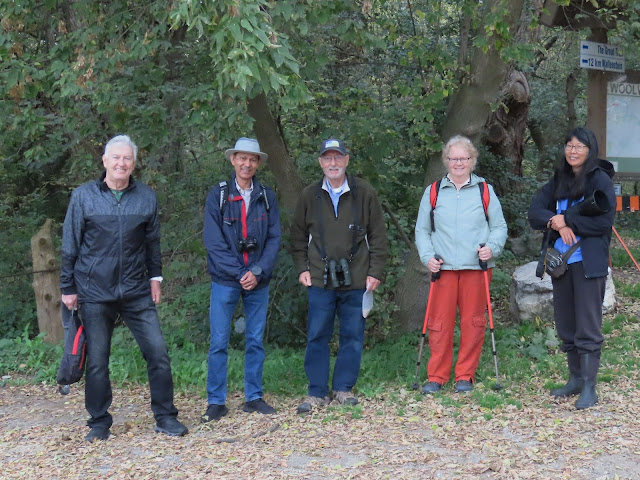
Lynn, Miriam, Bob, Curtiss, Lisa, Karl


Sunday, October 17, 2021

The Mill Race Trail with Staunch Naturalists of Waterloo Region Nature

      Slowly, but equally surely (at least for now) the restrictions on assembly made necessary by COVID-19 are being relaxed.
     With great elation I have welcomed the opportunity to lead outings for our nature club again, starting a recent series with a visit to the Mill Race Trail in St. Jacobs. More field trips will follow right through until the end of the year, and I will be sure to report on them all.

13 October 2021

Leader: David M. Gascoigne

Participants: Miriam Bauman (effectively a co-leader), Karl Malhotra, Pauline Richards, Andrew Wesolowski, Adrienne Zoe

     Three others who had signed up for the walk were sidelined by medical issues of one kind or another

Andrew, Karl, David, Pauline, Adrienne

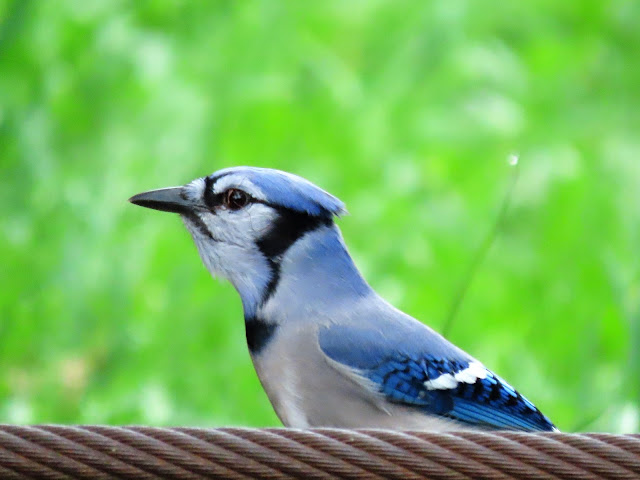
     A friendly Blue Jay (Cyanocitta cristata) came to bid us "Good Morning" before we even set foot on the trail.


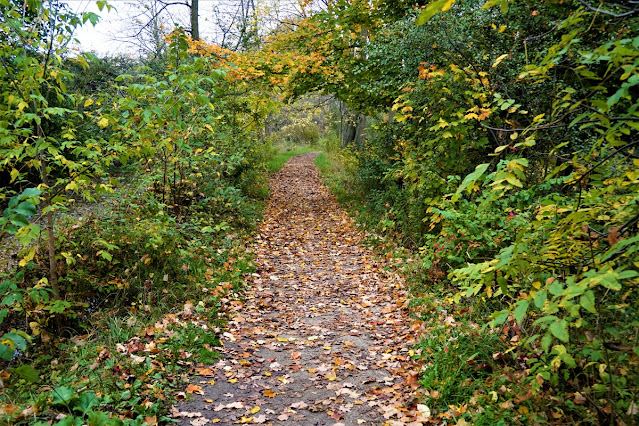
     The Mill Race Trail is beautiful at any time of year, but in the fall, bedecked with leaves, it is perhaps at its most charming.

Photo courtesy of Andrew Wesolowski

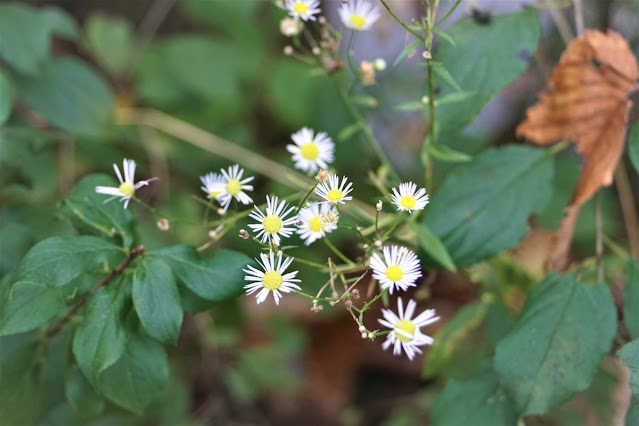
      Pannicled Asters (Symphyotrichum lanceolatum) continue to delight a curious naturalist right into October.

Photo courtesy of Andrew Wesolowski

     On a typical outing the participants have a wide range of skill levels and for some the opportunity to see a White-breasted Nuthatch (Sitta carolinensis) at arm's length is a singular pleasure.


     I can tell you that the pleasure does not diminish with familiarity!
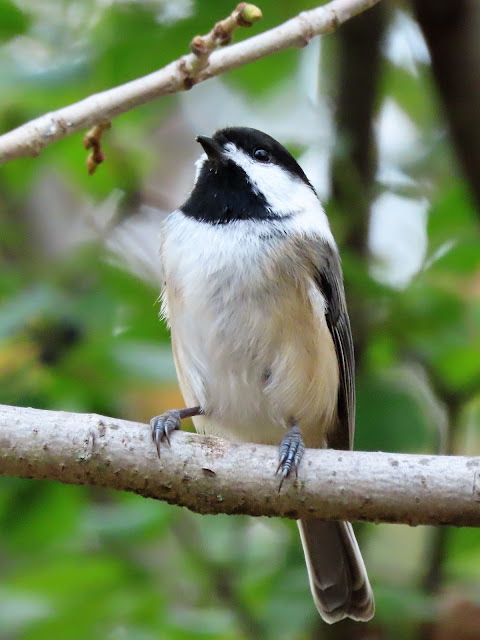
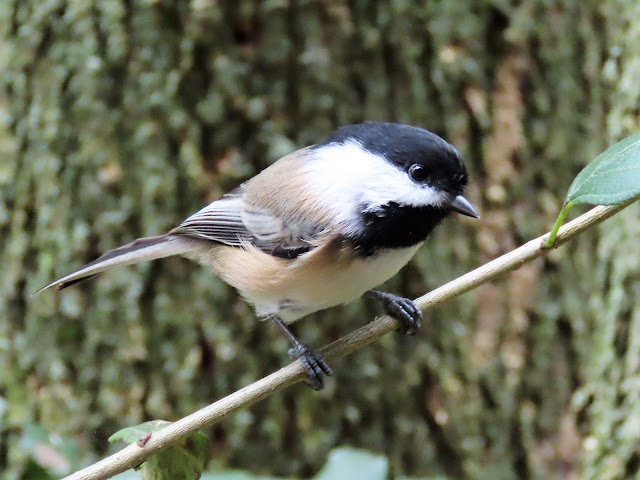
     If anything is as certain as death, taxes and conniving politicians, it is that Black-capped Chickadees (Poecile atricapillus) will come to secure their just reward almost from the moment when you first enter their realm.

Photo courtesy of Andrew Wesolowski

     They repay you with joy at every step along the way.


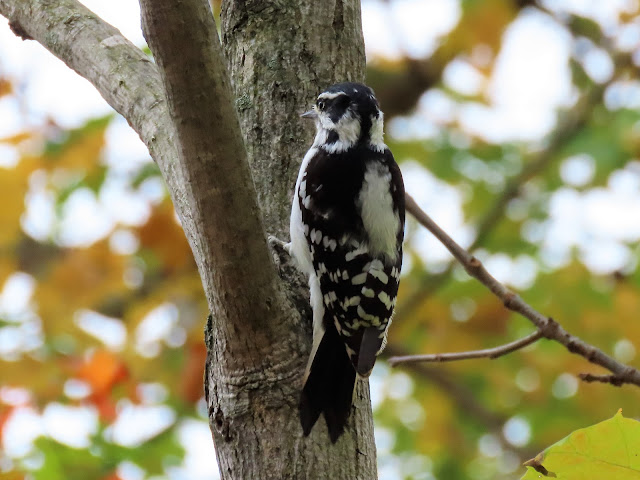
     It would be an odd day when chickadees and nuthatches were not spotted along the Mill Race, and the third "reliable" would be Downy Woodpecker (Dryobates pubescens).


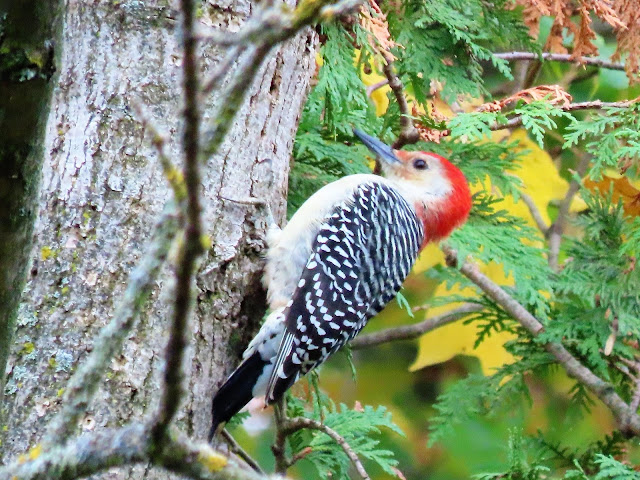
     In recent years Red-bellied Woodpecker (Melanerpes carolinensis) has become almost as predictable as a downy.


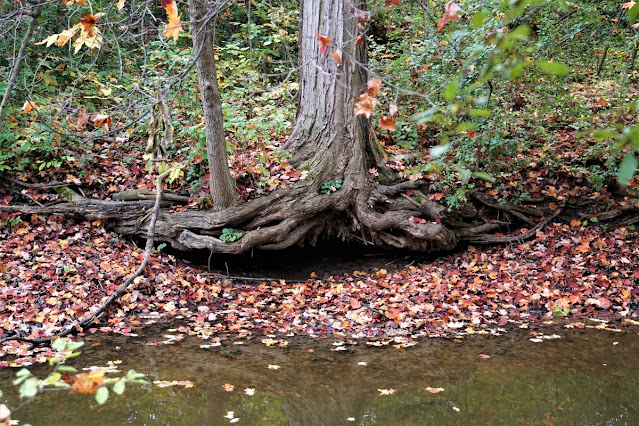
     I am quite sure that we notice this tree on every visit to the Mill Race, wondering when the next fierce wind will bring it down.

Photo courtesy of Andrew Wesolowski

     I think we have been looking at it for at least ten years, however, so it is perhaps better anchored than it appears. The winds of November will soon be shrieking, however.....
     How charming the surface of the water looks with a covering of autumn leaves.


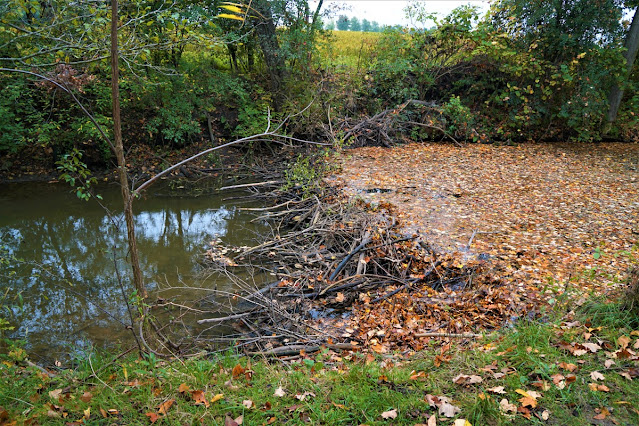
     American Beavers (Castor canadensis) have been busy and the water is backed up behind their dam.

Photograph courtesy of Andrew Wesolowski

      There were lots of Cedar Waxwings (Bombycilla cedrorum) busy flycatching from the treetops.


     October weather has been unseasonably warm and there was no shortage of flying insects.
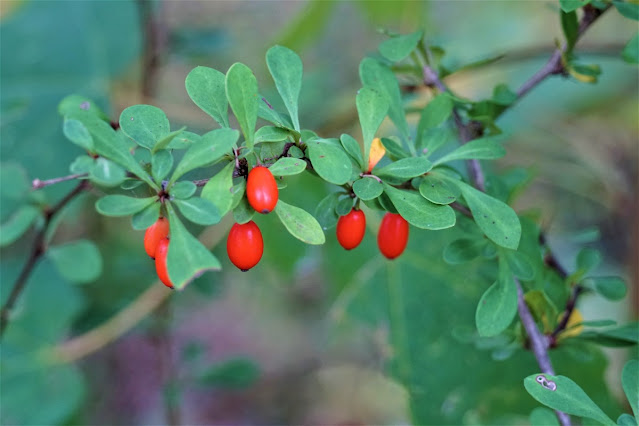
     Ripe Japanese Barberries (Berberis thunbergii) would normally beckon them, but today they seemed indifferent to the fruit shining brightly in the foliage.

Photo courtesy of Andrew Wesolowski

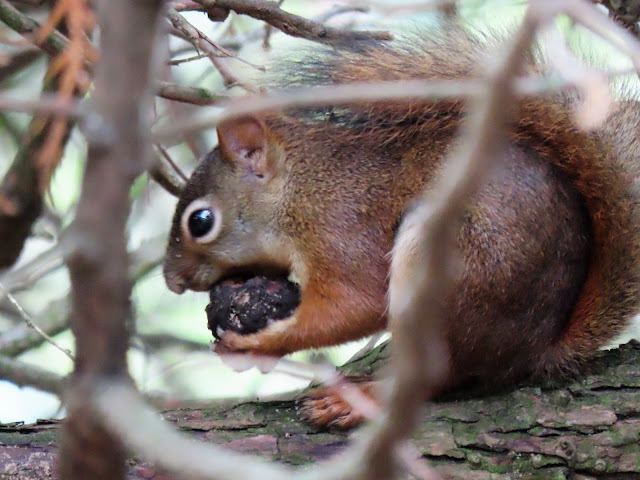
     An American Red Squirrel (Tamiasciurus hudsonius) was making inroads into a Black Walnut (Juglans nigra).


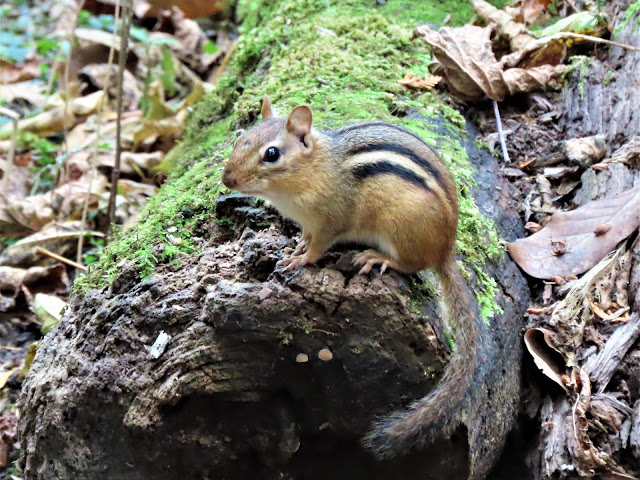
     Eastern Chipmunks (Tamias striatus), the darlings of the rodent world, were scurrying everywhere, busily gathering winter storage, and chattering to every human interloper who passed by.


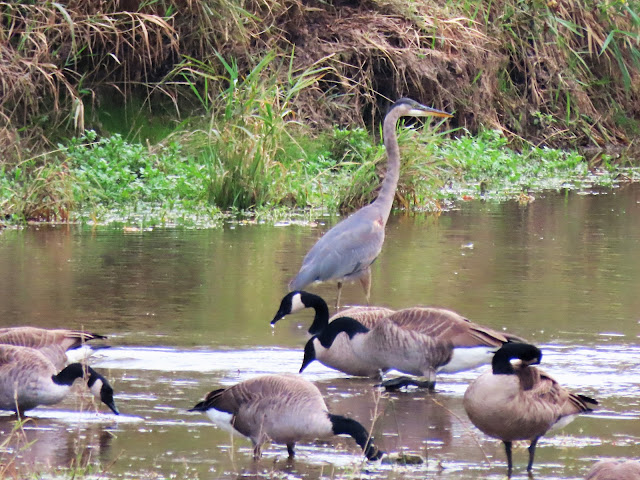
     Canada Geese (Branta canadensis) and a Great Blue Heron (Ardea herodias) were content to share the resources of the Conestogo River, both probing for their food of choice, without competition.


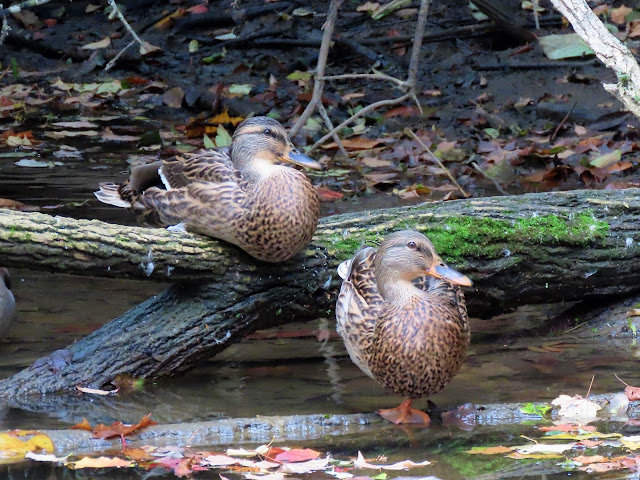
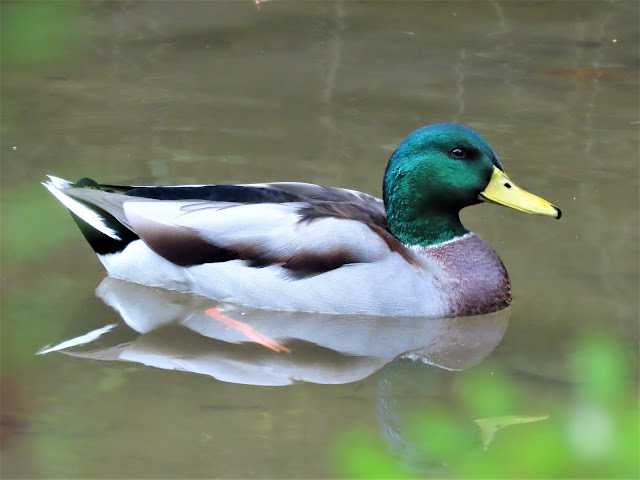
     There is little quite as peaceful as Mallards (Anas paltyrynchos) outside the frenzy of spring courtship, a time when raging hormones dictate aggressive behaviour. Fall is the time of easy living and relaxation and togetherness is the order of the day.


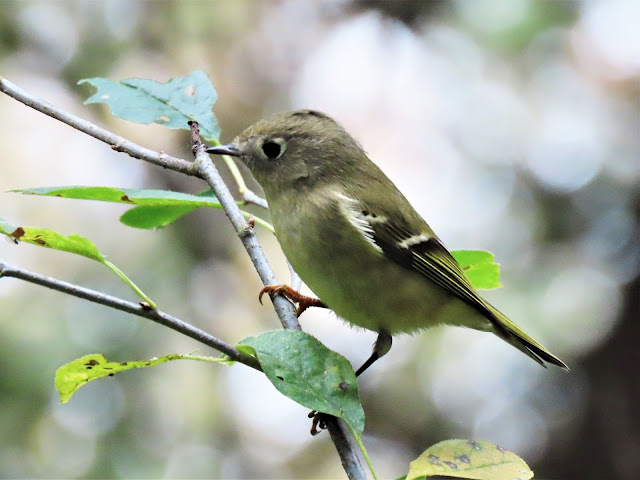
     The presence of several Ruby-crowned Kinglets (Regulus calendula) was highlighted by one especially cooperative individual who, contrary to all kinglet protocols, permitted portraits to be taken!


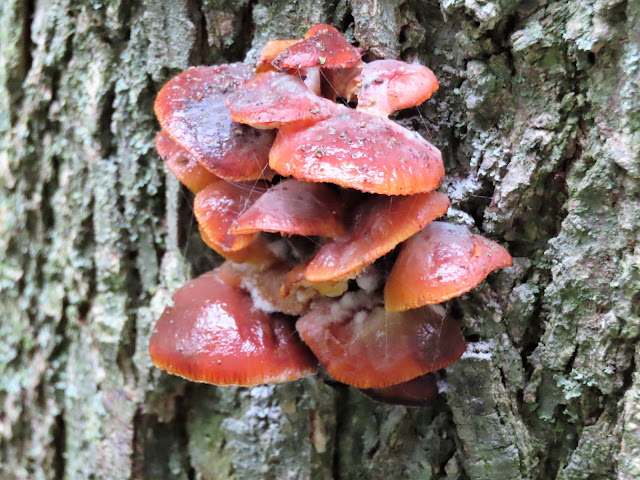
     Fungi, as a general rule, do not attract a great deal of attention, but on this walk several discussions were held as we observed different types, so it was fitting that our outing ended with a fine stand of Velvet Foot (Tapinella atrotomentosa).


     Thank you Karl, Pauline, Andrew and Adrienne. What engaging companions you were on a balmy October morning. 
     Let's do it again!

16 October 2021

Would have been participants: Christine Alexander, Miriam Bauman, Dog Brunton, Victoria Ho, Jennifer Leat, Geoff Moore, Tracey Rainer, Colleen Reilly, Zach Stevens, Roger Suffling, Selwyn Tomkun

Guests: Meghan Singaraja with her son, Gabe.

     My plan is to run the entire series of walks mid week, with a repeat on the weekend for those who work.
     Unfortunately, rain dashed our plans and we had to cancel this outing. 
     Some things we can control - the weather is not one of them.  


Tuesday, August 10, 2021

Tuesday Rambles with David Resume

02 August 2021
Hillside Park, Waterloo, ON

     After a COVID-imposed hiatus of almost a year, we finally were able to enjoy a Tuesday walk. Mary, Judy and Franc were unable to join us, for one reason or another, but Jim, Francine and Carol met Miriam and me for a pleasant stroll through Hillside Park in uptown Waterloo.
     The breeding season is complete for many species and it was encouraging to see this recently independent Red-bellied Woodpecker (Melanerpes carolinus) exploring its world.


     To the extent that we were able to judge, it was doing well.


     Berry-bearing shrubs and trees seem to have had a bountiful year, and Guelder-Rose (Viburnum opulus) was laden with fruit.


     These berries are mildly toxic to humans and are capable of inducing vomiting and diarrhea, but birds such as Cedar Waxwing (Bombycilla cedrorum) and American Robin (Turdus migratorius) eat them with impunity.
     A male Common Grackle (Quiscalus quiscula) was catching the sun, highlighting the iridescence in its plumage.


      A female House Finch (Haemorhous mexicanus) was drab by comparison. She seemed to be taking full advantage of the prolific berry crop of Eastern White Cedar (Thuja occidentalis).


     Song Sparrows (Melospiza melodia) are ubiquitous and very pleasing, akin to an old friend you never tire of seeing.


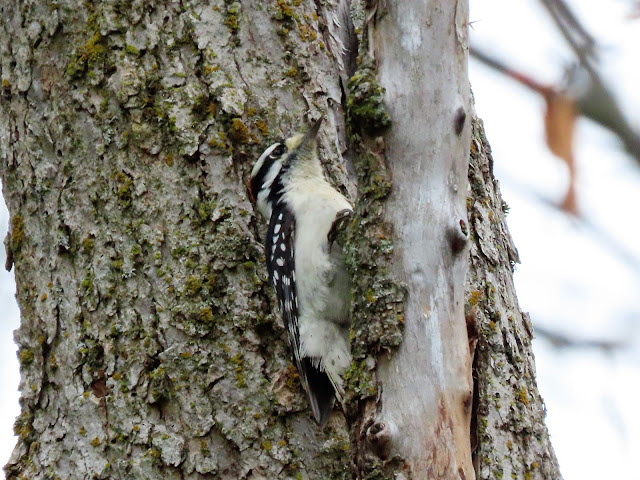
     A Hairy Woodpecker (Dryobates villosus) teased us a little, coming into view for a second or two, then disappearing behind the trunk of the tree on which it was foraging. 


     It was never in good light and seemed to have perfected its timing - disappear the moment the camera begins to focus!
     We had commented to each other that we had not seen a Belted Kingfisher (Megaceryle alcyon) all year at Hillside Park, a location generally reliable for an overwintering male, when we spotted this individual perched above the creek.


     It's not the greatest picture, unfortunately, but sometimes you have to take what you can get.
     Woodland Sunflower (Helianthus divaricatus) was in full bloom, glorious in the morning sun.


     A Leafcutter Bee (Megachilidae) wasted no opportunity to probe for nectar.


     A Western Honey Bee (Apis mellifera) had the same idea.


     Our only Tyrant Flycatcher of the morning was an Eastern Kingbird (Tyrannus tyrannus) who put in an appearance just before the end of our walk.


     It was good to get together again!

Tuesday, June 01, 2021

Lockdown Is Not Quite The Stranglehold It Was.

      I think that like most Ontarians we are happy that restrictions are being lifted very gradually, but based on past experience wonder whether (and when) the hammer will come down again. The politicians are all anxious to restore conditions to near normal, and take the credit for it of course, but many of the medical experts are cautioning that by being too ambitious we may jeopardize the progress we have made to this point.
     For the moment let's enjoy what expanded freedoms we have and look to the future with optimism.  In the meantime nature does not change, and we continue to find solace and pleasure in ways that are so much part of who we are.

24 May 2021

Berlett's Road, Wilmot Township, Waterloo, ON

     I spotted a Killdeer (Charadrius vociferus) as I was driving and pulled over to take a picture.


     It looks as though it is asking me what I am doing!
     In the same field were several horses, wonderful creatures, so sturdy and strong.


     They were attracted to the reeds around a pond; I assume that the forage is sweet and tender there.


     These horses give every impression that they are well cared for.


SpruceHaven, St. Agatha, ON

     I heard a Red-bellied Woodpecker (Melanerpes carolinus) and after a while located it.


     You may bestow upon yourself the Eagle Eye Award if you can find it on the left side of the tree!
     The ponds in Teen Hollow are filling as they should, and all is proceeding in a fashion that assures that within a couple of years we will have a functioning wetland. 
     American Toads (Anaxyrus americanus americanus) have laid their eggs in the water and there are now thousands of tadpoles.


     It is a transformational experience in human terms to witness the natural transformation of the landscape, and I cannot overstate that it is the wisdom of Dave, Jamie and Sandy that grants us this opportunity.

26 May 2021
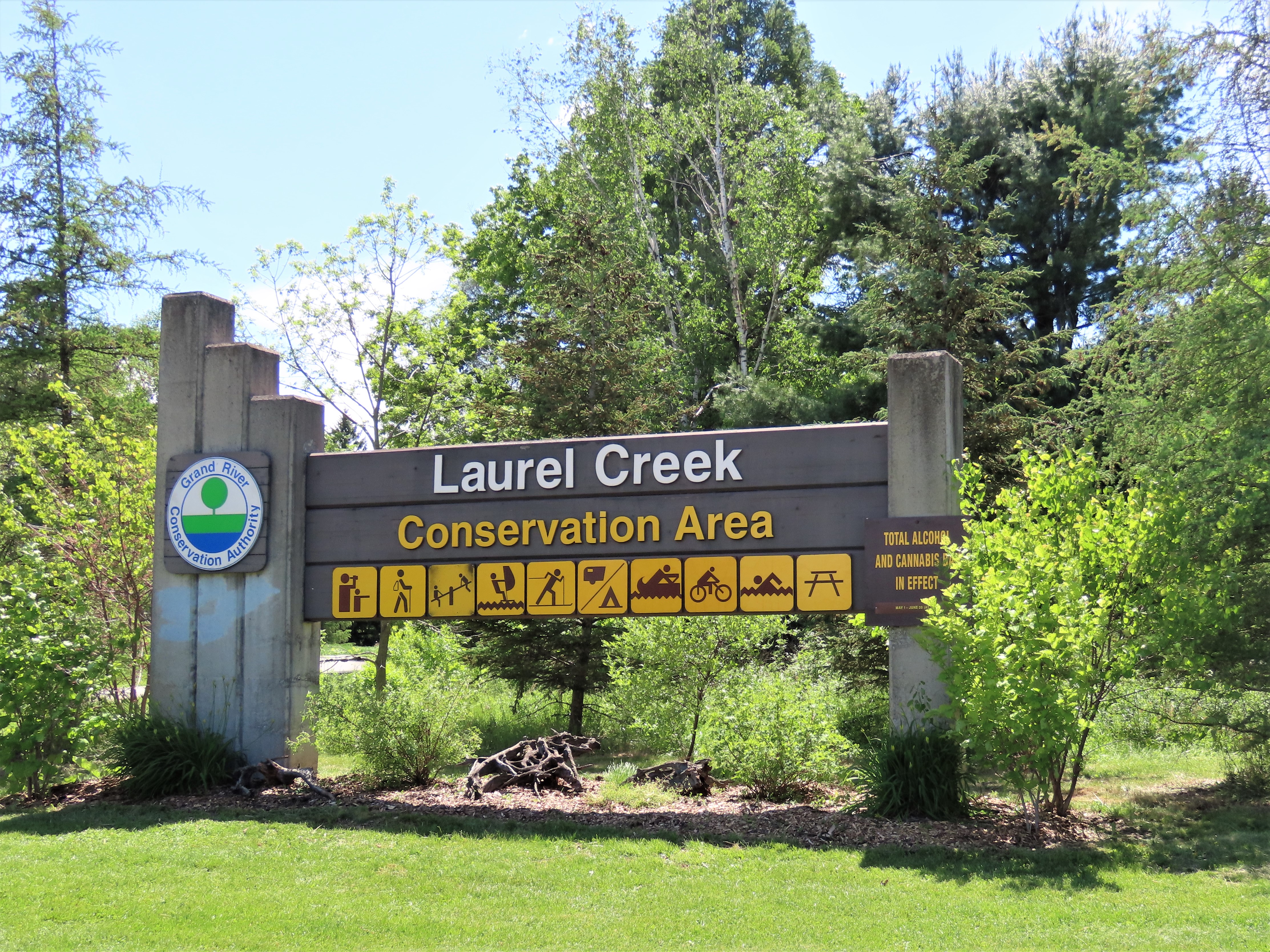
Laurel Creek Conservation Area, Waterloo, ON

     A very commendable programme has been launched by our public library, to encourage outdoor education, and to enable people to participate in the opportunities to explore nature offered in the conservation areas falling under the jurisdiction of the Grand River Conservation Authority.
     For a period of a week a free pass to all the properties is offered and covers up to six people entering at the same time. In this way a family of six - grandparents, parents and children perhaps - can  enjoy a period of outdoor recreation together. At the same time, interest in the conservation areas is rekindled after a long period of closure due to COVID regulations.
     In addition to the complimentary pass a kit is provided, containing a pair of binoculars, three field guides dealing with caterpillars, wildflowers and butterflies, and a map showing the locations that may be visited, all contained in a pouch any naturalist would be happy to own.


     This is a terrific scheme to get people involved in conservation and natural history; taxpayers' money being spent wisely!
     Laurel Creek is mere minutes from our house and that is where Miriam and I chose for our first visit.


     When our grandchildren were younger we used to buy an annual pass, but had not visited for a couple of years, so it was a pleasure to return.
     A male Red-winged Blackbird (Agelaius phoeniceus) was ardently cajoling females to join him to perpetuate the species.


     There appears to be a tick above his eye, which we hope will drop off once it has gorged and is satiated.
     Eastern Kingbirds (Tyrannus tyrannus) were seen flycatching at will.


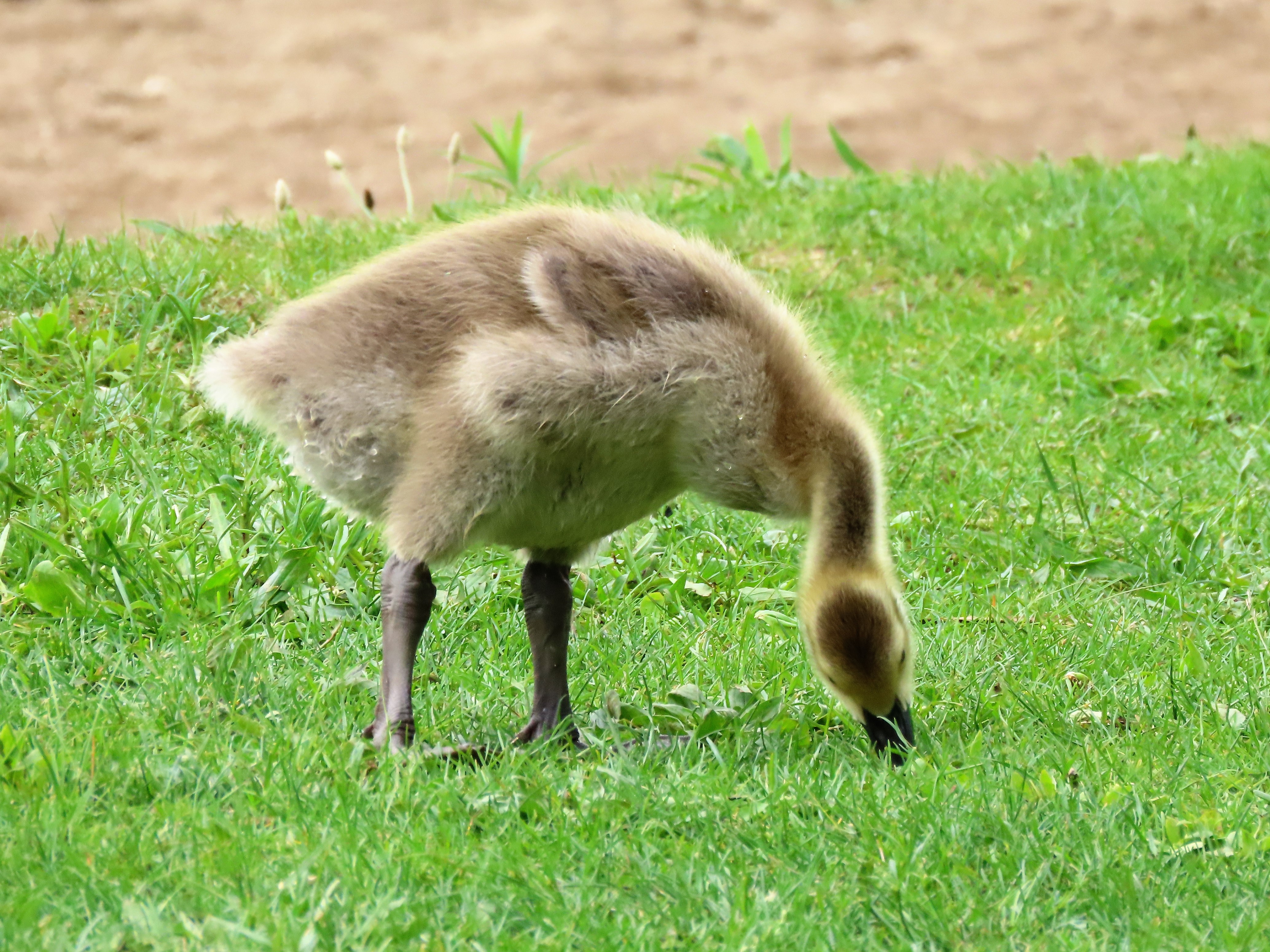
     If one were to nominate a species to take a prize for avian fecundity, Canada Goose (Branta canadensis) might be a unanimous choice. It seemed that families were everywhere and there is no denying that goslings are cute!


     In an area where we have observed Snapping Turtles (Chelydra serpentina) in the past, a nesting area has been constructed, and we hope that eggs are incubating below the surface of that sand.


     Miriam thought she heard an Indigo Bunting (Passerina cyanea) singing but could not be sure; it was extremely windy and the sound was carried away. Validation was provided on our way out of the park when she heard another and spotted it almost right away.


27 May 2021

Glen Allen, Wellington County, ON

     This is an area that we visit quite often, but generally in the winter when we are on a mission to find Snowy Owls (Bubo scandiacus) so you can imagine our delight, and surprise too I must say, when we discovered two colonies of American Cliff Swallow (Petrochelidon pyrrhonota)under two different bridges.


     When we first stopped the car many were gathering mud and a couple of males were scrapping for mating rights with a female, but the moment we opened the car every one of them exploded into the air. Even the promise of sex couldn't convince them to wait a minute or two!

Conostogo Lake Conservation Area, near Glen Allen, Wellington County, ON

     Armed with our pass we visited another GRCA property.


     This lake was created when Miriam was a young child and lived not far from the dam that was built to contain the water.


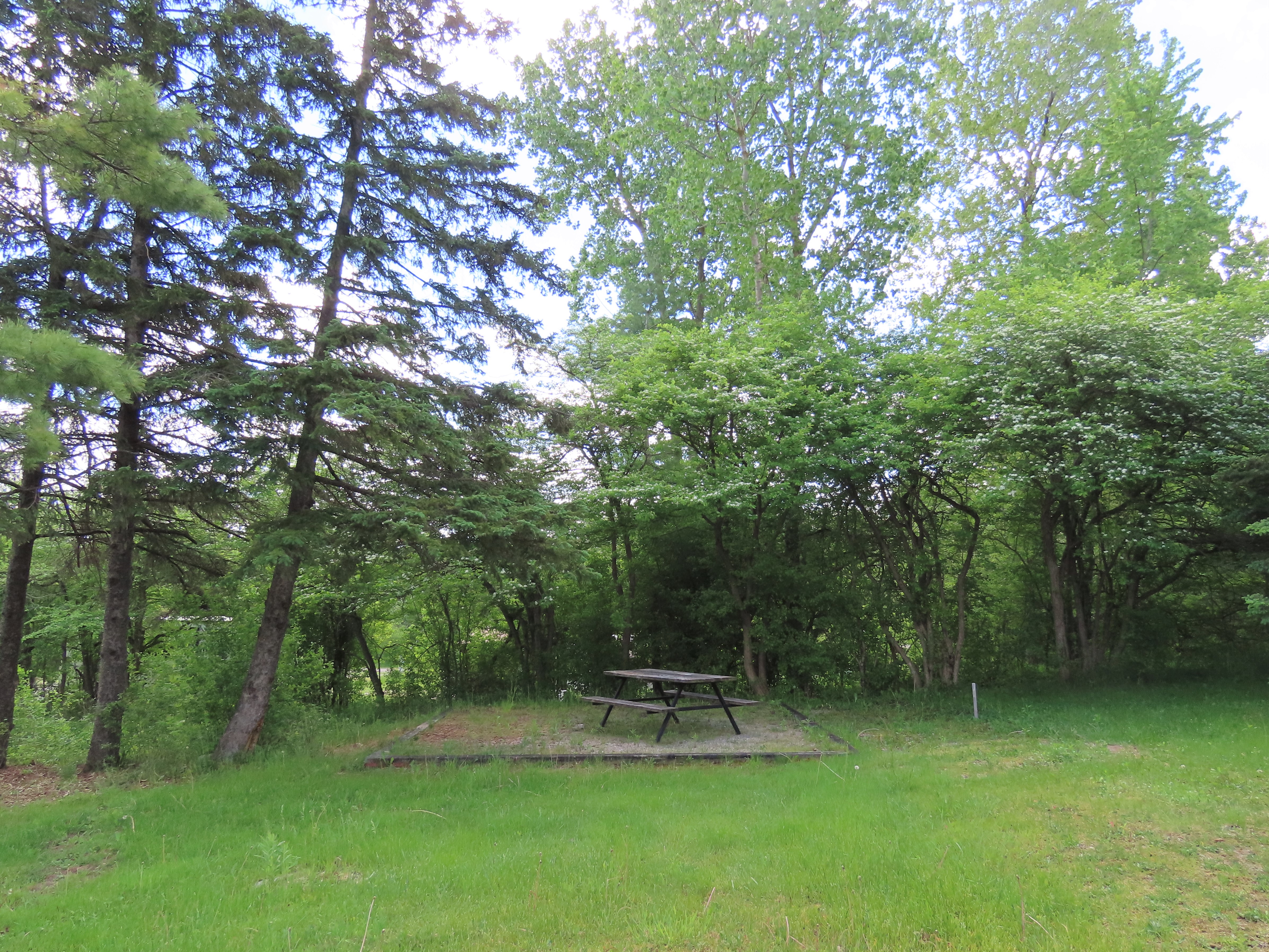
     As a sure indication that COVID-19 has seriously impacted the activities in the park, the picnic benches are stacked and out of commission, at a time when they should be occupied by people enjoying an outdoor picnic.


     We sat on a section of a dock that had been hauled out of the lake to enjoy our coffee and cookies, and a male Baltimore Oriole (Icterus galbula) arrived to keep us company.


     Several Eastern Kingbirds were flycatching, and you can see one perched in typical fashion, waiting for aerial insects to pass by.


     The campgrounds are closed at present so we were able to drive through areas where we would not be permitted unless camping there, and noted that campsites are both pleasant and spacious.


     There is an upper and lower component to the conservation area and we decided to explore both. 
This is the lower section looking back at the dam.


     The view along the riverbank is quite lovely.


     American Black Currant (Ribes americanum) has gained a foothold in the area, a native species among so many invasives.


     I have been unable to identify this caterpillar specifically, but I am confident that it is of a Tiger Moth (subfamily Arctiinae).


     Bitter Wintercress was abundant (Barbarea vulgaris), with an unidentified beetle on the flower.


     It is without question that Tatarian Honeysuckle (Lonicera tatarica) is a very attractive plant, visually that is, but its appeal stops there.


     It is considered by many to be a noxious weed. It is highly invasive, with seeds dispersed by mammals and birds, and spreads rapidly, leading to a dense understory thicket. Native plant growth is inhibited and biodiversity is reduced as a consequence.
     This is another case of human folly in introducing species that do not belong, with serious ecological disturbance being the result.
     Common Hawthorn (Crataegus monogyna) presents no such dire issues, and is equally beautiful to my eye.


     We watched an American Robin (Turdus migratorius) deliver food to its young and then settle down on the nest to regulate their temperature no doubt.


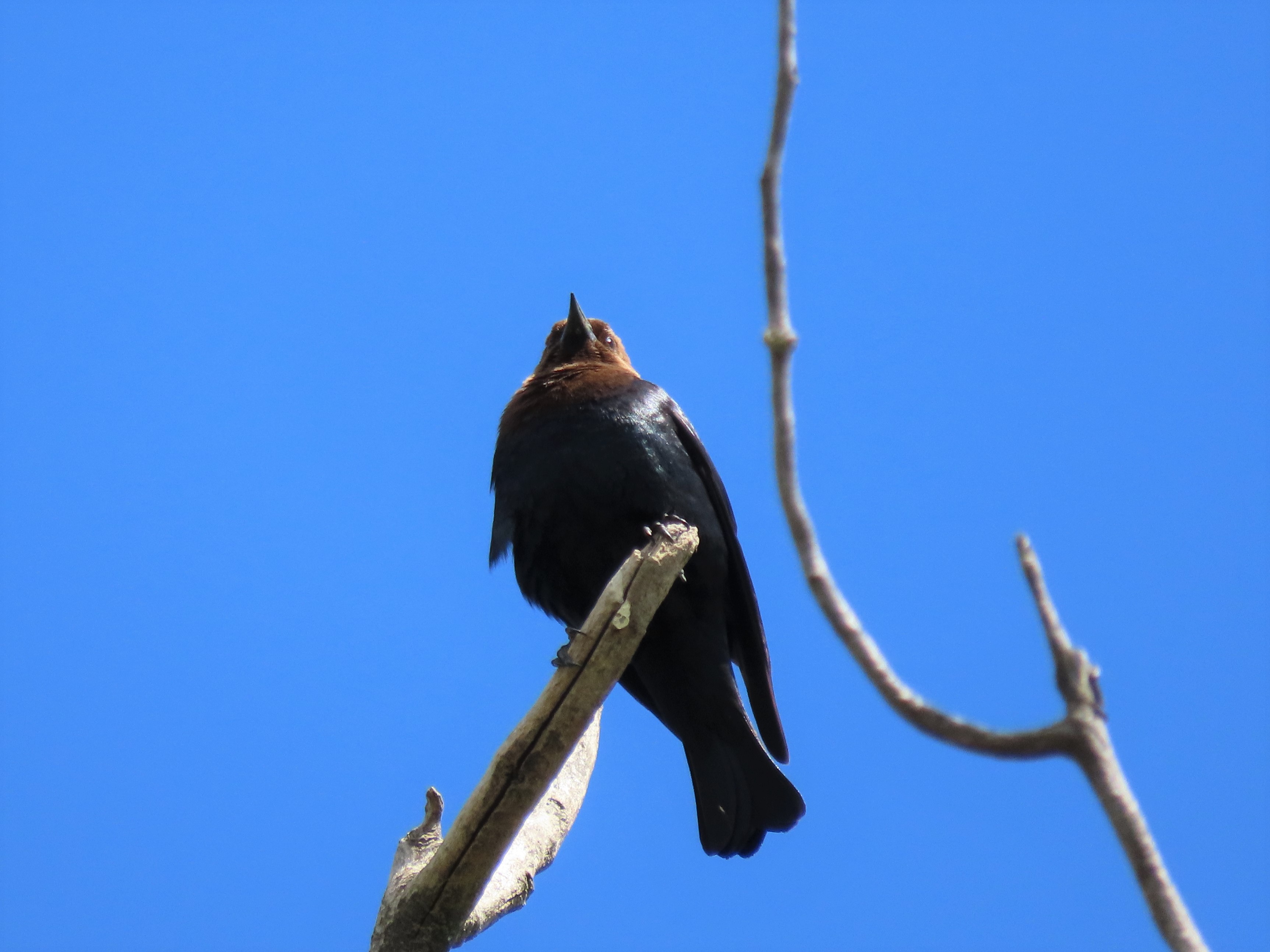
     A male Brown-headed Cowbird (Molothrus ater) looked down on us from on high as we left to head for home.


     We have very much enjoyed the two visits facilitated by the entry pass and look forward to a few more before we have to return the pass to the library. More to come in the next post I hope. 

Land Acknowledgement

We acknowledge that the land on which we are situated are the lands traditionally used by the Haudenosaunee, Anishinaabe, and Neutral People. We also acknowledge the enduring presence and deep traditional knowledge, laws, and philosophies of the Indigenous Peoples with whom we share this land today. We are all treaty people with a responsibility to honour all our relations.

Followers