Eastern Chipmunk (Tamias striatus)
This is the third (and last) of the squirrels that live in our area.

Eastern Chipmunk is a great favourite with everyone, especially children, who seem drawn to this little rodent with its pin-striped charm. The fact that it will feed from your hand almost without hesitation does nothing to diminish its appeal.

Its small size and relatively low weight mean that it can evade most devices designed to restrict squirrel access to bird feeders, and it dines with impunity.
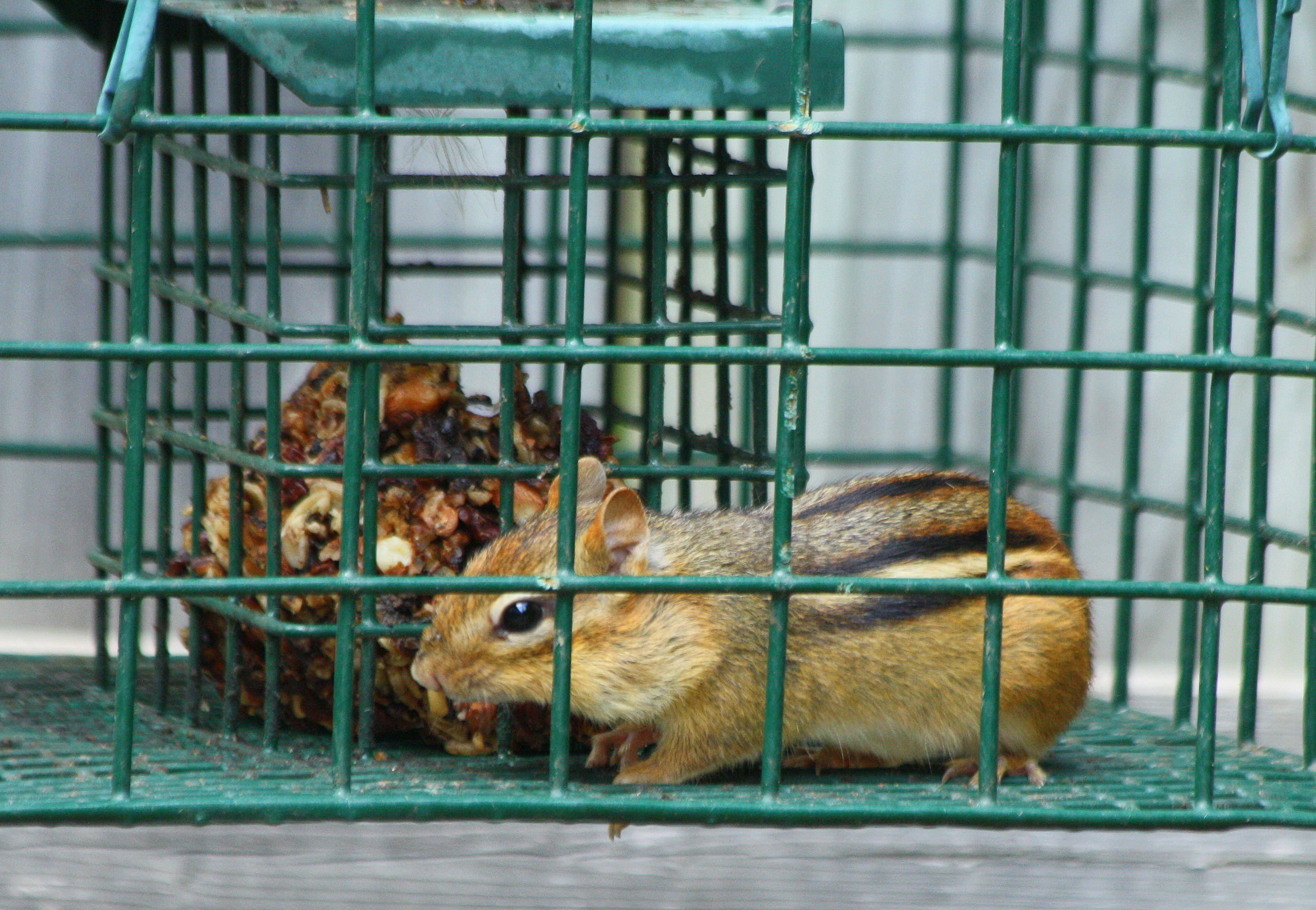
When they are on a mission to build up winter storage they make trip after trip to their den, cheeks bulging, and seeds set out for the birds can be depleted in short order.
But who can resist their charm? They climb up onto the chairs while we are relaxing on the patio and it is hard not to succumb to the notion that they enjoy human companionship.

Chipmunks are solitary, or sometimes live together in small family groups.
They are mostly vegetarian, but do not eschew June Bugs, earthworms, grasshoppers and even frogs. Given the chance to raid a bird's nest, eggs form a tasty treat. Gardeners are not always enamoured of chipmunks for whom bulbs and corms are a welcome addition to their diet.
The list of predators is long and constant vigilance is required to survive. Foxes, coyotes, weasels, raccoons, skunks, and birds of prey all include chipmunks in their diet. In urban areas domestic cats are a constant threat. Often well-fed tabbies will simply decapitate the chipmunks and leave their headless carcases scattered around. Cat owners take note!

I can hardly wait till spring when we will see them again.
22 November, 2022
Grande Allée and the Grand River, Cambridge, ON
I have pointed out to those who should care that the sign is incorrect, but it looks like that is how it is going to stay.

Even a Grade One pupil would be appalled, but correct French Grammar is obviously unimportant to some.
The trail meandered on from the road.

A vagrant Harris's Sparrow (Zontrichia querula) had been reported at this location, so we decided to start our regular Tuesday walk there.
The bird had been seen at 07h:30 but it did not show itself while we were there.
Blue Jays (Cyanocitta cristata) were plentiful, however, resplendent in their cerulean beauty.

We were delighted to see a couple of exceptionally handsome Red Fox Sparrows (Passerella iliaca), always a great sighting.

Grand River, Cambridge, ON
Having spent about an hour and half searching for the Harris's Sparrow and enjoying the Fox Sparrows, we decided to go down to the Grand River to check on the waterfowl.
Common Mergansers (Mergus merganser) were indeed exactly that - common. Here are a couple of males.....

..... and a female.

We were reminded that a Mallard (Anas paltyrynchos) is an exceedingly handsome bird.

Years ago, I used to run into an expatriate Brit quite frequently, who had a broad Birmingham accent and always referred to Mallard drakes as "stunners." Stunners indeed.
There was a small flock of Buffleheads (Bucephala albeola) - the local ladies club perhaps since they were all females.

Far down the river we could see a pair of Hooded Mergansers (Lophodytes cucullatus) but only the male is visible in the picture below, along with Common Mergansers and an American Herring Gull (Larus smithsonianus).

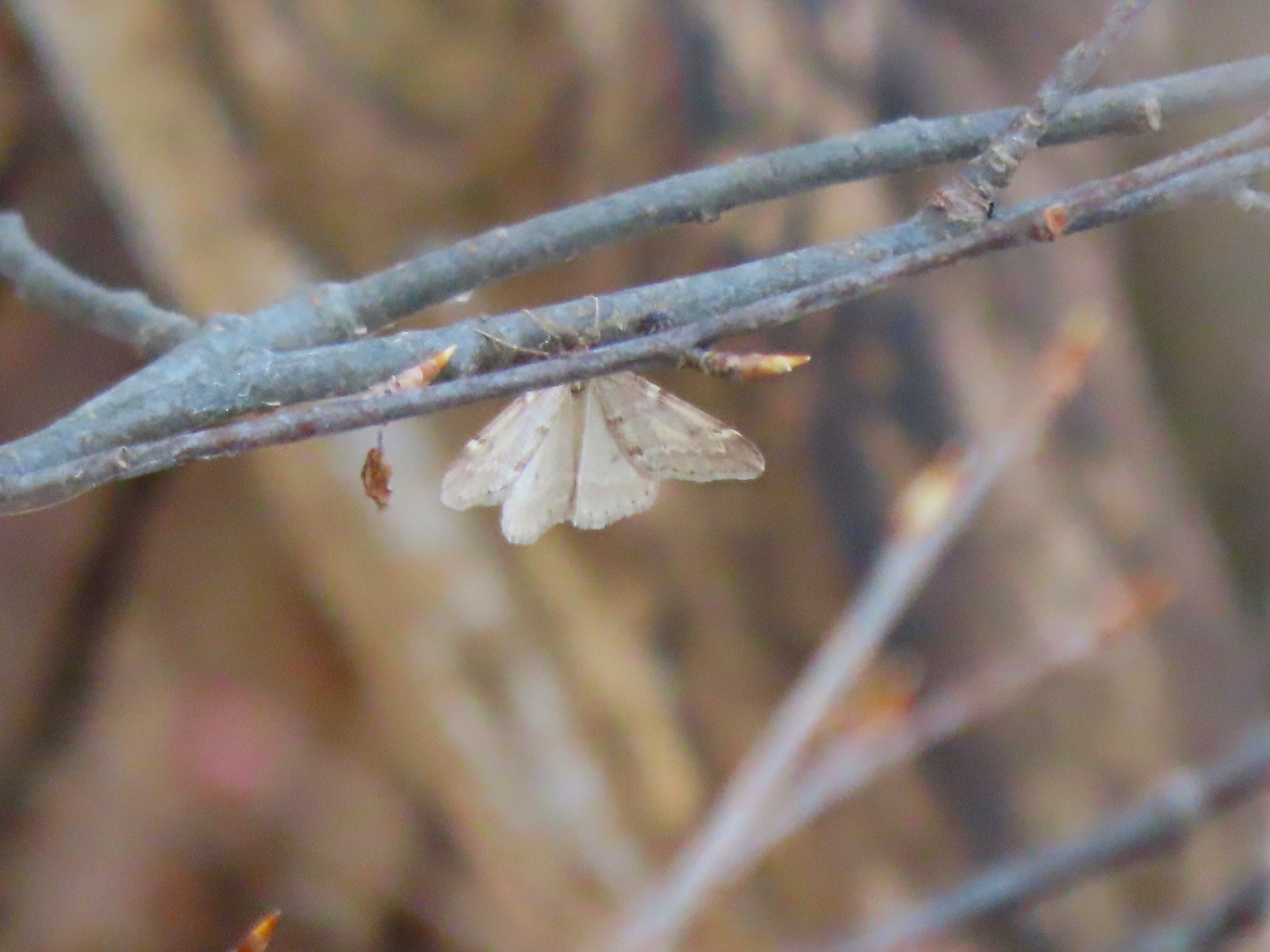
Bruce Spanworm (Operophtera bruceata) is a common moth in November, its appearance seeming to coincide with the first snow.
An American Red Squirrel (Tamiasciurus hudsonicus) was its usual argumentative self.

Mostly keeping company with the Buffleheads a single female Common Goldeneye (Bucephala clangula) dove repeatedly, as did all the other diving ducks present.

One must assume that the biomass of freshwater mussels, crayfish and other items sought by these ducks is substantial.
Ring-billed Gulls (Larus delawarensis), sated perhaps, seemed content to loaf together.

A rock always provides a good perch.

A herring gull was not to be outdone.

Canada Geese (Branta canadensis) seemed to be enjoying a collective snooze.

Grande Allée, Cambridge, ON
We decided to return to Grande Allée (less than ten minutes away) to see whether the Harris's Sparrow had appeared again, but no such luck. A small gathering of expectant birders waited patiently.
Several Dark-eyed Juncos (Junco hyemalis) came to feed.

They were joined by that most delicate of our native sparrows, American Tree Sparrow (Spizelloides arborea).

And to bid us farewell another Fox Sparrow joined the fray.

Fountain Street Bridge, Cambridge, ON
A pair of Bald Eagles (Haliaeetus leucocephala) have bred successfully at this location, and one of the pair (presumably) was perched adjacent to the nest.

Not a bad way to end the morning!
23 November 2022
Our backyard, Waterloo, ON
For a while our backyard resembled Central Station at the rush hour!
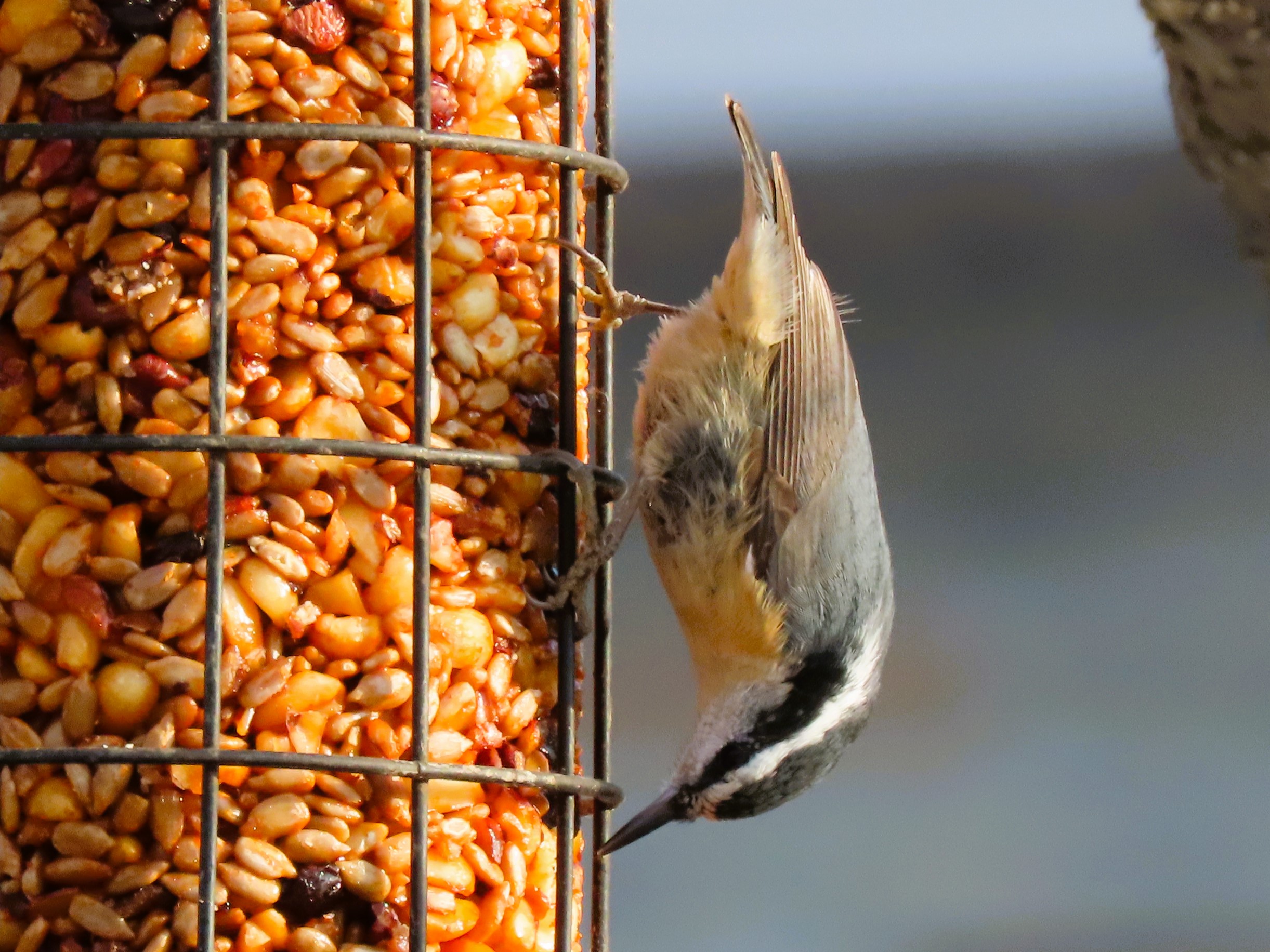
We have found that suet blocks impregnated with capsicum are effective at keeping the squirrels from gorging on it, but are equally enticing for the birds as untreated suet.
A Hairy Woodpecker (Leuconotopicus villosus) returned several times and chiseled away.

A Red-breasted Nuthatch (Sitta canadensis) found it no less appealing.
I have mentioned in previous posts that American Robin (Turdus migratorius) is no longer uncommon in the winter and this individual was efficiently gleaning seeds spilled from the feeders above.

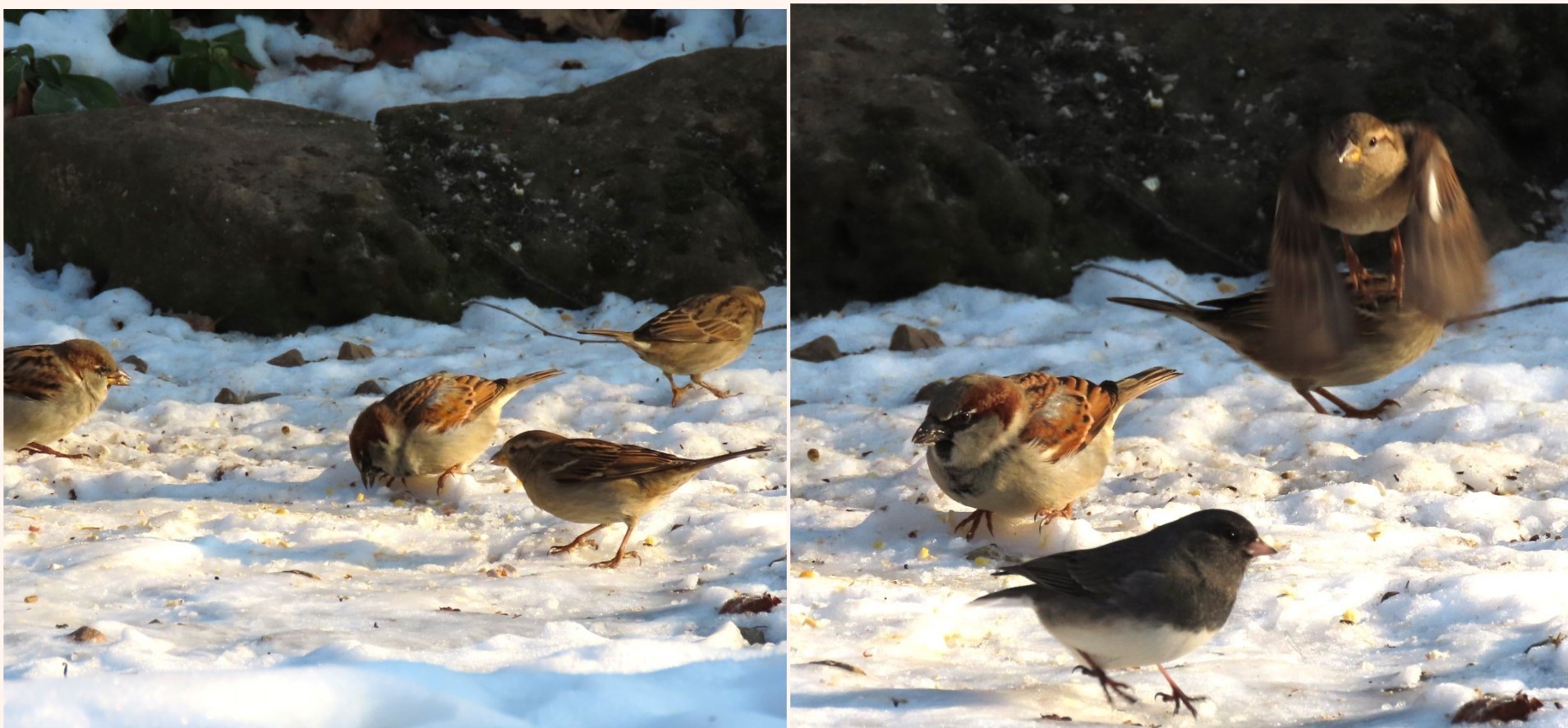
House Sparrow (Passer domesticus) is a species whose population has plummeted and often several weeks pass when we don't see them in our yard.


A Blue Jay is always a welcome visitor.

"If you've got it, flaunt it," this Northern Cardinal (Cardinalis cardinalis) seems to be saying.


A male Downy Woodpecker (Dryobates pubescens) came to partake in the feast.

Such an interesting display of its underwing as it left.

Mere moments later a female took its place.

And these are only the species we captured on camera. There were more!
We'll have to see what we can bring you next time.