Showing posts with label Andrew Wesolowski. Show all posts

Saturday, November 27, 2021

Hillside Park with Waterloo Region Nature

     There are few things I enjoy more in life than leading a bird walk, and when I can do it under the auspices of my favourite naturalists club the pleasure is magnified.
     A group of enthusiastic participants took part in my two latest outings to Hillside Park in Waterloo. In the first contingent the youngest participant was seventeen months old and the oldest a mature eighty-three years. Birding does have its allure!

24 November 2021

Leader: David M. Gascoigne

Members: Miriam Bauman, Lynn Conway, Pauline Copleston, Lisa Den Besten, Beth Hobson, Jen Leat, Graham Macdonald, Marg Macdonald, Karl Malhotra, Geoff Moore, Heather Polan (with Lily), Pauline Richards, Rog Suffling, Kathy Waybrant, Andrew Wesolowski. 

Jen, Kathy, Karl, Lisa, Geoff, Beth, Pauline C, Marg, Rog. Graham, Pauline R, Lynn, Andrew, David

Sunday, October 17, 2021

The Mill Race Trail with Staunch Naturalists of Waterloo Region Nature

      Slowly, but equally surely (at least for now) the restrictions on assembly made necessary by COVID-19 are being relaxed.
     With great elation I have welcomed the opportunity to lead outings for our nature club again, starting a recent series with a visit to the Mill Race Trail in St. Jacobs. More field trips will follow right through until the end of the year, and I will be sure to report on them all.

13 October 2021

Leader: David M. Gascoigne

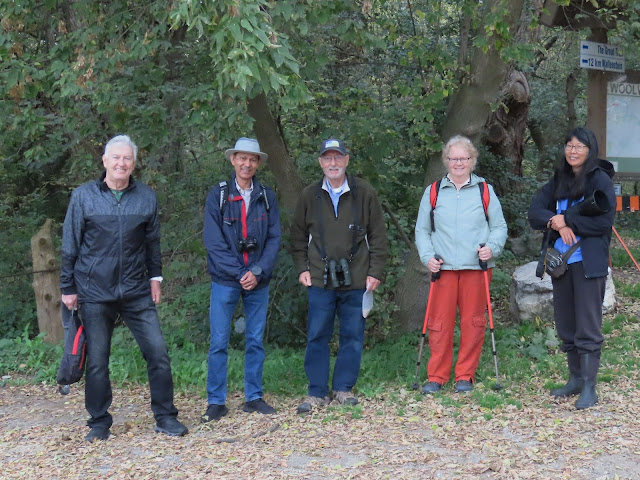
Participants: Miriam Bauman (effectively a co-leader), Karl Malhotra, Pauline Richards, Andrew Wesolowski, Adrienne Zoe

     Three others who had signed up for the walk were sidelined by medical issues of one kind or another

Andrew, Karl, David, Pauline, Adrienne

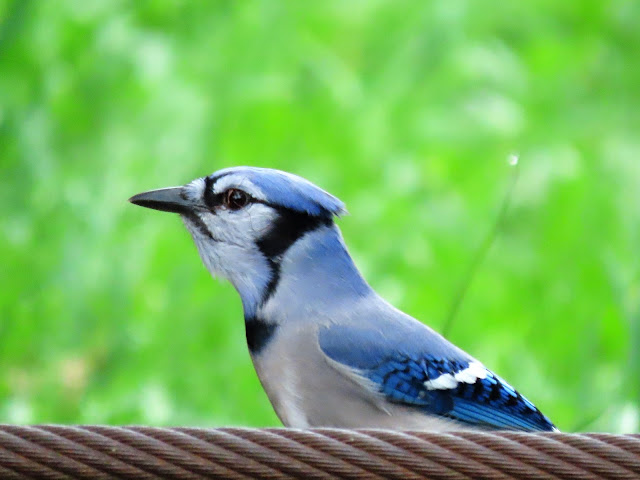
     A friendly Blue Jay (Cyanocitta cristata) came to bid us "Good Morning" before we even set foot on the trail.


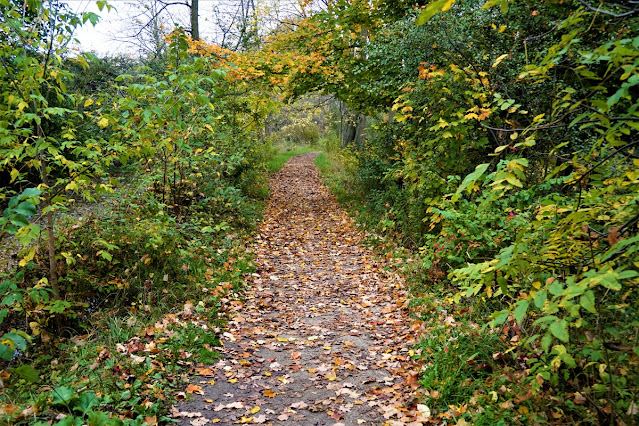
     The Mill Race Trail is beautiful at any time of year, but in the fall, bedecked with leaves, it is perhaps at its most charming.

Photo courtesy of Andrew Wesolowski

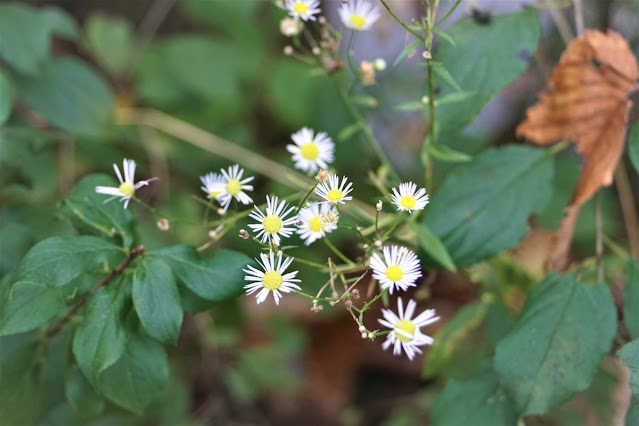
      Pannicled Asters (Symphyotrichum lanceolatum) continue to delight a curious naturalist right into October.

Photo courtesy of Andrew Wesolowski

     On a typical outing the participants have a wide range of skill levels and for some the opportunity to see a White-breasted Nuthatch (Sitta carolinensis) at arm's length is a singular pleasure.


     I can tell you that the pleasure does not diminish with familiarity!
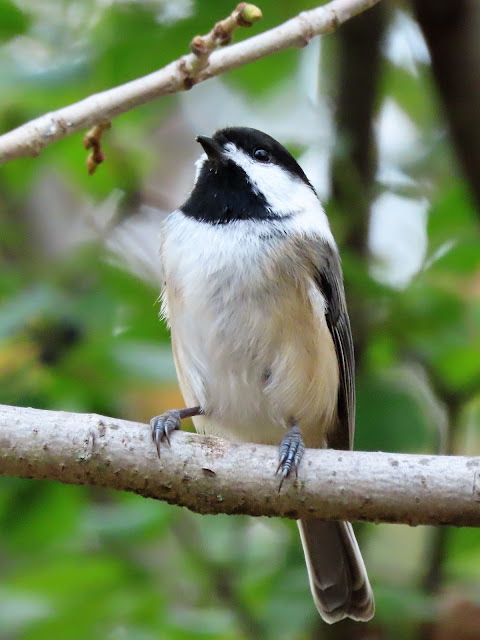
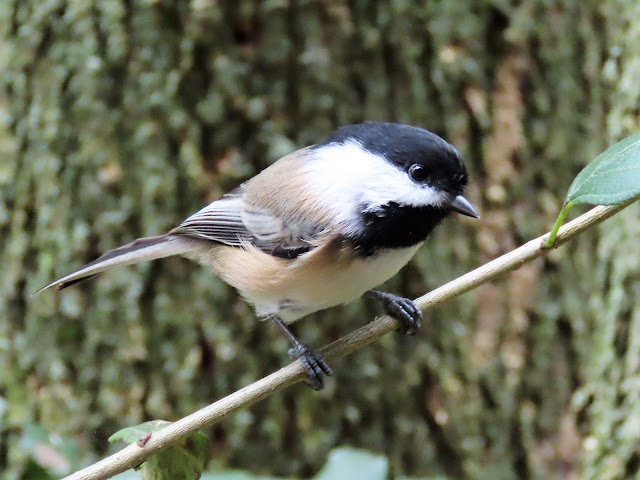
     If anything is as certain as death, taxes and conniving politicians, it is that Black-capped Chickadees (Poecile atricapillus) will come to secure their just reward almost from the moment when you first enter their realm.

Photo courtesy of Andrew Wesolowski

     They repay you with joy at every step along the way.


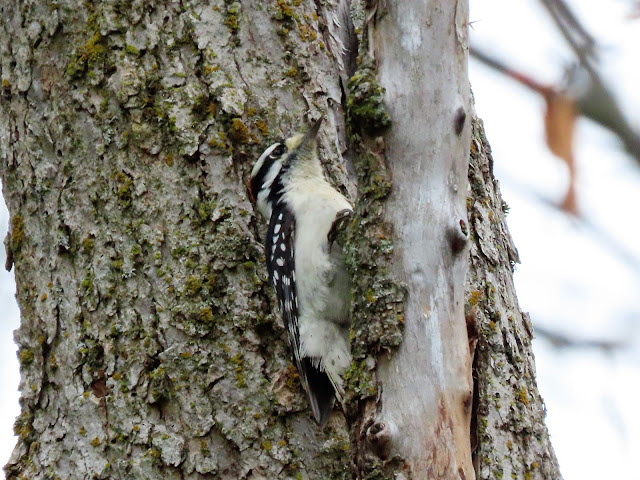
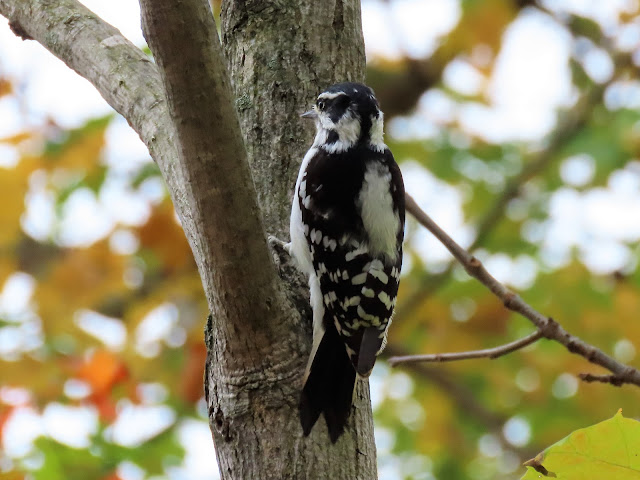
     It would be an odd day when chickadees and nuthatches were not spotted along the Mill Race, and the third "reliable" would be Downy Woodpecker (Dryobates pubescens).


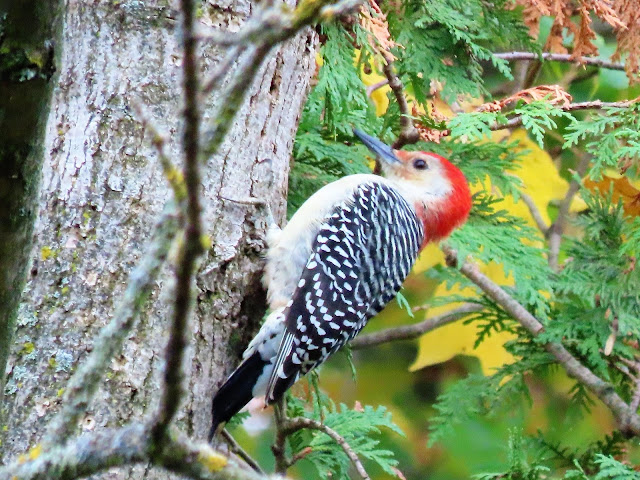
     In recent years Red-bellied Woodpecker (Melanerpes carolinensis) has become almost as predictable as a downy.


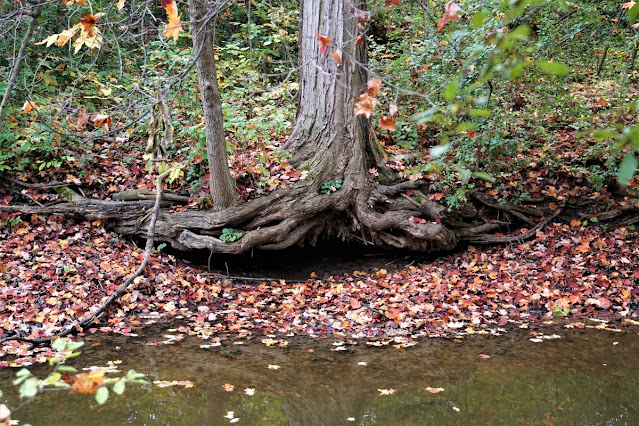
     I am quite sure that we notice this tree on every visit to the Mill Race, wondering when the next fierce wind will bring it down.

Photo courtesy of Andrew Wesolowski

     I think we have been looking at it for at least ten years, however, so it is perhaps better anchored than it appears. The winds of November will soon be shrieking, however.....
     How charming the surface of the water looks with a covering of autumn leaves.


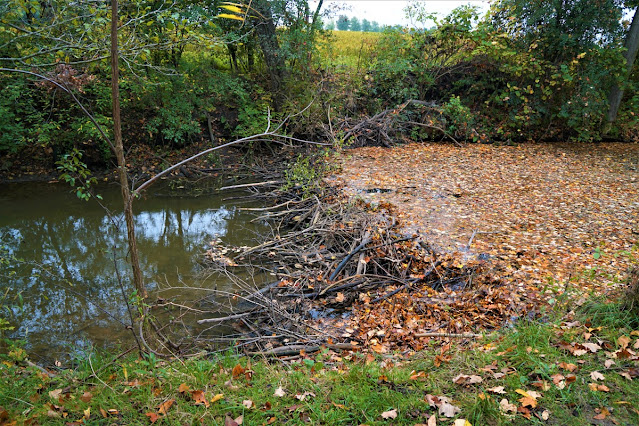
     American Beavers (Castor canadensis) have been busy and the water is backed up behind their dam.

Photograph courtesy of Andrew Wesolowski

      There were lots of Cedar Waxwings (Bombycilla cedrorum) busy flycatching from the treetops.


     October weather has been unseasonably warm and there was no shortage of flying insects.
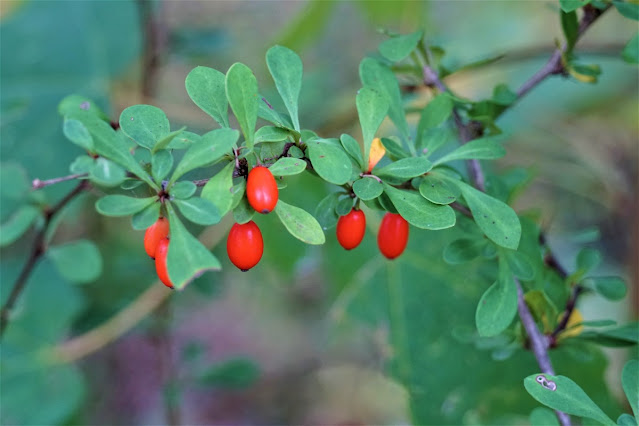
     Ripe Japanese Barberries (Berberis thunbergii) would normally beckon them, but today they seemed indifferent to the fruit shining brightly in the foliage.

Photo courtesy of Andrew Wesolowski

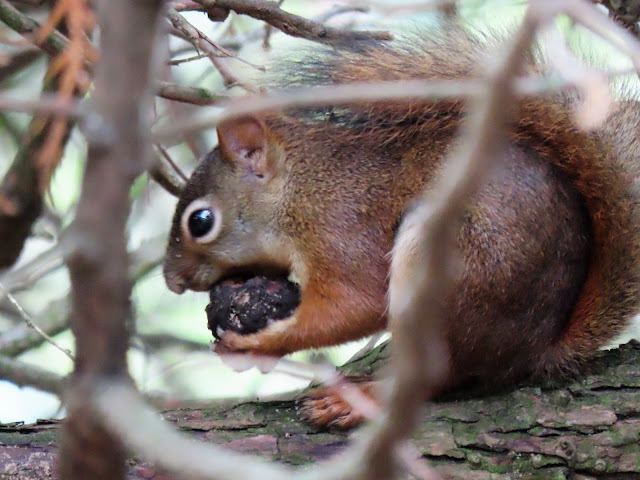
     An American Red Squirrel (Tamiasciurus hudsonius) was making inroads into a Black Walnut (Juglans nigra).


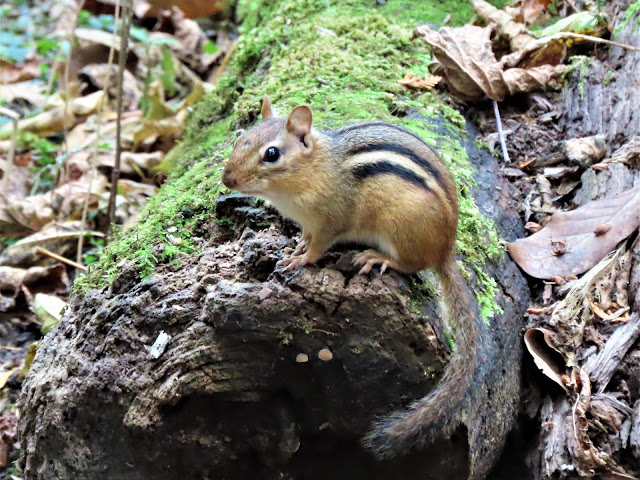
     Eastern Chipmunks (Tamias striatus), the darlings of the rodent world, were scurrying everywhere, busily gathering winter storage, and chattering to every human interloper who passed by.


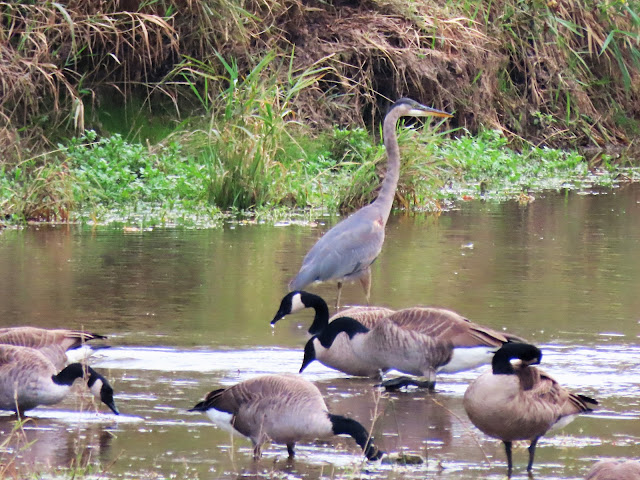
     Canada Geese (Branta canadensis) and a Great Blue Heron (Ardea herodias) were content to share the resources of the Conestogo River, both probing for their food of choice, without competition.


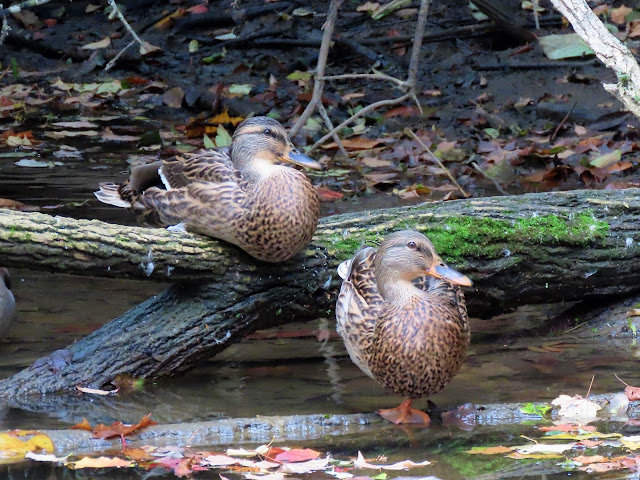
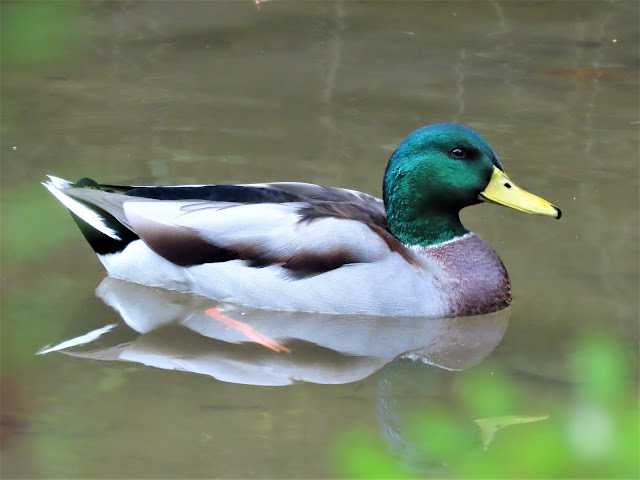
     There is little quite as peaceful as Mallards (Anas paltyrynchos) outside the frenzy of spring courtship, a time when raging hormones dictate aggressive behaviour. Fall is the time of easy living and relaxation and togetherness is the order of the day.


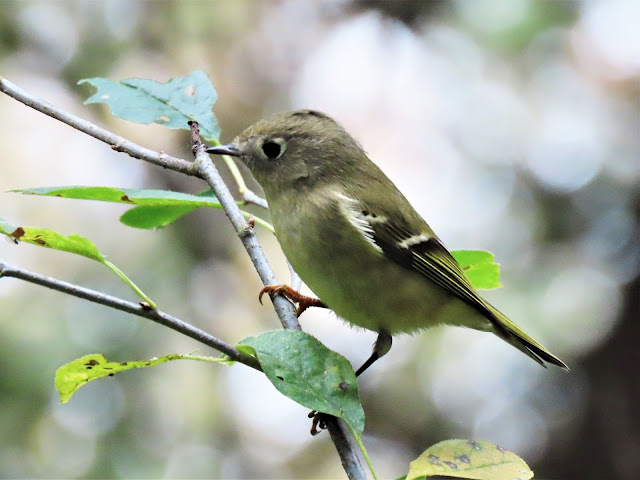
     The presence of several Ruby-crowned Kinglets (Regulus calendula) was highlighted by one especially cooperative individual who, contrary to all kinglet protocols, permitted portraits to be taken!


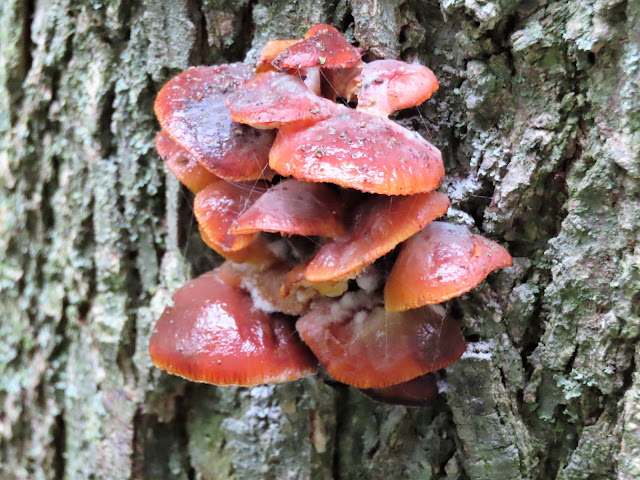
     Fungi, as a general rule, do not attract a great deal of attention, but on this walk several discussions were held as we observed different types, so it was fitting that our outing ended with a fine stand of Velvet Foot (Tapinella atrotomentosa).


     Thank you Karl, Pauline, Andrew and Adrienne. What engaging companions you were on a balmy October morning. 
     Let's do it again!

16 October 2021

Would have been participants: Christine Alexander, Miriam Bauman, Dog Brunton, Victoria Ho, Jennifer Leat, Geoff Moore, Tracey Rainer, Colleen Reilly, Zach Stevens, Roger Suffling, Selwyn Tomkun

Guests: Meghan Singaraja with her son, Gabe.

     My plan is to run the entire series of walks mid week, with a repeat on the weekend for those who work.
     Unfortunately, rain dashed our plans and we had to cancel this outing. 
     Some things we can control - the weather is not one of them.  


Sunday, August 16, 2020

Marg, Lily and Other Stuff

     In life one has friends and acquaintances, people who pass through with more or less impact, sometimes hardly at all, and then one is fortunate to have to have true, true friends, who can be counted on, who entertain, who delight, to whom one is irresistibly drawn.

     Margaret Lewis-Macdonald is such a person.

     She recently celebrated her eightieth birthday, and such an auspicious event could not be allowed to pass without celebration, even under the dire circumstances imposed by COVID-19. 


     The whole event was organized outside by her stalwart husband, Graham, and went off without a hitch. 

     As you may note, Marg took it all very seriously.

     She had insisted that she wanted no sappy cards and that all greetings should be humorous or naughty! That describes Marg down to a tee!

     As it happened, other friends had birthdays at the same time, so it was a joint celebration for three birthday beauties.

Marg Wendland (80), Marg Macdonald (80), Lynda Buck (75)

     What a pleasure it was to celebrate with these  gorgeous ladies. Good friends, good food, good wine - what more could one ask for?

     Well, you could ask for Lily too!


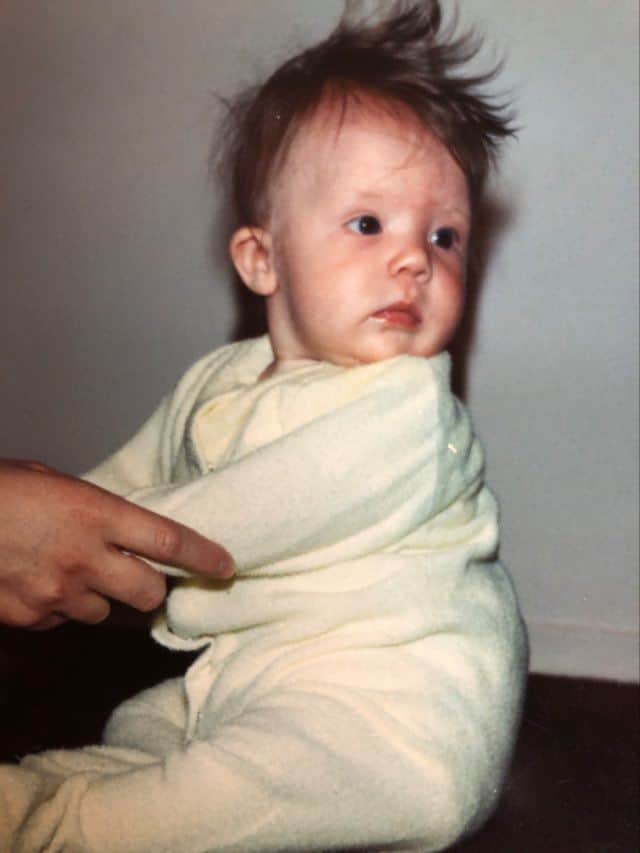
     Before going any further, permit me to show you a couple of pictures of Heather as a baby, and note the stunning resemblance to Lily. It could be the same person! Down to the hair almost!


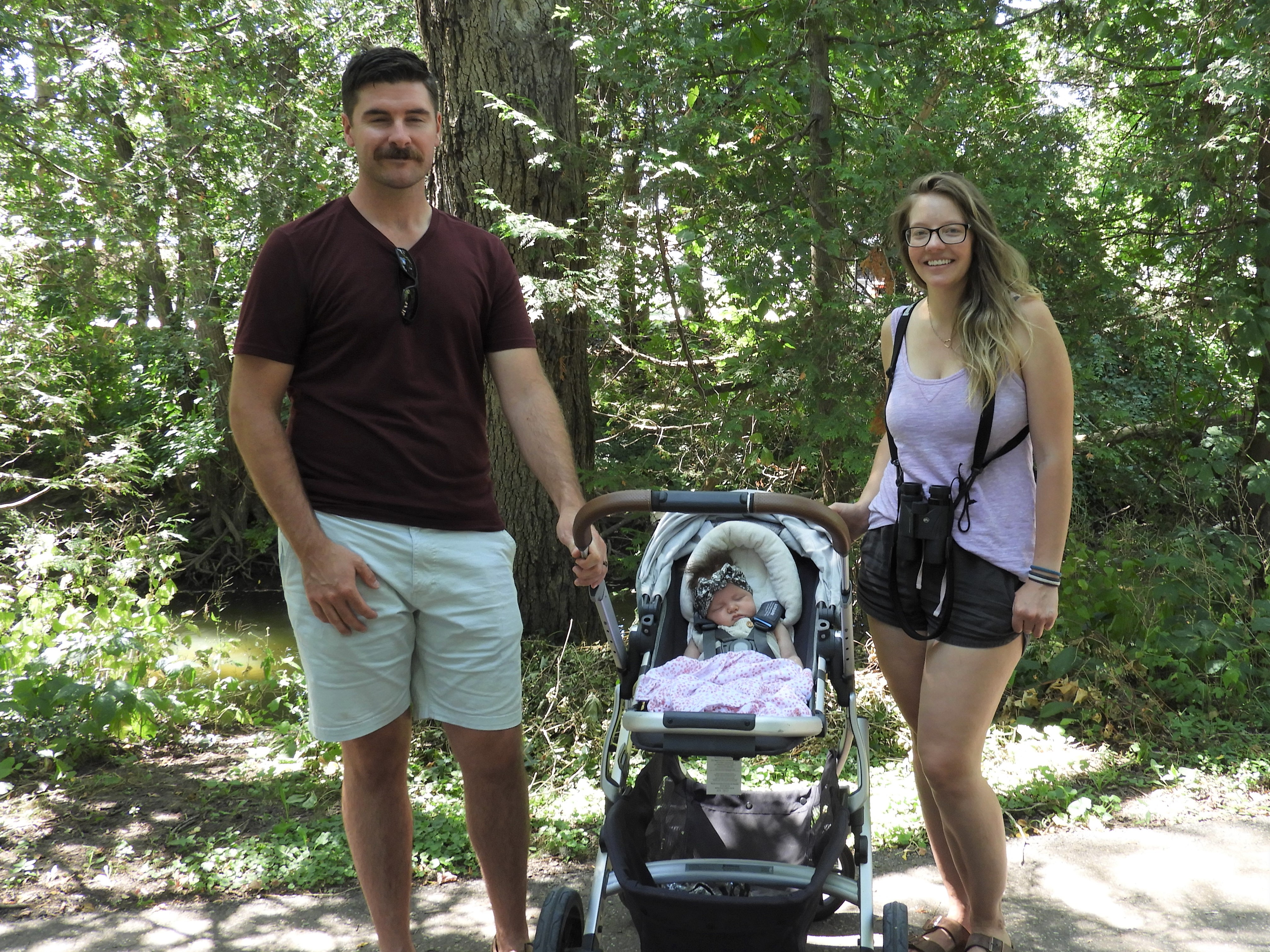
     We were joined on our walk this week by Shane, Lily's daddy, having recently shaved his beard and looking like an erstwhile Tom Selleck! 

     I am utterly convinced that as we continue these nature walks with Lily she will start to absorb the smells, sights and sounds around her, and that her character will be formed in part by these early encounters with nature.

     A girl has to have a sleep now and then.

     So that she can wake up lively and ready to look around.

     And what is life all about if you can't blow bubbles?


     On other fronts, we have a robust population of juvenile Barn Swallows (Hirundo rustica) at SpruceHaven. Many of them are content to perch on a wire and wait for devoted parents to zoom by, stuffing food in their mouths on the way past.

     I mentioned in an earlier post that Northern Flickers (Colaptes auratus) appear to have had a successful breeding season, and this recently independent bird was seen at Forwell Park.


     We pass through a tunnel on our way from Forwell Park to Hillside Park, and it is unfortunate that some of our less enlightened citizens cannot resist defacing the walls with their graffiti. Wouldn't it be wonderful if one of them could, even once, come up with something creative?

      The view above is looking back and I have spared you the pathetic nature of their crude daubing. You will be happy to know, however, that they can spell at least one word correctly, and it has four letters.

     If this American Crow (Corvus brachrynchos) perched high above considered himself superior he was right.

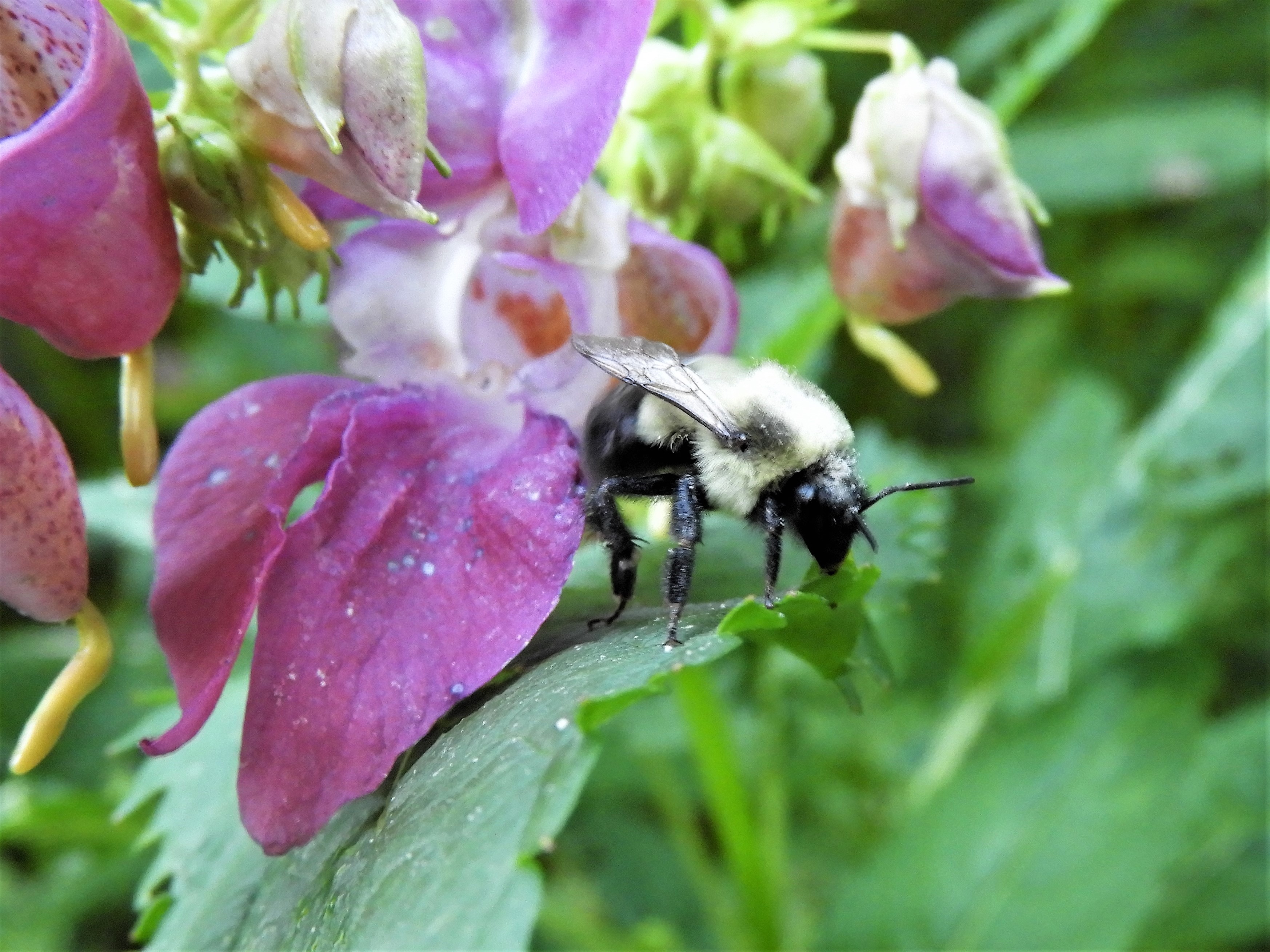
     If I am not mistaken, this insect is a Common Eastern Bumblebee (Bombus impatiens) and it was fascinating to watch as it got right into the corolla of the flower on which it was feeding.

     On a visit to SpruceHaven with the Morgans, Alan took these two wonderful shots.

Green Heron (Butorides virescens)

Clouded Sulphur (Colias philodice) on coneflower

     We had arranged to meet Andrew and Lorraine Wesolowski at RiverSong to tour around and stay for lunch, and just as we arrived a White-tailed Deer (Odocoileus virginianus) ambled slowly across the river.


     It was a wonderful welcome to a beautiful spot.


     Several Midland Painted Turtles (Chrysemys picta marginata) were basking in the warm sun.


     Sometimes you have to make room for a friend.


     Lorraine is an accomplished photographer and managed this superb shot of an Osprey (Pandion haliaeetus) flying along the Conestogo River.


     A Spotted Sandpiper (Actitis macularius) was perched a little out of range for a really good picture, but I think that what Lorraine achieved is delightful.


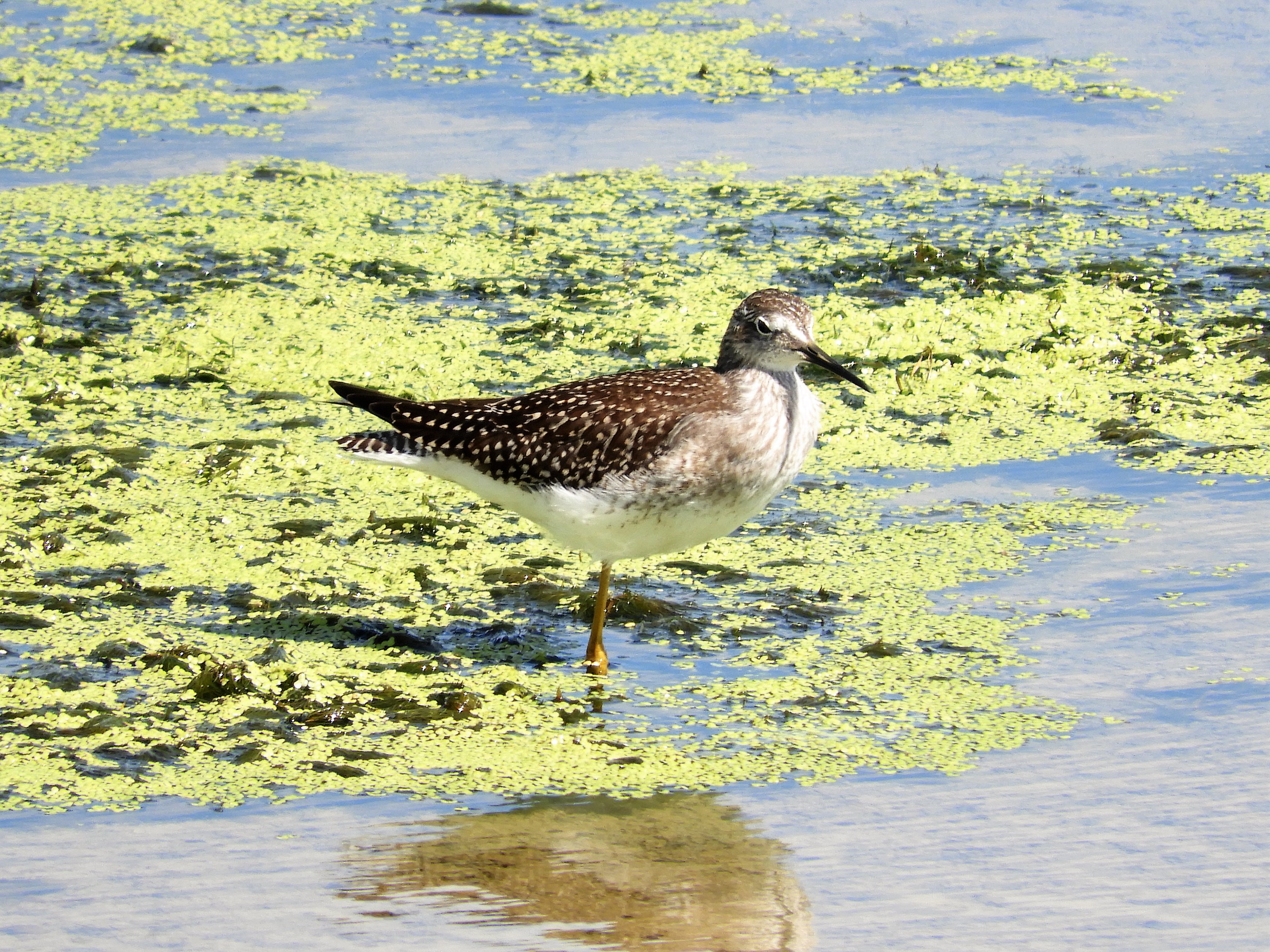
     Miriam and I made our first visit to the sewage ponds at Milverton, where Lesser Yellowlegs (Tringa flavipes) was far and away the most common species.


     For those not  familiar with the esoteric niceties of birding, sewage farms are highly prized habitat for waterfowl, shorebirds, herons, egrets and others, and by default therefore, equally cherished locations for birders. Eau de sewage is a powerful attractant, verging on pheromone for a dedicated birder!
     The highlight of this visit was to locate a Long-billed Dowitcher (Limnodromus scolopaceus), quite rare in these parts.

     Killdeer (Charadrius vociferus) were present, but not in the numbers one would normally expect at this time of the year.

     Many young Red-winged Blackbirds (Agelaius phoeniceus) were enjoying (or not) their first flush of freedom from the nest.

     Eastern Kingbirds (Tyrannus tyrannus) were no less common.

     As you can see, COVID-19 has not really slowed us down one bit!   


Land Acknowledgement

We acknowledge that the land on which we are situated are the lands traditionally used by the Haudenosaunee, Anishinaabe, and Neutral People. We also acknowledge the enduring presence and deep traditional knowledge, laws, and philosophies of the Indigenous Peoples with whom we share this land today. We are all treaty people with a responsibility to honour all our relations.

Followers