Showing posts with label Lorraine Wesolowski. Show all posts

Sunday, August 16, 2020

Marg, Lily and Other Stuff

     In life one has friends and acquaintances, people who pass through with more or less impact, sometimes hardly at all, and then one is fortunate to have to have true, true friends, who can be counted on, who entertain, who delight, to whom one is irresistibly drawn.

     Margaret Lewis-Macdonald is such a person.

     She recently celebrated her eightieth birthday, and such an auspicious event could not be allowed to pass without celebration, even under the dire circumstances imposed by COVID-19. 


     The whole event was organized outside by her stalwart husband, Graham, and went off without a hitch. 

     As you may note, Marg took it all very seriously.

     She had insisted that she wanted no sappy cards and that all greetings should be humorous or naughty! That describes Marg down to a tee!

     As it happened, other friends had birthdays at the same time, so it was a joint celebration for three birthday beauties.

Marg Wendland (80), Marg Macdonald (80), Lynda Buck (75)

     What a pleasure it was to celebrate with these  gorgeous ladies. Good friends, good food, good wine - what more could one ask for?

     Well, you could ask for Lily too!


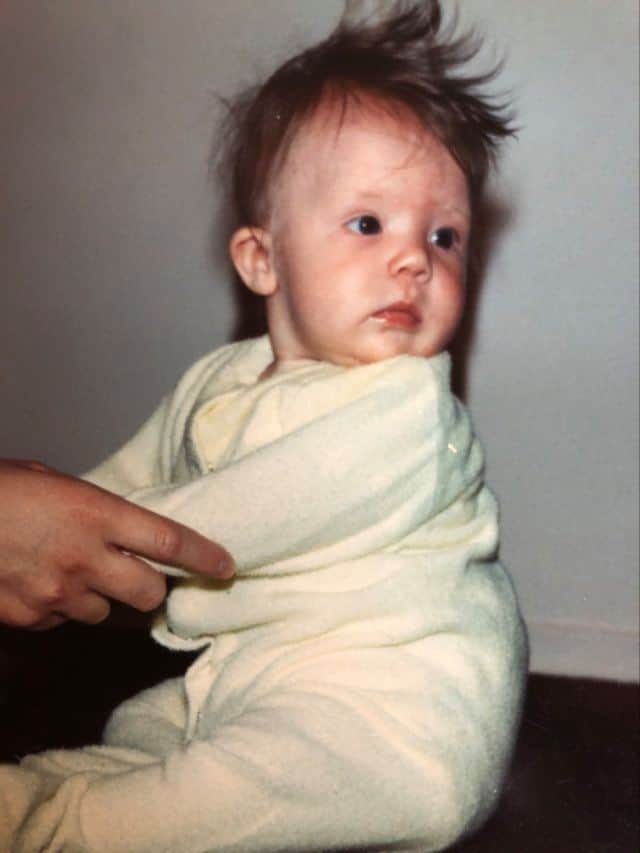
     Before going any further, permit me to show you a couple of pictures of Heather as a baby, and note the stunning resemblance to Lily. It could be the same person! Down to the hair almost!

     We were joined on our walk this week by Shane, Lily's daddy, having recently shaved his beard and looking like an erstwhile Tom Selleck! 
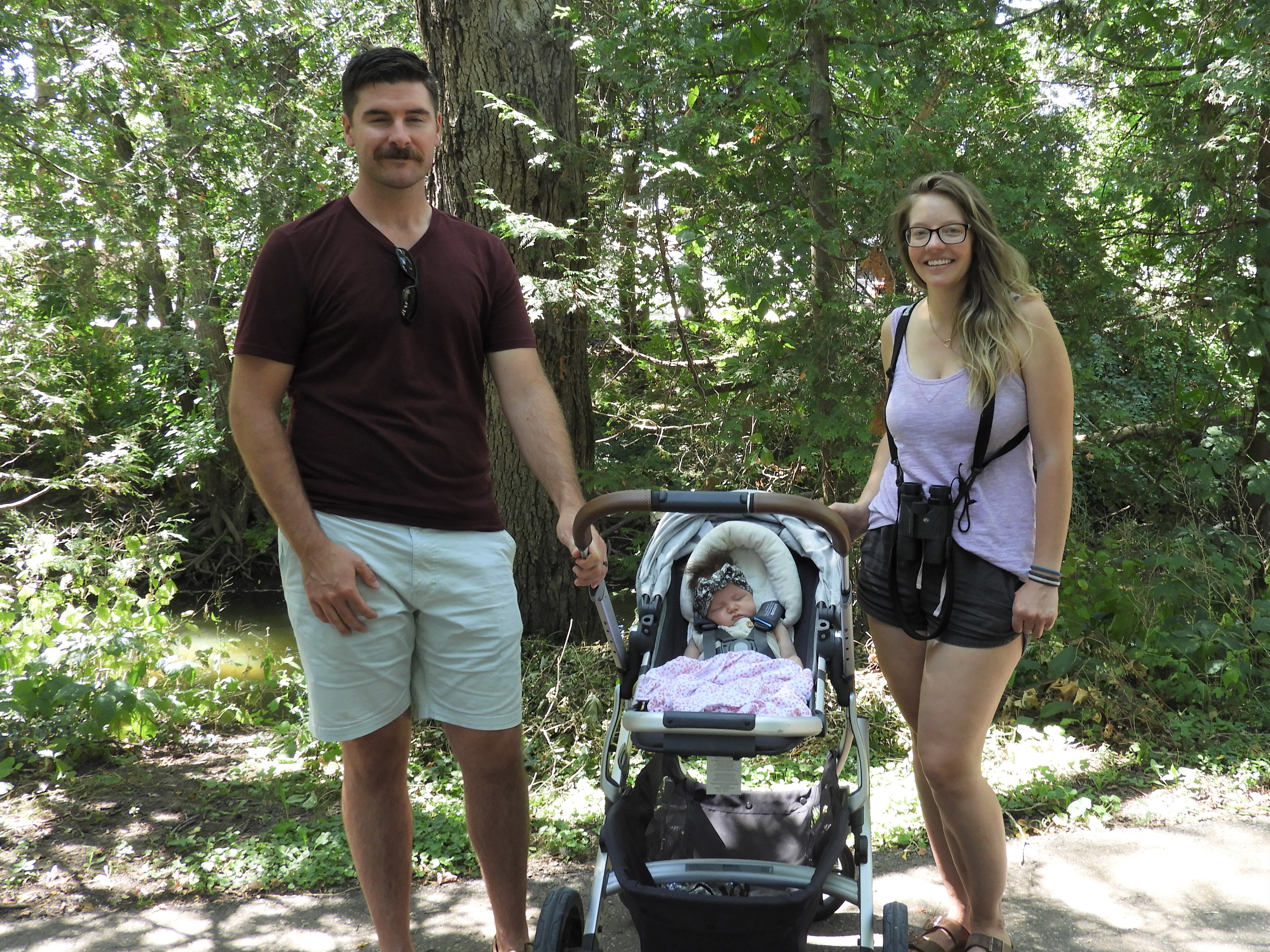
     I am utterly convinced that as we continue these nature walks with Lily she will start to absorb the smells, sights and sounds around her, and that her character will be formed in part by these early encounters with nature.

     A girl has to have a sleep now and then.

     So that she can wake up lively and ready to look around.

     And what is life all about if you can't blow bubbles?


     On other fronts, we have a robust population of juvenile Barn Swallows (Hirundo rustica) at SpruceHaven. Many of them are content to perch on a wire and wait for devoted parents to zoom by, stuffing food in their mouths on the way past.

     I mentioned in an earlier post that Northern Flickers (Colaptes auratus) appear to have had a successful breeding season, and this recently independent bird was seen at Forwell Park.


     We pass through a tunnel on our way from Forwell Park to Hillside Park, and it is unfortunate that some of our less enlightened citizens cannot resist defacing the walls with their graffiti. Wouldn't it be wonderful if one of them could, even once, come up with something creative?

      The view above is looking back and I have spared you the pathetic nature of their crude daubing. You will be happy to know, however, that they can spell at least one word correctly, and it has four letters.

     If this American Crow (Corvus brachrynchos) perched high above considered himself superior he was right.

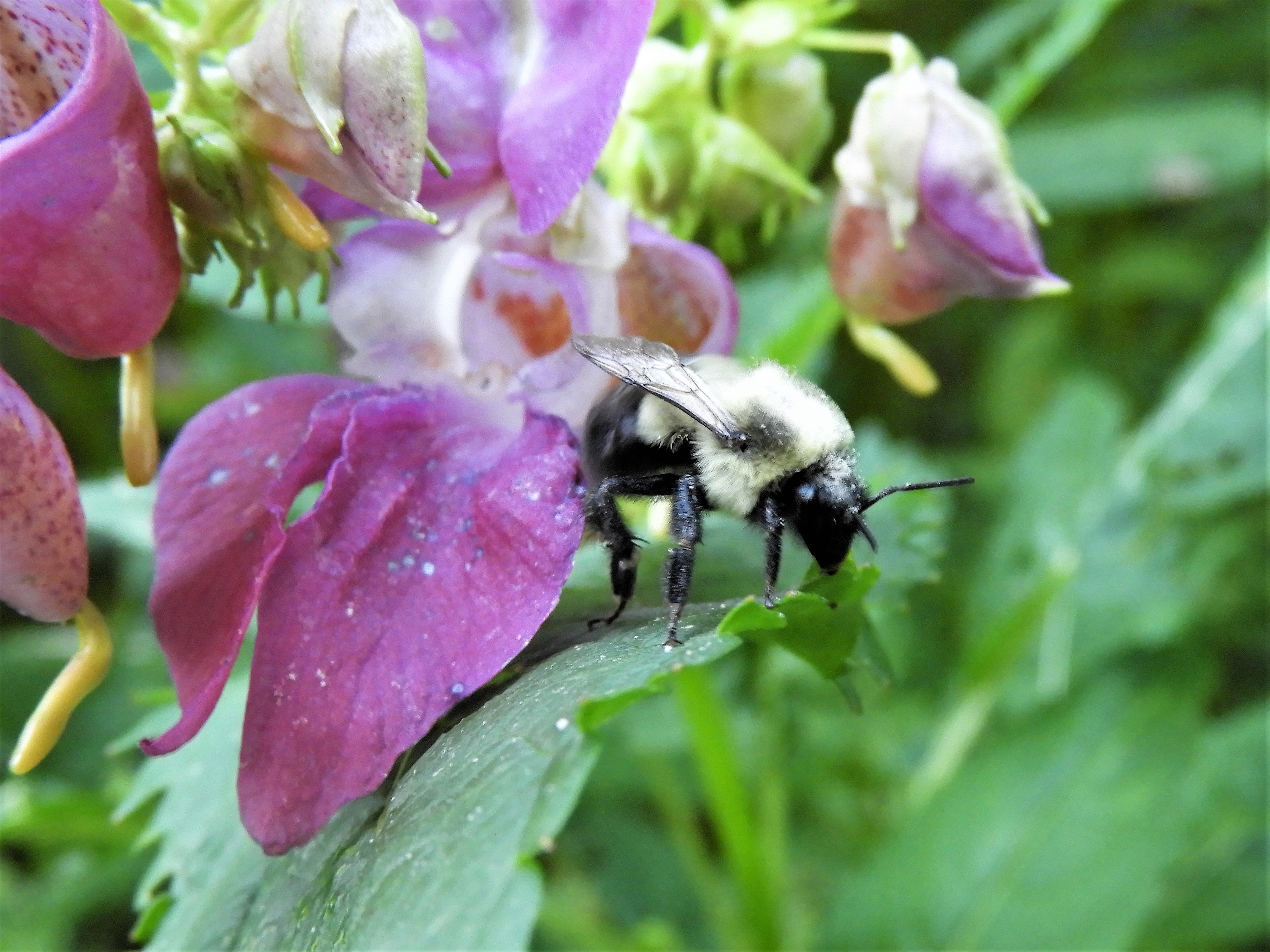
     If I am not mistaken, this insect is a Common Eastern Bumblebee (Bombus impatiens) and it was fascinating to watch as it got right into the corolla of the flower on which it was feeding.
     On a visit to SpruceHaven with the Morgans, Alan took these two wonderful shots.

Green Heron (Butorides virescens)

Clouded Sulphur (Colias philodice) on coneflower

     We had arranged to meet Andrew and Lorraine Wesolowski at RiverSong to tour around and stay for lunch, and just as we arrived a White-tailed Deer (Odocoileus virginianus) ambled slowly across the river.


     It was a wonderful welcome to a beautiful spot.


     Several Midland Painted Turtles (Chrysemys picta marginata) were basking in the warm sun.


     Sometimes you have to make room for a friend.


     Lorraine is an accomplished photographer and managed this superb shot of an Osprey (Pandion haliaeetus) flying along the Conestogo River.


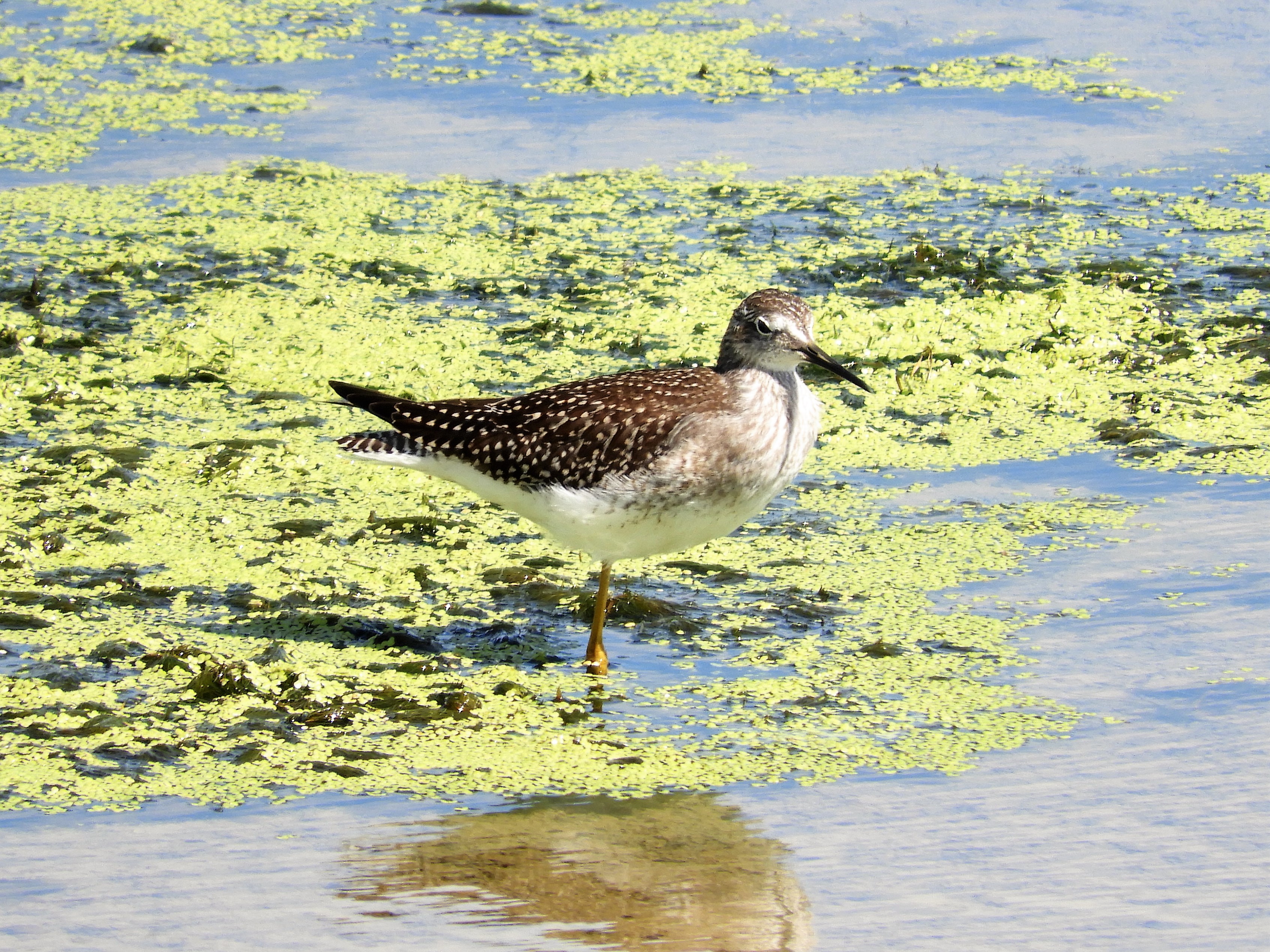
     A Spotted Sandpiper (Actitis macularius) was perched a little out of range for a really good picture, but I think that what Lorraine achieved is delightful.


     Miriam and I made our first visit to the sewage ponds at Milverton, where Lesser Yellowlegs (Tringa flavipes) was far and away the most common species.


     For those not  familiar with the esoteric niceties of birding, sewage farms are highly prized habitat for waterfowl, shorebirds, herons, egrets and others, and by default therefore, equally cherished locations for birders. Eau de sewage is a powerful attractant, verging on pheromone for a dedicated birder!
     The highlight of this visit was to locate a Long-billed Dowitcher (Limnodromus scolopaceus), quite rare in these parts.

     Killdeer (Charadrius vociferus) were present, but not in the numbers one would normally expect at this time of the year.

     Many young Red-winged Blackbirds (Agelaius phoeniceus) were enjoying (or not) their first flush of freedom from the nest.

     Eastern Kingbirds (Tyrannus tyrannus) were no less common.

     As you can see, COVID-19 has not really slowed us down one bit!   


Saturday, August 10, 2019

Radio Tagging Barn Swallows at SpruceHaven

09 August 2019

The goals of science may be noble, but there's no avoiding the fact that the practice of field biology can be terribly impolite to its subjects.
Thor Hansen

     It was with a good deal of pleasure that several interested biologists and others gathered to observe our annual radio tagging of Barn Swallows (Hirundo rustica) at SpruceHaven. 
     This year we were fortunate to be joined by several of Dave and Sandy's cousins from various parts of the continent, and by my daughter, Caroline, visiting from Ottawa.
     As is our normal practice we strung a mist net in the barn, and in no time at all we had trapped our first birds.


     We were delighted to enjoy the company of Julia Shonfield, who was a great help in retrieving birds from the net.


     Perhaps it is accurate to say that Sandy was left holding the bag!


     We received exceptional help this year from Megan Hiebert from Bird Studies Canada, who did the lion's share of the work in processing the birds.


       She was at once proficient, quick and extremely adept at attaching the equipment to the birds. Furthermore she was as agreeable and pleasant as one might wish for. I certainly hope that Megan will consider SpruceHaven a haven indeed and visit us often. I cannot overstate her contribution to a successful day.
     

     The tags are always checked to make sure they are functional before attaching them to a bird.


     Greg Mitchell, the scientist from Environment Canada who spearheads this  research programme, was as always, a consummate professional, always concerned for the welfare of the birds and working with precision, care and delicacy.


     If only these birds could know the contribution they will make to the ongoing survival of their species they would surely endure their indignity a little more willingly. 


     There was not a person present, from veteran swallow biologist or bander, to those seeing the bird up close for the first time, who was not taken by the beauty of the bird.


     Dave was attentive as Megan explained some of the finer points of her actions to him.


     Technology advances apace and improvements in the life of the tracking devices and their miniaturization are a constant. Megan introduced us to a new device called a Life Tag, which is permanently attached to the bird, and has its own solar panel to generate energy. It requires two sets of hands to attach this one.


     Would you say that Megan, Lorraine and Heather look pleased with the morning's activity?


     Caroline was anxious to observe and absorb as much as possible and stuck close to Greg to benefit from his expertise.


     Except when she was with Lorraine, that is!


     Lee Fraser was happy to release a bird and seems to be a supplicant to favourable winds and good foraging to speed the birds on their way to their winter quarters in South America.


     As always, it was a very agreeable day, in many respects the culmination of our year's work with the swallows and we appreciate the contribution that everyone made to its success.
     We will look forward to receiving news of our swallows as they embark on their hazardous journey, and hope that we will welcome them back again next spring.

Land Acknowledgement

We acknowledge that the land on which we are situated are the lands traditionally used by the Haudenosaunee, Anishinaabe, and Neutral People. We also acknowledge the enduring presence and deep traditional knowledge, laws, and philosophies of the Indigenous Peoples with whom we share this land today. We are all treaty people with a responsibility to honour all our relations.

Followers