Showing posts with label Cedar Waxwing. Show all posts

Sunday, October 17, 2021

The Mill Race Trail with Staunch Naturalists of Waterloo Region Nature

      Slowly, but equally surely (at least for now) the restrictions on assembly made necessary by COVID-19 are being relaxed.
     With great elation I have welcomed the opportunity to lead outings for our nature club again, starting a recent series with a visit to the Mill Race Trail in St. Jacobs. More field trips will follow right through until the end of the year, and I will be sure to report on them all.

13 October 2021

Leader: David M. Gascoigne

Participants: Miriam Bauman (effectively a co-leader), Karl Malhotra, Pauline Richards, Andrew Wesolowski, Adrienne Zoe

     Three others who had signed up for the walk were sidelined by medical issues of one kind or another
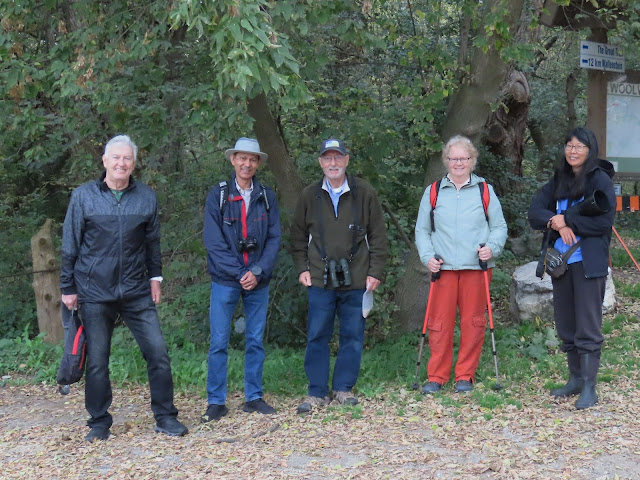
Andrew, Karl, David, Pauline, Adrienne

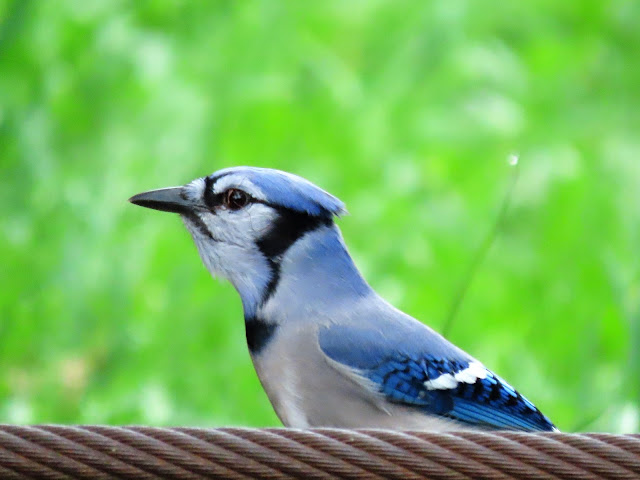
     A friendly Blue Jay (Cyanocitta cristata) came to bid us "Good Morning" before we even set foot on the trail.

     The Mill Race Trail is beautiful at any time of year, but in the fall, bedecked with leaves, it is perhaps at its most charming.
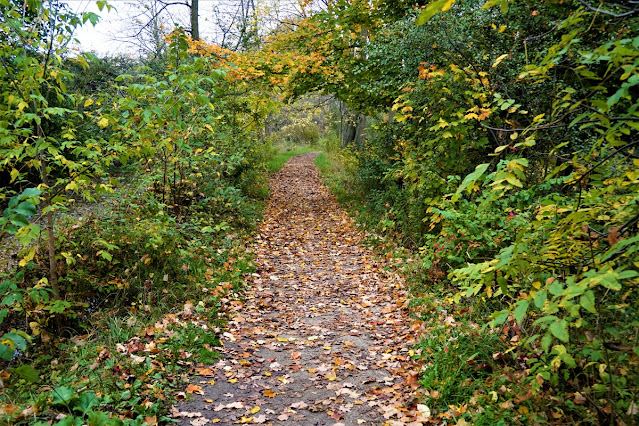
Photo courtesy of Andrew Wesolowski

      Pannicled Asters (Symphyotrichum lanceolatum) continue to delight a curious naturalist right into October.
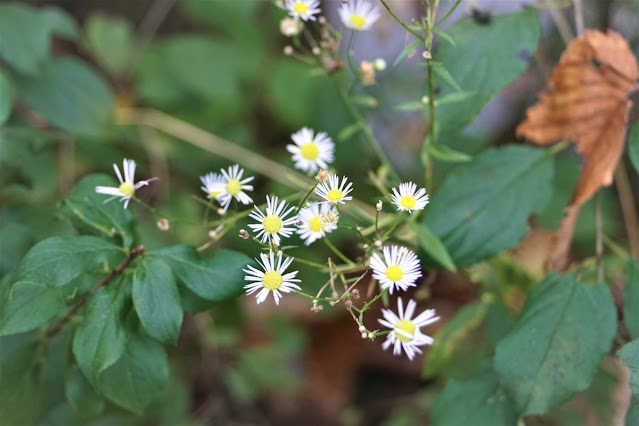
Photo courtesy of Andrew Wesolowski

     On a typical outing the participants have a wide range of skill levels and for some the opportunity to see a White-breasted Nuthatch (Sitta carolinensis) at arm's length is a singular pleasure.


     I can tell you that the pleasure does not diminish with familiarity!
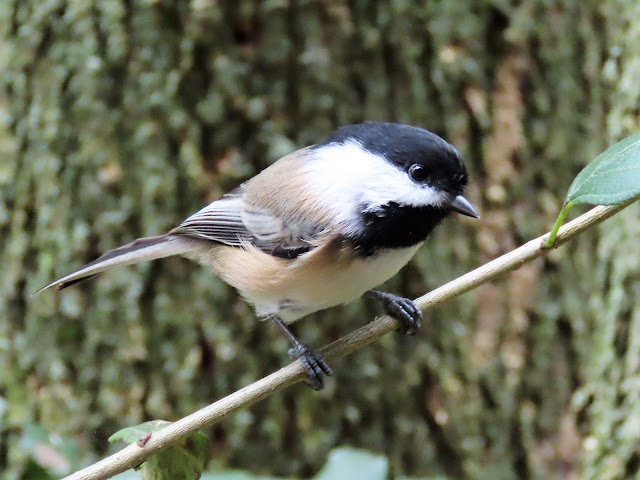
     If anything is as certain as death, taxes and conniving politicians, it is that Black-capped Chickadees (Poecile atricapillus) will come to secure their just reward almost from the moment when you first enter their realm.

Photo courtesy of Andrew Wesolowski

     They repay you with joy at every step along the way.
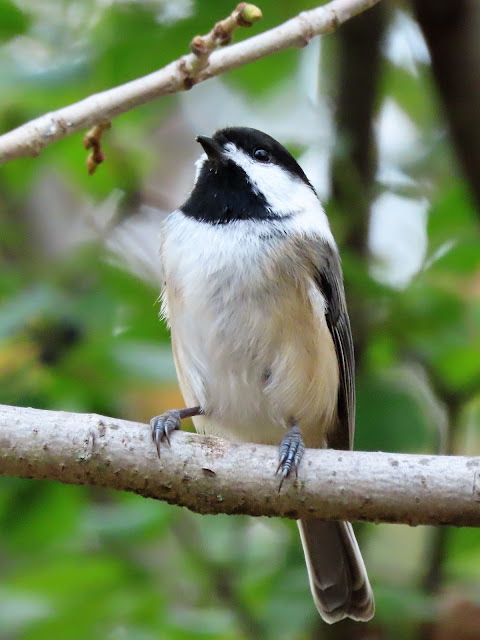


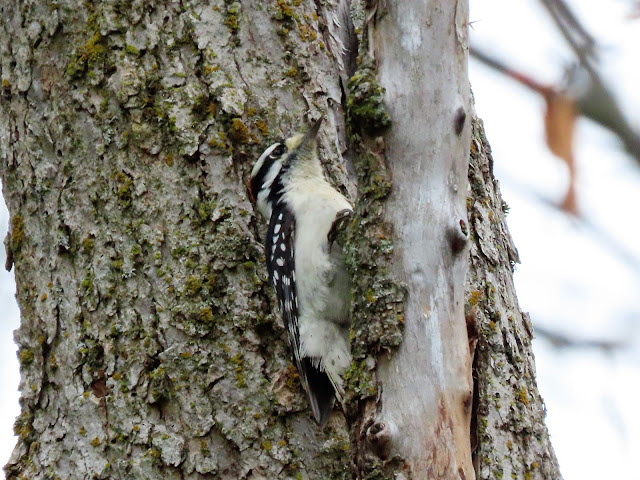
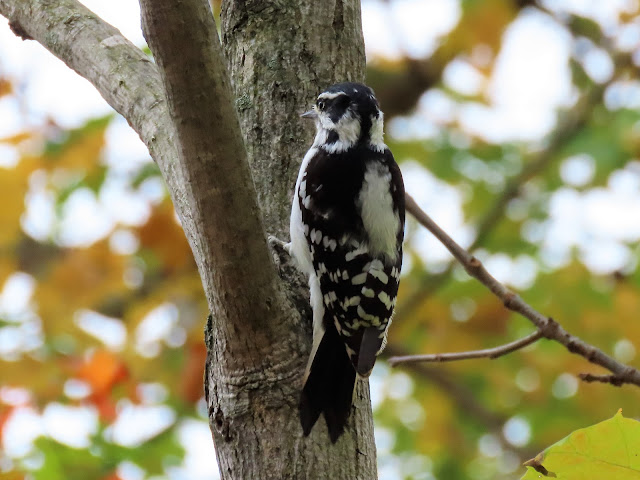
     It would be an odd day when chickadees and nuthatches were not spotted along the Mill Race, and the third "reliable" would be Downy Woodpecker (Dryobates pubescens).

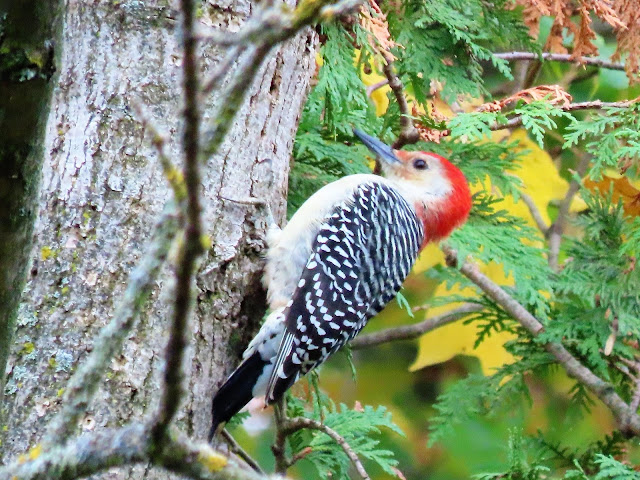
     In recent years Red-bellied Woodpecker (Melanerpes carolinensis) has become almost as predictable as a downy.

     I am quite sure that we notice this tree on every visit to the Mill Race, wondering when the next fierce wind will bring it down.
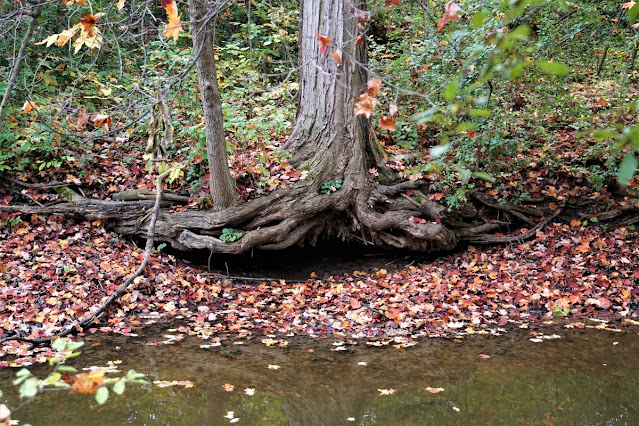
Photo courtesy of Andrew Wesolowski

     I think we have been looking at it for at least ten years, however, so it is perhaps better anchored than it appears. The winds of November will soon be shrieking, however.....
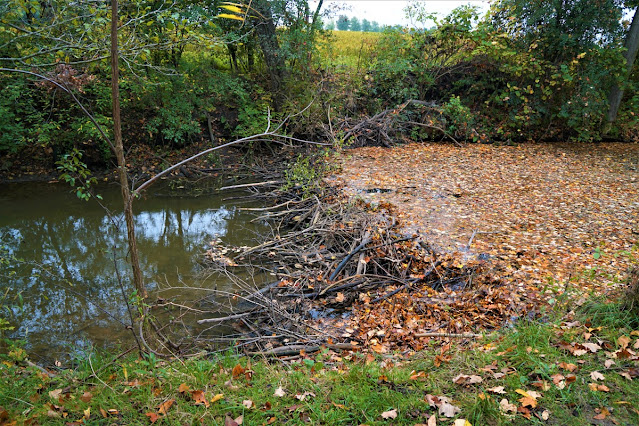
     How charming the surface of the water looks with a covering of autumn leaves.


     American Beavers (Castor canadensis) have been busy and the water is backed up behind their dam.
Photograph courtesy of Andrew Wesolowski

      There were lots of Cedar Waxwings (Bombycilla cedrorum) busy flycatching from the treetops.


     October weather has been unseasonably warm and there was no shortage of flying insects.
     Ripe Japanese Barberries (Berberis thunbergii) would normally beckon them, but today they seemed indifferent to the fruit shining brightly in the foliage.
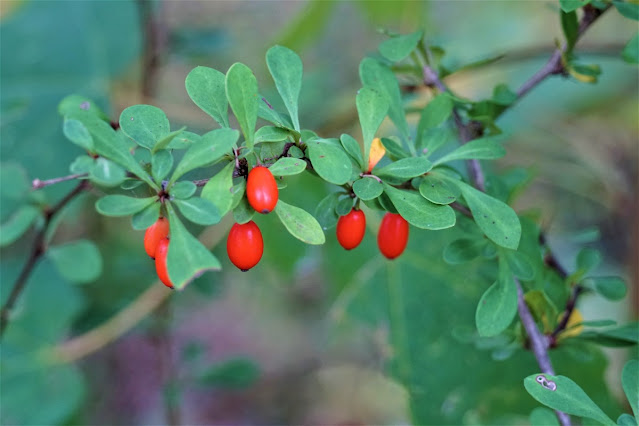
Photo courtesy of Andrew Wesolowski

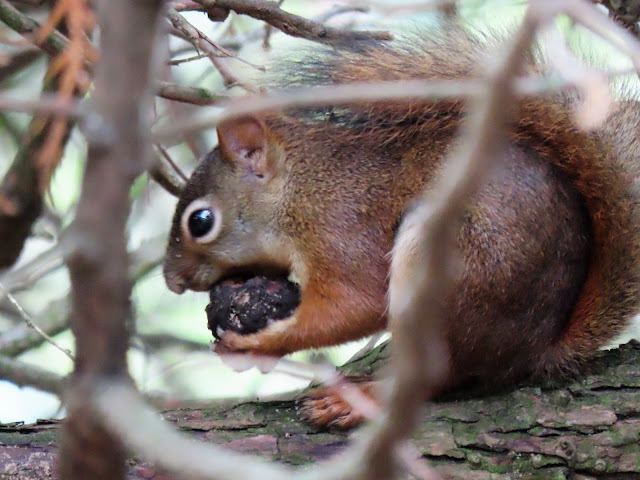
     An American Red Squirrel (Tamiasciurus hudsonius) was making inroads into a Black Walnut (Juglans nigra).

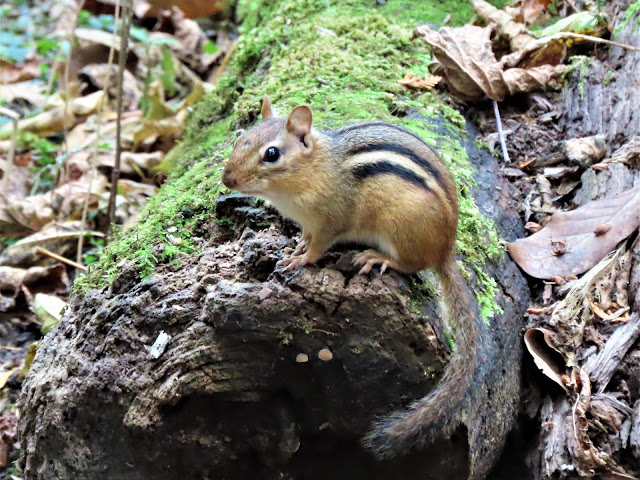
     Eastern Chipmunks (Tamias striatus), the darlings of the rodent world, were scurrying everywhere, busily gathering winter storage, and chattering to every human interloper who passed by.

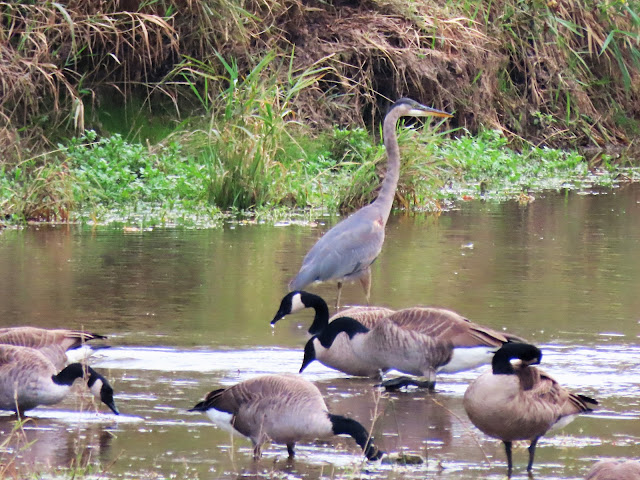
     Canada Geese (Branta canadensis) and a Great Blue Heron (Ardea herodias) were content to share the resources of the Conestogo River, both probing for their food of choice, without competition.

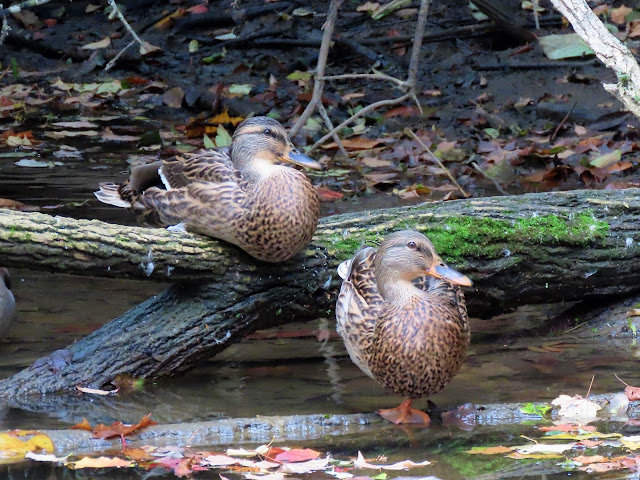
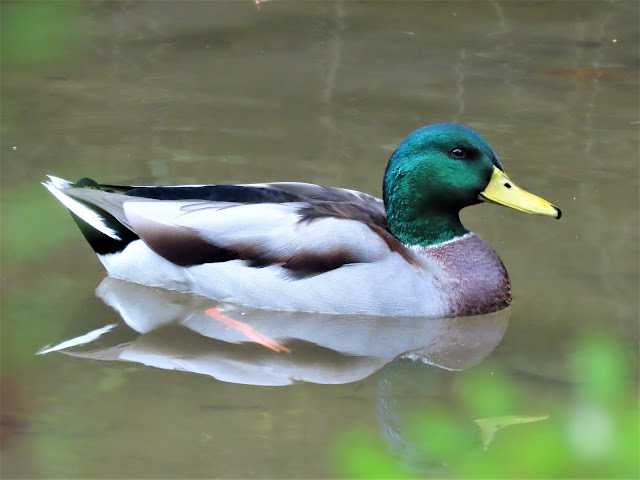
     There is little quite as peaceful as Mallards (Anas paltyrynchos) outside the frenzy of spring courtship, a time when raging hormones dictate aggressive behaviour. Fall is the time of easy living and relaxation and togetherness is the order of the day.

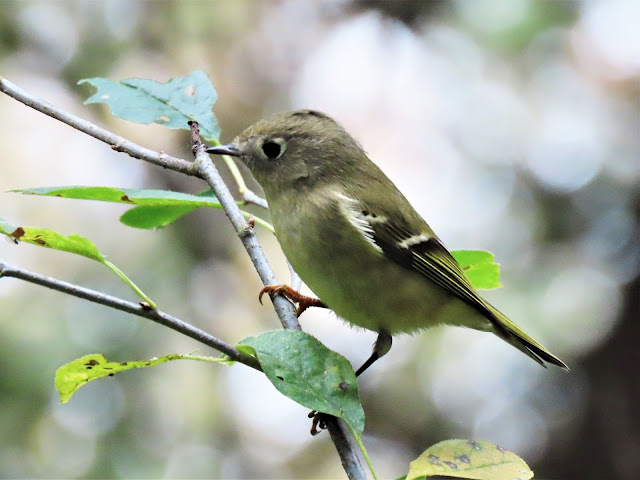
     The presence of several Ruby-crowned Kinglets (Regulus calendula) was highlighted by one especially cooperative individual who, contrary to all kinglet protocols, permitted portraits to be taken!

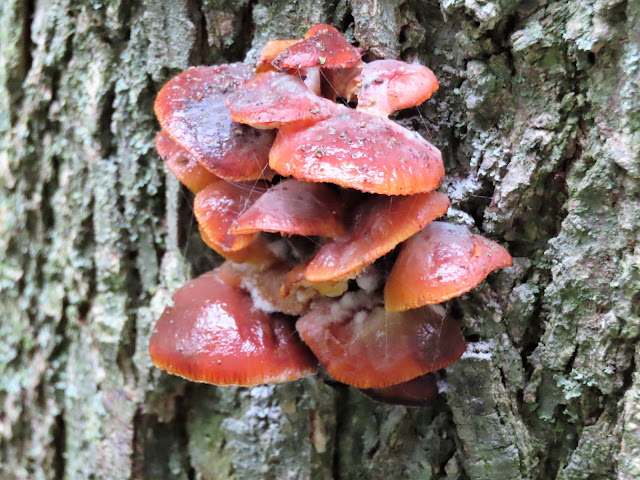
     Fungi, as a general rule, do not attract a great deal of attention, but on this walk several discussions were held as we observed different types, so it was fitting that our outing ended with a fine stand of Velvet Foot (Tapinella atrotomentosa).

     Thank you Karl, Pauline, Andrew and Adrienne. What engaging companions you were on a balmy October morning. 
     Let's do it again!

16 October 2021

Would have been participants: Christine Alexander, Miriam Bauman, Dog Brunton, Victoria Ho, Jennifer Leat, Geoff Moore, Tracey Rainer, Colleen Reilly, Zach Stevens, Roger Suffling, Selwyn Tomkun

Guests: Meghan Singaraja with her son, Gabe.

     My plan is to run the entire series of walks mid week, with a repeat on the weekend for those who work.
     Unfortunately, rain dashed our plans and we had to cancel this outing. 
     Some things we can control - the weather is not one of them.  


Wednesday, June 23, 2021

Nature's Riches

      The integrated beauty of nature never escapes our attention, but at this time of the year when most birds are preoccupied with breeding, and are silent and secretive, we find ourselves drawn to other taxa more frequently.

15 June 2021
Laurel Creek Conservation Area, Waterloo, ON

     Wild Turkey (Meleagris gallopavo) is one species that has done spectacularly well in recent years and can be found quite easily. It is not averse to making itself at home in the suburbs where food spilled from bird feeders is readily available.
     Four were on the road as we drove into Laurel Creek, and they scooted off into the undergrowth.


     According to Butterflies of Ontario, Peter W. Hall, Colin D. Jones, Antonia Guidotti and Brad Hubley, a ROM Science Publication (2014), the period of peak abundance for Northern Crescent (Phyciodes cocyta) is June and July, and based on their sheer numbers at present, I think we could vouch for that!


     A Northern Crescent would provide a tasty snack for an Eastern Kingbird (Tyrannus tyrannus) but this individual seemed content to rest, perhaps already digesting a large meal.


     At times I have witnessed a kingbird catch an enormous bumblebee and after battering it ferociously against a branch for several minutes, gulp it down.


       Any passing insect is fair game for this efficient flycatcher.
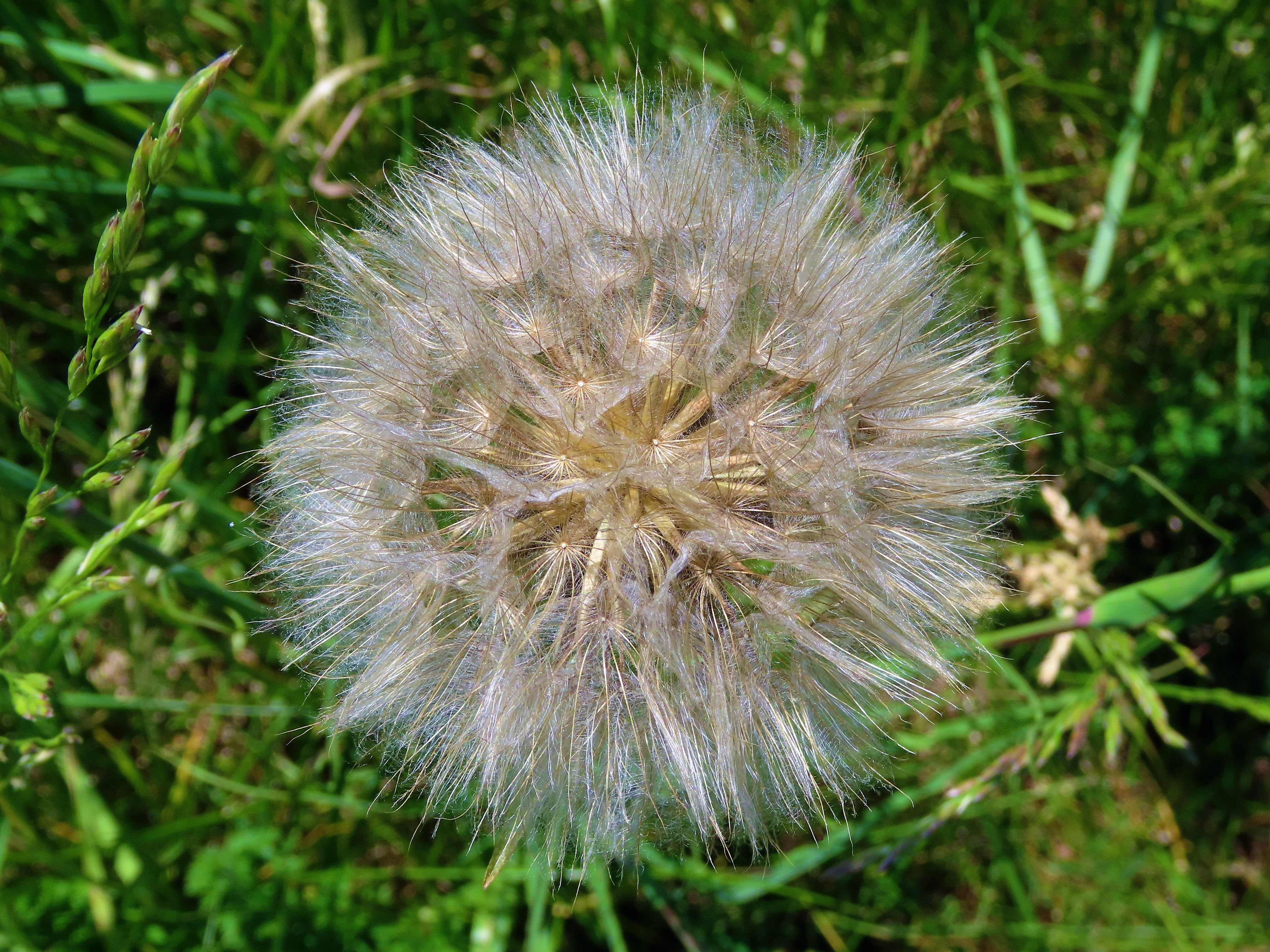
      I confess to not having known the identity of the plant that follows, but a little research reveals it to be Meadow Salsify (Tragopogon porrifolius).


     The plant was interesting enough but the achene was especially attractive, I thought.


     Common St. John's Wort (Hypericum perforatum) is widely distributed throughout our region.


     As you may see this plant is host to what appears to be a small Carpenter Bee, probably Xylocopa virginica, and St. John's Wort Beetle (Agrilus hyperici), better seen in the picture below.


      The beetle is destructive to the plant which rarely survives an attack such as this.
     Rough-fruited Cinquefoil (Potentilla recta) is native to Eurasia, but has been introduced to North America and is now widespread across the continent.


     Turtles have been busy in recent weeks laying their eggs in suitable soil. Many are detected by raccoons, skunks and other animals and one often comes across evidence of a set of eggs that will not make it to hatching.


     Canada Anemone (Anemone canadensis) is a wonderful component of our landscape, dancing in the wind and bringing joy to all who see it.


     Ox-eye Daisy (Leucanthemum vulgare) has been widely co-opted as a garden plant, and is familiar to many.


     Bedstraw (Genus Galium) is so named because the early settlers dried the plant and used it to stuff mattresses. I am not quite sure of the species in the image below.


     Perhaps G. boreale, I am just not sure. 

15 June 2021
RIM Park, Waterloo, ON

     We were advised that a Yellow-breasted Chat (Icteria virens) had been sighted at RIM Park, well out of its normal range, and never having seen this species in Ontario, decided to try our luck at finding it.
Normally, we don't chase after rarities but when one is so local it seems a pity not to rise to the challenge.
     In fact, we did see the bird, clearly and unimpeded by vegetation, but it remained in position for mere seconds, and Miriam could barely get her camera cocked in time, let alone succeed in taking a picture.
     While searching, however, we noticed Tree Swallows (Tachycineta bicolor) going in and out of high tree cavities, an occurrence that is quite rare. Most holes in trees are expropriated by other species, especially aggressive Common Starlings (Sturnus vulgaris) and Tree Swallows are forced to resort to nest boxes.


     It was great to see a grand Box Elder (Acer negundo), a rugged native species that resists cold and hot spells, having adapted to our climate over millennia. How it will react to ever hotter summers remains to be seen. I hope it handles them better than I do!


     Leafy Spurge (Euphorbia esula) was growing throughout.


     I always find this such an interesting plant with its greenish, yellowish petals and unique structure.


     Cedar Waxwing (Bombycilla cedrorum) must surely rank as one of our most attractive birds, and we were delighted to find one sitting on a nest, deep in dense cover and impossible to photograph, however.


     There was a slight breeze, sufficient to ruffle feathers, and I think this individual was doing its best to emulate Lily's old hairstyle!


16 June 2021
RIM Park, Waterloo, ON

     In the relative cool of the early morning we decided to return to RIM Park to see if we could get picture of the Yellow-breasted Chat before it concluded it was in the wrong place and headed for home. Again we saw it, again no picture.
     But a Great Crested Flycatcher (Myiarchus crinitus) was perched nicely for us.


     A Ring-billed Gull (Larus delawarensis) surveyed its domain from a convenient rock in the Grand River.


     Two-spotted Grass Bug (Stenotus binotatus) is a beautiful little creature, but I know little of its lifestyle, not was I able to find much in the literature.


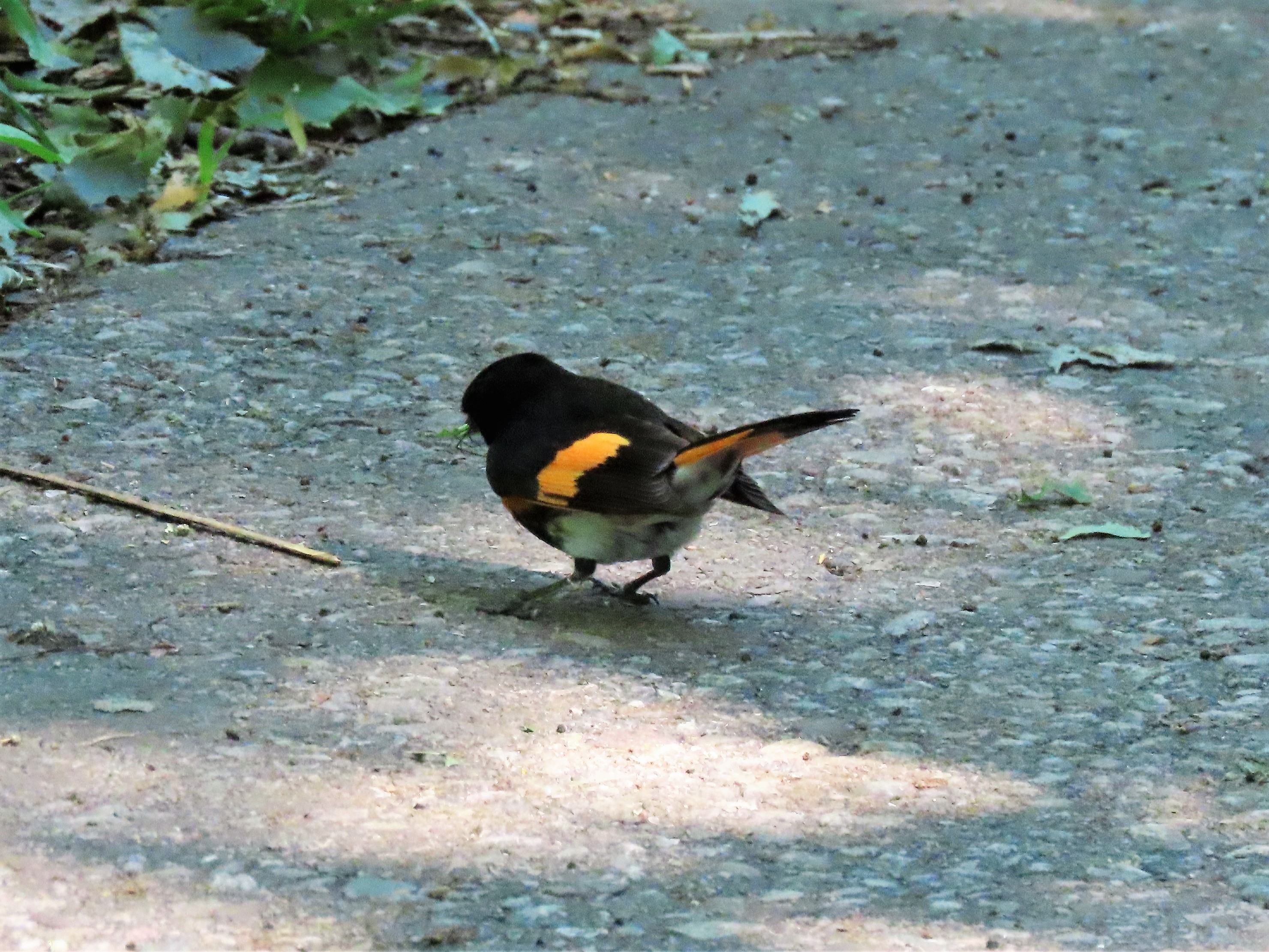
     American Redstart (Setophaga ruticilla) breeds locally and is generally not difficult to find.


     No doubt there are young to feed now and this male dropped down to pounce on a juicy green caterpillar.


     A Rose-breasted Grosbeak (Pheucticus ludovicianus) is always an impressive sight.


     Skippers (Family Hesperidae) are often difficult for the novice, easily confused with a day-flying moth.
European Skipper (Thymelicus lineola), known as Essex Skipper in the UK, can generally be found in grasses, rarely flying higher than a metre or two above them.


20 June 2021

Conservation Meadows Storm Water Management Area, Waterloo, ON

     Dotted here and there around the perimeter of the retention pond are dazzling arrays of Rose (Rosa rubiginosa).


     We are entering the period of odenate abundance, and Widow Skimmer (Libellula luctuosa) darted here and there, even deigning to land once in a while.


     My good friend, Richard Pegler, commented that he often finds it more difficult to get a picture of a female than a male, but in this instance, I could only succeed with females.


Killbear Storm Water Management Area, Waterloo, ON

     It is a constant source of amazement, and satisfaction too, that these ignominious little patches of wetland can be so productive, and a little puzzling that I have never encountered another naturalist at them.
     Common Whitetail (Plathemis lydia) males put on quite a show.


     I have no idea how many were active, but it certainly approached a hundred and possibly more.


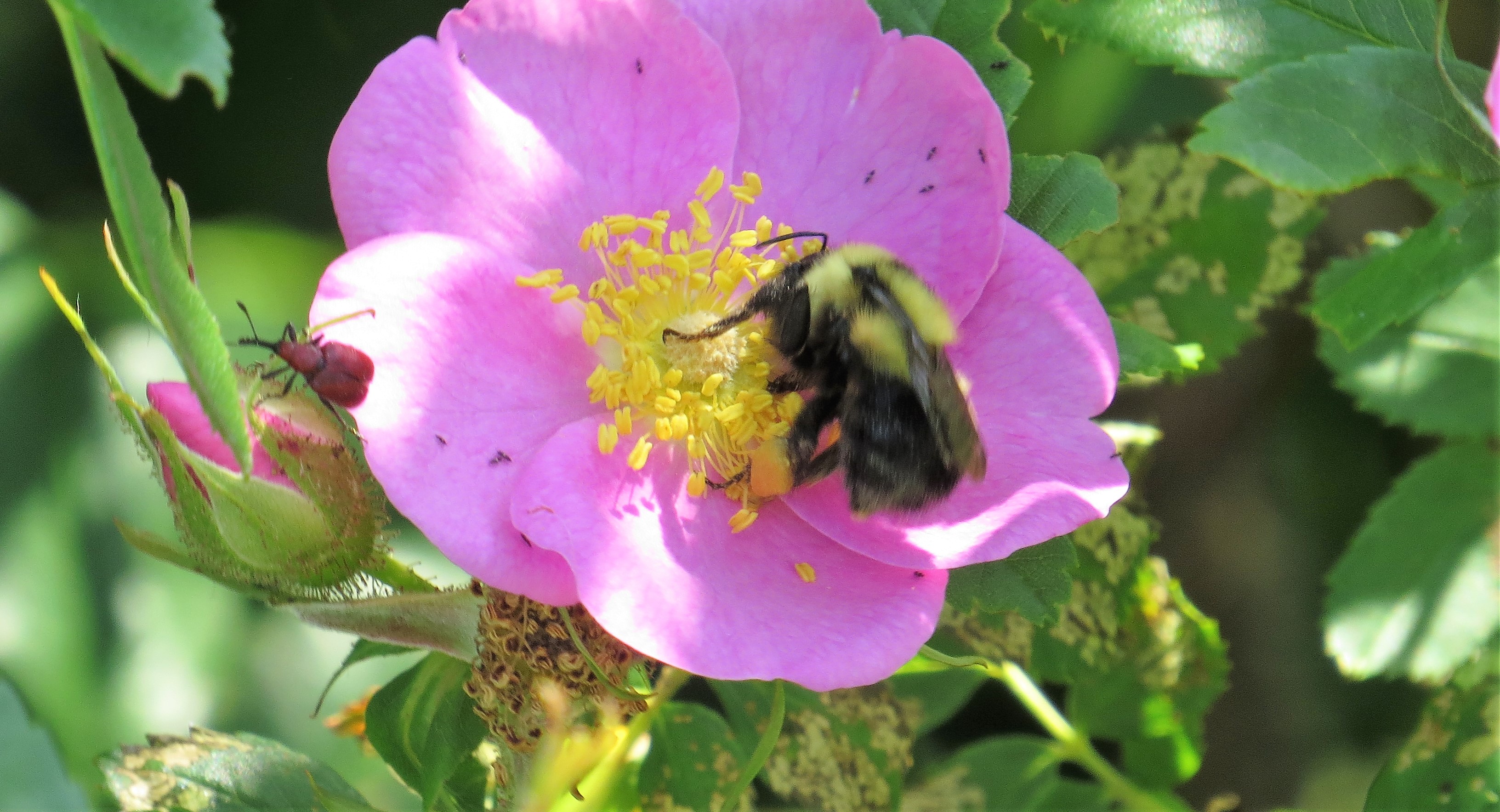
     I introduced you to Rose (sometimes referred to as Wild Rose) above and here is an interesting shot with a Two-spotted Bumblebee (Bombus bimaculatus) and a Rose Weevil (Rhynchites bicolor), one benefical to the plant, the other not.


     There were countless other small insects on the flowers, but their identification remains unresolved.


     Seeds of White Water-lily (Nymphaea odorata) have found their way into the pond, with pleasing results.


     Not only does it present a beautiful appearance, the lily pads are critical in moderating the temperature of the water, permitting other organisms to thrive. Small fish could be seen sheltering in the cool regions beneath the leaves, and as you may see in the picture below Northern Leopard Frogs (Lithobates pipiens) were content there too.


     Leopard frogs prefer to move at night, the inevitable result of which is that many are killed on roads and highways.
     Here is a Widow Skimmer.


     A Dot-tailed Whiteface (Leucorrhinia intacta) is an aptly named species.


     This species was not abundant at Killbear, nor was  Eastern Pondhawk (Erythemis simplicicollis); a female is shown below.


     Familiar Bluets (Enallagma civile) were actively engaged in ensuring the ongoing existence of the species.


     The dragonfly shown below is an Eastern Forktail (Ischnura verticalis) and I am not quite sure what is going on there. It's not a great picture, but the only one I have of this species.


     Next time I will try to coax Miriam into going with me. Two sets of eyes and two cameras might do a whole lot better!

Land Acknowledgement

We acknowledge that the land on which we are situated are the lands traditionally used by the Haudenosaunee, Anishinaabe, and Neutral People. We also acknowledge the enduring presence and deep traditional knowledge, laws, and philosophies of the Indigenous Peoples with whom we share this land today. We are all treaty people with a responsibility to honour all our relations.

Followers