The integrated beauty of nature never escapes our attention, but at this time of the year when most birds are preoccupied with breeding, and are silent and secretive, we find ourselves drawn to other taxa more frequently.
15 June 2021
Laurel Creek Conservation Area, Waterloo, ON
Wild Turkey (Meleagris gallopavo) is one species that has done spectacularly well in recent years and can be found quite easily. It is not averse to making itself at home in the suburbs where food spilled from bird feeders is readily available.
Four were on the road as we drove into Laurel Creek, and they scooted off into the undergrowth.

According to Butterflies of Ontario, Peter W. Hall, Colin D. Jones, Antonia Guidotti and Brad Hubley, a ROM Science Publication (2014), the period of peak abundance for Northern Crescent (Phyciodes cocyta) is June and July, and based on their sheer numbers at present, I think we could vouch for that!


A Northern Crescent would provide a tasty snack for an Eastern Kingbird (Tyrannus tyrannus) but this individual seemed content to rest, perhaps already digesting a large meal.


Any passing insect is fair game for this efficient flycatcher.
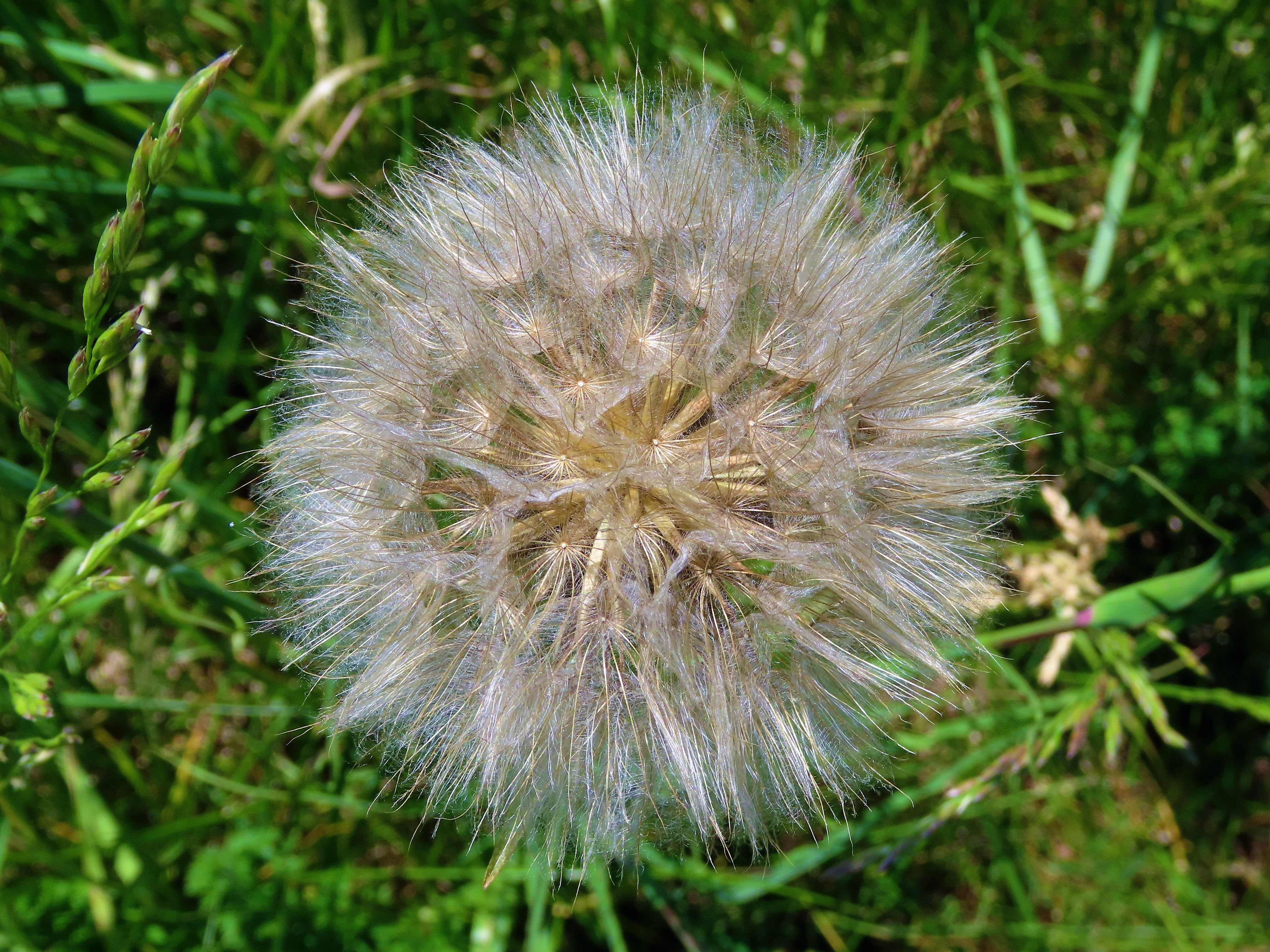
I confess to not having known the identity of the plant that follows, but a little research reveals it to be Meadow Salsify (Tragopogon porrifolius).

The plant was interesting enough but the achene was especially attractive, I thought.
Common St. John's Wort (Hypericum perforatum) is widely distributed throughout our region.

As you may see this plant is host to what appears to be a small Carpenter Bee, probably Xylocopa virginica, and St. John's Wort Beetle (Agrilus hyperici), better seen in the picture below.

The beetle is destructive to the plant which rarely survives an attack such as this.
Rough-fruited Cinquefoil (Potentilla recta) is native to Eurasia, but has been introduced to North America and is now widespread across the continent.


Turtles have been busy in recent weeks laying their eggs in suitable soil. Many are detected by raccoons, skunks and other animals and one often comes across evidence of a set of eggs that will not make it to hatching.

Canada Anemone (Anemone canadensis) is a wonderful component of our landscape, dancing in the wind and bringing joy to all who see it.

Ox-eye Daisy (Leucanthemum vulgare) has been widely co-opted as a garden plant, and is familiar to many.

Bedstraw (Genus Galium) is so named because the early settlers dried the plant and used it to stuff mattresses. I am not quite sure of the species in the image below.

Perhaps G. boreale, I am just not sure.
15 June 2021
RIM Park, Waterloo, ON
We were advised that a Yellow-breasted Chat (Icteria virens) had been sighted at RIM Park, well out of its normal range, and never having seen this species in Ontario, decided to try our luck at finding it.
Normally, we don't chase after rarities but when one is so local it seems a pity not to rise to the challenge.
In fact, we did see the bird, clearly and unimpeded by vegetation, but it remained in position for mere seconds, and Miriam could barely get her camera cocked in time, let alone succeed in taking a picture.
While searching, however, we noticed Tree Swallows (Tachycineta bicolor) going in and out of high tree cavities, an occurrence that is quite rare. Most holes in trees are expropriated by other species, especially aggressive Common Starlings (Sturnus vulgaris) and Tree Swallows are forced to resort to nest boxes.

It was great to see a grand Box Elder (Acer negundo), a rugged native species that resists cold and hot spells, having adapted to our climate over millennia. How it will react to ever hotter summers remains to be seen. I hope it handles them better than I do!

Leafy Spurge (Euphorbia esula) was growing throughout.

I always find this such an interesting plant with its greenish, yellowish petals and unique structure.

Cedar Waxwing (Bombycilla cedrorum) must surely rank as one of our most attractive birds, and we were delighted to find one sitting on a nest, deep in dense cover and impossible to photograph, however.


16 June 2021
RIM Park, Waterloo, ON
In the relative cool of the early morning we decided to return to RIM Park to see if we could get picture of the Yellow-breasted Chat before it concluded it was in the wrong place and headed for home. Again we saw it, again no picture.
But a Great Crested Flycatcher (Myiarchus crinitus) was perched nicely for us.

A Ring-billed Gull (Larus delawarensis) surveyed its domain from a convenient rock in the Grand River.

Two-spotted Grass Bug (Stenotus binotatus) is a beautiful little creature, but I know little of its lifestyle, not was I able to find much in the literature.

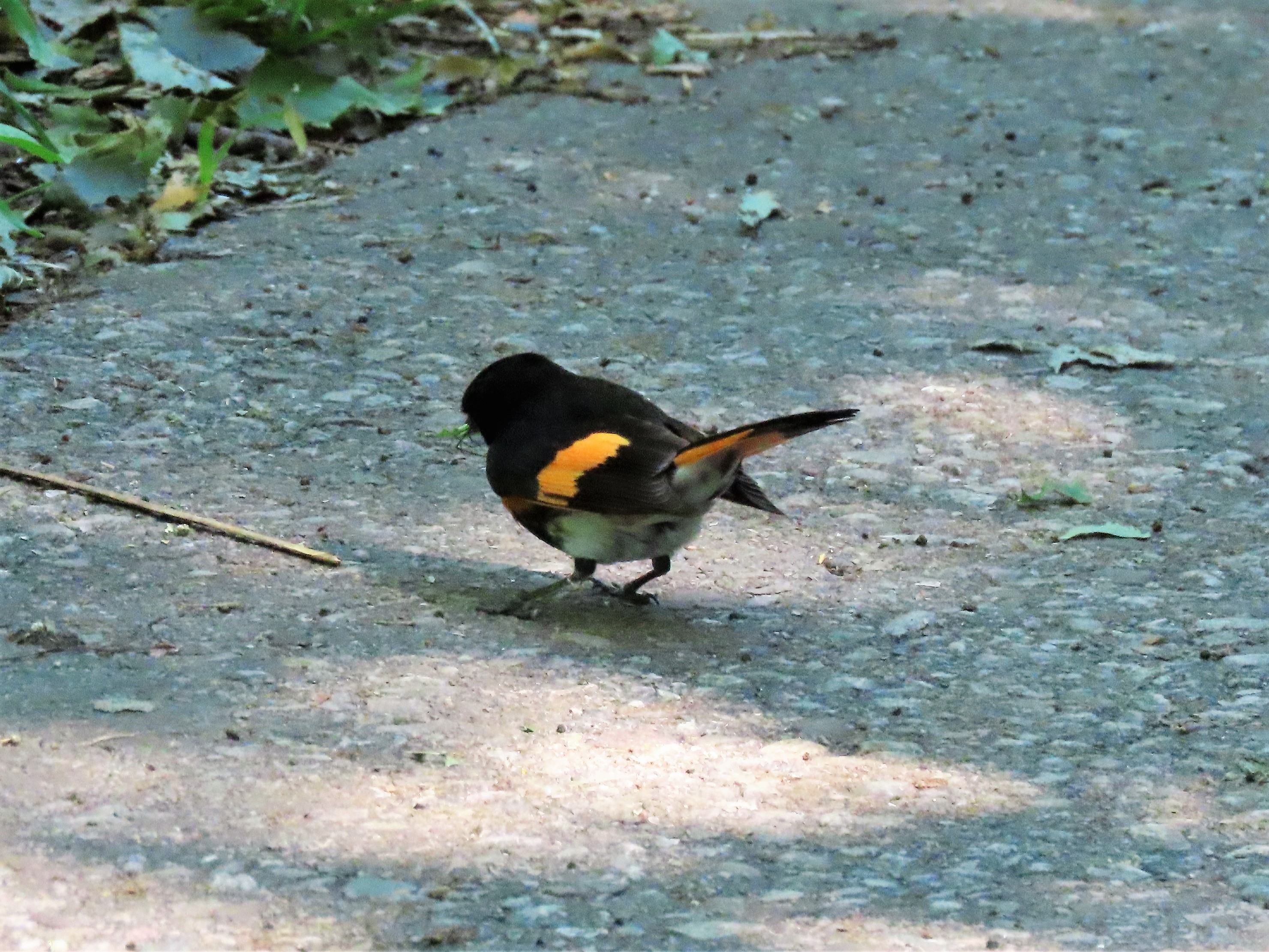
American Redstart (Setophaga ruticilla) breeds locally and is generally not difficult to find.

No doubt there are young to feed now and this male dropped down to pounce on a juicy green caterpillar.
A Rose-breasted Grosbeak (Pheucticus ludovicianus) is always an impressive sight.

Skippers (Family Hesperidae) are often difficult for the novice, easily confused with a day-flying moth.
European Skipper (Thymelicus lineola), known as Essex Skipper in the UK, can generally be found in grasses, rarely flying higher than a metre or two above them.


20 June 2021
Conservation Meadows Storm Water Management Area, Waterloo, ON
Dotted here and there around the perimeter of the retention pond are dazzling arrays of Rose (Rosa rubiginosa).

We are entering the period of odenate abundance, and Widow Skimmer (Libellula luctuosa) darted here and there, even deigning to land once in a while.

My good friend, Richard Pegler, commented that he often finds it more difficult to get a picture of a female than a male, but in this instance, I could only succeed with females.


Killbear Storm Water Management Area, Waterloo, ON
It is a constant source of amazement, and satisfaction too, that these ignominious little patches of wetland can be so productive, and a little puzzling that I have never encountered another naturalist at them.
Common Whitetail (Plathemis lydia) males put on quite a show.

I have no idea how many were active, but it certainly approached a hundred and possibly more.


I introduced you to Rose (sometimes referred to as Wild Rose) above and here is an interesting shot with a Two-spotted Bumblebee (Bombus bimaculatus) and a Rose Weevil (Rhynchites bicolor), one benefical to the plant, the other not.
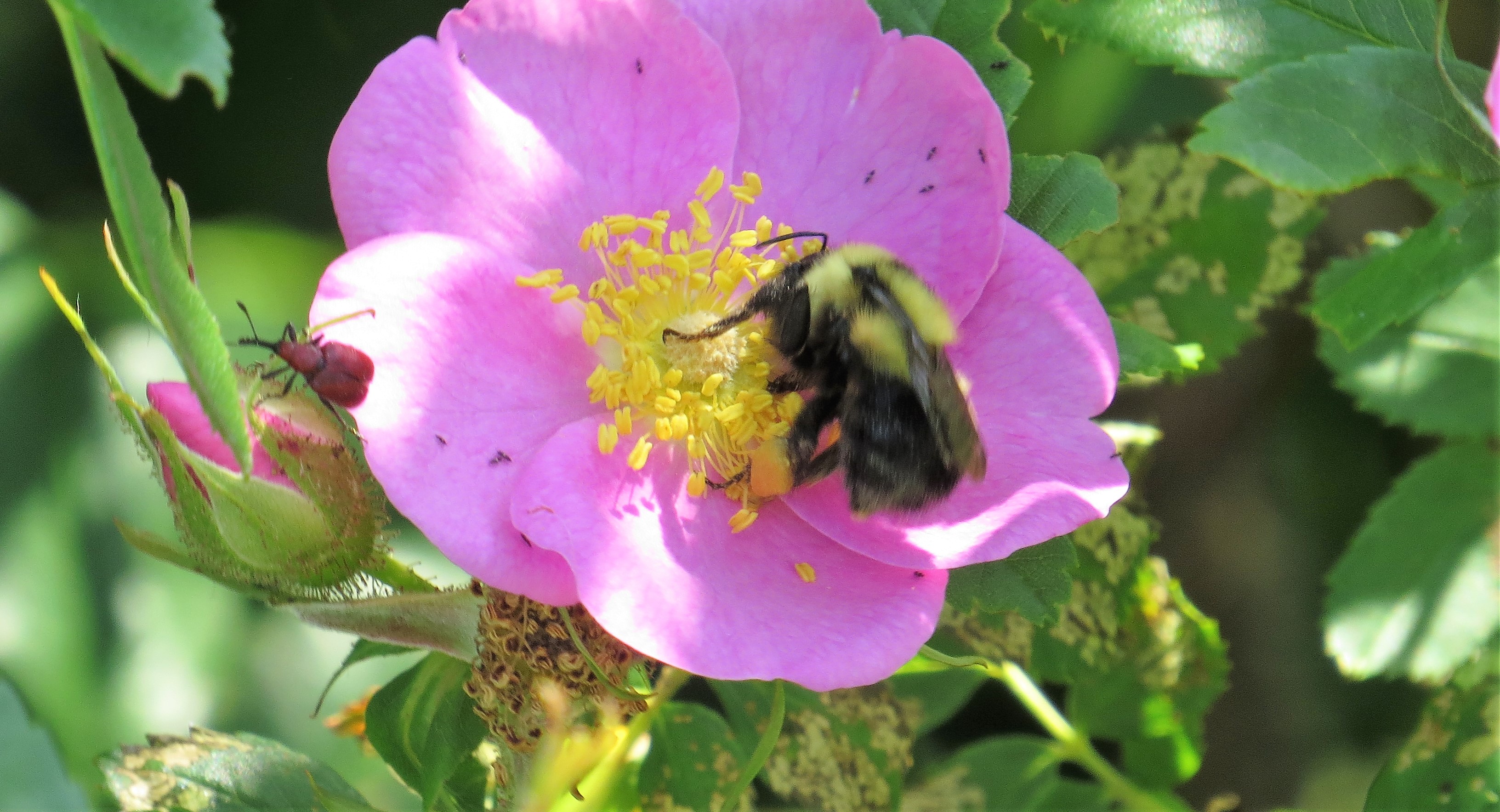
There were countless other small insects on the flowers, but their identification remains unresolved.

Seeds of White Water-lily (Nymphaea odorata) have found their way into the pond, with pleasing results.

Not only does it present a beautiful appearance, the lily pads are critical in moderating the temperature of the water, permitting other organisms to thrive. Small fish could be seen sheltering in the cool regions beneath the leaves, and as you may see in the picture below Northern Leopard Frogs (Lithobates pipiens) were content there too.

Leopard frogs prefer to move at night, the inevitable result of which is that many are killed on roads and highways.
Here is a Widow Skimmer.

A Dot-tailed Whiteface (Leucorrhinia intacta) is an aptly named species.

This species was not abundant at Killbear, nor was Eastern Pondhawk (Erythemis simplicicollis); a female is shown below.

Familiar Bluets (Enallagma civile) were actively engaged in ensuring the ongoing existence of the species.

The dragonfly shown below is an Eastern Forktail (Ischnura verticalis) and I am not quite sure what is going on there. It's not a great picture, but the only one I have of this species.

Next time I will try to coax Miriam into going with me. Two sets of eyes and two cameras might do a whole lot better!