09 June 2021
Lakeside Park, Kitchener, ON
The park has become dense with vegetation and some of the paths are barely visible.

There is luxuriant growth everywhere you look.

Dragonflies have been abundant of late and many Common Whitetails (Plathemis lydia) were present, and one very obliging female stopped for a moment to have her picture taken.

That two-legged reprobate, Homo ignoramus disgusticus continues to do what it does best, trash the environment, and it appears that this squirrel found tasty remnants left in a plastic container cavalierly tossed away.

It certainly is not beneficial for the squirrel to acquire a taste for human food and start to seek it out. It is lacking nutritionally and in any future conflict between squirrel and human there is going to be one sure loser - the squirrel.

In Canada last year, 3.3 millions tonnes of plastic was diligently separated and put out for recycling, of which only 9% was actually recycled. There is simply not the industrial capacity to process more. This abysmal ratio is no doubt true in other countries, and in many even worse. There are poor countries where there is no attempt at all to recycle plastics, electronic waste or other hazardous products. Children pick through mountains of garbage exposing themselves to all manner of hazards to their health.
In addition to household waste, containers like the one the squirrel is licking never make it to a recycling bin. The land we use for recreation and food is degraded with this stuff, soil and groundwater are polluted - and we just keep tossing it away.
People have more excuses than you can imagine for continuing to eat at restaurants that offer only plastic cutlery and styrofoam plates, plastic-lined beverage containers and little plastic containers for dipping sauce, to using disposable items at home to avoid the onerous chore of doing the dishes - and so on. It would be as well to sign a pledge committing to providing a trashed planet for your children and grandchildren, because that is exactly what you are doing.
I had no intention of getting into this disgrace when I started to write this post, but it is one of the key issues of our time. A friend of mine was horrified to see plastic bottles floating on the ocean in Antarctica, and the islands of debris floating in the seas of the world are well known to all. Microplastics are now being absorbed by fish rendering them unsafe for human consumption. It goes on and on.
It was a hot day and we left the squirrel to enjoy its treat.

I bet it wouldn't take long to find another.
10 June 2021
Our backyard, Waterloo, ON
A Northern Flicker (Colaptes auratus) is a handsome bird indeed, and I always think the French name for it, Pic flamboyant, captures it so well.

Unusual among woodpeckers it is primarily a ground-feeding species, with ants forming the mainstay of its diet.
Like all backyards ours has its share of ants, and this individual was perfectly willing to help us get them under control!

At times it seemed as though he was bent on excavating the patio as he drilled into the soil between the bricks!

It was a great pleasure to share our space with him and we hope he returns often. Ants du jour will doubtless always be available.
11 June 2021
Lily at Breithaupt Park, Kitchener, ON

Will someone help me out of the car, please?

A snack is always welcome.


That was a good one!

Do you think I'm cute?

This is a good book!

That was a great way to spend a couple of hours.
11 June 2021
SpruceHaven, St. Agatha, ON
Everywhere is looking quite splendid at this time of the year.

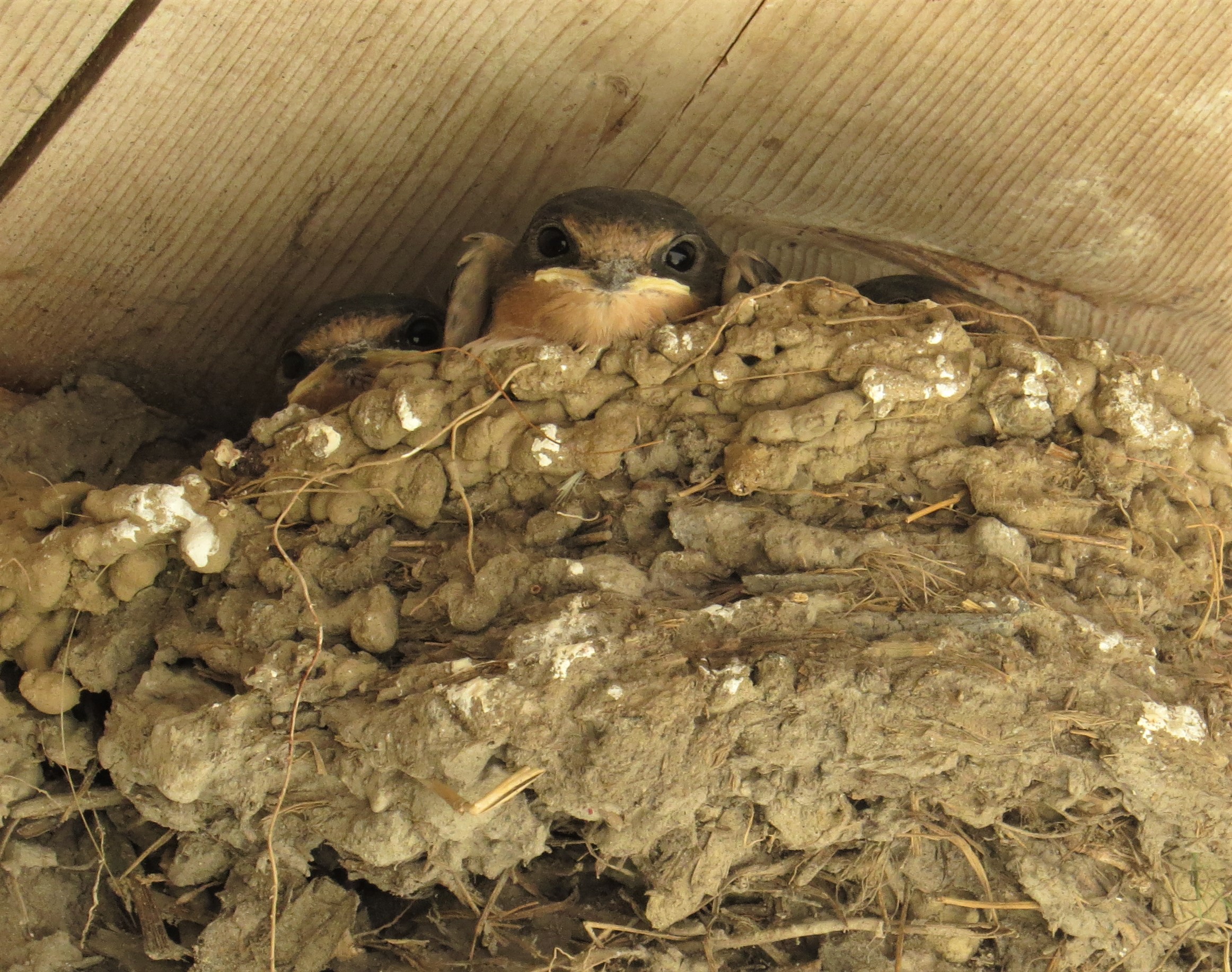
The Barn Swallow (Hirundo rustica) colony is thriving and we have around thirty nests with eggs or young.

The adults are kept busy providing a nonstop feeding shuttle to hungry young, and have earned a brief rest now and then.

Siberian iris (Iris siberica) is found around the pond. A more gorgeous plant would be hard to imagine.


Yellow Iris (Iris pseudacorus) also does well there, and is no less appealing.

This non-native species can be highly invasive, but is often planted at waste water ponds to take advantage of its ability to absorb heavy metals.

The area we call Teen Hollow in recognition of the work done there by WRN Teens is coming along according to plan, and is well on the way to becoming a fully functional restored wetland.

Back at home, Waterloo, ON
A glass before dinner, another with dinner. Hmmm!


How could you resist a wine with a name like that?
14 June 2021
Laurel Creek Conservation Area, Waterloo, ON
Having now bought an annual pass to all the properties of the Grand River Conservation Authority, we go over to Laurel Creek quite frequently.
With a sky like this and modest mid-twenties temperature, you will understand the allure.

We took our thermos of coffee and Miriam's delicious apple cake to David's Dell, and almost as soon as we sat down had the company of a Pearl Crescent (Phyciodes tharos), a fine welcome indeed.

Soldier Beetles (Catharis livida) are making their presence known and a quick search is sure to turn up a few.

We are still seeing them in singles, but soon they will be living up to their colloquial name of "boinking beetle" since the entire population seems to be joined together in a glorious orgy of sex!

What a handsome creature it is!
And Northern Crescent (Phyciodes cocyta) was also a joy to see.


It is always rewarding to capture them with wings both spread and closed to display all aspects of their beauty.

The pattern on the hindwing almost looks like scrollwork.
Bluets (genera Coenagrion and Enallagma) can be frustratingly difficult to identify without hand examination, but given the likelihood of a given species where we encounter it, I believe this representative is Familiar Bluet (Enallagma civile).


They were present in their hundreds, but were airborne far more frequently than perched.


It was interesting to see a Northern Crescent and a bluet so close to each other.

The most ambitious attempt at identification for the species below that I can make is that it is in the family Coenagrionidae, a narrow-winged damselfly of some type.

If you have by now concluded that my level of proficiency with odenates is not great, you are right!
A Little Wood-Satyr (Megisto cymela) posed no identification difficulties at all.


We are just getting into the period of peak abundance for Northern Pearly-eye (Enodia anthedon) and we were rewarded with a few sightings.

Monarch (Danaus plexippus) is probably the best known butterfly in the world, due principally to the many TV documentaries viewed by a wide audience.

Most birds are now well advanced into their breeding season and they are both silent and secretive, but one can always count on an American Robin (Turdus migratorius) to bid a fond farewell.

I had Miriam to keep me company, coffee, apple cake, butterflies, dragonflies, birds and beetles too. I can think of no better way to spend a morning in June.