Showing posts with label Gypsy Moth. Show all posts

Wednesday, July 29, 2020

The Dreaded, Unwelcome Gypsy Moth - It's Here to Stay

     A few days ago we were sitting on the deck at our friends Alan and Anne Morgan's house, gazing at, and admiring Anne's garden which is a phenomenon to behold, sipping wine and talking of all things under the sun.
     At some point our attention was rivetted on a female Gypsy Moth (Lymantria dispar) on an oak tree (Quercus sp) and the conversation quickly changed to this invasive insect, which is present in seemingly apocalyptic numbers this year. I know that memory is selective, but I cannot recall seeing Gypsy Moths in such profusion.
     Having been introduced to North America in 1869 in Boston, it has become a serious pest and is capable of deforesting vast areas of native woodland. Stephen Marshall recounts an incident where he was seated under a tree at a picnic table and was driven away by the pitter-patter of frass (bug poop) falling from the caterpillars on the branches above onto the table and into his coffee!


     Let me try to give you a little more insight into this entirely unwelcome guest.

Hosts: Gypsy Moth caterpillars are especially fond of oak and aspen, but will opportunistically feed on other species as diverse as Hemlock, White Pine and Poison Ivy. The picture below shows females, egg masses, larvae and pupa on a Norway Maple.


Damage: The larvae chew the leaves of their host plants during the spring, and the noise of an army of these creatures can become quite loud. Gypsy Moth is an outbreak species, sometimes persisting for two or three years, during which time trees can be seriously weakened and vulnerable to other pests such as the Two-lined Chestnut Borer (Agrilus bilineatus).

Distribution: Currently found over much of Eastern and Central Canada, the Northern U.S. as far west as Minnesota, and south to the The Carolinas. Isolated infestations have occurred in other regions when eggs have been transferred on plant materials.


Appearance: Larvae are generally mottled grey and have pairs of coloured tubercules. The hairs on the body can be irritating to human skin. Male moths are dark brown with wavy darker markings across the wings. Females are flightless despite having wings that are white with wavy stripes.

Unmated female
Life History and Habits: The eggs overwinter in a mass covered with hairs from the body of the female. Exposure to cold is a requirement for egg development. Eggs usually hatch in April and the young larvae move to the tips of branches where they may be dispersed by the wind (ballooning). Males go through five larval instars, females six, over the course of about six weeks. Feeding occurs at night with the larvae moving to branches and trunks during the day to rest and moult. During serious outbreaks daytime feeding also occurs. 

Caterpillars with chrysalids
     The larvae may settle on plants for pupation but will also wander and settle on rocks, other vegetation, upright surface of buildings or other convenient locations. Adults emerge about two weeks later. The male is a strong flyer but as noted above the female is flightless. 
     After mating, females lay a single egg mass, typically containing 250 eggs. 

Copulation

     The Gypsy Moth is a notoriously variable species and the Siberian Moth (Dendrolimus sibiricus) differs from the European Gypsy Moths in some sinister ways. The females are able to fly and they have a taste for conifers which are the lifeblood of the western forest industry. Not surprisingly the appearance of of the Siberian Moth in British Columbia has caused great consternation and aggressive actions to control or eradicate it.

Photo credit: All of the photographs were taken by Alan Morgan, to whom I owe much gratitude for his permission to use them on my blog.

References

Cranshaw, Whitney and David Shetlar, Garden Insects of North America Second Edition, Princeton University Press ((2018)

Marshall, Stephen A., Insects - Their Natural History and Diversity, Firefly Books (2006)

Milne, Lorus and Margery, National Audubon Guide to Insects and Spiders, Chanticleer Press Inc. (1980)

Stanek, V. J., The Pictorial Encyclopedia of Insects, The Hamlyn Publishing Group Limited (1969)    


Tuesday, July 07, 2020

Midsummer Happenings

         It has been miserably hot of late, with the daily temperature routinely getting up into the thirties, not conducive to long walks, unfortunately. As a consequence this post will be a bit of a mixed bag of sightings around the backyard, in the house, and a few items from farther afield.
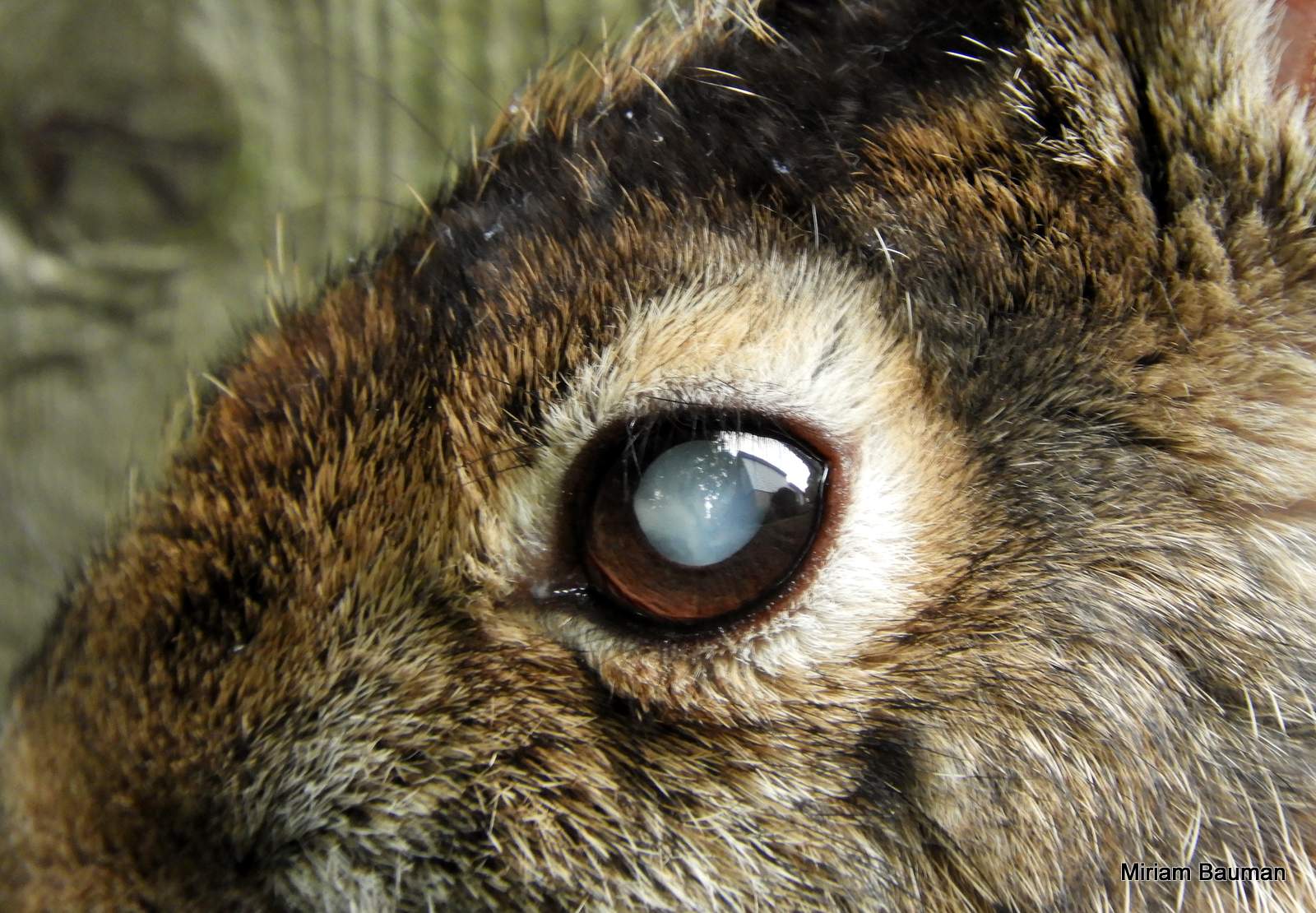
     Eastern Cottontail (Sylvilagus floridanus), the arch invader of the garden, is both a delight and a menace, and is extremely common. These creatures, whose life span seldom exceeds six to eight months, rarely one year, are susceptible to all manner of diseases, and harbour a full suite of endo and ecto parasites, and in addition face a formidable array of predators, both terrestrial and aerial.
     Cottontails contract a range of occular surface diseases, and this individual, a regular visitor, appears to have a cataract in one eye.


     It does not seem to have affected its ability to forage and even with one operative eye it unerringly finds the plants Miriam would least like it to chew upon.


     Woe betide it, however, when a cunning fox comes up on its blind side!
     For several years now we have raised butterflies inside the house, with an undiminished fascination for observing the transformation from egg to caterpillar, to chrysalis, and finally a beautiful butterfly.
     Here are two companions, both feeding on Rue (Ruta graveolens), safe from the elements, and more significantly from winged predators of many types. Black Swallowtail (Papilio polyxenes) is at the left, nose-to-nose, so to speak, with Giant Swallowtail (Papilio cresphontes) at the right.


     Miriam and I were outside looking at another half dozen caterpillars or so on the Rue, debating whether we should bring them into the safety of the house, all the while recognizing that these larvae are an important food source for birds and other insects. Our minds were made up for us, in short order, as several European Paper Wasps (Polistes dominula) swarmed the plant, and immobilized the caterpillars with their sting, and feasted on them.


     Most caterpillars do not survive, of course, and songbirds would be unable to raise their young without this spring flush of protein.


     Less desirable are Gypsy Moth (Lymantria dispar) caterpillars, which have appeared in profusion this year, and are capable of inflicting serious damage to a range of native deciduous trees.


     Foolishly, this species was deliberately introduced into North America in 1868-69 and threatens our forests. Many have found their way into our yard, where we destroy them.


     Their spiny body makes them unappealing to most birds and other potential enemies.
     A male Cabbage White (Pieris rapae) nectaring on Salvia is not threatening at all.


     There was a bumper crop of Paeonies (Paeoniceae) this year and Miriam brought the final few into the house. 


     Several juvenile American Robins (Turdus migratorius) have appeared in the backyard as they leave the nest, sometimes accompanied by an adult but more frequently alone as they embark on an independent life.
     It was apparent that one young bird was in trouble. It panted frequently, its wings drooped and it had a noticeable tremor. I do not know whether some form of pathogen affected this bird or whether it was carrying a lethal load of parasites, but it succumbed overnight and was found dead the next morning.


     It is always sad to see a young bird not live to fulfill its potential, but life in the wild is neither easy nor predictable.


     The Mourning Dove (Zenaida macroura) below seemed to be engaged in some kind of feather maintenance activity, either anting or soaking up UV rays.


     Our Butterfly Milkweed (Asclepias tuberosa) has done exceptionally well this year, and provides a burst of colour at the front of the house.


      Despite its name, we have never seen a butterfly on it, although it does not lack for other pollinators.


     It is by any measure a beautiful plant and has fortunately escaped the attention of the rabbits.
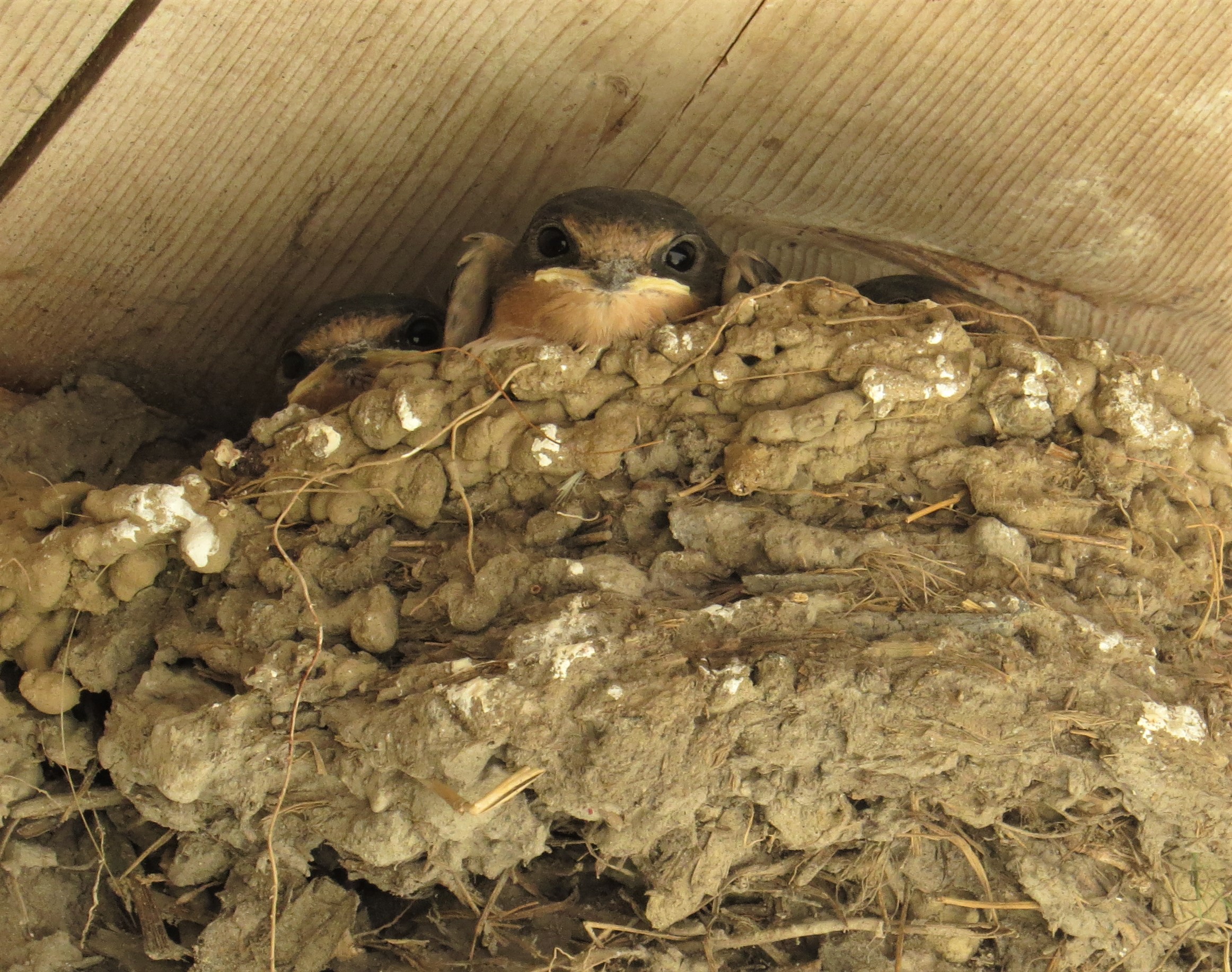
     At SpruceHaven this year we have not been able to do any serious monitoring of the Barn Swallows (Hirundo rustica) as the Coronavirus put an end to team work and cooperative effort, but the colony appears to be prospering.


     Fairly early in their development the nestlings learn to orient their rear ends to excrete over the lip of the nest, so an easy way to know which nests have active young is to follow the piles of poop building up beneath them.


     Many species of butterfly are active now; witness this Tawny-edged Skipper (Polites themistocles) on Bird's Foot Trefoil (Lotus corniculata).


     Several Pearl Crescents (Phyciodes tharos) were flitting around; finally one came to rest and we were able to get a picture.


     This period has also been marked by upgrading from Windows 7 to Windows 10 on a brand new computer. Nothing has the capacity to make me nervous more than computer issues and we owe a great debt of gratitude to Jeremy Faulkner of Nerds on Site for making the transition seamless and worry-free.
     We had always used Picasa for our photo editing and were very familiar with its ease of operation. It was at the apex of user-friendliness. However, it was discontinued some years ago and is no longer available for download, so on Jeremy's advice we switched to digiKam. After some initial consternation, and a great deal of perseverance from Miriam, we (insert "she") navigated our way through it, and are becoming more comfortable with repeated use.
     Adding a watermark to a photograph seems inordinately complicated, however, and we will eschew this feature for now. I am not quite sure why amateurs like us need a watermark anyway.

Wednesday, July 11, 2018

A Sunday morning Butterfly Chase

08 July 2018

     Although a birder first, foremost and always, there is not a single aspect of the natural world that fails to capture my interest. I have different levels of proficiency (or in some cases a decided lack thereof) of various taxa.
     One of the most colourful additions to the summer landscape, especially when the birds are preoccupied with raising young, is a wide range of butterfly species. In addition there are some interesting diurnal moths and I have even been dabbling in nocturnal moths under the expert tutelage of my good friend, Ross Dickson. If you have ever felt you had sinister tendencies of incipient masochism, sitting out in the dark watching moths crawling over a lighted sheet, in a mind-boggling range of diversity, colour, shape and form, will cause them to be front and centre! And that doesn't even take into account the lack of sleep.
     In any event, it occurred to me a while ago that many people I see with a butterfly net have not the slightest idea how to use it properly. They charge around like Don Quixote tilting at some illusory windmill, smacking the ground, flattening the grass, uttering the unseemly curses of a drunken sailor, and coming up empty-handed - or should that be empty-netted?
     With this in mind I thought it would be a good idea to have a proper training session so that budding lepidopterists would learn how to wield a net correctly, sweep with grace and efficiency to capture their quarry, extract it from the net swiftly and cleanly in a collecting vial, take whatever photographs they need, and release the papillon unharmed.
     Owen Lucas, of the rare Charitable Research Reserve, as fine a net professional as one could wish to find, agreed to come and conduct a tutorial.
     People gathered round with great interest.


     Like a magician on a stage, Owen was in short order explaining technique.


     It did not take everyone long to get the idea and we set off on a walk to capture some butterflies. New skills were on display, strategies were developed, and stealth became a new art; but I must say, with a certain level of vicarious pride, that Miriam was the undisputed champion. Hers was a performance worthy of a prima ballerina in the Bolshoi Ballet. In total we captured about fourteen species, much to everyone's delight.


      As a bonus for the eager adventurers we introduced them to the wonderful world of caterpillars. A couple of people had already raised Monarchs indoors so there was the added excitement of seeing the varied forms and colours of the larvae of other species.
     Here is the colourful child of a Black Swallowtail (Papilio polyxenes).


     And how grand is the caterpillar of a White-marked Tussock Moth (Orgyia leucostigma)?


     Jeff Grant, a local teenager from St. Agatha is keenly interested in butterflies and moths and has been raising Cecropia Moths (Hyalophora cecropia) by placing their eggs on appropriate host plants and protecting them by means of a mesh sleeve. Jeff kindly opened up one of the sleeves to show everyone the grandeur of a Cecropia caterpillar - and even provided a little discourse on the life cycle of this stunning moth.


     The caterpillar of an Eastern Tiger Swallowtail (Papilio glaucous), in a late instar with its false eye spots is perhaps one of the most appealing of all, and we were lucky to see one such example along with a little brother (perhaps second instar) on the same leaf.


     We were not quite as happy to find many Gypsy Moth (Lymantria dispar) caterpillars. This species is truly destructive in our eastern hardwood forests and is an invasive species in any event.


     Some had already cocooned.


     The weather was quite beautiful, a perfect day in fact for what we wanted to do. And just in case I had withdrawal pangs from not dealing with birds, Barn Swallows (Hirundo rustica) displayed their aerial superiority as they hawked for insects and a male Eastern Bluebird (Sialia sialis) perched on a nest box where his mate is incubating four eggs. Perhaps he even delivered a juicy caterpillar for lunch.

Land Acknowledgement

We acknowledge that the land on which we are situated are the lands traditionally used by the Haudenosaunee, Anishinaabe, and Neutral People. We also acknowledge the enduring presence and deep traditional knowledge, laws, and philosophies of the Indigenous Peoples with whom we share this land today. We are all treaty people with a responsibility to honour all our relations.

Followers