Showing posts with label Trumpeter Swan. Show all posts

Friday, February 18, 2022

A Couple of Recent Walks through Snowy Woods

08 February 2022
Hillside Park, Waterloo, ON

     The first sight to greet us was a Great Blue Heron (Ardea herodias) perched stoically in a tree, weathering the storm like the rest of us.


     Most Great Blue Herons migrate at the approach of winter, but a few hardy individuals always remain, and over the past twenty years or so I have seen this species here in every month of the year. They are opportunistic feeders, and in addition to capturing prey in open water, will take waterfowl, rodents, rabbits and other mammals, anything they can capture really. As long as they are able locate food they appear to be capable of tolerating harsh weather.
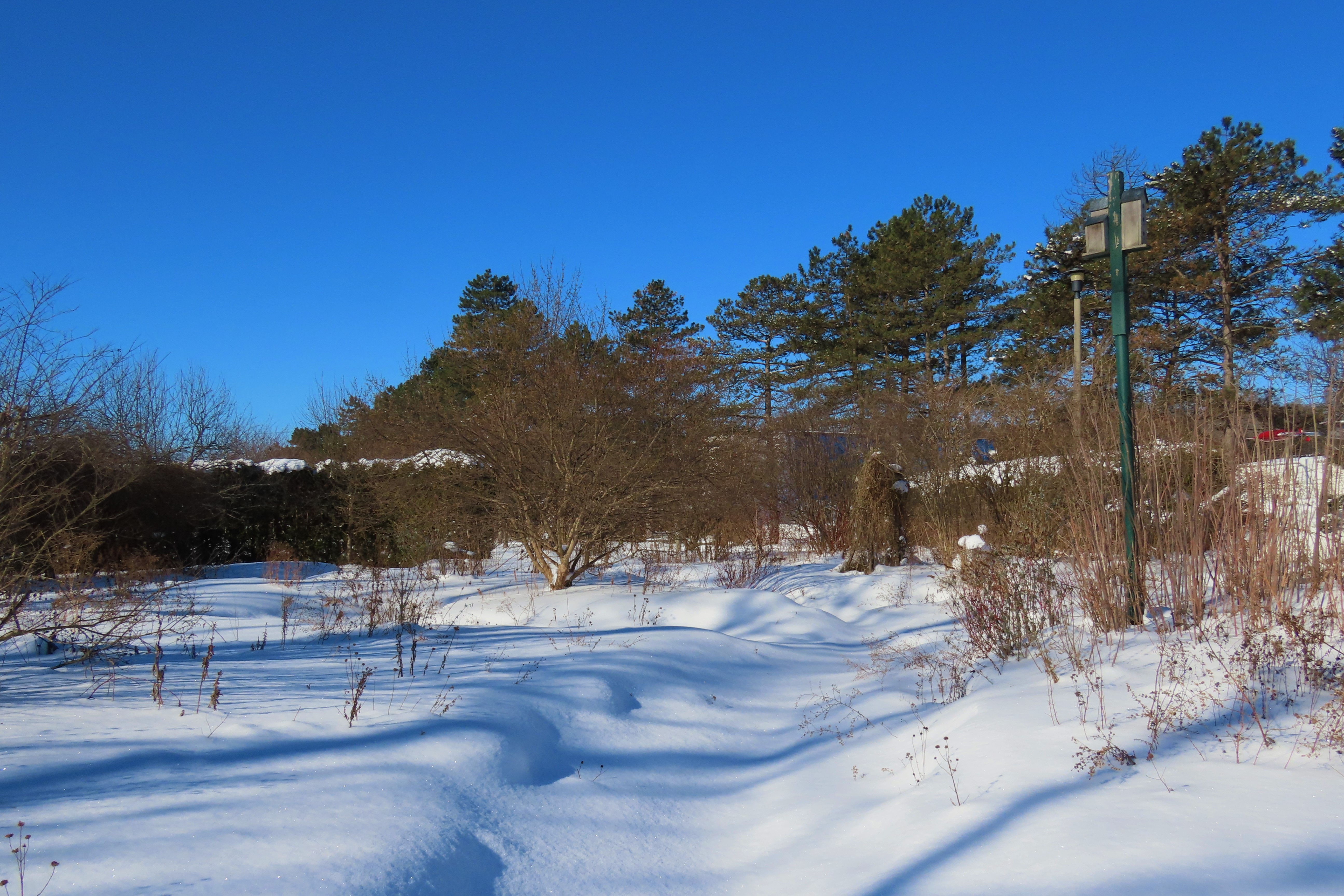
     It was a snowy day in the park.

Tuesday, May 18, 2021

Staying Local is Not So Bad After All

      We continue to explore the riches of our local area, bound as we are by COVID restrictions, but life is far from dull.

10 May 2021
Waterloo, ON

     At least some of you will recall that I told of a Canada Goose (Branta canadensis) that made its nest in a busy commercial plaza.
     I am happy to report that the outcome was successful.


     People had obviously warmed to this goose and some well-intentioned person left a tray of fresh vegetables, keen to ensure the goose ate a balanced diet, I suppose!


     One gosling did not even make it out of the nest, but death in young birds is a reality and if the others made it to safety this family did well.


Martin Creek Road, Woolwich Township, Waterloo, ON

     I have never quite understood how the Common Dandelion (Taraxacum officinale) became so universally despised. The flower is beautiful, requires no care, and the leaves make a tasty salad.
     Perhaps the next time you are ready to foam at the mouth over dandelions, keep the following image in mind.


     It is nature's beauty writ large.

St. Jacobs, ON

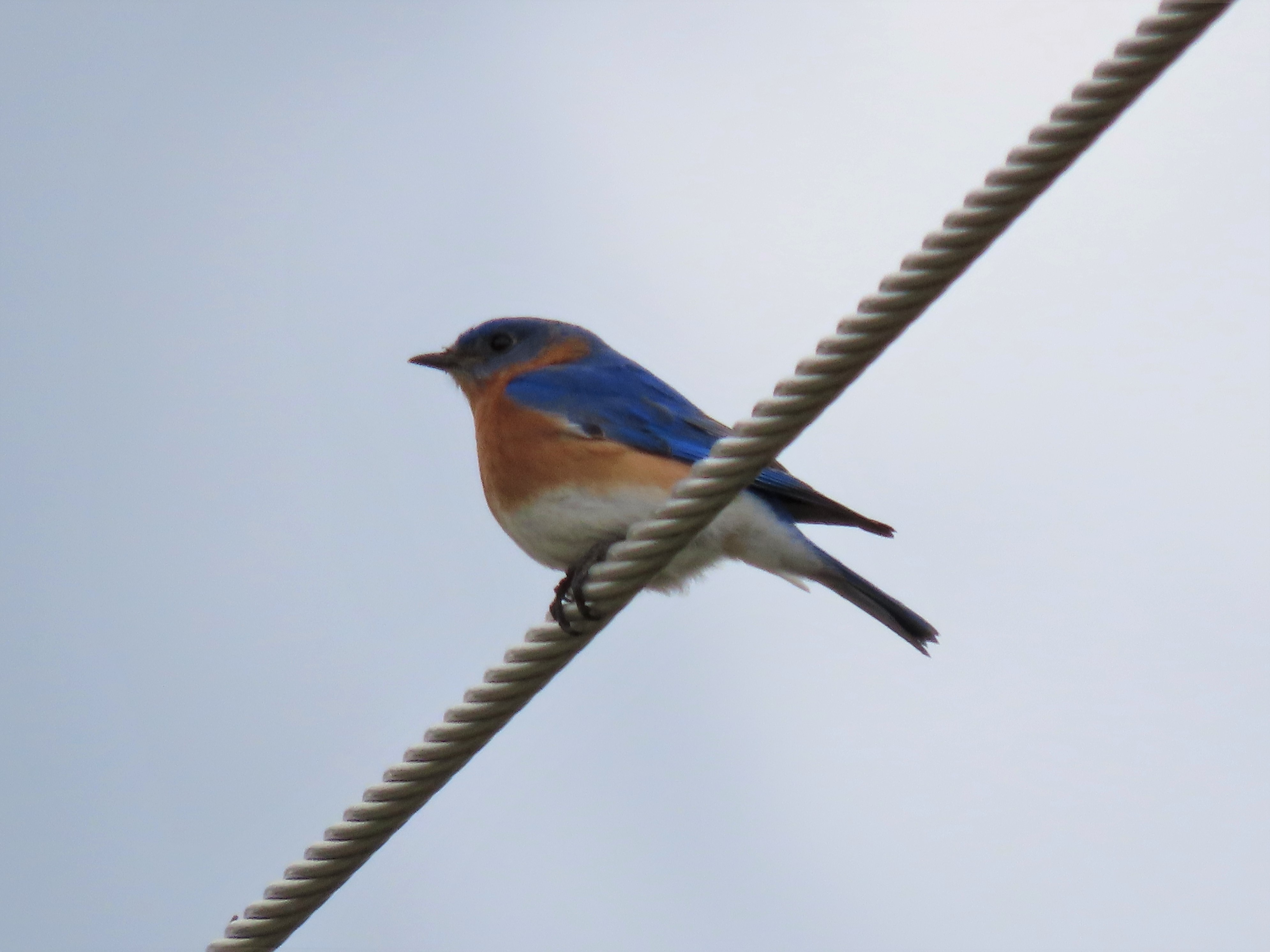
     A male Eastern Bluebird (Sialia sialis) waited for us in the graveyard of a church where we often see this species.


     We noticed a Red-tailed Hawk (Buteo jamaicensis) foolishly (or so it seemed to us), tangling with a couple of Bald Eagles (Haliaeetus leucocephalus).


     It was impossible to get all three birds in the same frame, but here are the two eagles.


     The red-tail had a couple of gaps in its primary feathers so its maneuverability was compromised perhaps, and wisely it broke away from the tussle.
     
14 May 2021
The Mill Race Trail, St. Jacobs, ON

     I was attempting to calculate how many times we have walked this trail and I came up with an estimate in the order of four hundred times. But it still holds secrets that we have not uncovered, and we stand little chance of knowing more than a small fraction of the wonders of nature occurring there in every season. 
     It remains one of our favourite spots.


     A Downy Woodpecker (Dryobates pubescens) is predictable and it is rare that we do not see at least one individual and most frequently several. This male is probing for insects and their larvae in the dead wood and hollows of this rotting trunk.


     It was Miriam who first spotted a large concentration of what we initially assumed were Water Striders (Gerridae) but a closer examination revealed a mass of Whirligig Beetles (Gyrinidae), in the genus Dineutus if I am not mistaken.


     Whirligig Beetles are interesting from many angles, not the least of which is that their swimming legs have been modified into unidirectional paddles. These beetles are actually in the water, not on it.


     We were excited to find them.
     Three male Brown-headed Cowbirds (Molothrus ater) were perched high above us. 


     Not for them the rigours of parenting. Their sole purpose in life is to provide sperm for the female; once that deed is done, the warm, balmy breezes of summer are to be enjoyed. One might be inclined to recall George Gershwin's immortal words, "Summertime and the livin is easy"!
     A female Red-winged Blackbird (Agelaius phoeniceus) will never rival the male for ostentation, but she is certainly lovely.


     I am quite sure that you will agree.


      Baltimore Oriole (Icterus galbula) surely ranks as of one of nature's great troubadours, clad in finery to match his golden voice.


     It is a not uncommon bird in spring and summer, but it is a joyous event whenever one is seen.


     And it could sing to me without end and I would still find it enjoyable.


     Two-leaved Toothwort (Cardamine diphylla) has attracted its share of insects.


     A species of maple (Acer) is about to burst into full leaf, but at this stage I am not sure of the species.


     Mourning Cloak (Nymphalis antiopa) can still be found fluttering through the woodlands, often alighting with wings outspread.


     Eastern Comma (Polygonia comma) was equally cooperative.


     We saw a couple of Palm Warblers (Setophaga palmarum), but never in the open, and difficult to photograph.


15 May 2021
Grass Lake and Area, Cambridge, ON

     Much of the wetland component of the area known as Grass Lake, ancestrally known as the Paris Cranberry Bog, has been invaded by Common Reed Grass (Phragmites australis) and is unfortunately slowly filling in. 


     Nonetheless, it remains a spot to see species not easily viewed elsewhere in the region.
     Savannah Sparrow (Passerculus sandwichensis) is guaranteed to be there, with males seeking fenceposts and bushes as vantage points to sing in proclamation of territory, and to lure females to join in a tryst to assure the survival of the species.


     Bobolink (Dolichonyx oryzivorus) is a classic grassland species, and the expanse of uncut meadow provides perfect habitat for this visitor from the pampas of South America.


     Horned Lark (Eremophila alpestris) is an easy species to find in winter, but far more difficult once breeding is initiated. It is a safe bet that this individual gathering grit from the road, is a member of a breeding pair.


     Tree Swallows (Tachycineta bicolor) still nest in natural cavities when they can find them, but most breeding now takes places in nest boxes provided by humans.


     Skunk Cabbage (Symplocarpus foetidus) is an interesting plant, thriving in cold, wet meadows and swamps.


     Heat generated by Skunk Cabbage can melt  surrounding snow and may help to release the foul smell of decaying flesh that helps it to attract pollinators.


     If you would like some to plant in a wet spot in your garden, be sure to let me know and I will ship it immediately!
     Trumpeter Swans (Cygnus buccinator) are  majestic  birds, and have been reintroduced to Ontario, (with great difficulty I might add), having been extirpated many years ago. And their population is expanding.
     Last year we found a pair nesting locally and were ecstatic to find them in the same spot again this year.


     Pure euphoria overcame us when we saw them.


     Yet it was about to get better.
     Miriam was busy photographing the swans, having scampered across a busy road I might add, when I saw a pair of Sandhill Cranes (Antigone canadensis) with a chick, on the far shore of the wetland.


     It's hard to jump for joy strapped into a car seat at the side of a busy road, but mentally that's what I was doing.


     It was so encouraging to see this, to say nothing of inspirational, and gob-smackingly entrancing.


     The combination of the swan sitting on eggs, with a pair of Sandhill Cranes with a young baby, is probably going to remain the highlight of the year.


      It's hard to beat exultation like this. To hell with COVID, I say. Pandemic or not, scenes such as this are eternal.
     There is more, but I think we will save that for the next post. Until then stay safe, and be thankful for nature in your life. Nothing beats it!

Friday, February 19, 2021

Lockdown Rules Eased and a Day Out!

17 February 2021

     Having been confined close to home for so long, Miriam and I were like two excited children, going on an outing to the beach! It seemed so long since we had packed a lunch for a day in the field, and made a thermos of coffee for elevenses, (accompanied naturally by blueberry muffins), that there was an air of palpable excitement as we made preparations to leave home.

DesJardins Canal, Dundas, ON

     Our ultimate destination was the north shore of Lake Ontario, and as has been our practice for many years, we detoured first to the DesJardins Canal in Dundas.


     The target bird there in the winter is Hooded Merganser (Lophotdytes cucullatus) and this female presented herself almost right away.


     Sedate and beautiful though she is we held out for a male too.
     Two Mute Swans (Cygnus olor) sailed towards us like elegant barques on a glassy sea.


      There was deep snow all around, but a recent dusting, or perhaps fine snow blown from the trees that line the bank, gave the impression of icing sugar on the backs of these Canada Geese (Branta canadensis), hunkered down against the cold, heads tucked under their wings for warmth.


     It did not take us long to spot a male Hooded Merganser, a matinée idol of a bird if ever there was one.


     A single female Common Merganser (Mergus merganser) was the only member of her kind that we saw.


     A walk west along the canal leads to the Urquhart Butterfly Garden.


     Obviously there are no butterflies flitting hither and yon in the dead of winter, but it has a beauty all its own, and provides cover for small birds.


     House Sparrows (Passer domesticus) were chattering to each other and sheltering in the bushes; other than that we neither saw nor heard another songbird.


     Several times, as we walked around, a dozen or two Canada Geese lifted up off the canal, and with resounding protestations took to the air, flying directly over our heads and out of view.


     What caused some to leave and others to remain is a question to which we have no answer.
     When we arrived  back at our car, we sat inside to enjoy our coffee and muffin, and a male Hooded Merganser arrived to swim among the Canada Geese directly in front of us. Doubtless, he had come for a final portrait and Miriam hopped out of the car to ensure that he received suitable attention.


     I could say that he showed us his best side - but he only has best sides!


     As I am sure you will understand, it was a very agreeable way to end our visit.


Woodland Cemetery, Burlington, ON

     For many years, Eastern Screech Owls (Megascops asio) have resided in the cemetery, and we are familiar with a tree where a couple have made their home for years.
     On a sunny day, they sometimes delight birders by sitting at the edge of their hole, oblivious to the goings on beneath them, and are greeted with elation by all who see them.
     Today was our lucky day; a red morph individual was snoozing at the entrance.


     We were the only people present. The regular flow of activity at the cemetery has been very much reduced of late, as COVID has imposed restrictions on the number of participants at a funeral, only two graveside visitors are permitted, and others who might have business with the departed are urged to exercise restraint.

Grindstone Creek, Hamilton, ON

     We were quite sure that the water would be frozen, but headed over to Grindstone Creek, where numerous passerines find shelter and food in the bushes and trees that line the shore.
     The undoubted highlight was a wonderfully obliging Carolina Wren (Thryothorus ludovicianus).


     This species, formerly rare here, has dramatically expanded its range over the past thirty years or so, and at this time of the year is the most familiar wren. It is not common, but in the right place, with a little effort, it can be found. It is non migratory and has evidently adapted to our winters.


     In the last Atlas of the Breeding Birds of Ontario covering the years 2001-2005, it is stated: "Between atlases (the previous atlas dealt with 1981-1985), the species expanded considerably, with a significant, more than five-fold increase in its probability of observation......"
     Atlassing begins again this year so we will soon know whether populations have increased even more.

Hendrie Valley Sanctuary, Burlington, ON

     Grindstone Creek and Hendrie Valley Sanctuary come together at the county line demarcating Hamilton and Halton, so it is a given that when we visit one we visit the other.
     We did not walk too far along the trails which were deep with snow, and it was hard slogging.


     Predictable winter species were easy to find, however, and what a cheery air they lent to bright sunlight and immaculate snow.
     A Downy Woodpecker (Dryobates pubescens) was one of the first birds we saw.


     A Northern Cardinal (Cardinalis cardinalis) is blessed with prodigious beauty, but it is never more gob-smacking than in winter.


     It is an immutable part of the annual rhythm of nature, that when the days are lengthening in the second half of February, males will begin to sing. And so they did, which filled us with profound joy. The first cardinal heard in late winter is very special.


     I can assure you that a cardinal of Rome, not even were he to try for a thousand years, could thrill me as much.
     A Song Sparrow (Melospiza melodia) was finding morsels to eat on the snow.


      American Tree Sparrows (Spizelloides arborea) who only favour us with their company during the winter, were in their element.


      Opportunistic House Sparrows (Passer domesticus) furnished evidence of the tough, enterprising birds they are.


     And what would a winter stroll be without a Black-capped Chickadee (Poecile atricapillus)?


La Salle Park and Marina, Burlington, ON

     The premier attraction is without doubt the large number of Trumpeter Swans (Cygnus buccinator) that spend the winter at the park.


     What glorious birds they are!
     For a couple of weeks now we have all become familiar with the term Polar Vortex as a period of intense cold has gripped much of the continent.
The bay was frozen from shore to shore so the anticipated concentrations of a variety of waterfowl were absent.


     The Trumpeter Swans are able to survive without having access to inshore feeding by supplemental rations of corn.
     A Red-tailed Hawk (Buteo jamaicensis) surveyed his domain, concluding perhaps that continuous ice might be an advantage in capturing an unwary or injured Mallard (Anas platyrynchos).


     I am always fascinated by the huge, webbed feet of Trumpeter Swans, resembling fine leather it seems to me.


     Many young birds furnished evidence that it had been a successful year for breeding pairs.


     The wind was cold coming across the ice on the bay, and a head tucked into a wing was a plan adopted by many.


Lake Ontario at Stoney Creek, ON

     I knew that there would be open water on the wide body of Lake Ontario (in effect an inland sea) so we travelled down to Stoney Creek.
     Even here, as you may see, there was considerable ice buildup along the shore, stretching out for quite a distance into the lake.


     Usually the water here is teeming with huge numbers of bay ducks of several species, but we found few birds, with only two species approaching good numbers, and others totally absent. Where they might have gone, I have no idea.
     Long-tailed Duck (Clangula hyemalis) is always a joy to see, but they were all quite far out, obviously beyond the ice.

Long-tailed Duck ♂

Long-tailed Duck ♀

     Common Goldeneye (Bucephala clangula) was present in small rafts; some already engaged in courtship behaviour, posturing and head-tossing with verve and enthusiasm.

Common Goldeneye ♂


Common Goldeneye ♀

     Our drive home was uneventful and we were both well-satisfied with a wonderful day. It felt good to be exploring along the lake again.   


Land Acknowledgement

We acknowledge that the land on which we are situated are the lands traditionally used by the Haudenosaunee, Anishinaabe, and Neutral People. We also acknowledge the enduring presence and deep traditional knowledge, laws, and philosophies of the Indigenous Peoples with whom we share this land today. We are all treaty people with a responsibility to honour all our relations.

Followers