Showing posts with label Downy Woodpecker. Show all posts

Wednesday, February 09, 2022

Amherst Island and Ottawa

     For a couple of years, my oldest grandson, Sam, has been hankering to visit Amherst Island, but you all know what effect COVID has had on everyone's travel plans. Finally, with restrictions lifted a little we were able to make it there.
     Miriam and I travelled up to Belleville the previous afternoon to spend the night, before meeting my daughter, Caroline, son-in-law, Andrew, Sam and his girlfriend, Mel, the following day at the Amherst Island ferry. We were also joined by our friend and fellow naturalist, Wendy, who was visiting her daughter in Kingston, and took advantage of the opportunity to tag along with us to see what we could find.

5 February 2022
Amherst Island, Lennox and Addington County, ON

     Miriam and I were the very first in line at the ferry terminal and settled in to wait for the others to arrive. 
As it turned out the absence of information on the notice board should have provoked a few questions in our minds, but more about that later.


     As best I recall it was around minus 25 degrees and Canada Geese (Branta canadensis) and Mallards (Anas platyrynchos) huddled in a little open water near the dock.

Sunday, November 14, 2021

Outing for Waterloo Region Nature to Linear Trail and Riverside Park, Cambridge, ON

The latest in the series of outings conducted for Waterloo Region Nature saw us visit two local birding hotspots in Cambridge, ON

10 November 2021
Linear Trail, Cambridge, ON

Leader: David M. Gascoigne

Members: Miriam Bauman, Lynn Conway, Lisa DenBesten, Bob Fraser, Karl Malhotra, Curtiss MacDonald

Lynn, Miriam, Bob, Curtiss, Lisa, Karl


Sunday, October 17, 2021

The Mill Race Trail with Staunch Naturalists of Waterloo Region Nature

      Slowly, but equally surely (at least for now) the restrictions on assembly made necessary by COVID-19 are being relaxed.
     With great elation I have welcomed the opportunity to lead outings for our nature club again, starting a recent series with a visit to the Mill Race Trail in St. Jacobs. More field trips will follow right through until the end of the year, and I will be sure to report on them all.

13 October 2021

Leader: David M. Gascoigne

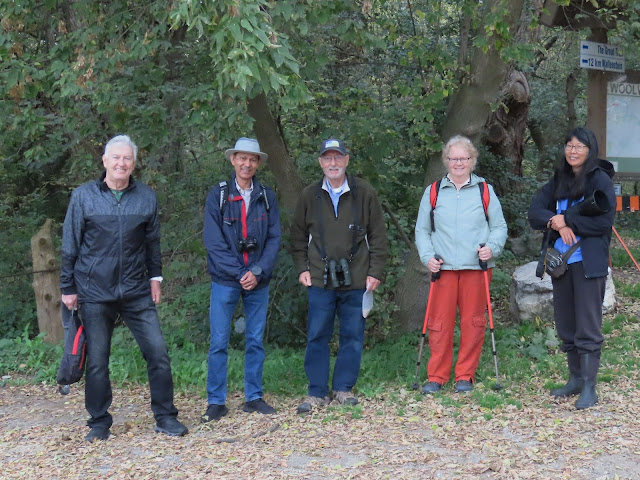
Participants: Miriam Bauman (effectively a co-leader), Karl Malhotra, Pauline Richards, Andrew Wesolowski, Adrienne Zoe

     Three others who had signed up for the walk were sidelined by medical issues of one kind or another

Andrew, Karl, David, Pauline, Adrienne

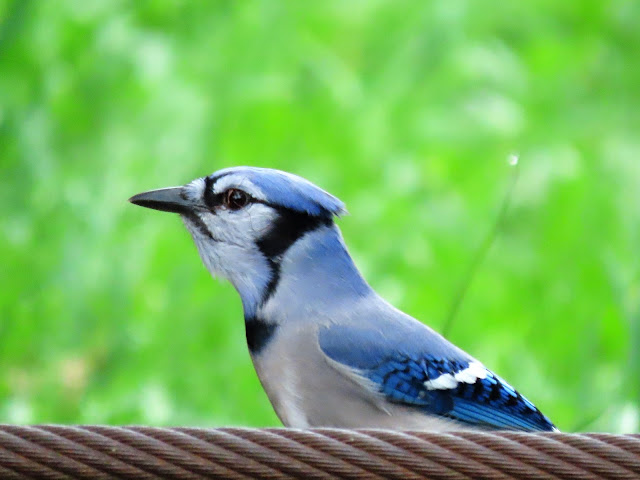
     A friendly Blue Jay (Cyanocitta cristata) came to bid us "Good Morning" before we even set foot on the trail.


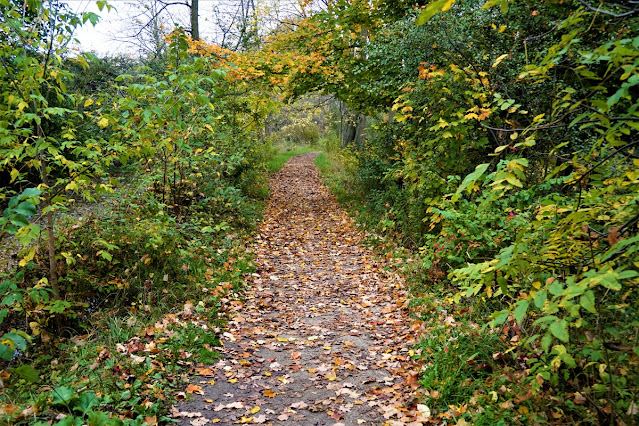
     The Mill Race Trail is beautiful at any time of year, but in the fall, bedecked with leaves, it is perhaps at its most charming.

Photo courtesy of Andrew Wesolowski

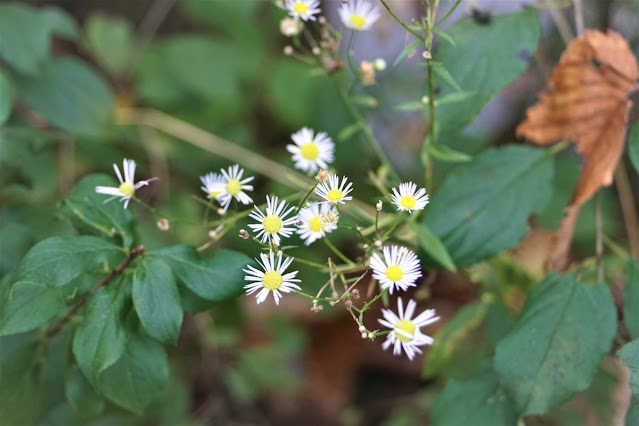
      Pannicled Asters (Symphyotrichum lanceolatum) continue to delight a curious naturalist right into October.

Photo courtesy of Andrew Wesolowski

     On a typical outing the participants have a wide range of skill levels and for some the opportunity to see a White-breasted Nuthatch (Sitta carolinensis) at arm's length is a singular pleasure.


     I can tell you that the pleasure does not diminish with familiarity!
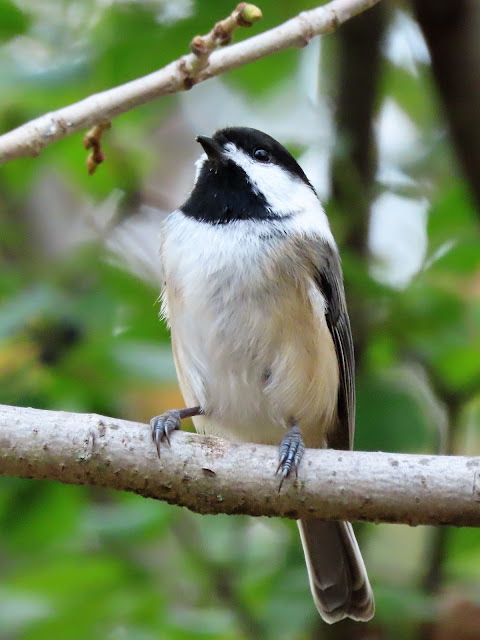
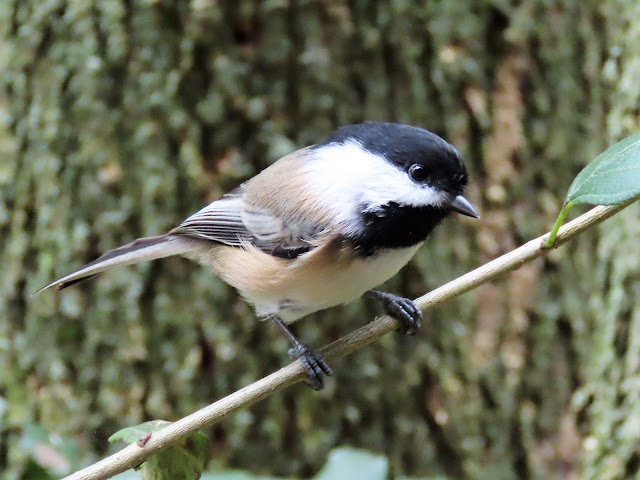
     If anything is as certain as death, taxes and conniving politicians, it is that Black-capped Chickadees (Poecile atricapillus) will come to secure their just reward almost from the moment when you first enter their realm.

Photo courtesy of Andrew Wesolowski

     They repay you with joy at every step along the way.


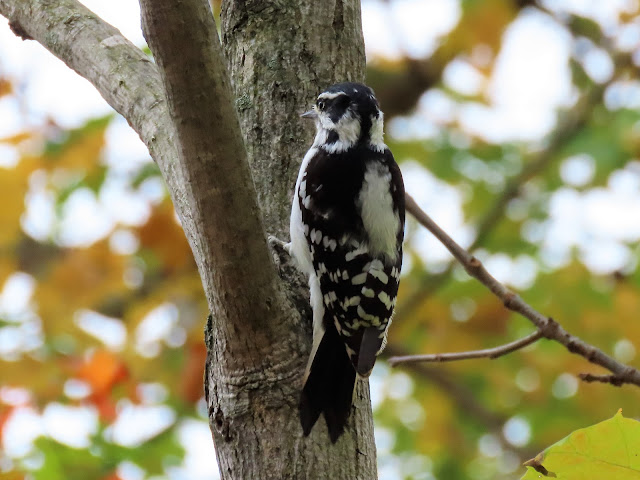
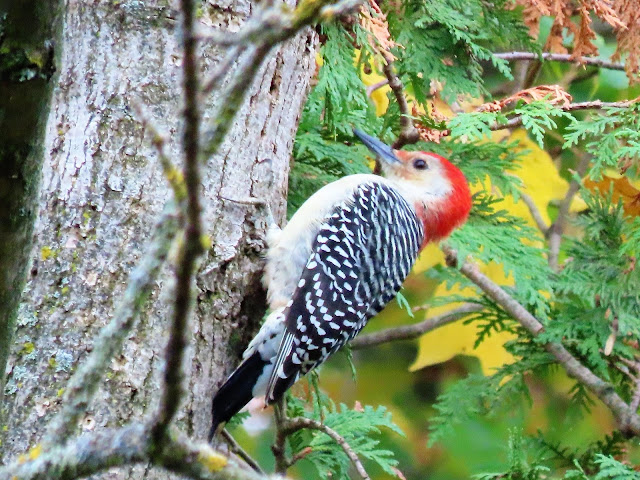
     It would be an odd day when chickadees and nuthatches were not spotted along the Mill Race, and the third "reliable" would be Downy Woodpecker (Dryobates pubescens).


     In recent years Red-bellied Woodpecker (Melanerpes carolinensis) has become almost as predictable as a downy.


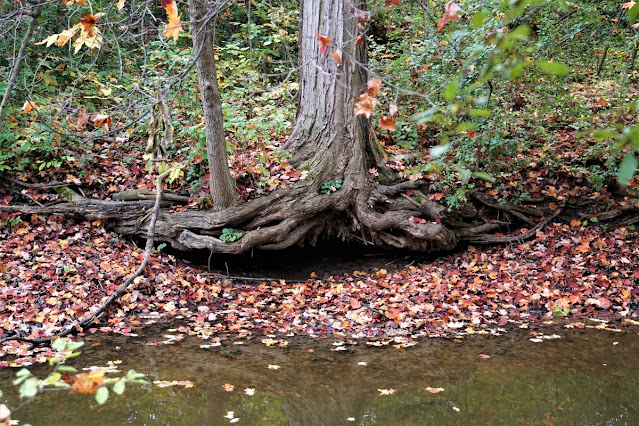
     I am quite sure that we notice this tree on every visit to the Mill Race, wondering when the next fierce wind will bring it down.

Photo courtesy of Andrew Wesolowski

     I think we have been looking at it for at least ten years, however, so it is perhaps better anchored than it appears. The winds of November will soon be shrieking, however.....
     How charming the surface of the water looks with a covering of autumn leaves.


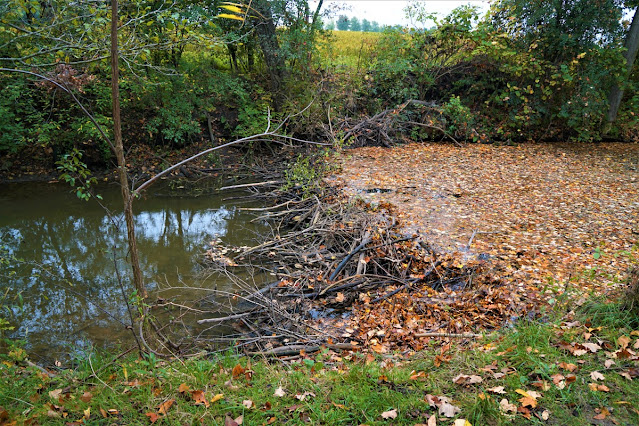
     American Beavers (Castor canadensis) have been busy and the water is backed up behind their dam.

Photograph courtesy of Andrew Wesolowski

      There were lots of Cedar Waxwings (Bombycilla cedrorum) busy flycatching from the treetops.


     October weather has been unseasonably warm and there was no shortage of flying insects.
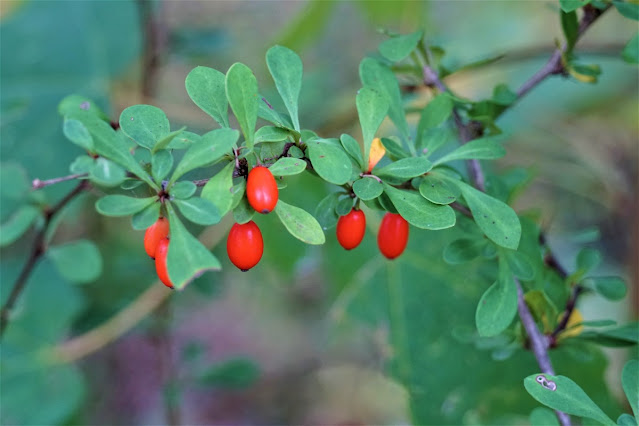
     Ripe Japanese Barberries (Berberis thunbergii) would normally beckon them, but today they seemed indifferent to the fruit shining brightly in the foliage.

Photo courtesy of Andrew Wesolowski

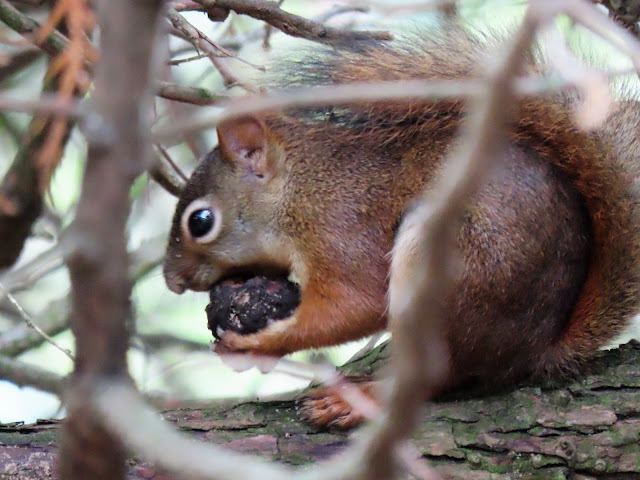
     An American Red Squirrel (Tamiasciurus hudsonius) was making inroads into a Black Walnut (Juglans nigra).


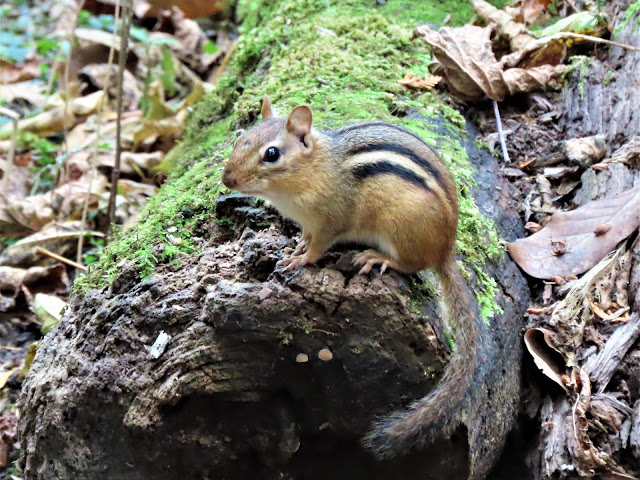
     Eastern Chipmunks (Tamias striatus), the darlings of the rodent world, were scurrying everywhere, busily gathering winter storage, and chattering to every human interloper who passed by.


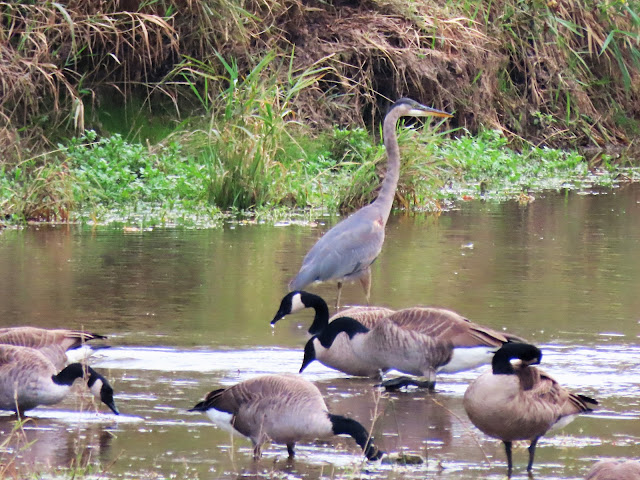
     Canada Geese (Branta canadensis) and a Great Blue Heron (Ardea herodias) were content to share the resources of the Conestogo River, both probing for their food of choice, without competition.


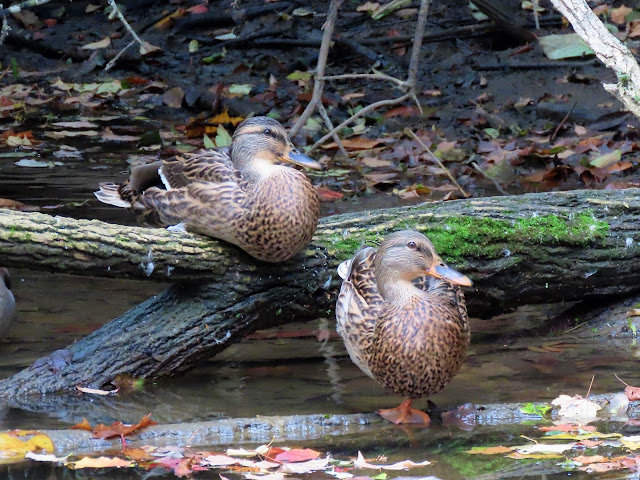
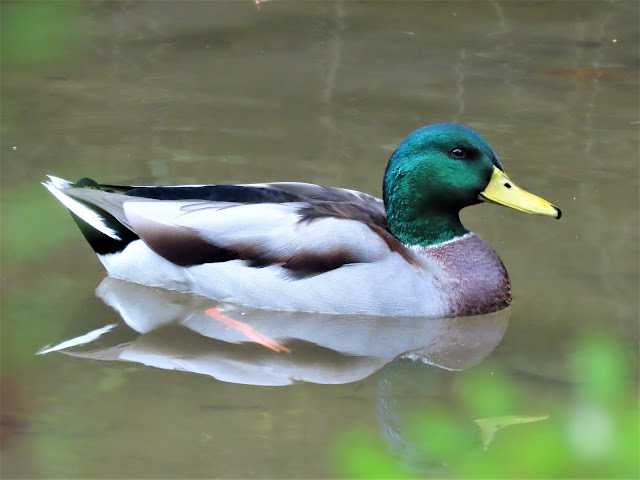
     There is little quite as peaceful as Mallards (Anas paltyrynchos) outside the frenzy of spring courtship, a time when raging hormones dictate aggressive behaviour. Fall is the time of easy living and relaxation and togetherness is the order of the day.


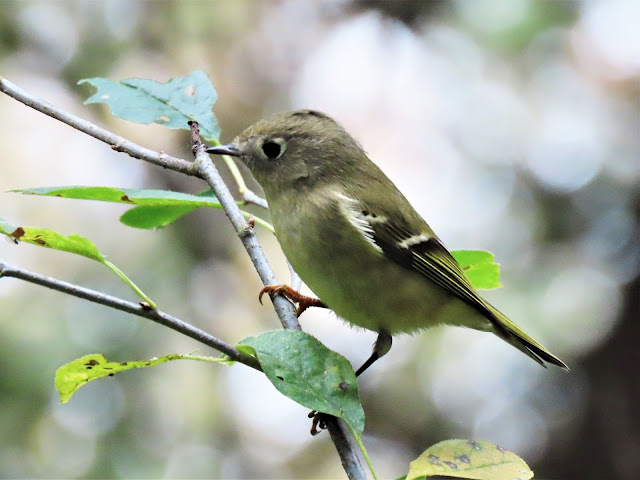
     The presence of several Ruby-crowned Kinglets (Regulus calendula) was highlighted by one especially cooperative individual who, contrary to all kinglet protocols, permitted portraits to be taken!


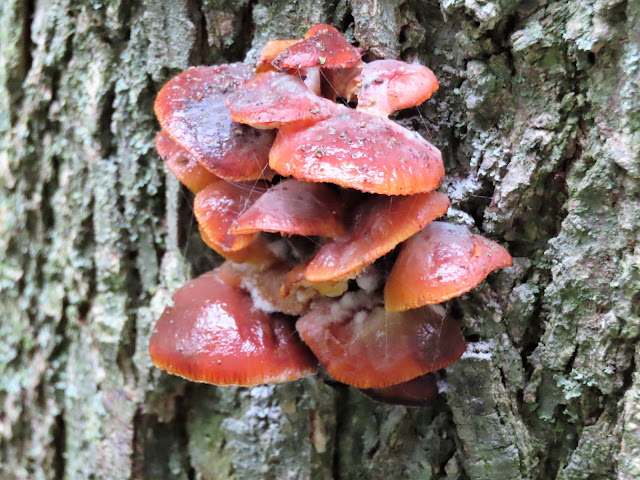
     Fungi, as a general rule, do not attract a great deal of attention, but on this walk several discussions were held as we observed different types, so it was fitting that our outing ended with a fine stand of Velvet Foot (Tapinella atrotomentosa).


     Thank you Karl, Pauline, Andrew and Adrienne. What engaging companions you were on a balmy October morning. 
     Let's do it again!

16 October 2021

Would have been participants: Christine Alexander, Miriam Bauman, Dog Brunton, Victoria Ho, Jennifer Leat, Geoff Moore, Tracey Rainer, Colleen Reilly, Zach Stevens, Roger Suffling, Selwyn Tomkun

Guests: Meghan Singaraja with her son, Gabe.

     My plan is to run the entire series of walks mid week, with a repeat on the weekend for those who work.
     Unfortunately, rain dashed our plans and we had to cancel this outing. 
     Some things we can control - the weather is not one of them.  


Tuesday, May 18, 2021

Staying Local is Not So Bad After All

      We continue to explore the riches of our local area, bound as we are by COVID restrictions, but life is far from dull.

10 May 2021
Waterloo, ON

     At least some of you will recall that I told of a Canada Goose (Branta canadensis) that made its nest in a busy commercial plaza.
     I am happy to report that the outcome was successful.


     People had obviously warmed to this goose and some well-intentioned person left a tray of fresh vegetables, keen to ensure the goose ate a balanced diet, I suppose!


     One gosling did not even make it out of the nest, but death in young birds is a reality and if the others made it to safety this family did well.


Martin Creek Road, Woolwich Township, Waterloo, ON

     I have never quite understood how the Common Dandelion (Taraxacum officinale) became so universally despised. The flower is beautiful, requires no care, and the leaves make a tasty salad.
     Perhaps the next time you are ready to foam at the mouth over dandelions, keep the following image in mind.


     It is nature's beauty writ large.

St. Jacobs, ON

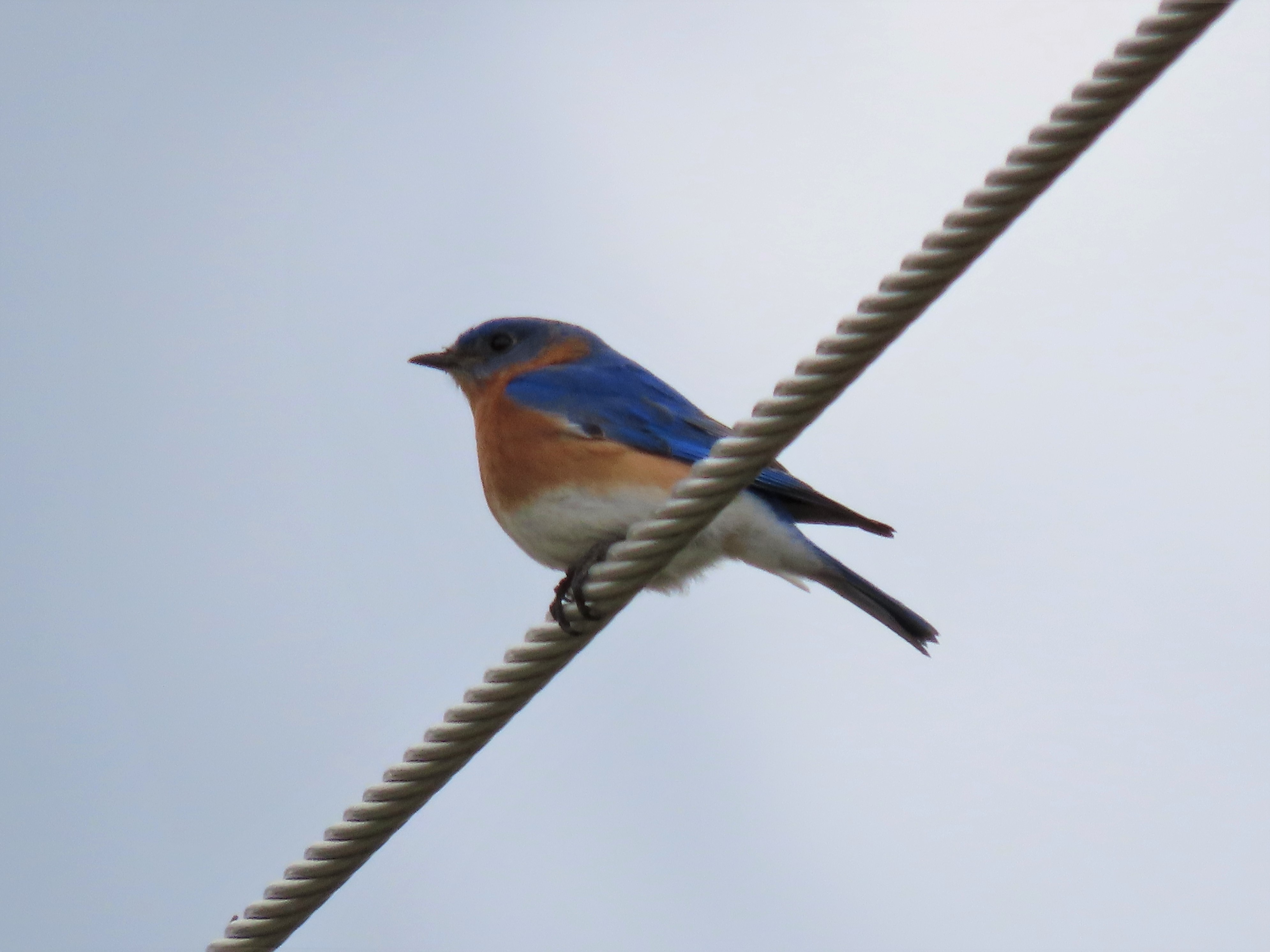
     A male Eastern Bluebird (Sialia sialis) waited for us in the graveyard of a church where we often see this species.


     We noticed a Red-tailed Hawk (Buteo jamaicensis) foolishly (or so it seemed to us), tangling with a couple of Bald Eagles (Haliaeetus leucocephalus).


     It was impossible to get all three birds in the same frame, but here are the two eagles.


     The red-tail had a couple of gaps in its primary feathers so its maneuverability was compromised perhaps, and wisely it broke away from the tussle.
     
14 May 2021
The Mill Race Trail, St. Jacobs, ON

     I was attempting to calculate how many times we have walked this trail and I came up with an estimate in the order of four hundred times. But it still holds secrets that we have not uncovered, and we stand little chance of knowing more than a small fraction of the wonders of nature occurring there in every season. 
     It remains one of our favourite spots.


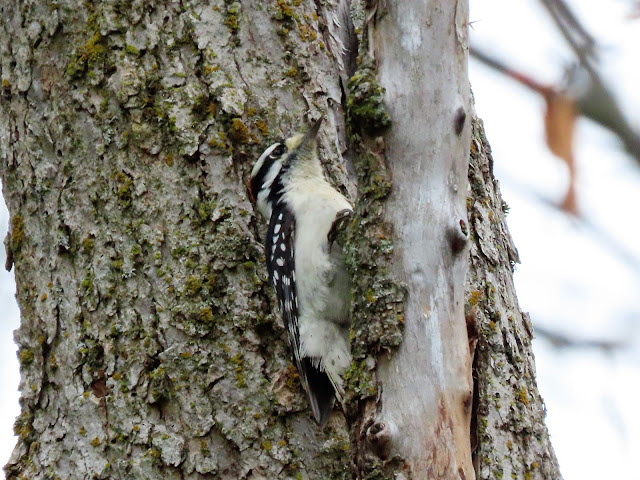
     A Downy Woodpecker (Dryobates pubescens) is predictable and it is rare that we do not see at least one individual and most frequently several. This male is probing for insects and their larvae in the dead wood and hollows of this rotting trunk.


     It was Miriam who first spotted a large concentration of what we initially assumed were Water Striders (Gerridae) but a closer examination revealed a mass of Whirligig Beetles (Gyrinidae), in the genus Dineutus if I am not mistaken.


     Whirligig Beetles are interesting from many angles, not the least of which is that their swimming legs have been modified into unidirectional paddles. These beetles are actually in the water, not on it.


     We were excited to find them.
     Three male Brown-headed Cowbirds (Molothrus ater) were perched high above us. 


     Not for them the rigours of parenting. Their sole purpose in life is to provide sperm for the female; once that deed is done, the warm, balmy breezes of summer are to be enjoyed. One might be inclined to recall George Gershwin's immortal words, "Summertime and the livin is easy"!
     A female Red-winged Blackbird (Agelaius phoeniceus) will never rival the male for ostentation, but she is certainly lovely.


     I am quite sure that you will agree.


      Baltimore Oriole (Icterus galbula) surely ranks as of one of nature's great troubadours, clad in finery to match his golden voice.


     It is a not uncommon bird in spring and summer, but it is a joyous event whenever one is seen.


     And it could sing to me without end and I would still find it enjoyable.


     Two-leaved Toothwort (Cardamine diphylla) has attracted its share of insects.


     A species of maple (Acer) is about to burst into full leaf, but at this stage I am not sure of the species.


     Mourning Cloak (Nymphalis antiopa) can still be found fluttering through the woodlands, often alighting with wings outspread.


     Eastern Comma (Polygonia comma) was equally cooperative.


     We saw a couple of Palm Warblers (Setophaga palmarum), but never in the open, and difficult to photograph.


15 May 2021
Grass Lake and Area, Cambridge, ON

     Much of the wetland component of the area known as Grass Lake, ancestrally known as the Paris Cranberry Bog, has been invaded by Common Reed Grass (Phragmites australis) and is unfortunately slowly filling in. 


     Nonetheless, it remains a spot to see species not easily viewed elsewhere in the region.
     Savannah Sparrow (Passerculus sandwichensis) is guaranteed to be there, with males seeking fenceposts and bushes as vantage points to sing in proclamation of territory, and to lure females to join in a tryst to assure the survival of the species.


     Bobolink (Dolichonyx oryzivorus) is a classic grassland species, and the expanse of uncut meadow provides perfect habitat for this visitor from the pampas of South America.


     Horned Lark (Eremophila alpestris) is an easy species to find in winter, but far more difficult once breeding is initiated. It is a safe bet that this individual gathering grit from the road, is a member of a breeding pair.


     Tree Swallows (Tachycineta bicolor) still nest in natural cavities when they can find them, but most breeding now takes places in nest boxes provided by humans.


     Skunk Cabbage (Symplocarpus foetidus) is an interesting plant, thriving in cold, wet meadows and swamps.


     Heat generated by Skunk Cabbage can melt  surrounding snow and may help to release the foul smell of decaying flesh that helps it to attract pollinators.


     If you would like some to plant in a wet spot in your garden, be sure to let me know and I will ship it immediately!
     Trumpeter Swans (Cygnus buccinator) are  majestic  birds, and have been reintroduced to Ontario, (with great difficulty I might add), having been extirpated many years ago. And their population is expanding.
     Last year we found a pair nesting locally and were ecstatic to find them in the same spot again this year.


     Pure euphoria overcame us when we saw them.


     Yet it was about to get better.
     Miriam was busy photographing the swans, having scampered across a busy road I might add, when I saw a pair of Sandhill Cranes (Antigone canadensis) with a chick, on the far shore of the wetland.


     It's hard to jump for joy strapped into a car seat at the side of a busy road, but mentally that's what I was doing.


     It was so encouraging to see this, to say nothing of inspirational, and gob-smackingly entrancing.


     The combination of the swan sitting on eggs, with a pair of Sandhill Cranes with a young baby, is probably going to remain the highlight of the year.


      It's hard to beat exultation like this. To hell with COVID, I say. Pandemic or not, scenes such as this are eternal.
     There is more, but I think we will save that for the next post. Until then stay safe, and be thankful for nature in your life. Nothing beats it!

Land Acknowledgement

We acknowledge that the land on which we are situated are the lands traditionally used by the Haudenosaunee, Anishinaabe, and Neutral People. We also acknowledge the enduring presence and deep traditional knowledge, laws, and philosophies of the Indigenous Peoples with whom we share this land today. We are all treaty people with a responsibility to honour all our relations.

Followers