20 August 2021
Waterloo Park, Waterloo, ON
It was a warm morning even by eight o'clock and we decided to take Lily to Waterloo Park where she could enjoy the splash pad.
The entire park is being renovated and improved and from what we see has the potential to be terrific. There is a remnant of an old small "zoo", with very few animals remaining, almost in the nature of a petting zoo. It was a first for Lily, but she took to it like a duck to a June bug.

She was really delighted!


After a session with the animals and a little walkabout, we headed to the splash pad.

Lily, who is now walking as you see, loved it!


When it was time to go she didn't even put up a fuss.

But the morning wasn't over. We all went to Vincenzo's, our favourite deli, where we sat at a table in the shade and had gelato.
Not a bad way to end off a morning if you ask me! And did you ever see a more beautiful couple than these two? I don't think I did.
22 August 2021
Columbia Lake, Waterloo, ON
The weather has been too hot of late to do a whole lot of walking, but I made a visit to Columbia Lake. I barely saw or heard a songbird, so I suspect they were staying deep in the foliage away from the oppressive heat and humidity.
A Great Egret (Ardea alba) no doubt remained somewhat cool by striding through the water whenever it felt the urge to do so.

Can you identify the two species of gull?

At the right in the picture above is a Caspian Tern (Hydroprogne caspia), seen in a little better detail below.

It was impossible to get close enough to the birds for better shots.
New England Aster (Symphyotrichum novae-angliae) is blooming prolifically across the region.

An Eastern Tailed Blue (Cupido comyntas) was very cooperative.

A Northern Leopard Frog (Lithobates pipiens), a very handsome amphibian, was content to remain motionless in the grass.

24 August 2021
West Perth Wetlands, Mitchell, ON

The early morning was pleasant, but the forecast was for a hot, sticky day, and by the time we left it was getting that way.
Here you see quite easily the size differential between Killdeer ( Charadrius vociferus) and Least Sandpiper (Calidris minutilla).

Let us never become blasé about American Goldfinches (Spinus tristis). Common they may be, but they are also uncommonly beautiful.

Guelder-rose (Viburnum opulus) makes a fine splash of colour on the landscape too.

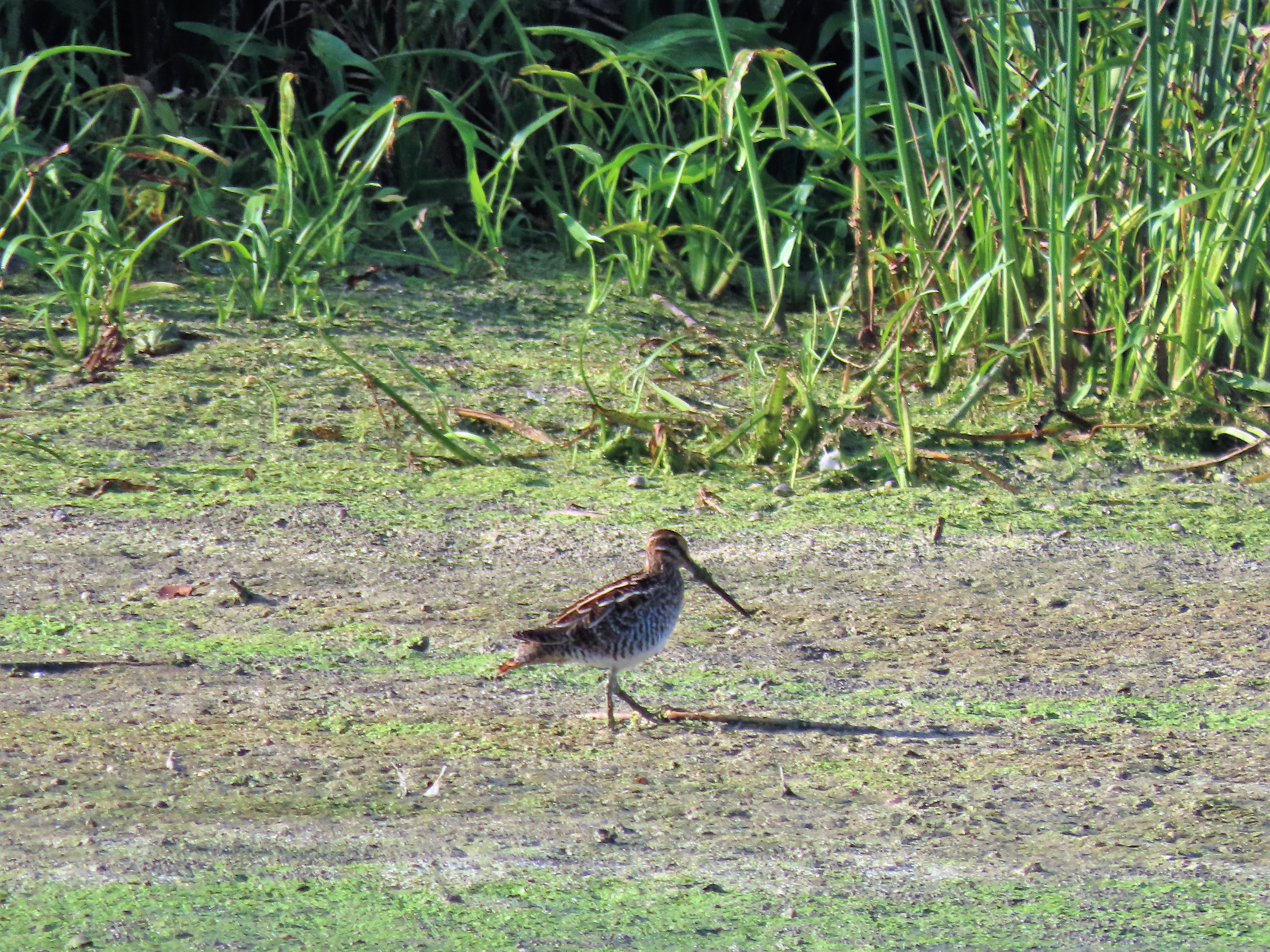
A lone Wilsons Snipe (Gallinago delicata) was feeding frantically.
Many of the trees and bushes have berries by now, and where there are berries, there are Cedar Waxwings (Bombycilla cedrorum).

Greater Yellowlegs (Tringa melanoleuca) is always substantially outnumbered by Lesser Yellowlegs (Tringa flavipes), but we did spot a few.

Perhaps in the picture below of a Lesser Yellowlegs you can pick out some of the differences, other than size, between a Greater and Lesser Yellowlegs.

There were several Green-winged Teal (Anas carolinensis) amongst the Mallards (Anas platyrynchos), all quite far out unfortunately, but this individual obligingly flashed its speculum for us.

It was not hard to find a Monarch (Danaus plaxippus).

This wetland is a place where we always expect to see substantial numbers of Wood Ducks (Aix sponsa), but we saw few on this occasion.

No doubt many are concealed in the reeds, concerned for their safety pending the regrowth of their flight feathers.
Several different species of dragons and damsels were present, but few condescended to perch for us. Eastern Forktails (Ischnura verticalis) were a pleasing exception.


There were hundreds of Mallards on the various ponds, many of them males resembling females. They have undergone complete moult, including all their flight feathers, and will rarely stray from the safety of the water during this period when escape from danger by flight is not an option.

Various species of Milkweed (Asclepias) are developing their signature seed pods.


Soon the pods will burst open and seeds will be scattered by the wind.
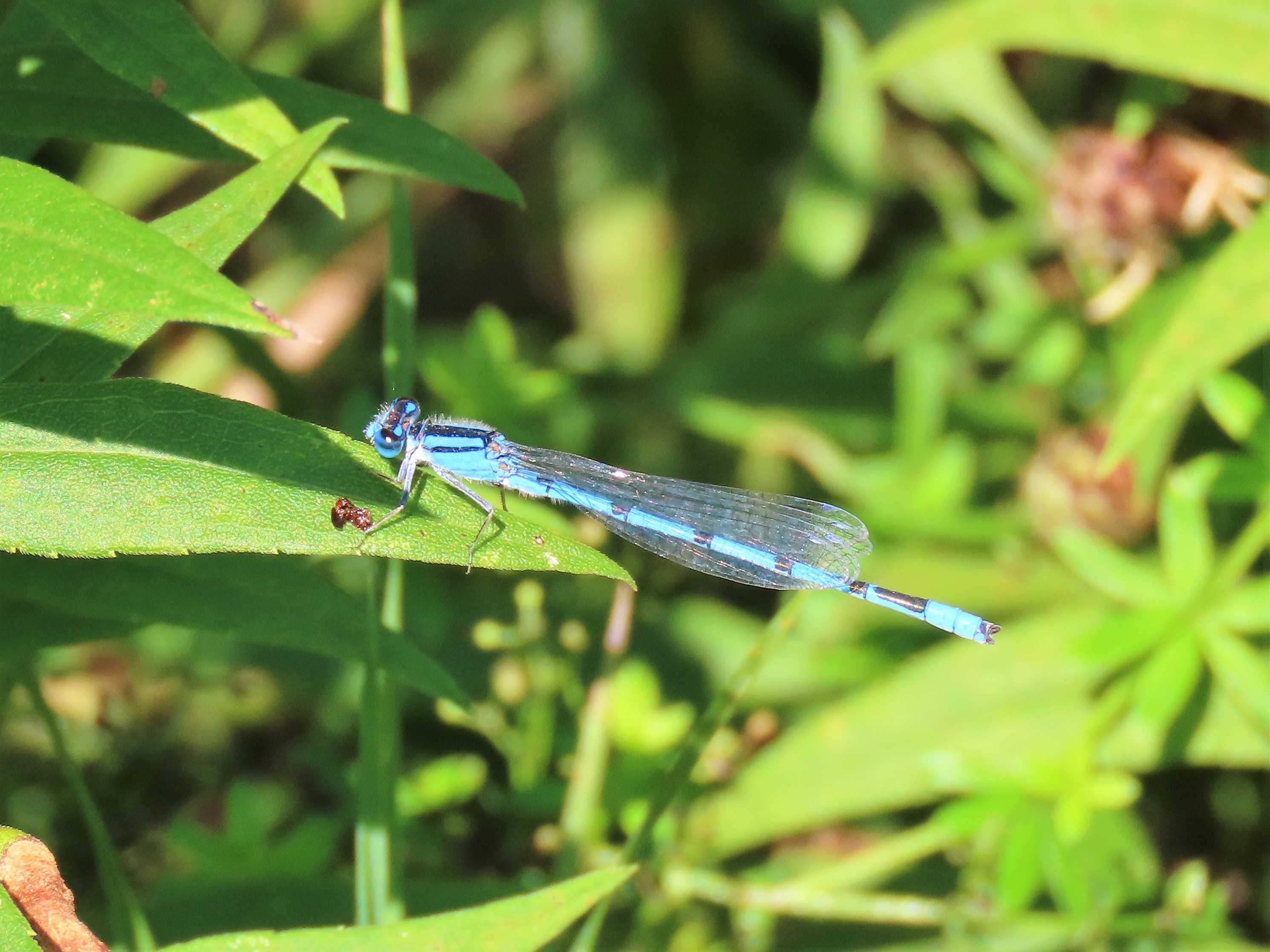
Familiar Bluets (Enallagma civile) were as familiar as their name implies.
Black-legged Meadow Katydids (Orchelimum nigripes) for the most part kept well ahead of us, but Miriam did manage this photograph.

It is a striking insect as you may see.
Yellow Garden Spider (Argiope aurantia) is a large and dramatic arachnid.

27 August 2021
Columbia Lake, Waterloo, ON
It was a brutally hot day, but we thought it might be a little cooler near the water.
From an avian perspective there was little to be seen that was different from my visit a few days earlier.

Lesser Yellowlegs

Least Sandpiper

Great Egret

Lesser Yellowlegs and Least Sandpipers
It was exciting to discover the caterpillar of Bedstraw Hawk-moth (Hyles gallii), a formidable larva if ever I saw one!

27 August 2021
At home, Waterloo, ON
We were sitting in the family room when Miriam spotted a "blotch" on the patio door. It turned out to be a Green Cloverworm Moth (Hypena scabra).

A great way to end the day!