Showing posts with label Great Egret. Show all posts

Monday, August 15, 2022

More Odds and Ends

02 August, 2022
Columbia Lake, Waterloo, ON

     There is cause for despair over the long period of drought we have been experiencing, although our situation in southern Ontario is nowhere near as dire as in many parts of the world where entire ecosystems are being incinerated.


     When I see this parched lake-bed, baking in the sun, I cannot help but fume at the folly of continuing to ignore climate change. Entire trophic chains are obliterated under conditions such as this; how much they can recover is anyone's guess given that the planet is on target to get hotter over the next few decades. There are no benthic invertebrates to feed the myriad small creatures that inhabit the lake bottom, in turn preyed upon by small fish which fall victim to large fish, to provide food for obligate piscivores like ospreys, terns, kingfishers and so on, to say nothing of majestic eagles and stealthy herons - and on it goes. The link has been broken, and for those who think we are not affected by it, a rude awakening lies  in store.
     As John Donne so eloquently phrased it, "..... never send to know for whom the bell tolls; it tolls for thee."
     On the few areas where a little water persisted, and mud was created, Semipalmated Plovers (Charadrius semipalmatus) plied their trade.


     A couple of Spotted Sandpipers (Actitis macularius) flew in to join the parade, one of them disappearing almost immediately. How well they can blend into a rocky shore.


     This wonderfully attractive maple is an Amur Maple (Acer ginnala), native to eastern Asia, but now localized in the landscape of the temperate zones of North America.


     Attractive though it may be, it nevertheless competes with native species for scarce resources.
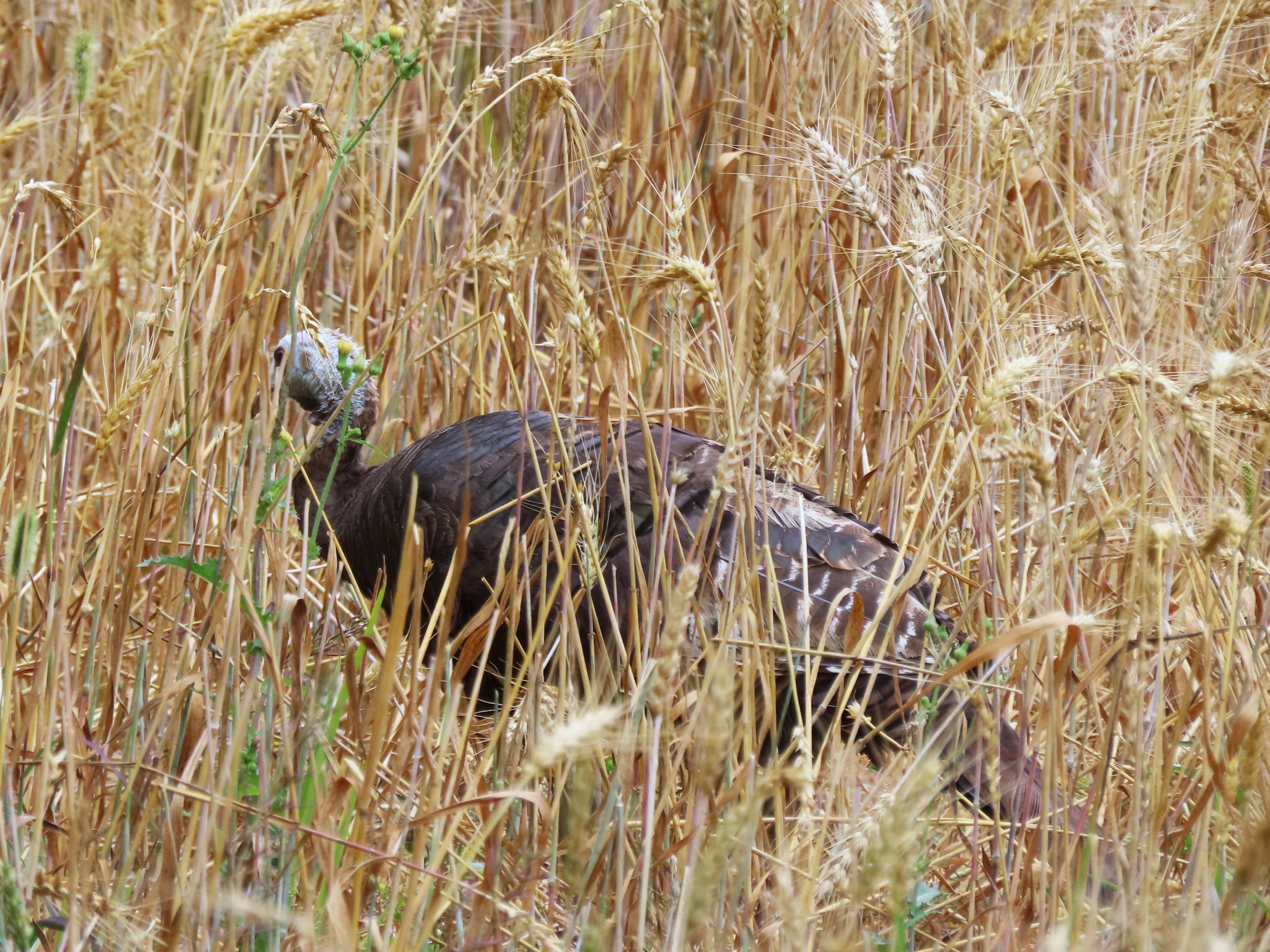
     A Wild Turkey (Meleagris gallopavo) exploits every nook and cranny of woodland and meadow with great success.

05 August, 2022
A Country Drive

     We went for a leisurely drive, primarily motivated by the desire to pick up fresh corn for dinner. In terms of birding, the dog days of summer are upon us, with most species busy raising a family, and with no need to sing, stillness descends on the landscape. Many species will already be winging their way south by month's end.
     A Great Blue Heron (Ardea herodias) claimed a rock to himself; he was indeed king of the castle. 


     With lightening reflexes and a stiletto for a bill, I doubt there would be many challengers.
     Barn Swallows (Hirundo rustica) and their young are fattening up for the long journey ahead.


09 August, 2022
West Perth Wetlands, Mitchell, ON

     This location has long been one of our favourite destinations and over the years has delivered some outstanding species.


     Today we met a species brand new to us - our first genuine climate migrant. We chatted with a couple (and their dogs) who had moved to Mitchell from interior British Columbia, sick of dealing with the constant smell of smoke, with its attendant threat to respiratory health - to say nothing of the real possibility of losing their home to rampant, uncontrollable wild fires. There will doubtless be more to follow.
     Wood Ducks (Aix sponsa) have been a presence on the wetland for many years, and after a successful breeding season may be seen in very large numbers, in every stage of plumage from day-old duckling to adult, with males in transition from eclipse plumage back to their breathtaking splendour.


     Lesser Yellowlegs (Tringa flavipes) arrive from their Arctic breeding grounds and are happy to associate with ubiquitous Mallards (Anas platyrynchos).


     A Wood Duck joined the party to make it a trio.


     A Burr Oak (Quercus macrocarpa) had a prodigious crop of acorns.


     There will be many happy squirrels this year!
     No doubt Cedar Waxwings (Bombycilla cedrorum) and American Robins (Turdus migratorius)  will be equally delighted with the fine crop of berries on Guelder Rose (Viburnum opulus).


11 August, 2022
Columbia Lake, Waterloo, ON

     Miriam and I were sitting at home, unusually for us not doing much of anything, so we decided to visit Columbia Lake, a mere five minutes from our house, where a substantial contingent of Great Egrets (Ardea alba) had been reported. 
     All but one had departed, but one was enough for us, and we revelled in the graceful elegance of this denizen of the waterways.


     It is sobering to reflect on the fact that it was almost driven to extinction by feather traders seeking to satisfy the fashion for egret plumes for women's hats. And if you had a few stuffed hummingbirds to go along with it so much the better! 
     A Great Blue Heron is perhaps no less elegant than the egret, but pristine whiteness seems to confer extra cachet, probably because we are less familiar with it, and for no darker meaning than that.


     A Caspian Tern (Hydroprogne caspia) is an impressive bird with that blood-red bill looking vaguely like a carrot. Adult and juvenile together is a fine study.


     Inside the mouth of the bird is as crimson as the mandibles.


     Ring-billed Gulls (Larus delawarensis), as gulls are prone to do on a hot day, were happy to loaf at the water's edge.


     All of the foreground you see would normally be underwater, and as you may see from the standing gulls, it will not take many more days of heat to evaporate what water remains.
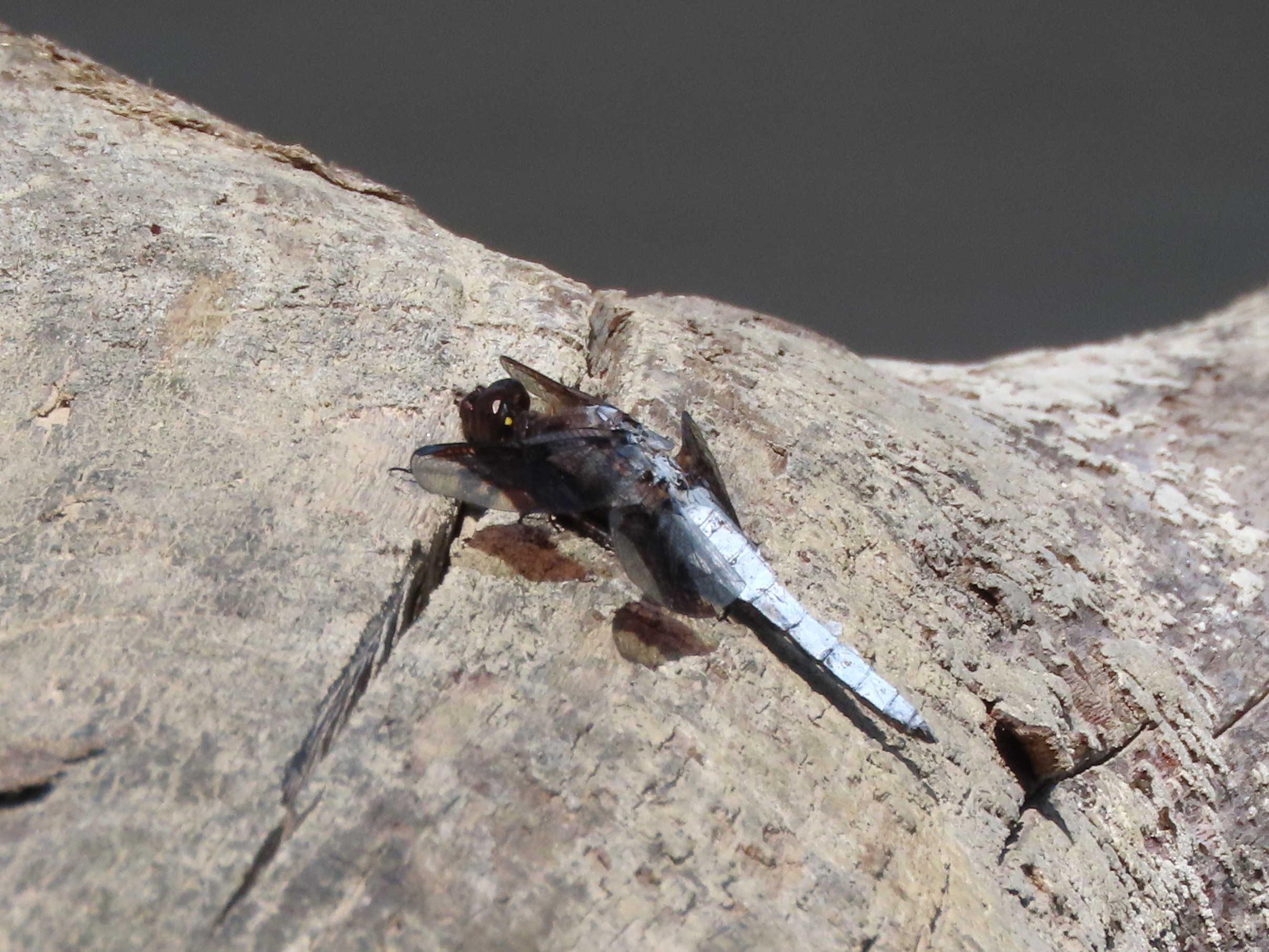
     A Common Whitetail (Plathemis lydia) is very common in July and August.

     Coneflowers have passed their prime, probably at least in part due to being starved for moisture.


     Ants appeared to find what they were looking for on Wild Carrot (Daucus carota), otherwise known by the grander name, Queen Anne's Lace.


     At the far corner of the lake, partly shaded by trees is an area that holds water longer than anywhere else and the Caspian Terns were feeding there. Can you see them almost at dead centre in the picture?


     We saw them make a couple of successful plunges; no doubt the fish are compressed into ever smaller pools making for easy pickings. A second Great Blue Heron seemed to reinforce the point.


     Thanks for stopping by my blog today.

Wednesday, September 01, 2021

Lily, Birds, Frogs and Bugs

20 August 2021 
Waterloo Park, Waterloo, ON

     It was a warm morning even by eight o'clock and we decided to take Lily to Waterloo Park where she could enjoy the splash pad.
     The entire park is being renovated and improved and from what we see has the potential to be terrific. There is a remnant of an old small "zoo", with very few animals remaining, almost in the nature of a petting zoo. It was a first for Lily, but she took to it like a duck to a June bug.


     She was really delighted!


     After a session with the animals and a little walkabout, we headed to the splash pad. 


     Lily, who is now walking as you see, loved it!


     When it was time to go she didn't even put up a fuss.


     But the morning wasn't over. We all went to Vincenzo's, our favourite deli, where we sat at a table in the shade and had gelato. 
     Not a bad way to end off a morning if you ask me! And did you ever see a more beautiful couple than these two? I don't think I did.

22 August 2021
Columbia Lake, Waterloo, ON

     The weather has been too hot of late to do a whole lot of walking, but I made a visit to Columbia Lake. I barely saw or heard a songbird, so I suspect they were staying deep in the foliage away from the oppressive heat and humidity.
     A Great Egret (Ardea alba) no doubt remained somewhat cool by striding through the water whenever it felt the urge to do so.


     Can you identify the two species of gull?


     At the right in the picture above is a Caspian Tern (Hydroprogne caspia), seen in a little better detail below.


     It was impossible to get close enough to the birds for better shots.
     New England Aster (Symphyotrichum novae-angliae) is blooming prolifically across the region. 


      An Eastern Tailed Blue (Cupido comyntas) was very cooperative.


     A Northern Leopard Frog (Lithobates pipiens), a very handsome amphibian, was content to remain motionless in the grass.


24 August 2021
West Perth Wetlands, Mitchell, ON


It was the day for our Tuesday group to get together, but only Franc and Carol were able to make the trip to Mitchell to join Miriam and me.
     The early morning was pleasant, but the forecast was for a hot, sticky day, and by the time we left it was getting that way.
     Here you see quite easily the size differential between Killdeer ( Charadrius vociferus) and Least Sandpiper (Calidris minutilla).


     Let us never become blasé about American Goldfinches (Spinus tristis). Common they may be, but they are also uncommonly beautiful.


     Guelder-rose (Viburnum opulus) makes a fine splash of colour on the landscape too.


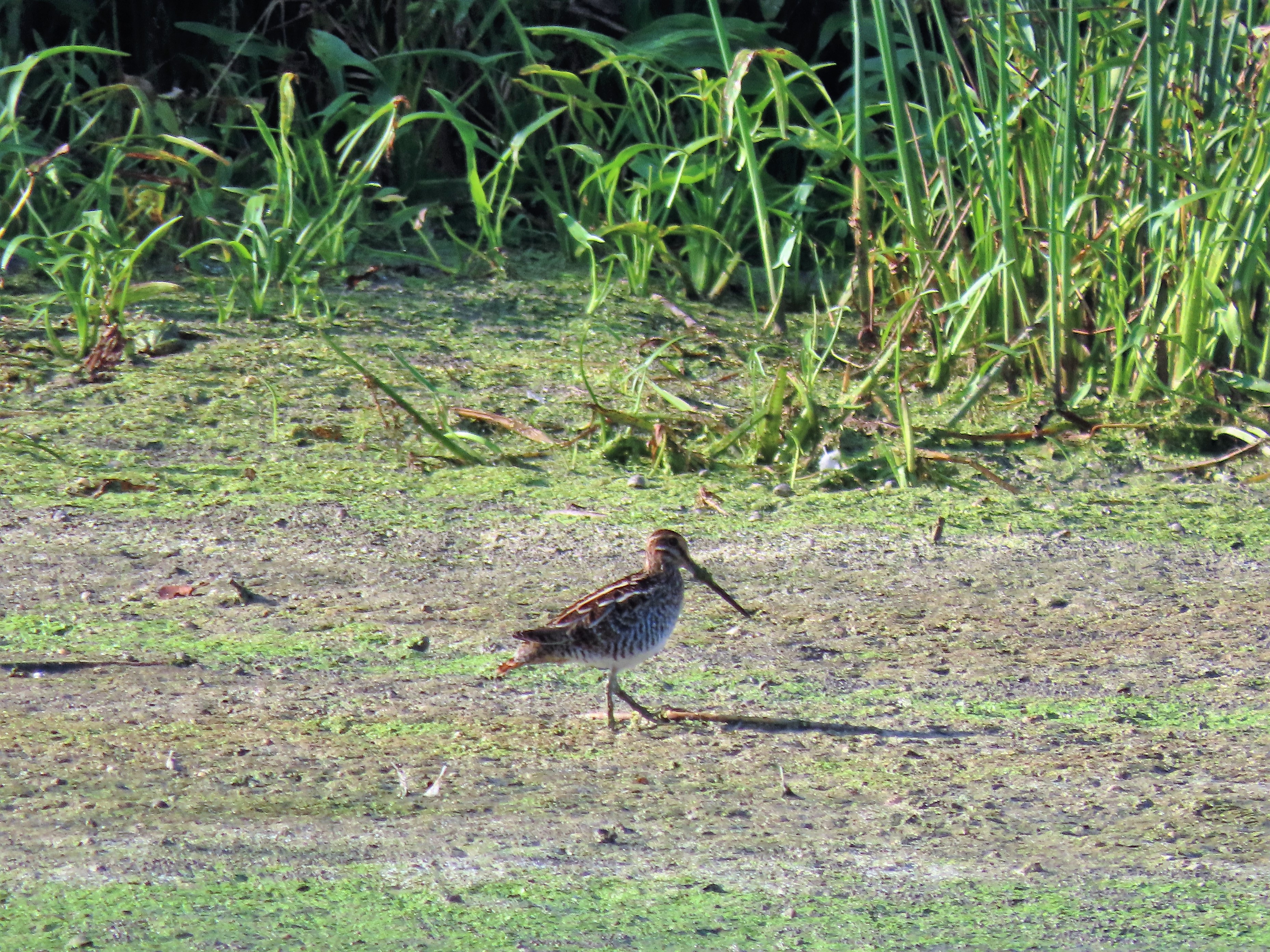
     A lone Wilsons Snipe (Gallinago delicata) was feeding frantically.


     Many of the trees and bushes have berries by now, and where there are berries, there are Cedar Waxwings (Bombycilla cedrorum).


     Greater Yellowlegs (Tringa melanoleuca) is always substantially outnumbered  by Lesser Yellowlegs (Tringa flavipes), but we did spot a few.


     Perhaps in the picture below of a Lesser Yellowlegs you can pick out some of the differences, other than size, between a Greater and Lesser Yellowlegs.


     There were several Green-winged Teal (Anas carolinensis) amongst the Mallards (Anas platyrynchos), all quite far out unfortunately, but this individual obligingly flashed its speculum for us.


     It was not hard to find a Monarch (Danaus plaxippus).


     This wetland is a place where we always expect to see substantial numbers of Wood Ducks (Aix sponsa), but we saw few on this occasion.


     No doubt many are concealed in the reeds, concerned for their safety pending the regrowth of their flight feathers.
     Several different species of dragons and damsels were present, but few condescended to perch for us.  Eastern Forktails (Ischnura verticalis) were a pleasing exception.


     There were hundreds of Mallards on the various ponds, many of them males resembling females. They have undergone complete moult, including all their flight feathers, and will rarely stray from the safety of the water during this period when escape from danger by flight is not an option. 


     Various species of Milkweed (Asclepias) are developing their signature seed pods.


     Soon the pods will burst open and seeds will be scattered by the wind.
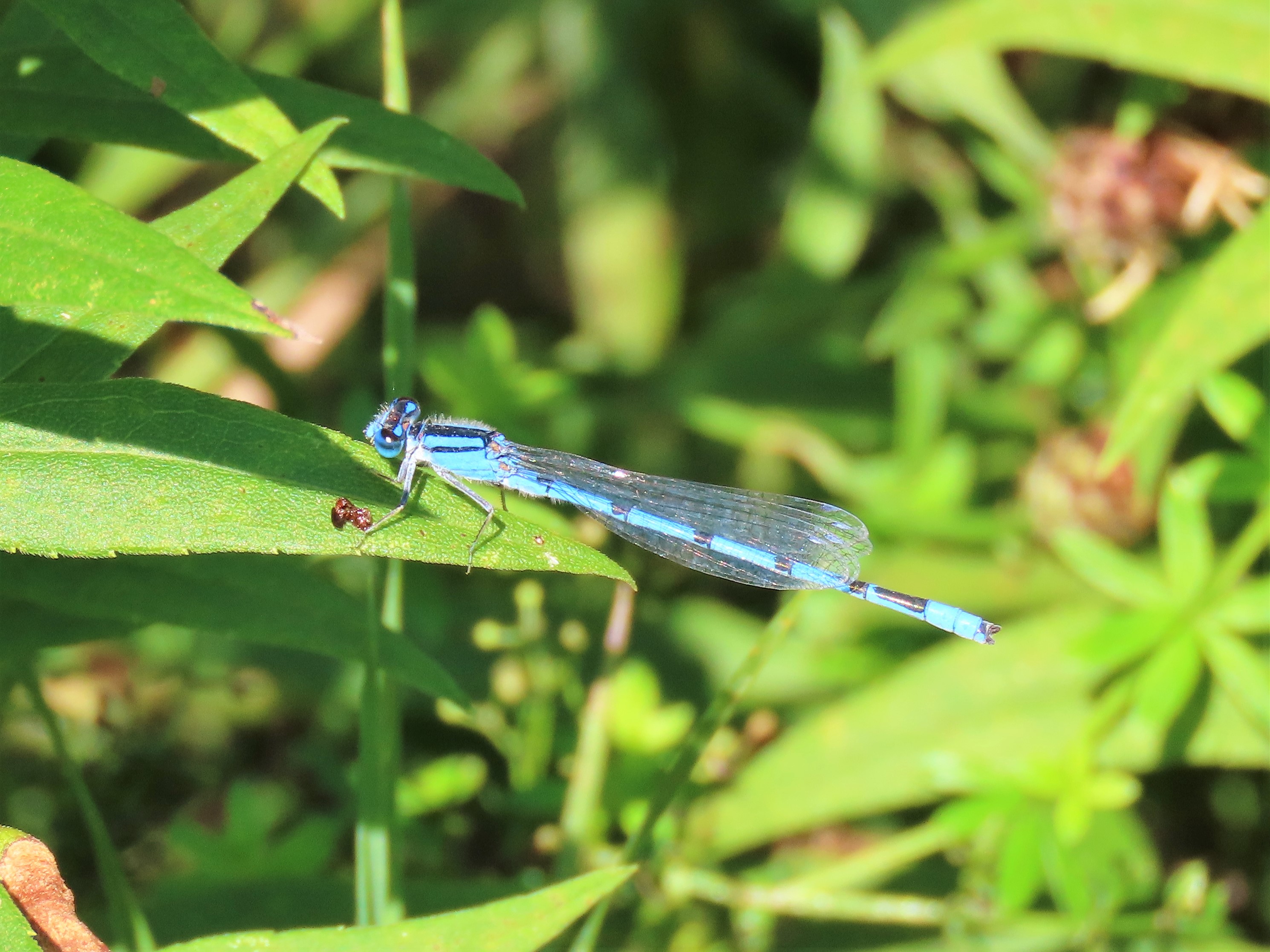
     Familiar Bluets (Enallagma civile) were as familiar as their name implies.


     Black-legged Meadow Katydids (Orchelimum nigripes) for the most part kept well ahead of us, but Miriam did manage this photograph.


     It is a striking insect as you may see.
     Yellow Garden Spider (Argiope aurantia) is a large and dramatic arachnid.


27 August 2021
Columbia Lake, Waterloo, ON

     It was a brutally hot day, but we thought it might be a little cooler near the water.
     From an avian perspective there was little to be seen that was different from my visit a few days earlier.

Lesser Yellowlegs
Least Sandpiper

Great Egret

Lesser Yellowlegs and Least Sandpipers

       It was exciting to discover the caterpillar of Bedstraw Hawk-moth (Hyles gallii), a formidable larva if ever I saw one!


27 August 2021
At home, Waterloo, ON

      We were sitting in the family room when Miriam spotted a "blotch" on the patio door. It turned out to be a Green Cloverworm Moth (Hypena scabra).


     A great way to end the day!

Land Acknowledgement

We acknowledge that the land on which we are situated are the lands traditionally used by the Haudenosaunee, Anishinaabe, and Neutral People. We also acknowledge the enduring presence and deep traditional knowledge, laws, and philosophies of the Indigenous Peoples with whom we share this land today. We are all treaty people with a responsibility to honour all our relations.

Followers