Recently my daughter, Caroline, drove down from Ottawa for a long weekend's visit, and it was a pleasure to see her for the first time since we went to Algonquin Provincial Park together in March, just before the full impact of Covid-19 steamrolled over all of us.
Lots went on while she was here, so I will break down my blog coverage into a couple of posts, so that they don't become unreasonably long.
Just before I get into that, let me show you a basket of strawberries I bought from a local farmer a few days before Caroline arrived.
They were delicious, juicy and quite reasonably priced.
I had arranged with our good friend, John Pries, for us to visit RiverSong on the morning of Caroline's first day with us, and the resident Western Osprey (Pandion haliaetus) was there to bid her welcome.
John has made innumerable improvements to RiverSong since acquiring the property several years ago, including the restoration of this wonderful old waterwheel.
The view of the Conestogo River from this little Shangri-La is nothing short of spectacular.
John had been chatting to us about the behaviour of a pair of Bald Eagles (Haliaeetus leucocephalus) he had been observing along the river and pointed us in the general direction. Far off, perched in a tree where John believes the nest is located, was a sentinel.
Beavers (Castor canadensis) are a marvelous component of our ecosystem, but when their landscape-altering dams and lodges are built too close to humans, conflicts can arise. One's admiration for the creature is sometimes strained to the limit when land and buildings are flooded. John has coped well with his local residents.
We saw this odd growth on the leaves of several trees. What it is exactly I am not sure, so if anyone knows be sure to let me know.
What do you do with an old picnic table no longer in use? Susan, John's wife, is quick to come up with ideas which John is ready to execute. VoilĂ ! A bench!
What better companion could one have on a walk around River Song on a hot, steamy day (a three-shirt day as John described it!) than an American Toad (Anaxyrus americanus)? We were very happy to share a few minutes with this handsome individual.
Many turtles come up from the river to lay their eggs in sandy areas and John was showing Caroline where both Snapping Turtles (Chelydra serpentina) and Midland Painted Turtles (Chrysemys picta) had already completed their task for the year.
An Eastern Phoebe (Sayornis phoebe) had found a great perch from which to capture passing insects.
As one meanders around RiverSong one is struck by whimsy everywhere, always tasteful, always appealing. And photogenic too!
We had decided that we would leave for a while and return for lunch, and on the way out Caroline posed for a picture at the water wheel.
As we left the parking area, the two young Ospreys, now almost as big as their parents, looked over the nest to say "See you soon."
We went down Three Bridges Road to the section of the Conestogo River where there is a weir in St. Jacobs, a beautiful spot.
The first bird we saw was a Great Blue Heron (Ardea herodias) followed in short order by a Green Heron (Butorides virescens).
A Green Frog (Lithobates clamitans) posed for us very nicely.
Wildflowers are abundant in early summer, beautiful and fragrant, with the hum of pollinators a constant background noise.
Chicory (Cichorium intybus) seems to dominate every roadside verge and abandoned field.
It is hard to know whether it, or Queen Anne's Lace (Daucus corota) is more common.
We returned to RiverSong to enjoy lunch, being greeted by the now familiar Ospreys, adult and young alike.
It had been a wonderful start to Caroline's visit.
Showing posts with label Eastern Phoebe. Show all posts
Thursday, July 16, 2020
Thursday, June 04, 2020
30 May 2020
Three Bridges Road, St. Jacobs, ON
The full suite of flycatchers has arrived back in our area, some passing through on their way farther north, others stopping to breed.
Two of the most common species are shown below.
| Eastern Phoebe, Sayornis phoebe |
Friday, October 11, 2019
This post will be a composite of various outings over the past couple of weeks. We do not have a lot of photographs for any single walk so it makes sense to combine them.
We are at that point in the fall when most of the outbound migrants have left and winter species have not yet moved in. The end of the month should already start to redress that situation.
Hillside Park, Waterloo, ON
A couple of visits to Hillside Park were pleasant and overall the birding was not bad. Passerines high in treetops, and others in dense bushes and tangles, did not make for great photographic opportunities. It is a great place to visit and very local, however; we can leave the house and be there in ten minutes.
As you may see, autumn foliage is slowly starting to dominate the greenery of deciduous woodlands.
The colours are spectacular, no less awe-inspiring with each passing year, and are a familiar and welcome feature of autumn in Ontario. People travel great distances for the splendour of the fall colours; we are lucky to have them in our own backyard.
This juvenile Cedar Waxwing (Bombycilla cedrorum) was gorging on the prolific crop of berries of European Buckthorn (Rhamnus cathartica).
Fall has been warm this year, unseasonably so, and the skies have been blue; sometimes etched with white, always interesting with shifting shapes and formations.
An Eastern Phoebe (Sayornis phoebe) was probably paying scant attention to the clouds, focusing all its attention on insects passing by, to be snapped up in a quick sally from its perch.
Mallards are ubiquitous; known to everyone both by sight and by sound, but they are always delightful. Like old friends we don't always give them their due, but we relish the reassurance of their presence.
Riverside Park, Cambridge, ON
A few hours at Riverside Park is generally rewarding, and this visit was no exception.
I also needed to buy bird seed from Wild Birds Unlimited, which is close by, so I took care of that chore too.
This park is well used by casual walkers, and dogs exercising their humans, and many birds have come to realize that friendly two-legged creatures often have food in their pockets. Black-capped Chickadee (Poecile atricapillus) is frequently one of the first to explore this possibility.
It seems to have become a trend recently that people paint rocks and inscribe inspirational messages on them, and leave them in prominent places.
From what I understand the finder is expected to be uplifted by the words, and may take the rock home or leave it for others to be similarly inspired. Some items are just decorative and have a reference on the back.
Quite what this signifies I am not sure. We left them for others to discover!
White-breasted Nuthatch (Sitta canadensis) was very common and wasted no time in letting us know that if we had seed it was willing to take it.
Male and female Northern Cardinals (Cardinalis cardinalis) were equally bold.
Not to be outdone, an American Red Squirrel (Tamiasciurus hudsonicus) was preoccupied with the serious business of laying in winter storage.
Red-winged Blackbird (Agelaius phoeniceus) is a migratory species, but every year several individuals elect to remain at Riverside Park, and I am sure that supplemental human feeding has a lot to do with it. They are arrayed in various stages of plumage, all very handsome.
A Mourning Dove (Zenaida macroura) appeared content to simply observe from on high, although periodically it did come down to snatch a little seed.
House Finches (Haemorhous mexicanus) seem to have declined in numbers in recent years so it was very agreeable to see this pair at Riverside park.
American Robin (Turdus migratorius) is another species that can now be found in the winter, having demonstrated an ability to exploit micro-climates and find suitable roosting sites. This individual was quite pale.
As might be expected in October fungi dotted the woodlands, in a myriad of shapes, colours and sizes.
Like the red squirrels above Eastern Chipmunks (Tamias striatus) are veritable paragons of industriousness as they prepare for winter, filling their cheek pouches with seeds and berries, and scampering off to add to their larder.
Columbia Lake/Clair Lake Park, Waterloo, ON
As I arrived at Columbia Lake I saw three Canada Geese (Branta canadensis) fly in to join a couple of others already on the lawn.
The welcome they received was not entirely friendly.
But after a couple of minutes of posturing and hissing it looks like they decided to get along.
Fall colours were in evidence, of little concern to the quarrelsome geese I am sure.
Great Blue Herons (Ardea herodias) could be seen around the lake, sometimes in the open, at other times hidden by the reeds.
In recent weeks I have seen as many as fifteen Great Egrets (Ardea alba) at Columbia Lake, but yesterday only three remained.
This is an elegant, handsome bird, and it is very agreeable that its presence here has increased exponentially in recent years.
Mallards have not yet been joined by other species of ducks from the north, but I am sure that will change shortly. In the meantime it feels good to loaf on the rocks.....
..... or go off to find a snack.
Killdeer (Charadrius vociferus) is another species which has departed over the past few days, as birds head out on migration. I searched in all the likely spots but only a single bird remained.
The trees at Clair Lake Park were a riot of colour.
I had a pleasant walk but what birds I saw for the most part were in the darkest recesses of the woodlot, and all resident species one might expect.
As I departed I spotted an Eastern Phoebe flycatching from the top of a tree. Phoebes are the hardiest of the flycatchers to visit us, always the first to arrive and the last to leave. And a great favourite to all who know them.
I bade this one farewell in the sincere hope that I may see it again next spring.
Subscribe to:
Posts (Atom)
Land Acknowledgement
We acknowledge that the land on which we are situated are the lands traditionally used by the Haudenosaunee, Anishinaabe, and Neutral People. We also acknowledge the enduring presence and deep traditional knowledge, laws, and philosophies of the Indigenous Peoples with whom we share this land today. We are all treaty people with a responsibility to honour all our relations.
Followers
Welcome
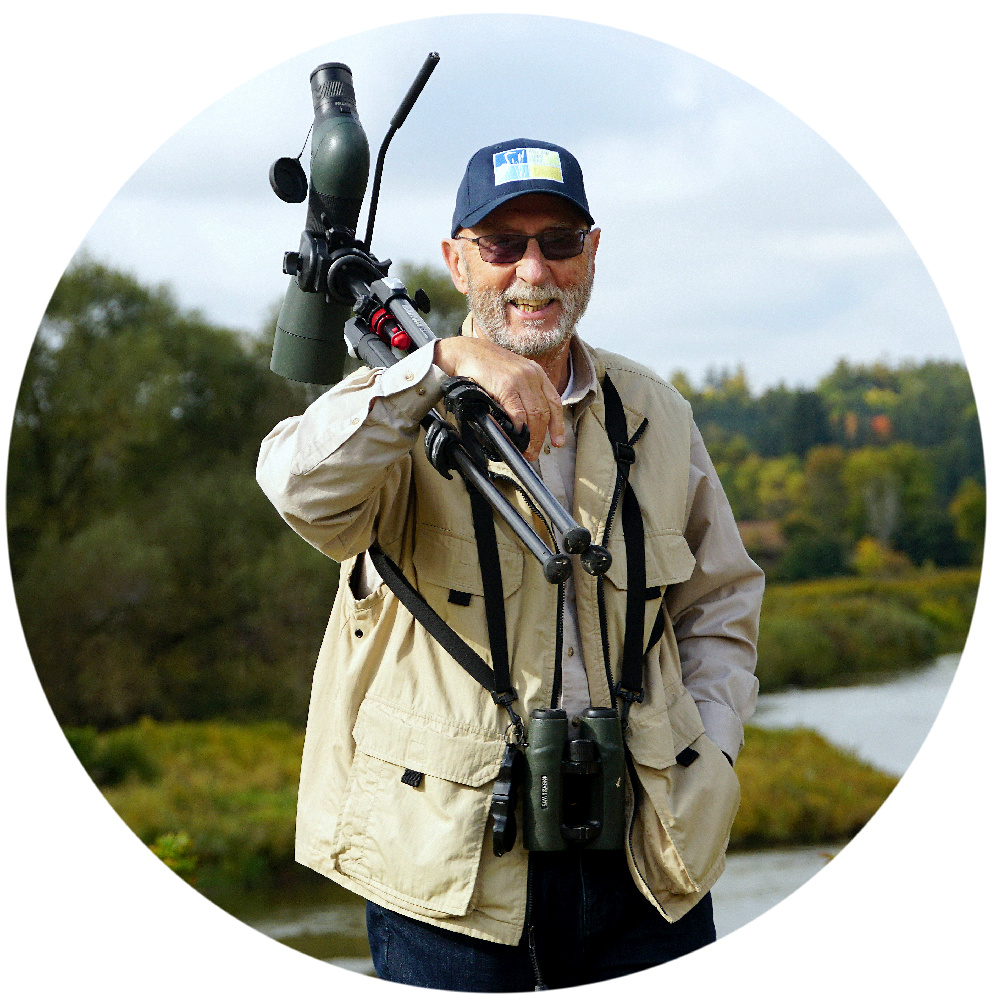
My name is David. I'm a lifelong birder, fiercely committed to all of nature, however. Married to Miriam Bauman. I love to travel. I Enjoy a good book and a good glass of wine. To read more about me, click my ABOUT page.