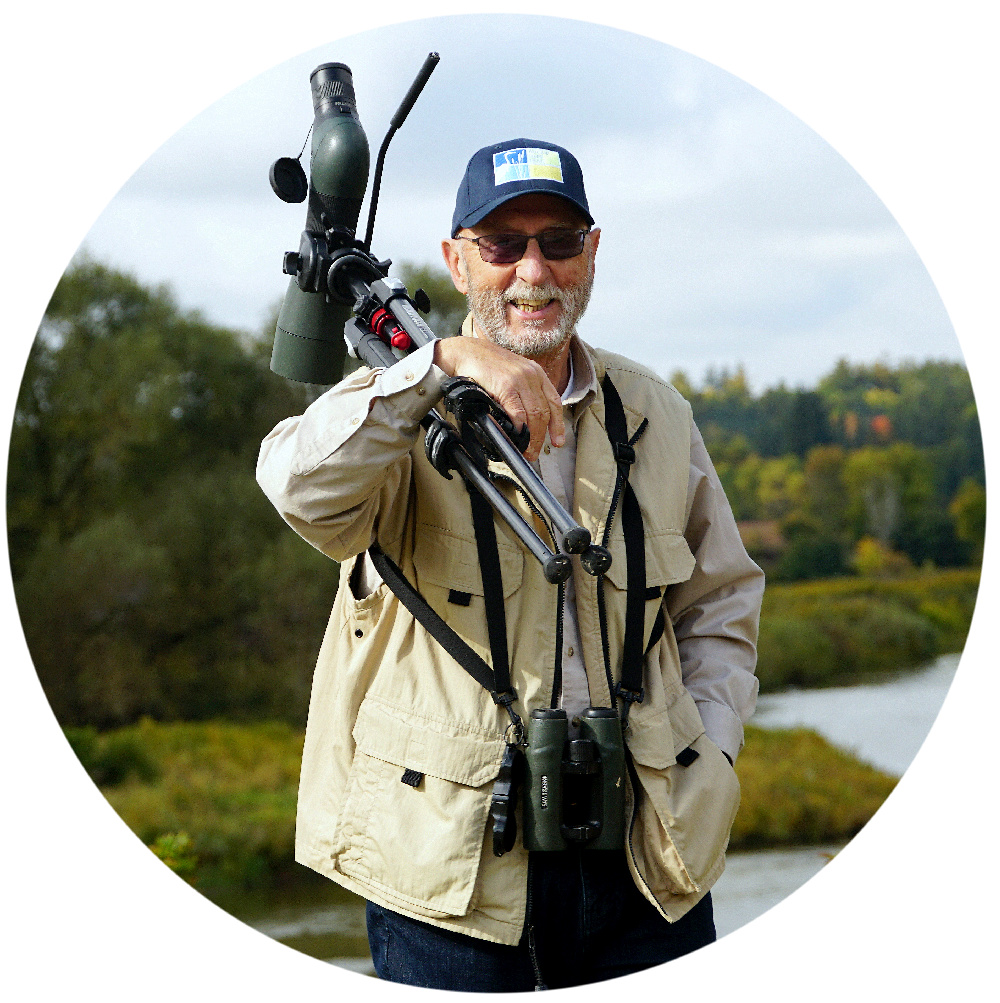
Showing posts with label Peter Mclaren. Show all posts

Sunday, March 18, 2018

Twenty-ninth Annual Canadian National Wildlife Carving Championship

17 March 2018

     This year I had the distinct honour, and great pleasure, in being asked to be a judge at the Canadian National Wildlife Carving Championship, an annual event I always look forward to attending as a lover of this art form (and that is what it is), and as a collector, so to be a judge was a rare and much-appreciated privilege. 
     The Grand Valley Woodcarvers Club is a primary organizer of the event and deserves much credit.
     I owe a great debt of gratitude to Peter McLaren for asking me to take part, to Lyn Burnett for her superb organizational job, but most of all to Jeff Krete, ( www.facebook.com/JeffKretewildfowlart; www.legendarywings.ca) a five-time world champion carver, and to Jason Lucio (www.jasonlucioart.com; www.facebook.com/JasonLucioArt), a three-time world champion, with whom I formed one of the judging teams, for their great kindness and willingness to explain the myriad nuances of what makes a good carving, and the techniques, thought processes and design decisions that go into it.  I saw carvings in a way I never saw them before; my astonishment at the creative forces behind a carving grew exponentially. I have little doubt that my meagre contribution in terms of ornithological knowledge was insignificant compared with the expert assessments of these world class artists.
     The show was opened by the Mayor of Waterloo, Dave Jaworsky, with suitable words of encouragement.


      We were judges in various categories and skill levels, beginning with the Master Class.
     One of the pieces in our first group was this male Belted Kingfisher, perched on a branch, draped in an epiphyte looking down on the water, where Yellow Perch were hiding beneath aquatic vegetation and submerged logs.


     In the same grouping was this female Green-winged Teal, carved and painted to perfection. 

     
     I should mention here that sometimes it was relatively easy to narrow the choices down to three finalists, but then selecting between the final three was much more difficult. I relied heavily on Rick and Jason to guide me through these final steps, knowing that the characters between first and third place were both subjective and subtle. I am sure that in some cases if the winner could be assigned a score of 100, second was 99.9 and third was 99.8. It was sometimes that close.
     African Pygmy Falcon was the subject for one of the Purchase Awards and there were several carvings of this beautiful, diminutive little bird that I have had the pleasure of seeing in both South Africa and Ethiopia.


     This one was in our group, characteristically perched among the sharp thorns of an Acacia, and as you can see we accorded it first place. The red sticker indicates first, blue second, yellow third and green honourable mention. Once the judging has been completed appropriate name tags are added, with the names of the species and the artist.


     Here are some of the other renditions of African Pygmy Falcon.


      We had to judge a group of carvings in which Jeff had an entry so he had to excuse himself from participating.  A substitute judge was added to our crew and I say with pleasure that we unanimously came to the conclusion that Jeff's rendition of a Griffon Vulture high above a carcass on the African savanna was the clear winner.
     Look how Jeff has given the perception of the height of the bird descending from the sky, by minimizing the size of the zebra and presenting it in a muted way so as not to draw attention away from the bird.


     The details in the wing were quite remarkable to me, where moulted feathers are shown, with some positions already showing emergent new plumes. The margins were emarginated in classic vulture fashion; I swear that if that bird had flown off the wire it would not have surprised me!


     The detail on the underside was completed with the same precision and attention to detail as the upper surface.


     Was I biased because I knew it was Jeff's work? I don't think so, and the verdict was unanimous in any event. And Jeff would have only wanted a totally honest approach from all of us.
     Just before lunch we did some judging in the Interpretative Class, where there is a very wide range of styles, and evaluating one piece against another is highly subjective and far from easy.


     A fine lunch of soup and wraps was provided and a lively discussion took place around the table. As an "outsider" it was fascinating to hear the shop talk of carvers and competitors.


     By the time we returned from our lunch break the public was starting to arrive in increasing numbers.


     A female Belted Kingfisher was the subject for another Purchase Award.


     As was a miniature Northern Cardinal.


     Working decoys have a long and storied tradition, and it is probably in these utilitarian objects that decorative carving originated. These modern working decoys must have a keel and be able to float and self-right from any position to qualify for the competition.


     Here is part of one group of Intermediate Class carvings we had to judge.


     And more....


     Looking at these Killdeers, one gets the impression that perhaps these carvers all took the same class!


     I found this portrayal of an Elf Owl especially appealing.


     Don't forget that every element has to be carved; look how well the artist has rendered the effect of insects or caterpillars feeding on the leaves.
      A Northern Saw-whet Owl is guaranteed to earn the approbation of everyone!


     And I thought this approach to presenting an Eastern Screech Owl was bold and creative.


     As you can see we awarded it second place in its category.
     After our judging I walked around and chatted to various friends and acquaintances who had come to the show, and took a few more miscellaneous photographs of carvings that caught my eye.


     From Novice to Master Class, from the most humble beginner to a world class artist, all of these carvers deserve our respect and admiration for their commitment to their craft, and the continuation and enhancement of what is still primarily a North American art form.
     Long may it continue.

Tuesday, May 10, 2016

Waterloo Region Nature Field Trip to Thickson's Woods, Whitby, ON

9 May 2016

Leader: David Gascoigne

Members: Miriam Bauman, John Lichty, Jim Huffman, Francine Gilbert

Guests: Peter McLaren, Carol McLaren

     We had four cancellations the night before the trip, but the people who participated were treated to a fine day of birding, with close encounters with a range of interesting species.
     The drive across Toronto was abysmal and it took us an hour longer than it did last year to make the same trip. Every time I visit Canada's largest city I shake my head at the gridlock. Soon this whole metropolitan area is going to grind to a total halt.
     When we arrived at Thickson's Woods we were all happy to get out of the car and stretch our legs. We were ready to start birding!


     It took us about a half hour just to get to the woodlot, the birding along the road was so terrific, with many warblers to keep us occupied, and several Baltimore Orioles Icterus galbula decorating the trees. 


     Barely had we entered the woods than we saw a flock of about fifteen Cedar Waxwings Bombycilla cedrorum seemingly content to simply watch the world go by.


     Black-throated Green Warblers Setophaga virens were both numerous and co-operative and the sound of cameras clicking was interspersed with bird songs, as many enthusiasts were able to get close-up shots.


     It is always a great pleasure to have Jim Huffman and Francine Gilbert accompany me on my walks. Jim quietly observes and is adept at spotting birds, while Francine is ebullient in her sheer delight at the panoply of nature's beauty spread before her.


     Ovenbird Seirus aurocapilla is a species not always easy to see; it does not show itself willingly. We were lucky indeed to be able to get pictures of this individual.


     Myrtle Warbler Setophaga coronata is one of our commonest wood warblers but it is a beautiful little bird and usually easier to find than most other warblers.


     White-breasted Nuthatch Sitta carolinensis is a resident species but its presence in the breeding season enhanced the pleasure of our day.


     Surely one of the most stunning birds to enliven the spring woods is a Scarlet Tanager Piranga olivacea and we were all enthralled to see at least three of them. The individual in the picture below has not quite attained full breeding plumage and remnant green patches of non-breeding plumage may be clearly seen.


       It was a happy group enjoying the marvel of spring migration.


     It was quite a surprise to find a Wild Turkey Meleagris gallopavo in the woods. I have never seen one here before, although this species is proliferating and it really should not seem unusual to find one here in prime habitat.


     We decided to go over to Whitby Harbour to have our picnic lunch and it was on the way to the car that we spotted a singing male Orchard Oriole Icterus spurius, an uncommon species in the area.


     Whitby Harbour is a delightful spot to have lunch but there was a cold breeze coming off Lake Ontario and Peter and Carol decided to eat in the car. The rest of us braved the cold to sit at a picnic table, but when Francine offered to share her hot coffee I was happy to take a cup.
     After lunch we returned to Thickson's Woods.


     We had been seeing Black-and-White Warblers Mniotilta varia all day but never in a position where we could photograph them. Finally this individual enabled us to get a picture.


     The floor of the woods had several stands of ferns, all emerging in their characteristic fiddlehead shape.


     Leaving the southernmost perimeter of the woods proper it is but a short distance to Lake Ontario, where we scanned for ducks, cormorants and gulls.


      Back in the woodlot we were finally able to get a reasonably open Blackburnian Warbler Setophaga fusca for a picture. As was the case with the Black-and-white Warbler we had seen this species several times, but always hidden by leaves and moving about very quickly.


     It was a great day's birding, thoroughly enjoyed by everyone. 
     Thanks are due to those who joined my outing and to Miriam especially who took all the photographs to leave me free to help the others to find and identify their birds. A complete list of all species follows below.

Species en route: Turkey Vulture, Red-tailed Hawk, Rock Dove, American Crow, Common Starling.

Species at Thickson's Woods: Trumpeter Swan, Common Merganser, Red-breasted Merganser, Wild Turkey, Mourning Dove, Ruby-throated Hummingbird, Belted Kingfisher, Downy Woodpecker, Hairy Woodpecker, Northern Flicker, Eastern Phoebe, Great Crested Flycatcher, Blue-headed Vireo, Warbling Vireo, Blue Jay, Black-capped Chickadee, Tree Swallow, Northern Rough-winged Swallow, Ruby-crowned Kinglet, Blue-grey Gnatcatcher, White-breasted Nuthatch, Swainson's Thrush, American Robin, House Finch, American Goldfinch, Ovenbird, Golden-winged Warbler, Black-and-White Warbler, Nashville Warbler, American Redstart, Blackburnian Warbler, American Yellow Warbler, Chestnut-sided Warbler, Black-throated Blue Warbler, Palm Warbler, Myrtle Warbler, Black-throated Green Warbler, Baltimore Oriole, Orchard Oriole, Red-winged Blackbird, Brown-headed Cowbird, Common Grackle, Song Sparrow, White-throated Sparrow, Scarlet Tanager, Northern Cardinal.

Species at Whitby Harbour: Canada Goose, Mute Swan, Double-crested Cormorant, Ring-billed Gull, American Herring Gull, Caspian Tern, House Sparrow.

Total species: 59


Land Acknowledgement

We acknowledge that the land on which we are situated are the lands traditionally used by the Haudenosaunee, Anishinaabe, and Neutral People. We also acknowledge the enduring presence and deep traditional knowledge, laws, and philosophies of the Indigenous Peoples with whom we share this land today. We are all treaty people with a responsibility to honour all our relations.

Followers