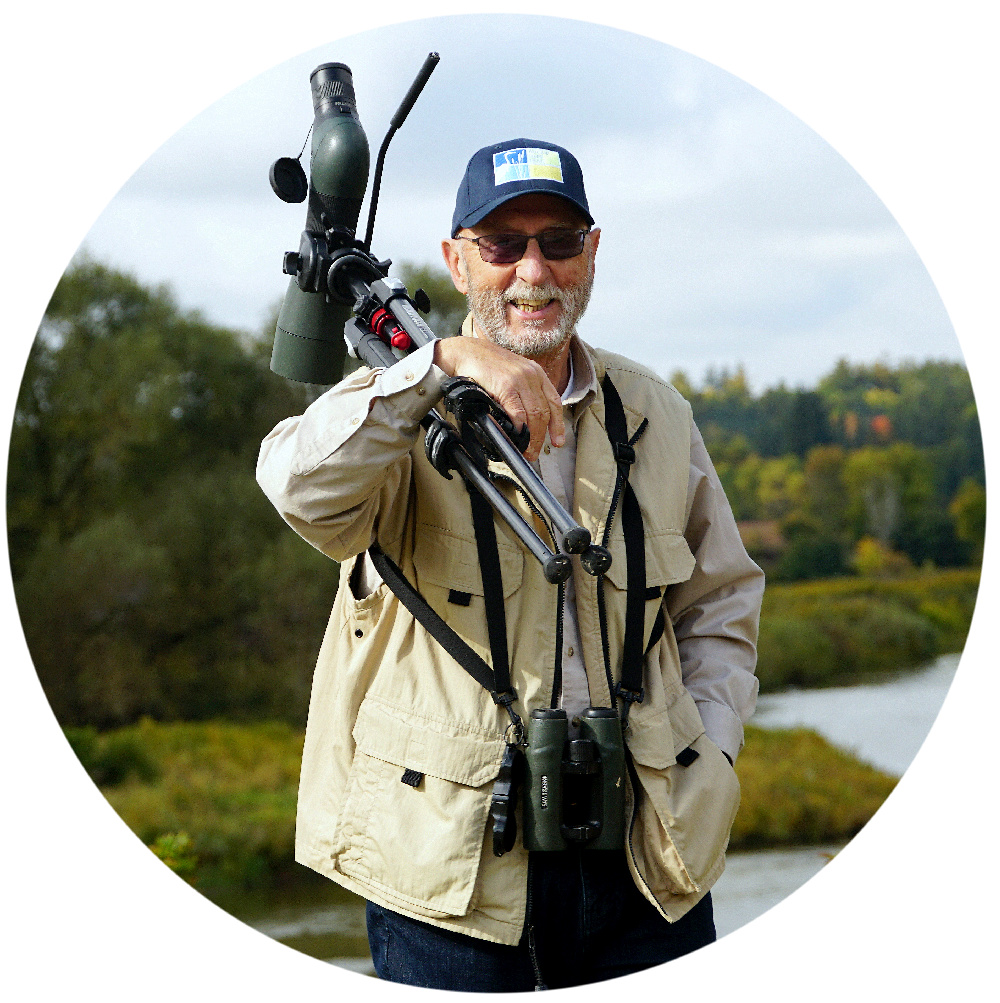
Showing posts with label John Lichty. Show all posts

Monday, June 27, 2016

The first of "our" Barn Swallows (Hirondelles rustiques) leaves the nest

26 June 2016

     We all assembled again to band the final four nests of young Barn Swallows Hirundo rustica with a few additional interested observers. 
     I must say again that Kevin has been absolutely obliging in terms of having an audience watch him band these birds, and has answered questions patiently and made sure that the children have enjoyed the experience and learned a good deal in the process. 
     The nestlings we have already banded are now within hours of leaving the nest, and are starting to crowd each other out.


     Here they are with their little rear ends all directed away from the nest to ensure that their droppings are shot over the side.


     Miriam was again handling the camera chores for me and she captured Kevin's banding skill very nicely in the following images.


     This little bird seems to have had enough to do with the nest and is ready to explore the world outside.


     Stephen Trink brought his two daughters Abigail, nine years old, and Emma, seven years old to watch the operation, and here they are along with Marilyn Burch, a friend of Dave and Sandy, carefully observing the goings on.


     These two little girls were absolutely fascinated by the birds and couldn't resist holding one.


     There is a degree of wonder, quite unrivalled by other experiences, in having intimate contact with wild creatures. This is especially true when children are involved and sometimes it is enough to trigger a lifelong connection to nature. I certainly hope that it turns about to be the case with Abigail and Emma, polite, engaged and delightful girls, who were anxious to participate and learn. I hope to see more of them and help them with their enjoyment of the natural world.
     Inside the barn no less interested observers and helpers watched Kevin return the banded brood back to their nest.

Josh Pickering, John Lichty, Kevin Grundy, Emma Trink, Marilyn Burch

     We had been observing this nest full of young birds.......


     .........when one decided that it was time to make an exit and flew over to a nearby perch.


     Within minutes it had moved over to the window and was feeling the first wind ever to ruffle its feathers. 


     This little bird is about to face the most dangerous segment of its young life as it learns how to cope with the world outside, and masters all the skills it takes to be a Barn Swallow. We wish it well!

Tuesday, May 10, 2016

Waterloo Region Nature Field Trip to Thickson's Woods, Whitby, ON

9 May 2016

Leader: David Gascoigne

Members: Miriam Bauman, John Lichty, Jim Huffman, Francine Gilbert

Guests: Peter McLaren, Carol McLaren

     We had four cancellations the night before the trip, but the people who participated were treated to a fine day of birding, with close encounters with a range of interesting species.
     The drive across Toronto was abysmal and it took us an hour longer than it did last year to make the same trip. Every time I visit Canada's largest city I shake my head at the gridlock. Soon this whole metropolitan area is going to grind to a total halt.
     When we arrived at Thickson's Woods we were all happy to get out of the car and stretch our legs. We were ready to start birding!


     It took us about a half hour just to get to the woodlot, the birding along the road was so terrific, with many warblers to keep us occupied, and several Baltimore Orioles Icterus galbula decorating the trees. 


     Barely had we entered the woods than we saw a flock of about fifteen Cedar Waxwings Bombycilla cedrorum seemingly content to simply watch the world go by.


     Black-throated Green Warblers Setophaga virens were both numerous and co-operative and the sound of cameras clicking was interspersed with bird songs, as many enthusiasts were able to get close-up shots.


     It is always a great pleasure to have Jim Huffman and Francine Gilbert accompany me on my walks. Jim quietly observes and is adept at spotting birds, while Francine is ebullient in her sheer delight at the panoply of nature's beauty spread before her.


     Ovenbird Seirus aurocapilla is a species not always easy to see; it does not show itself willingly. We were lucky indeed to be able to get pictures of this individual.


     Myrtle Warbler Setophaga coronata is one of our commonest wood warblers but it is a beautiful little bird and usually easier to find than most other warblers.


     White-breasted Nuthatch Sitta carolinensis is a resident species but its presence in the breeding season enhanced the pleasure of our day.


     Surely one of the most stunning birds to enliven the spring woods is a Scarlet Tanager Piranga olivacea and we were all enthralled to see at least three of them. The individual in the picture below has not quite attained full breeding plumage and remnant green patches of non-breeding plumage may be clearly seen.


       It was a happy group enjoying the marvel of spring migration.


     It was quite a surprise to find a Wild Turkey Meleagris gallopavo in the woods. I have never seen one here before, although this species is proliferating and it really should not seem unusual to find one here in prime habitat.


     We decided to go over to Whitby Harbour to have our picnic lunch and it was on the way to the car that we spotted a singing male Orchard Oriole Icterus spurius, an uncommon species in the area.


     Whitby Harbour is a delightful spot to have lunch but there was a cold breeze coming off Lake Ontario and Peter and Carol decided to eat in the car. The rest of us braved the cold to sit at a picnic table, but when Francine offered to share her hot coffee I was happy to take a cup.
     After lunch we returned to Thickson's Woods.


     We had been seeing Black-and-White Warblers Mniotilta varia all day but never in a position where we could photograph them. Finally this individual enabled us to get a picture.


     The floor of the woods had several stands of ferns, all emerging in their characteristic fiddlehead shape.


     Leaving the southernmost perimeter of the woods proper it is but a short distance to Lake Ontario, where we scanned for ducks, cormorants and gulls.


      Back in the woodlot we were finally able to get a reasonably open Blackburnian Warbler Setophaga fusca for a picture. As was the case with the Black-and-white Warbler we had seen this species several times, but always hidden by leaves and moving about very quickly.


     It was a great day's birding, thoroughly enjoyed by everyone. 
     Thanks are due to those who joined my outing and to Miriam especially who took all the photographs to leave me free to help the others to find and identify their birds. A complete list of all species follows below.

Species en route: Turkey Vulture, Red-tailed Hawk, Rock Dove, American Crow, Common Starling.

Species at Thickson's Woods: Trumpeter Swan, Common Merganser, Red-breasted Merganser, Wild Turkey, Mourning Dove, Ruby-throated Hummingbird, Belted Kingfisher, Downy Woodpecker, Hairy Woodpecker, Northern Flicker, Eastern Phoebe, Great Crested Flycatcher, Blue-headed Vireo, Warbling Vireo, Blue Jay, Black-capped Chickadee, Tree Swallow, Northern Rough-winged Swallow, Ruby-crowned Kinglet, Blue-grey Gnatcatcher, White-breasted Nuthatch, Swainson's Thrush, American Robin, House Finch, American Goldfinch, Ovenbird, Golden-winged Warbler, Black-and-White Warbler, Nashville Warbler, American Redstart, Blackburnian Warbler, American Yellow Warbler, Chestnut-sided Warbler, Black-throated Blue Warbler, Palm Warbler, Myrtle Warbler, Black-throated Green Warbler, Baltimore Oriole, Orchard Oriole, Red-winged Blackbird, Brown-headed Cowbird, Common Grackle, Song Sparrow, White-throated Sparrow, Scarlet Tanager, Northern Cardinal.

Species at Whitby Harbour: Canada Goose, Mute Swan, Double-crested Cormorant, Ring-billed Gull, American Herring Gull, Caspian Tern, House Sparrow.

Total species: 59


Friday, March 11, 2016

A few more nest boxes at SpruceHaven

8 March 2016

     John Lichty kindly made four nest boxes to be installed at SpruceHaven in the hope of inducing Black-capped Chickadees Poecile atricpillus to take up residence in them. I have little doubt that we will see all of them occupied by about the middle of next month.


     These small boxes are much easier to mount than the larger boxes already installed with Eastern Screech Owls Megascops asio in mind and they were installed in short order.

John Lichty

Sandy Hill, Jamie Hill, Lichty's best side

Almost complete

        We have been having a really warm spell and migrants are suddenly everywhere. Male Red-winged Blackbirds Agelaius phoeniceus were singing from every cattail and sapling, establishing and defending territories and waiting for the first females to arrive.


     Male Common Grackles Quiscalus quiscula were also much in evidence, although nowhere near as vocal as the Red-winged Blackbirds.


     To round out the trio of expected early migrants American Robins Turdus migratorius were present also.


     The warm spell continues unabated and more and more species are arriving. Perhaps today I'll see a Killdeer Charadrius vociferus!


Sunday, September 29, 2013

Kitchener-Waterloo Naturalists Field Trip

Trip Report
Kitchener-Waterloo Field Naturalists' Outing
Reesor Pond, Little Reesor Pond, Cranberry Marsh
Raptor Watch, Whitby Harbour, Lunde Shores C.A.
28 September 2013

Leader: David M. Gascoigne

KWFN Members: Betty Brechun, Peter McLaren, Carol Nussli

Guest: John Lichty

Reesor Pond, Markham 08:40 – 09:33

Of late, there have been reports of both Snow Geese and a Ross'Goose at this location and these were our target birds. Upon arrival we chatted to a local birder who advised that the Ross'Goose had not been seen for a few days, that the Snow Geese had been regulars, but left the pond at the crack of dawn only to return near dusk.
There was much of interest, however. One of the first things to attract our attention was a Canada Goose, very much bloodied around the bill and face, also on the breast. It appeared that it might have been the victim of an attack by a coyote or other such predator, and had managed to escape, albeit seriously injured. Given the condition of the bird we doubted that it could survive.
There was a Great Egret glistening pristinely in the early morning sun, a Great Blue Heron for contrast, and no less than four juvenile Black-crowned Night Herons. There was a great congregation of Killdeer, numbering around fifty by my estimate, and they squabbled and scurried and fed providing great entertainment for us. We saw both Blue and Green-winged Teal and the sun glinting off the speculum of the Green-winged Teal was simply breathtaking.
Waterfowl are beginning to arrive from their northern breeding grounds and we saw both Northern Shoveler and American Wigeon.
The most spectacular exhibition was provided when a Merlin swooped low over the Killdeer, all of which immediately took to the air shrieking. What was most amazing, was that as the Merlin began the process of segregating its quarry from the flock, the Ring-billed Gulls all arose in unison and attacked the Merlin, finally driving it off to a tree on the far shore where it perched. Incredibly a second Merlin cruised by in front of us, but it appeared not to be hunting.

All species at Reesor Pond (not in taxonomic sequence) – Black-crowned Night Heron, Great Blue Heron, Great Egret, Blue-winged Teal, Double-crested Cormorant, Killdeer, Northern Shoveler, American Wigeon, American Black Duck, Canada Goose, Mallard, Green-winged Teal, Merlin, Red-winged Blackbird.

Little Reesor Pond, Toronto 09:41 – 10:05

There is a small wetland at the end of Old Reesor Road, near Finch Avenue, which has come to be commonly called Little Reesor Pond, although I believe it has no formal name. The area is quite small, barely a hectare I would say, but is sometimes very productive.
A single, untagged, Trumpeter Swan was the first bird we saw, followed by a female Wood Duck. Several passerines were flitting around, some flycatching, including a juvenile Eastern Phoebe, so lovely in the yellow plumage it sports at this time of year. A couple of empidonax flycatchers were impossible to identify as to species. Two Swamp Sparrows moved back and forth from one section of the marsh to another.

All species at Little Reesor Pond (not in taxonomic sequence) – Trumpeter Swan, Wood Duck, Mallard, Accipiter sp., Swamp Sparrow, Eastern Phoebe, Empidonax flycatcher sp., Blue Jay.

Cranberry Marsh Raptor Watch, Whitby 10:30 – 11:30

A visit to the hawk watch had been the focal point of this trip and we were hoping for a miserable day's weather with northwest winds. Instead, we were treated to as benign a September day as one could possibly wish for, with bright sunshine, a high of 22 degrees and barely a breath of wind! It was, to say the least, not classic raptor-watching weather.
Despite this we spent a fine hour on the viewing platform with other hopefuls, renewing old acquaintances and enjoying a few raptors and a wide variety of birds on the marsh.
Chief among the great pleasures of this stop was a sensational show put on by a Peregrine Falcon as it patrolled low over the water. Everyone was able to have superb views of this bird, certainly among the apex predators of the avian world. Later we were treated to a second Peregrine Falcon. Rayfield Pye and I were reminiscing about many how many years we had been watching hawks together at that location (well over thirty!) and back in those days, when the Peregrine Falcon was barely beginning its recovery from the dark days of organochloride pesticide contamination, the sighting of a peregrine was cause for great celebration.
A local Northern Harrier was joined by a migratory bird and the two of them coursed briefly over the marsh together. We saw eight Turkey Vultures, but they, like everyone else, seemed to be content to simply enjoy the good weather, and certainly didn't press on with their migration.
A source of great pleasure was derived from a Sharp-shinned Hawk which passed low right over our heads, and gave a textbook display of flight techniques, enabling everyone to see how skillfully it used its tail as a rudder. Everyone was enthralled with this “demonstration flight.”
Rusty Blackbirds are at the peak of their period of migration and numerous birds were seen, as well as a variety of ducks.
Great Egrets dotted the marsh; it is quite remarkable how common this species has become in recent years.

All species at Cranberry Marsh (not in taxonomic sequence) – Blue Jay, Black-capped Chickadee, Great Egret, Mute Swan, Rusty Blackbird, Peregrine Falcon, American Crow, Mallard, Turkey Vulture, American Kestrel, Red-winged Blackbird, Wood Duck, Sharp-shinned Hawk, American Wigeon, Northern Shoveler, Great Blue Heron, Northern Harrier, Mourning Dove, American Black Duck, Green-winged Teal.

Whitby Harbour 12:00 – 12:50


We moved over to Whitby Harbour to enjoy our lunch in the very pleasant ambiance of the boardwalk, with a few birds to keep us company, and even a Monarch butterfly, exceedingly rare this year. It made one feel good to be alive, basking in the sun, enjoying good fellowship and food which always tastes better when consumed al fresco.
Among the birds we did see was a wing-tagged Trumpeter Swan as shown in the picture below, and a remarkable thirty-seven Mute Swans.

Great Blue Heron and Ring-billed Gulls
Mute Swans, Trumpeter Swan (K21), Canada Goose, Ring-billed Gulls
                                    
Mute Swans, Herring Gull, Ring-billed Gulls
Mute Swans, Trumpeter Swan, Herring Gull

All species at Whitby Harbour (not in taxonomic sequence) – Double-crested Cormorant, Ring-billed Gull, Herring Gull, Trumpeter Swan, Mute Swan, Turkey Vulture, Great Blue Heron, Mourning Dove.

Lynde Shores C.A., Whitby 12:56 – 14:49

We ambled along the road searching for a small marsh where we were told a Long-billed Dowitcher was present. Unfortunately, even with five people looking, we did not find the marsh!
During a walk through the woodlot we were both surprised and pleased at the numbers of people out enjoying nature with their children. The paths through the wood have been well provisioned with bird feeders supplied by local schools and children are encouraged to feed the birds, principally chickadees that are renowned for their confiding nature, and willingly take food from the hand. While some purists might argue that this kind of behaviour is not de rigeur I could not help feeling very reassured that some of those children, based on their encounter with wild creatures, will form the next generation of naturalists. It was quite lovely to see grandparents, parents and children all enjoying nature together, with not a tablet or Iphone in sight!
Even three Wild Turkeys seem to have been well habituated to throngs of people surrounding them.
The entrance to the woodlot was populated by large numbers of Common Grackles and the noise was almost deafening. At one of the feeders we saw two White-breasted Nuthatches, our only nuthatches of the day. We also spotted our first White-throated Sparrow of the fall.

All species at Lynde Shores C.A. (not in taxonomic sequence) – Great Egret, Blue Jay, Ring-billed Gull, Double-crested Cormorant, Canada Goose, Great Blue Heron, Mute Swan, Lesser Yellowlegs, Rusty Blackbird, Blue Jay, Pied-billed Grebe, Common Grackle, Mallard, Wild Turkey, Mourning Dove, White-throated Sparrow, House Sparrow, Black-capped Chickadee, White-breasted Nuthatch.

Lake Ontario Shore, Whitby 15:00 – 15:20

The lake was noteworthy for its paucity of species! We saw only Double-crested Cormorants and Ring-billed Gulls.

General Comment

I am very grateful to the people who joined this trip. We had a great time together and I will look forward to birding with each of them again.

Land Acknowledgement

We acknowledge that the land on which we are situated are the lands traditionally used by the Haudenosaunee, Anishinaabe, and Neutral People. We also acknowledge the enduring presence and deep traditional knowledge, laws, and philosophies of the Indigenous Peoples with whom we share this land today. We are all treaty people with a responsibility to honour all our relations.

Followers