My daughter, Caroline, and my son-in-law, Andrew, drove down from Ottawa last weekend for a visit, and a great time was had by all.
30 September, 2022
West Perth Wetlands, Mitchell, ON
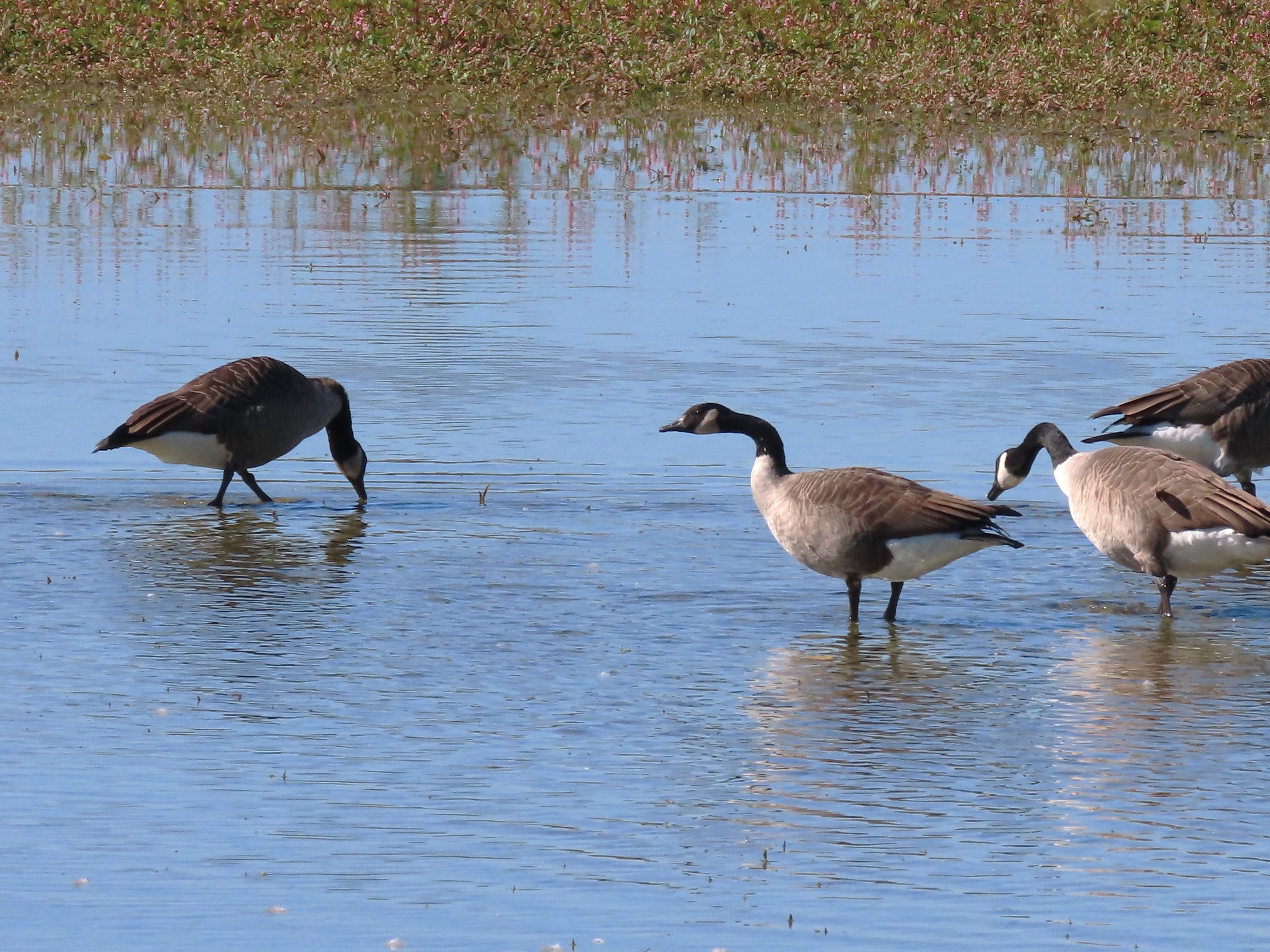
This location is a perennial favourite of ours and at this time of the year, with migration well underway, can be very productive. As it turned out, the birds were relatively sparse, but it was a glorious fall day, with lots of other things to see and enjoy. A welcoming committee of Canada Geese (Branta canadensis) is always a welcome sight.

Guelder-rose (Viburnum opulus) looked splendid in the bright sunshine of an October morning.

Lesser Yellowlegs (Tringa flavipes) was less numerous than usual, but was nevertheless the most common shorebird present.

Were they so inclined Canada Geese would be able to admire their own reflection.

European Craneflies (Tipula paludosa) have been noted hanging around the porch and the garage door recently, so it was good to see them in a more natural setting.


This species transmits parasites that mature in Wild Turkey (Melagris gallopavo), but is preyed upon by a variety of birds, amphibians and small mammals.
The caterpillar of a Virginian Tiger Moth (Spilosoma virginica) will overwinter as larva.
Common Eastern Bumblebees (Bombus impatiens) were still foraging, although one might conclude that the supply of nectar must surely be minimal by October.

Lesser Yellowlegs is clear proof that familiarity does not breed contempt.

Orange Sulphur (Colias eurytheme) is a very dramatic butterfly and they were ubiquitous that day.

It is rare, at least for me, that Orange Sulphur outnumbers Cabbage White (Pieris rapae) but on this occasion it was certainly the case.

We are not generally given to taking pictures of ourselves, since we are clearly the least interesting species, but a family picture to record the day seemed appropriate.

Caroline, Andrew, David
Wood Duck (Aix sponsa) is a common breeding species at the West Perth Wetlands but we found very small numbers and no resplendent males.

Young American Goldfinches (Spinus tristis) fresh from the nest showed their proficiency at both flying and begging for food from harried parents.

I have no doubt that we observed at least a couple of dozen Myrtle Warblers (Setophaga coronata) migrating through the area.

We saw several Greater Yellowlegs (Tringa melanoleuca) but most were too far off to take a picture. This one individual was a little more obliging than the others.

The most remarkable event of the day was when we detected what we thought initially to be a lump of mud, that turned out to be a Snapping Turtle (Chelydra serpentina). Several Midland Painted Turtles (Chrysemys picta marginata) were clambering up on to its back to use it as a basking platform, pushing each other back into the water in the process.


This was one tolerant Snapping Turtle!

A young Red Fox (Vulpes vulpes), probably barely independent, did not look healthy.

It scratched almost continuously leading us to wonder if it had mange, or a similar condition.
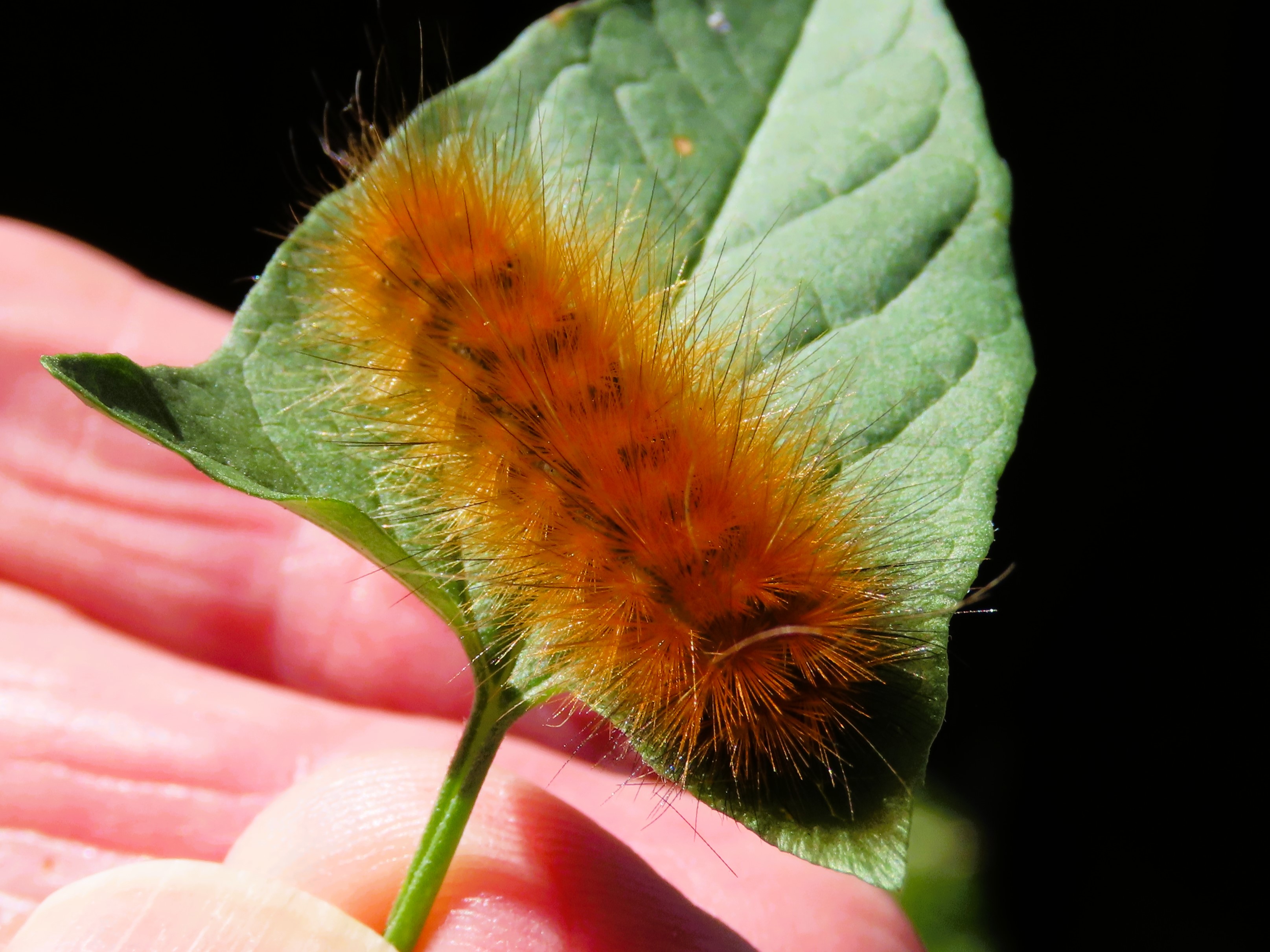
The is the time of year when Wooly Bear caterpillars, the larvae of the Isabella Tiger Moth (Pyrrharctica isabella), are frequently seen trundling along the ground seeking a secluded spot to overwinter.

A Brown Stink Bug (Euchistus servus) seemed quite content to spend its time on the back of the car.

It had been an entertaining morning and we left to go to Stratford to have lunch at Fellini's, a restaurant Miriam and I have patronized a few times over the years, generally if we have a reason to celebrate. A visit from Caroline and Andrew seemed just such an occasion.
01 October, 2022
Westmount Sports Park and Environmental Reserve, Waterloo, ON
In 2016 I was preoccupied with the opening of this facility and Andrew had not seen "my" sign - see here, so we all went down to take a look.

Martin Creek Road, Woolwich Township, region of Waterloo, ON
A large flock of very noisy American Crows (Corvus brachyrynchos) were exploiting corn spilled in the field at the time of harvesting.

The Mill Race Trail, St. Jacobs, ON
The Mill Race Trail, as always, looked very inviting and we were happy to embark on our walk.

It was hardly any time at all before endearing Black-capped Chickadees (Poecile atricapillus) came to see whether we had brought breakfast - and of course we had!

There seems to be a trend of late for people to leave objects along paths and trails for others to admire or take home. Some are quite elaborate creations, as was this leather feather.

We left it there for others to enjoy.
Mallards (Anas platyrynchos) form a classic restful image along any of the waterways of the region.

An American Black Duck (Anas rubipres) seemed content to keep them company.

At every turn we were reminded that fall has arrived and with it the splendour of an eastern deciduous woodland preparing for winter.

Perennial Sow Thistles (Sonchus arvensis) are set to have their seeds borne by the wind.

American Beaver (Castor canadensis) bears the title of Nature's Architect with good reason. Their work on the Mill Race has reduced the downstream flow to a mere trickle.


Stargazing in Macton, ON
Andrew has been a keen amateur astronomer since I first knew him as a teenager, and we were anxious to join him in an exploration of the night sky. Marj (Miriam's sister) and her husband, Dave, permitted us to set up our equipment at their farm, where the sky is unimpeded by light pollution from the city.
It was all new and fascinating for Miriam and me, and here is what we saw.
Solar system: Jupiter, Saturn, Neptune (Likely), Uranus, Mars, and the moon.
Galaxies: The Milky Way, Andromeda (M31), Whirlpool Galaxy (M51) and Cigar Galaxy (M82)
Star: Vega
Star Clusters: Perseus Double Cluster (open), Great Globular Cluster (globular, M13) and M92 (globular).
Some of the distances involved defy belief and are impossible to grasp, at least for me. The Cigar Galaxy is 12 million light years from Earth and the Andromeda Galaxy 2.5 million light years away. It would be a really good idea if we learned to take better care of the Earth - our only home.
02 October, 2022
St. Jacobs, ON
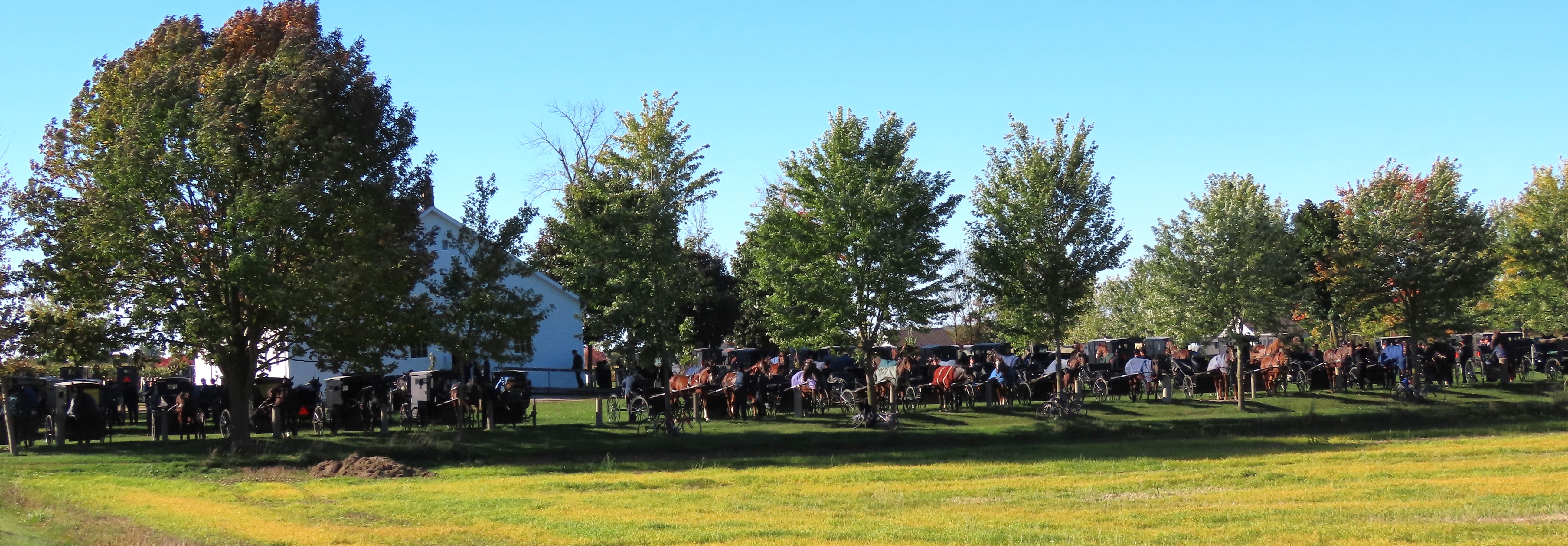
One of the exquisite features of living in this part of southern Ontario is the presence of a large and vibrant Mennonite community. To witness the parade of horses and buggies going to church on Sunday mornings is an event cherished by many. It is familiar to us, but new to Andrew, so we made a point to witness the spectacle before he and Caroline left for home.
The pictures need no further comment from me, but I invite you to conjure in your mind the sweet strains of a cappella hymns wafting from the church. Like most orthodox or fundamentalist sects of any faith, men and women are seated separately.



Trivia
On Monday I led a walk for Waterloo Public Library with an enthusiastic group of about twenty people, and one of the participants asked me for the definition of a keystone species. It occurs to me that others may have heard the term and have only a vague understanding of what it is. A keystone species is an organism that defines an ecosystem, without which the natural environment would be different. The organism does not have to be numerically superior to be considered a keystone species. Woodpeckers, for example, might be a keystone species by providing most of the holes required by other organisms. Without their presence the community would change radically.