Showing posts with label Caroline Cudmore. Show all posts

Friday, October 07, 2022

A Visit from Caroline and Andrew

     My daughter, Caroline, and my son-in-law, Andrew, drove down from Ottawa last weekend for a visit, and a great time was had by all. 

30 September, 2022
West Perth Wetlands, Mitchell, ON

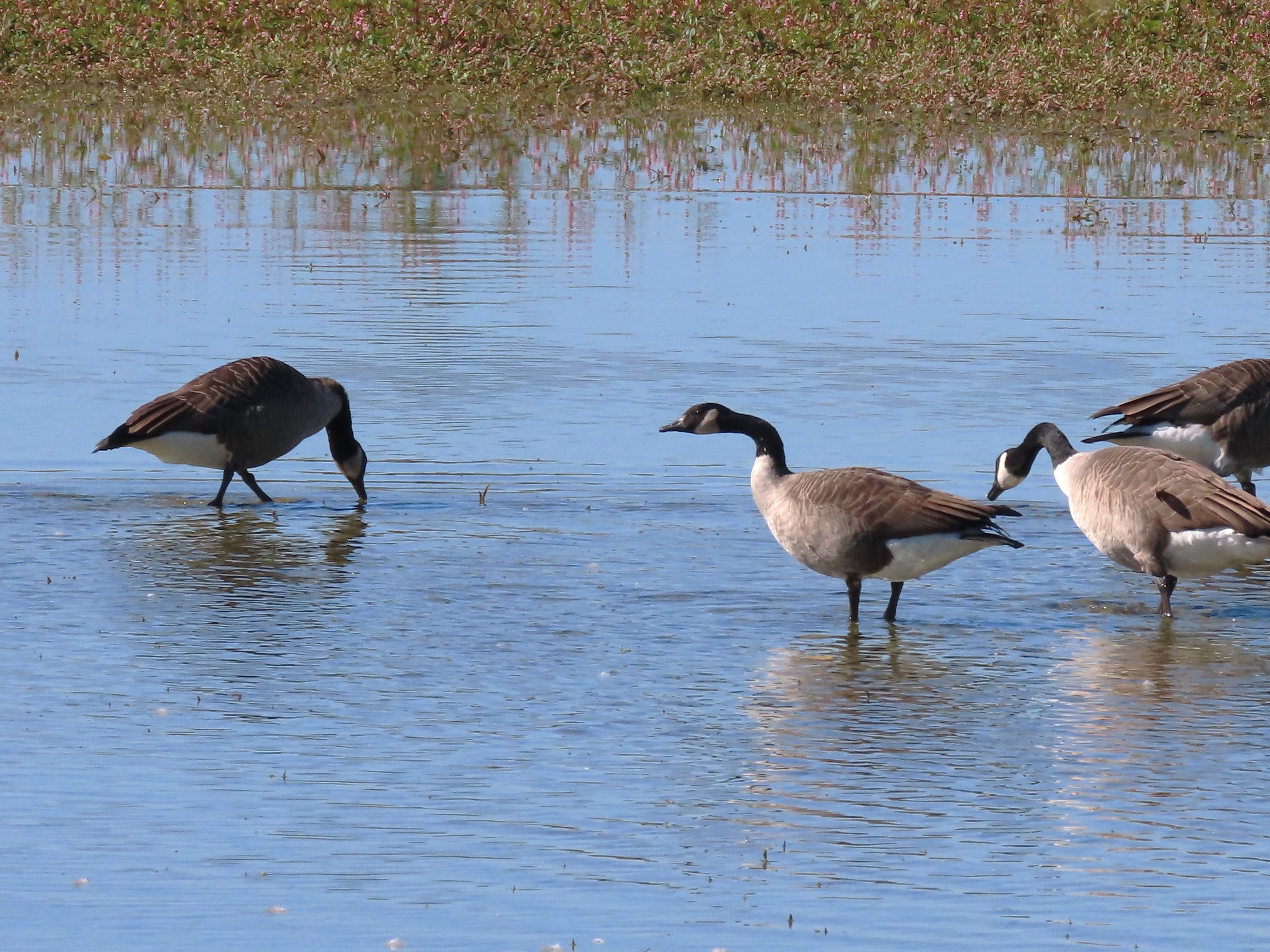
     This location is a perennial favourite of ours and at this time of the year, with migration well underway, can be very productive. As it turned out, the birds were relatively sparse, but it was a glorious fall day, with lots of other things to see and enjoy. A welcoming committee of Canada Geese (Branta canadensis) is always a welcome sight.


     Guelder-rose (Viburnum opulus) looked splendid in the bright sunshine of an October morning.


     Lesser Yellowlegs (Tringa flavipes) was less numerous than usual, but was nevertheless the most common shorebird present.


     Were they so inclined Canada Geese would be able to admire their own reflection.


     European Craneflies (Tipula paludosa) have been noted hanging around the porch and the garage door recently, so it was good to see them in a more natural setting.


     Red-legged Grasshopper (Melanoplus femurrubrum) is known to feed into December, so it was no surprise to encounter them in the fields and scrub surrounding the wetland.


     This species transmits parasites that mature in Wild Turkey (Melagris gallopavo), but is preyed upon by a variety of birds, amphibians and small mammals.
     The caterpillar of a Virginian Tiger Moth (Spilosoma virginica) will overwinter as larva.

     Common Eastern Bumblebees (Bombus impatiens) were still foraging, although one might conclude that the supply of nectar must surely be minimal by October.


     Lesser Yellowlegs is clear proof that familiarity does not breed contempt.


     Orange Sulphur (Colias eurytheme) is a very dramatic butterfly and they were ubiquitous that day.


     It is rare, at least for me, that Orange Sulphur outnumbers Cabbage White (Pieris rapae) but on this occasion it was certainly the case.


     We are not generally given to taking pictures of ourselves, since we are clearly the least interesting species, but a family picture to record the day seemed appropriate.

Caroline, Andrew, David

     Wood Duck (Aix sponsa) is a common breeding species at the West Perth Wetlands but we found very small numbers and no resplendent males.


     Young American Goldfinches (Spinus tristis) fresh from the nest showed their proficiency at both flying and begging for food from harried parents.


     I have no doubt that we observed at least a couple of dozen Myrtle Warblers (Setophaga coronata) migrating through the area.


     We saw several Greater Yellowlegs (Tringa melanoleuca) but most were too far off to take a picture. This one individual was a little more obliging than the others.


     The most remarkable event of the day was when we detected what we thought initially to be a lump of mud, that turned out to be a Snapping Turtle (Chelydra serpentina). Several Midland Painted Turtles (Chrysemys picta marginata) were clambering up on to its back to use it as a basking platform, pushing each other back into the water in the process.


     This was one tolerant Snapping Turtle!


     A young Red Fox (Vulpes vulpes), probably barely  independent, did not look healthy.


     It scratched almost continuously leading us to wonder if it had mange, or a similar condition.
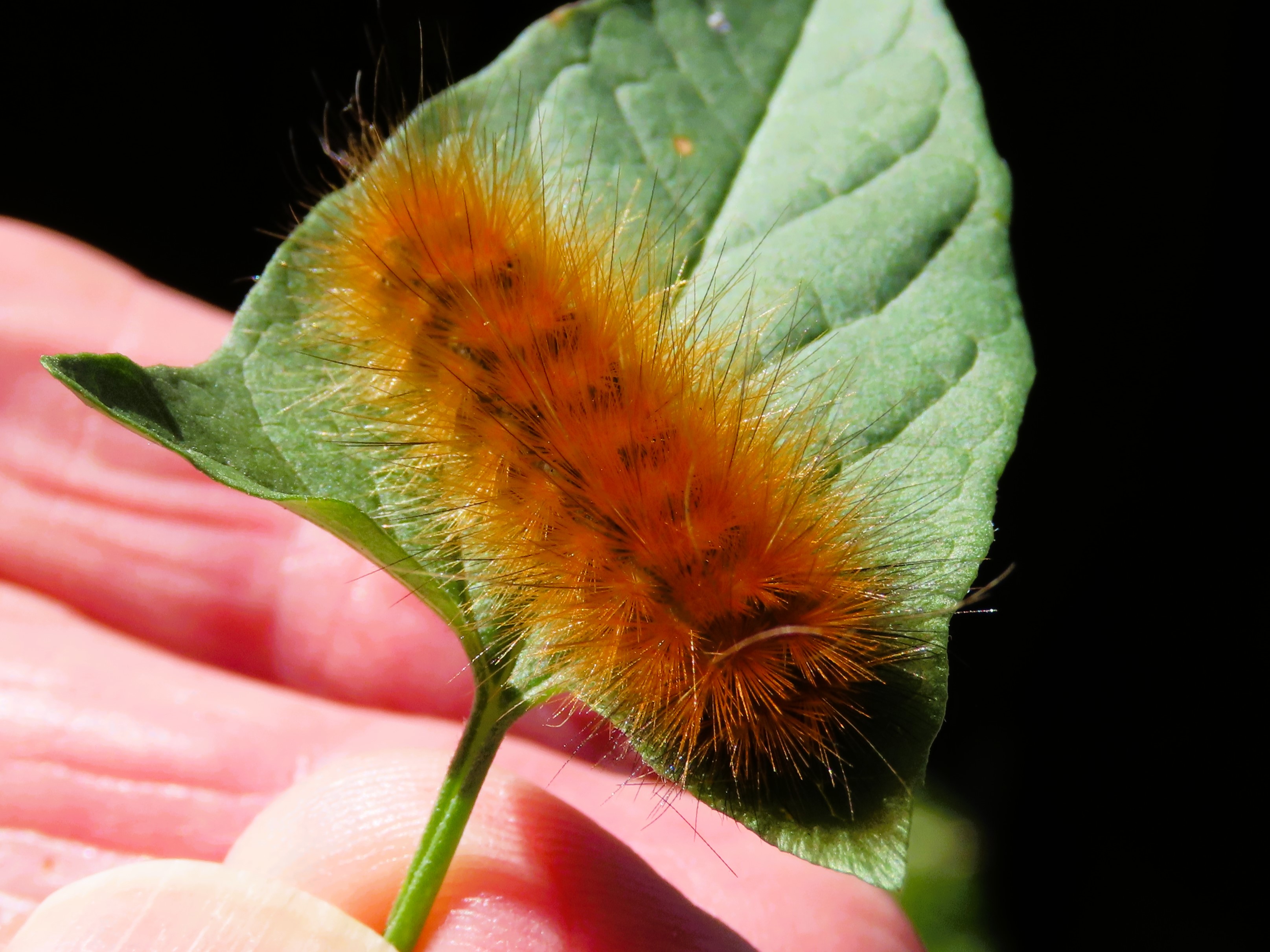
     The is the time of year when Wooly Bear caterpillars, the larvae of the Isabella Tiger Moth (Pyrrharctica isabella), are frequently seen trundling along the ground seeking a secluded spot to overwinter.


     A Brown Stink Bug (Euchistus servus) seemed quite content to spend its time on the back of the car.


     It had been an entertaining morning and we left to go to Stratford to have lunch at Fellini's, a restaurant Miriam and I have patronized a few times over the years, generally if we have a reason to celebrate. A visit from Caroline and Andrew seemed just such an occasion.

01 October, 2022
Westmount Sports Park and Environmental Reserve, Waterloo, ON

     In 2016 I was preoccupied with the opening of this facility and Andrew had not seen "my" sign - see here, so we all went down to take a look.


Martin Creek Road, Woolwich Township, region of Waterloo, ON

     A large flock of very noisy American Crows (Corvus brachyrynchos) were exploiting corn spilled in the field at the time of harvesting.


The Mill Race Trail, St. Jacobs, ON

     The Mill Race Trail, as always, looked very inviting and we were happy to embark on our walk.


     It was hardly any time at all before endearing Black-capped Chickadees (Poecile atricapillus) came to see whether we had brought breakfast - and of course we had!


     There seems to be a trend of late for people to leave objects along paths and trails for others to admire or take home. Some are quite elaborate creations, as was this leather feather.


     We left it there for others to enjoy.
     Mallards (Anas platyrynchos) form a classic restful image along any of the waterways of the region.


     An American Black Duck (Anas rubipres) seemed content to keep them company.


     At every turn we were reminded that fall has arrived and with it the splendour of an eastern deciduous woodland preparing for winter.


     Perennial Sow Thistles (Sonchus arvensis) are set to have their seeds borne by the wind.


     American Beaver (Castor canadensis) bears the title of Nature's Architect with good reason. Their work on the Mill Race has reduced the downstream flow to a mere trickle.


Stargazing in Macton, ON

     Andrew has been a keen amateur astronomer since I first knew him as a teenager, and we were anxious to join him in an exploration of the night sky. Marj (Miriam's sister) and her husband, Dave, permitted us to set up our equipment at their farm, where the sky is unimpeded by light pollution from the city.
     It was all new and fascinating for Miriam and me, and here is what we saw.

Solar system: Jupiter, Saturn, Neptune (Likely), Uranus, Mars, and the moon.
Galaxies: The Milky Way, Andromeda (M31), Whirlpool Galaxy (M51) and Cigar Galaxy (M82)
Star: Vega
Star Clusters: Perseus Double Cluster (open), Great Globular Cluster (globular, M13) and M92 (globular).

     Some of the distances involved defy belief and are impossible to grasp, at least for me. The Cigar Galaxy is 12 million light years from Earth and the Andromeda Galaxy 2.5 million light years away. It would be a really good idea if we learned to take better care of the Earth - our only home.

02 October, 2022
St. Jacobs, ON

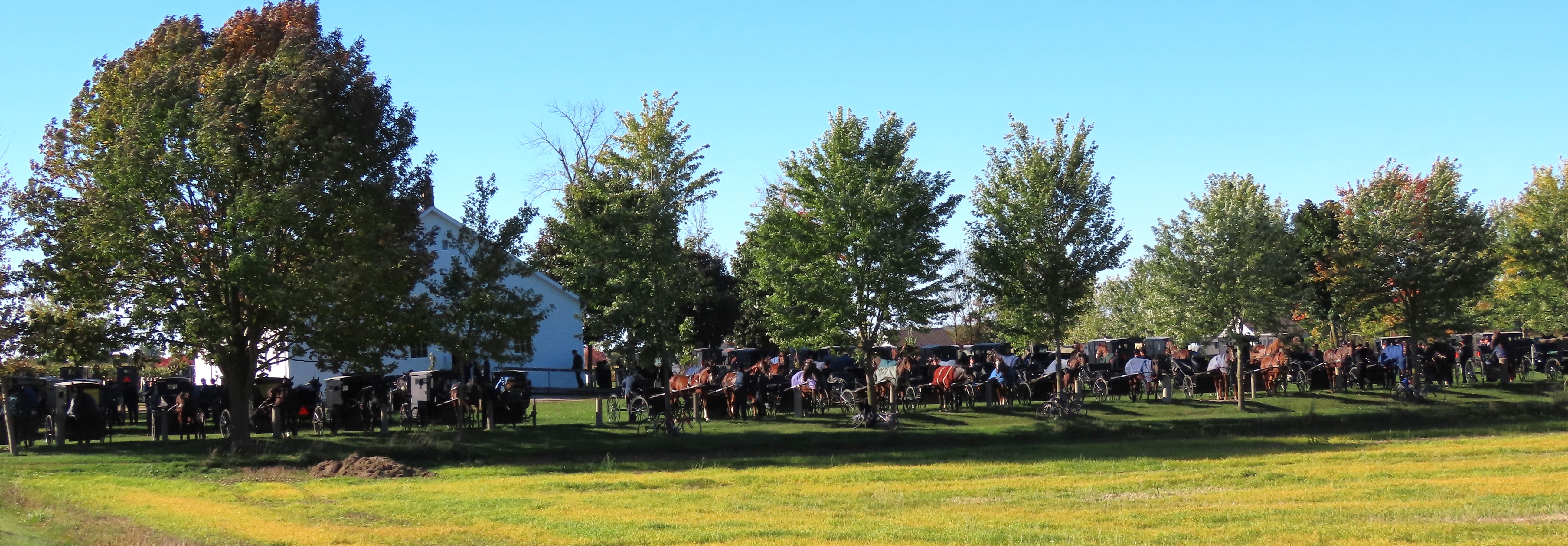
     One of the exquisite features of living in this part of southern Ontario is the presence of a large and vibrant Mennonite community. To witness the parade of horses and buggies going to church on Sunday mornings is an event cherished by many. It is familiar to us, but new to Andrew, so we made a point to witness the spectacle before he and Caroline left for home. 
The pictures need no further comment from me, but I invite you to conjure in your mind the sweet strains of a cappella hymns wafting from the church. Like most orthodox or fundamentalist sects of any faith, men and women are seated separately.


     We had a wonderful weekend together and we were sorry when it came time to part company. If only we lived a little closer to each other......

Trivia

     On Monday I led a walk for Waterloo Public Library with an enthusiastic group of about twenty people, and one of the participants asked me for the definition of a keystone species. It occurs to me that others may have heard the term and have only a vague understanding of what it is. A keystone species is an organism that defines an ecosystem, without which the natural environment would be different. The organism does not have to be numerically superior to be considered a keystone species. Woodpeckers, for example, might be a keystone species by providing most of the holes required by other organisms. Without their presence the community would change radically.

Thursday, September 30, 2021

An Outing for Waterloo Region Nature - 25 September 2021

      On 1 September I ran an outing for Waterloo Region Nature to the DesJardins Canal in Dundas, ON, and to various points on Lake Ontario, and I repeated the same outing for a new group of participants on 25 September.

Leader: David M. Gascoigne

Members: Christine Alexander, Miriam Bauman, Barb Bowman, Jim Bowman, Douglas Brunton, Victoria Ho, Jennifer Leat, Karl Malhotra, Selwyn Tomkun.

Guests: Caroline Cudmore, Sam Cudmore

Jim, Barb, Christine, Victoria, Selwyn, Sam, Caroline, David, Karl, Douglas, Jennifer

     Normally I am little inclined to indulge in the narcissism of eternally posting pictures of myself or Miriam, but I am showing below three generations in our family.

David, Caroline, Sam

      Caroline is my daughter and Sam my grandson. They both came down from Ottawa to take part in the outing, arriving around 21h:00 the previous night and leaving around lunchtime the next day.
     A brief visit!

DesJardins Canal/Urquart Butterfly Garden, Dundas, ON


     The signature bird at this time of year is the Black-crowned Night Heron (Nycticorax nycticorax) shown on the sign above. We were not disappointed, sighting the first individual as we drove in.

Photo courtesy Jim Bowman

     We saw four adults, all partially hidden in the vegetation, but despite a careful search were unable to find a juvenile.
     While we were looking at the night herons a couple of Double-crested Cormorants (Nannopterum auritum) entertained us with diving displays.


     For those readers interested in such arcane matters you will note that the scientific name of this species has recently changed.
     Pied-billed Grebes (Podilymbus podiceps) can be frustrating for a photographer as they are prone to dive almost as soon as they have surfaced from the previous plunge. Jim Bowman was able to capture a fine picture of this individual.


     Common Milkweed (Asclepias syriaca) is now producing seed pods, which will soon burst, dispersing their seed far and wide.


     I wonder what attracted this snail to the plant? My knowledge of gastropods is quite limited, but I think this specimen is found in the genus Cepaea. Snails seemed to be everywhere, and as much as possible we avoided stepping on them.
     There seems little need to remind you that a Ring-billed Gull (Larus delawarensis) is a handsome bird indeed.


     Rock Doves (Columbia livia), aka Feral Pigeons, are interesting birds and much can be learned about avian behaviour by simple observation. You will be following in the footsteps of Charles Darwin, no less.


     You may note the bird above has a band on its right leg, probably indicating that it originated in the coop of a pigeon fancier. Perhaps it is a homing pigeon attracted by the lure of the wild and it has joined its free-flying congeners.
     Rock Doves present an amazing array of forms and colours following centuries of selective breeding by humans.


     A Western Honey Bee (Apil mellifera) was seeking nectar and fulfilling its role as a pollinator.


     A Silver Maple (Acer saccharinum) is transitioning to the glorious colours of fall.


     Here is another look at the very attractive snails we saw.


     I have several times seen people collecting them in buckets, destined for the table I assume. Never having tried this delicacy, I am quite sure I will continue to eschew the pleasure!
     They probably evoke little interest from a Belted Kingfisher (Megaceryle alcyon) either.


     Jim was in position with his camera to capture a  Monarch (Danaus plexippus), perhaps en route to Mexico.


     You will no doubt agree that the canal presents a lovely scene.


     Walnut trees (Juglans sp) have produced a prolific crop this year.


     We found a dead Northern Short-tailed Shrew (Blarina brevicauda), but there was no indication as to how it met its demise.


     An Eastern Carpenter Bee (Xylocopa virginica) was busy exploiting the flowers on a Butterfly Bush (Buddleia davidii).


     Wooly Bear Caterpillars are common in the fall, preparing to overwinter beneath leaves or other debris. This is the larval stage of the Isabella Tiger Moth (Pyrrharctia isabella).


Grindstone Creek, Hamilton, ON

     An innovative use has been found for discarded Christmas trees. They are piled up to form a barrier to prevent invasive, destructive Asian Carp (actually any one of four species) from penetrating farther into Lake Ontario.


     As I understand it, the technique has been quite effective.
     Several Great Egrets (Ardea alba) were present, well photographed by Jim.....


     ..... and by Miriam.


     Not surprisingly the rich resources of the  wetland also attracted several Great Blue Herons (Ardea herodias).


     A Western Osprey (Pandion haliaetus) put on quite a show for us.


     Several Bald Eagles (Haliaeetus leucocephalus) were present, one of which got into quite a tussle with the Osprey. 


     Unfortunately no one was able to capture them in the same frame.

(Update: Jen Leat just contributed the following dramatic image of the Bald Eagle and one with the Osprey and the Bald Eagle engaged in their mid morning duel. Thank you Jen.)


     A Northern Cardinal (Cardinalis cardinalis) surveyed the scene from a bush.


     Perhaps he was contemplating his good fortune in making his home at Grindstone Creek.


     There were several groups of ducks far off on the opposite shore, some of which were noticeably smaller than Mallards (Anas platyrynchos), but it was really difficult to get enough detail to identify them, and I had left my scope in the car.
     Victoria was convinced they were Wood Ducks (Aix spona) and let out a whoop of delight when Miriam's picture validated her claim.


     We may have to seriously consider changing her name to Wood Duck Ho!

LaSalle Park and Marina, Burlington, ON

     It was lunchtime when we arrived at LaSalle and we all enjoyed sitting outside in warm sunshine.
     An Eastern Grey Squirrel (Sciurus carolinensis) appeared to be enjoying its lunch too.


     Double-crested Cormorants seemed content to loaf around, enjoying a perfect early fall day.


     One individual was occupied with drying its feathers and performing its toilette.


     Caroline and Sam were entranced as a friendly female Mallard walked right by them.


     The only species of swan present was Mute Swan (Cygnus olor), of which there were many.

Photo Courtesy Jim Bowman
    
     American Coot (Fulica americana) is not common on Lake Ontario, so we were delighted to see this singleton, and Jim obtained a fine picture.


     Ring-billed Gull was the most numerous larid present, but there were a few American Herring Gulls (Larus smithsonianus) too.

Photo Courtesy Jim Bowman

     A walk along the woodland trail yielded a Hairy Woodpecker (Leuconotopicus villosus).


     There was also a nice movement of warblers, flitting around so actively, however, that photographs were almost impossible. The leaves have not yet fallen from the trees making the situation even more difficult. Jim managed a shot of a Blackpoll Warbler (Setophaga striata), not his best work I am sure he would admit, but with enough detail to identify the species.


     Fall warblers were sent to challenge and frustrate birders; I think we can all agree on that!
     A Northern Cardinal is much easier to identify, adult or offspring.  


     There were a few Common Mergansers (Mergus merganser) on the bay.


     Soon their numbers will be augmented as birds move in for the winter.
      There is a decidedly odd duck at LaSalle, probably a hybrid with more than two species in its ancestry. Beyond that I am unable to offer much speculation as to its origins.


Paletta Park, Burlington, ON

     There was no bird life at all on the lake, at least none that we could see, but it was a lovely walk alongside the creek.


     A Ruby-throated Hummingbird (Archilocus colubris) was incredibly cooperative and posed in the same position for about five minutes.


     Male and female Northern Cardinals were easy to spot.


     We heard a Carolina Wren (Thryothorus ludovicianus) singing beautifully, and after a little dogged searching Jim was able to get a decent picture.


     There was a movement of warblers busily feeding and moving with lightning speed. Miriam managed this portrait of an American Redstart (Setophaga ruticilla).


Bronte Harbour, Oakville, ON

     Our target at Bronte Harbour was Red-necked Grebe (Podiceps grisegena) and two were within a few metres of us as soon as we reached the water.


     As you will note there is substantial difference in the bill colour on the two birds above, and the second bird is considerably duller. I am not aware of the reason for this difference, but I suspect it has to do with moult. I will have to hit the books!
     In the picture below the size difference between Ring-billed Gull and American Herring Gull is apparent.


     An odd duck was present and I am not quite sure what to make of it. It has the look of a Canvasback (Aythya valisineria) but not the colouration, and it would be incredibly early for a Canvasback to be in the region. It is a winter resident on Lake Ontario.


     This one may remain a mystery.
      Finally, this sign at the entrance to the restaurant at the harbour is good advice for all of us.


     It was a great day or birding, a great outing for all. The camaraderie of the day was contagious and we all journeyed home well satisfied with our adventure.     


Land Acknowledgement

We acknowledge that the land on which we are situated are the lands traditionally used by the Haudenosaunee, Anishinaabe, and Neutral People. We also acknowledge the enduring presence and deep traditional knowledge, laws, and philosophies of the Indigenous Peoples with whom we share this land today. We are all treaty people with a responsibility to honour all our relations.

Followers