Showing posts with label Canada Goose. Show all posts

Saturday, November 27, 2021

Hillside Park with Waterloo Region Nature

     There are few things I enjoy more in life than leading a bird walk, and when I can do it under the auspices of my favourite naturalists club the pleasure is magnified.
     A group of enthusiastic participants took part in my two latest outings to Hillside Park in Waterloo. In the first contingent the youngest participant was seventeen months old and the oldest a mature eighty-three years. Birding does have its allure!

24 November 2021

Leader: David M. Gascoigne

Members: Miriam Bauman, Lynn Conway, Pauline Copleston, Lisa Den Besten, Beth Hobson, Jen Leat, Graham Macdonald, Marg Macdonald, Karl Malhotra, Geoff Moore, Heather Polan (with Lily), Pauline Richards, Rog Suffling, Kathy Waybrant, Andrew Wesolowski. 

Jen, Kathy, Karl, Lisa, Geoff, Beth, Pauline C, Marg, Rog. Graham, Pauline R, Lynn, Andrew, David

Tuesday, June 01, 2021

Lockdown Is Not Quite The Stranglehold It Was.

      I think that like most Ontarians we are happy that restrictions are being lifted very gradually, but based on past experience wonder whether (and when) the hammer will come down again. The politicians are all anxious to restore conditions to near normal, and take the credit for it of course, but many of the medical experts are cautioning that by being too ambitious we may jeopardize the progress we have made to this point.
     For the moment let's enjoy what expanded freedoms we have and look to the future with optimism.  In the meantime nature does not change, and we continue to find solace and pleasure in ways that are so much part of who we are.

24 May 2021

Berlett's Road, Wilmot Township, Waterloo, ON

     I spotted a Killdeer (Charadrius vociferus) as I was driving and pulled over to take a picture.


     It looks as though it is asking me what I am doing!
     In the same field were several horses, wonderful creatures, so sturdy and strong.


     They were attracted to the reeds around a pond; I assume that the forage is sweet and tender there.


     These horses give every impression that they are well cared for.


SpruceHaven, St. Agatha, ON

     I heard a Red-bellied Woodpecker (Melanerpes carolinus) and after a while located it.


     You may bestow upon yourself the Eagle Eye Award if you can find it on the left side of the tree!
     The ponds in Teen Hollow are filling as they should, and all is proceeding in a fashion that assures that within a couple of years we will have a functioning wetland. 
     American Toads (Anaxyrus americanus americanus) have laid their eggs in the water and there are now thousands of tadpoles.


     It is a transformational experience in human terms to witness the natural transformation of the landscape, and I cannot overstate that it is the wisdom of Dave, Jamie and Sandy that grants us this opportunity.

26 May 2021
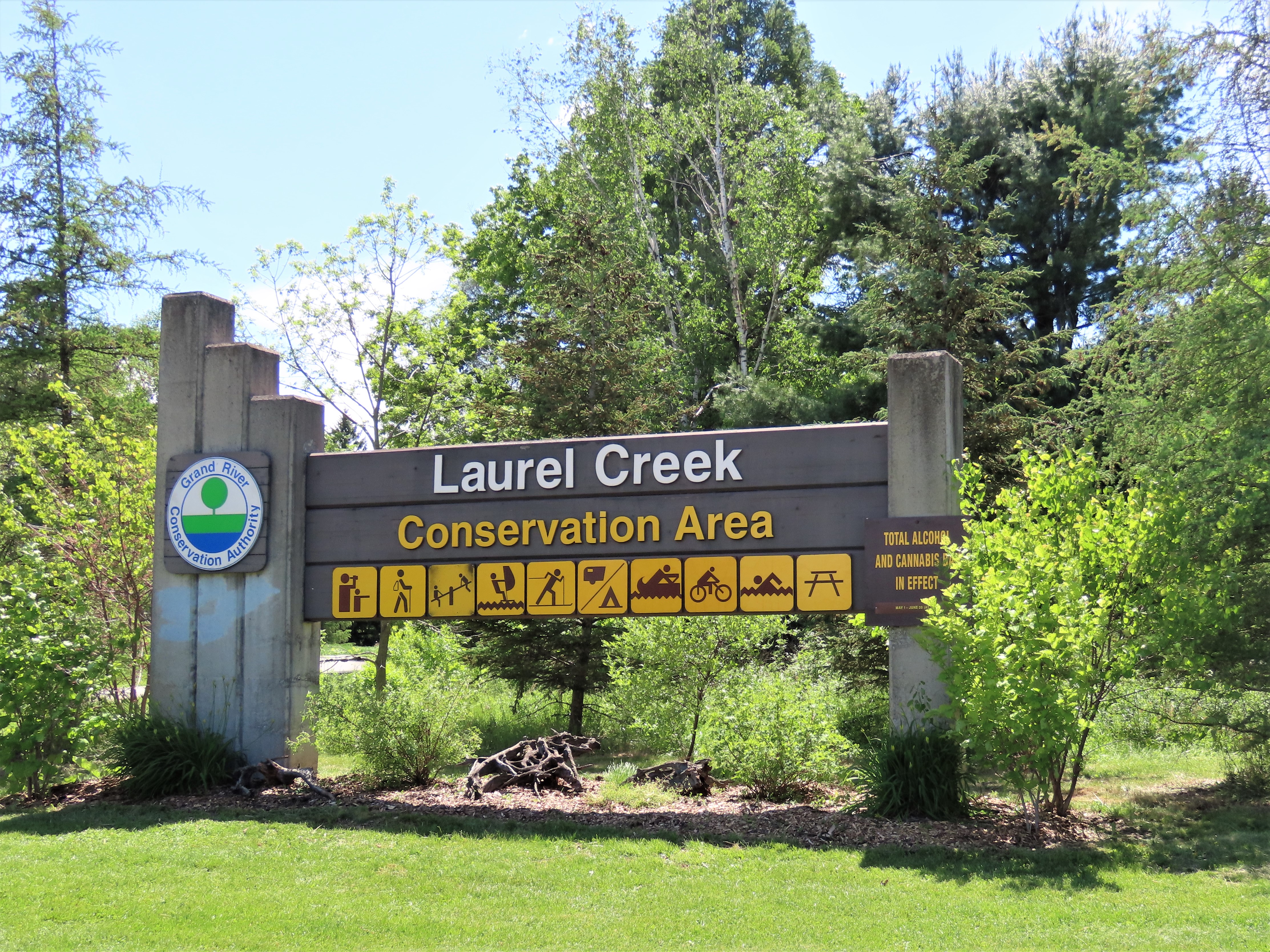
Laurel Creek Conservation Area, Waterloo, ON

     A very commendable programme has been launched by our public library, to encourage outdoor education, and to enable people to participate in the opportunities to explore nature offered in the conservation areas falling under the jurisdiction of the Grand River Conservation Authority.
     For a period of a week a free pass to all the properties is offered and covers up to six people entering at the same time. In this way a family of six - grandparents, parents and children perhaps - can  enjoy a period of outdoor recreation together. At the same time, interest in the conservation areas is rekindled after a long period of closure due to COVID regulations.
     In addition to the complimentary pass a kit is provided, containing a pair of binoculars, three field guides dealing with caterpillars, wildflowers and butterflies, and a map showing the locations that may be visited, all contained in a pouch any naturalist would be happy to own.


     This is a terrific scheme to get people involved in conservation and natural history; taxpayers' money being spent wisely!
     Laurel Creek is mere minutes from our house and that is where Miriam and I chose for our first visit.


     When our grandchildren were younger we used to buy an annual pass, but had not visited for a couple of years, so it was a pleasure to return.
     A male Red-winged Blackbird (Agelaius phoeniceus) was ardently cajoling females to join him to perpetuate the species.


     There appears to be a tick above his eye, which we hope will drop off once it has gorged and is satiated.
     Eastern Kingbirds (Tyrannus tyrannus) were seen flycatching at will.


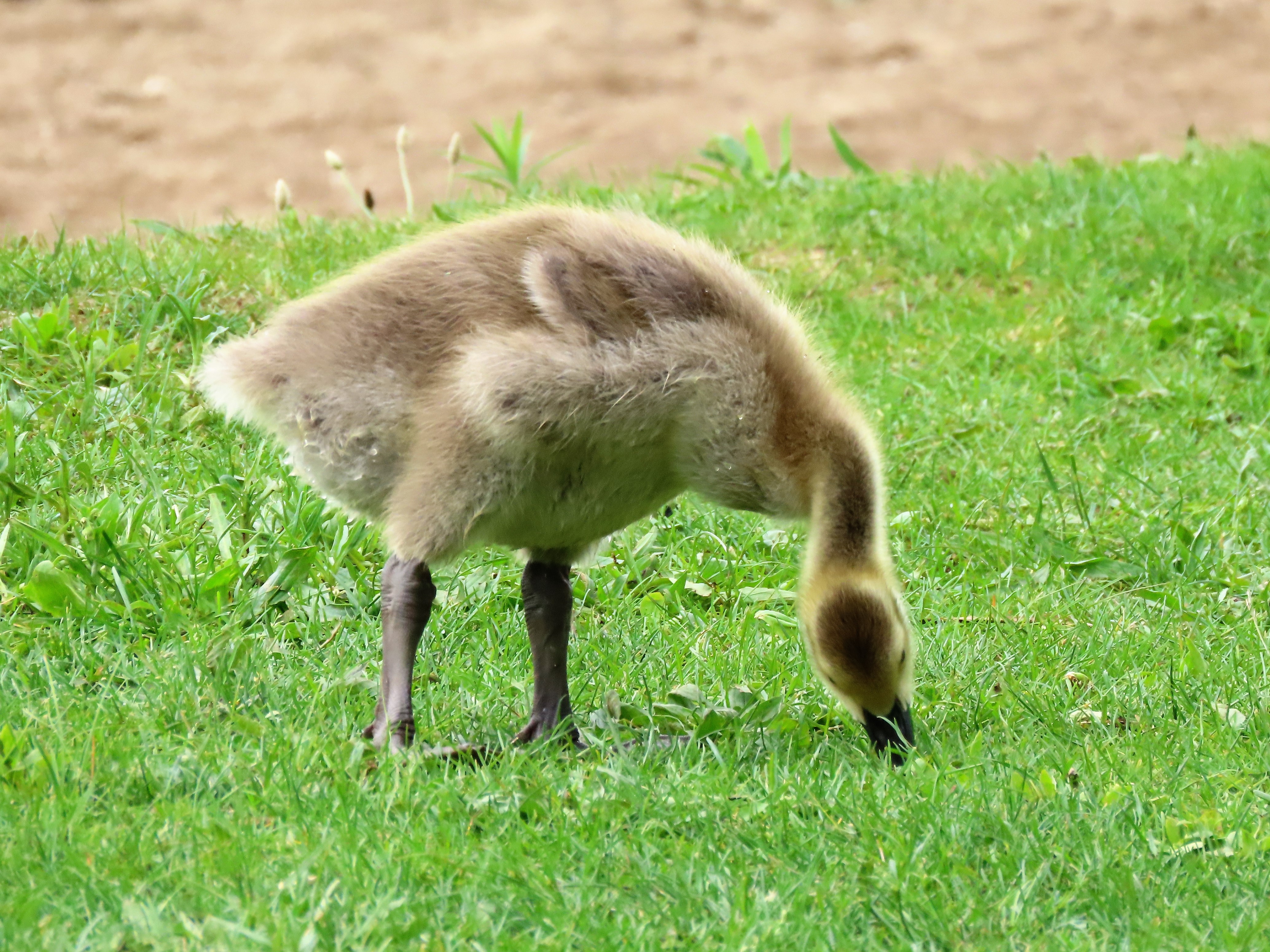
     If one were to nominate a species to take a prize for avian fecundity, Canada Goose (Branta canadensis) might be a unanimous choice. It seemed that families were everywhere and there is no denying that goslings are cute!


     In an area where we have observed Snapping Turtles (Chelydra serpentina) in the past, a nesting area has been constructed, and we hope that eggs are incubating below the surface of that sand.


     Miriam thought she heard an Indigo Bunting (Passerina cyanea) singing but could not be sure; it was extremely windy and the sound was carried away. Validation was provided on our way out of the park when she heard another and spotted it almost right away.


27 May 2021

Glen Allen, Wellington County, ON

     This is an area that we visit quite often, but generally in the winter when we are on a mission to find Snowy Owls (Bubo scandiacus) so you can imagine our delight, and surprise too I must say, when we discovered two colonies of American Cliff Swallow (Petrochelidon pyrrhonota)under two different bridges.


     When we first stopped the car many were gathering mud and a couple of males were scrapping for mating rights with a female, but the moment we opened the car every one of them exploded into the air. Even the promise of sex couldn't convince them to wait a minute or two!

Conostogo Lake Conservation Area, near Glen Allen, Wellington County, ON

     Armed with our pass we visited another GRCA property.


     This lake was created when Miriam was a young child and lived not far from the dam that was built to contain the water.


     As a sure indication that COVID-19 has seriously impacted the activities in the park, the picnic benches are stacked and out of commission, at a time when they should be occupied by people enjoying an outdoor picnic.


     We sat on a section of a dock that had been hauled out of the lake to enjoy our coffee and cookies, and a male Baltimore Oriole (Icterus galbula) arrived to keep us company.


     Several Eastern Kingbirds were flycatching, and you can see one perched in typical fashion, waiting for aerial insects to pass by.


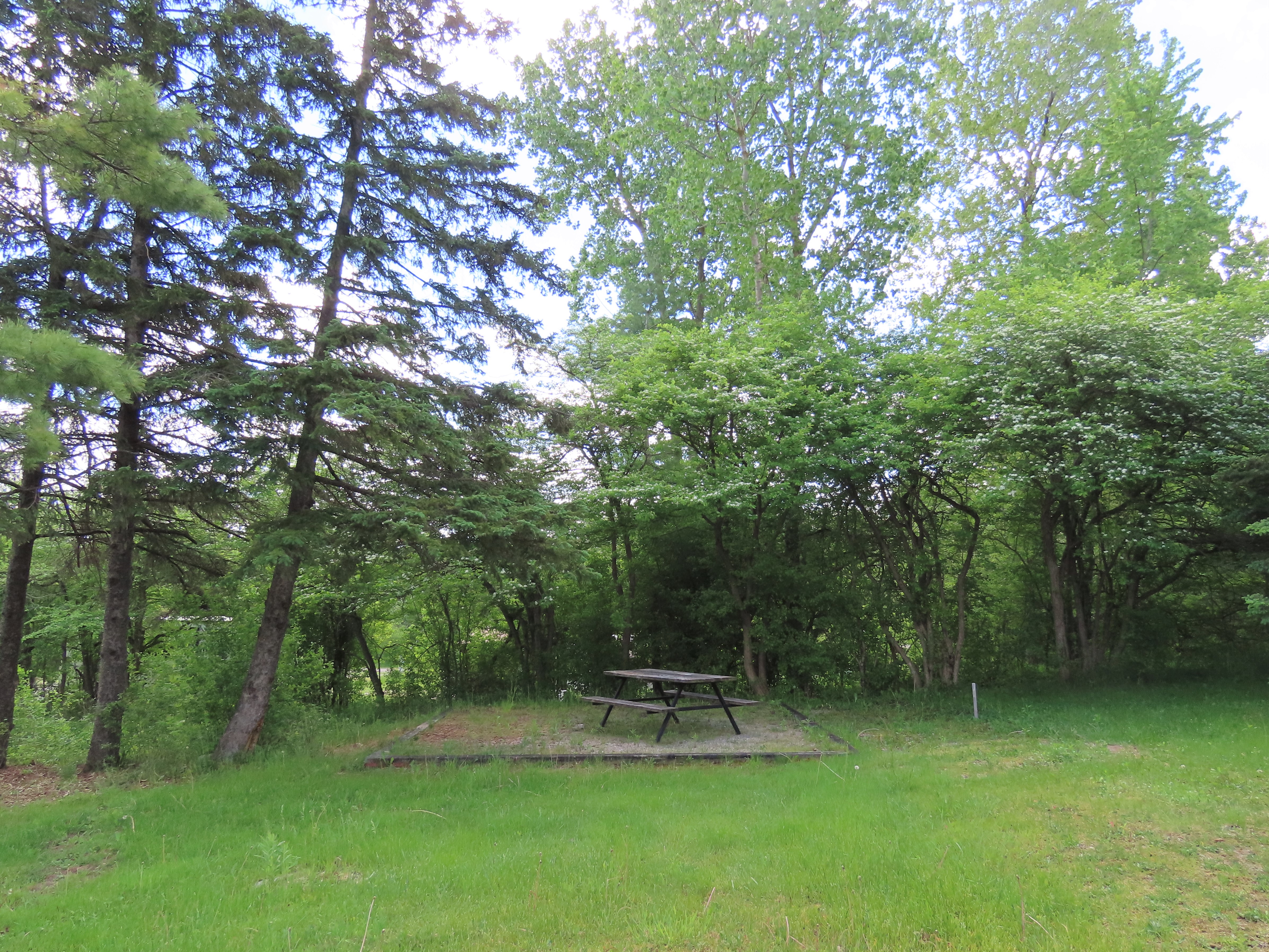
     The campgrounds are closed at present so we were able to drive through areas where we would not be permitted unless camping there, and noted that campsites are both pleasant and spacious.


     There is an upper and lower component to the conservation area and we decided to explore both. 
This is the lower section looking back at the dam.


     The view along the riverbank is quite lovely.


     American Black Currant (Ribes americanum) has gained a foothold in the area, a native species among so many invasives.


     I have been unable to identify this caterpillar specifically, but I am confident that it is of a Tiger Moth (subfamily Arctiinae).


     Bitter Wintercress was abundant (Barbarea vulgaris), with an unidentified beetle on the flower.


     It is without question that Tatarian Honeysuckle (Lonicera tatarica) is a very attractive plant, visually that is, but its appeal stops there.


     It is considered by many to be a noxious weed. It is highly invasive, with seeds dispersed by mammals and birds, and spreads rapidly, leading to a dense understory thicket. Native plant growth is inhibited and biodiversity is reduced as a consequence.
     This is another case of human folly in introducing species that do not belong, with serious ecological disturbance being the result.
     Common Hawthorn (Crataegus monogyna) presents no such dire issues, and is equally beautiful to my eye.


     We watched an American Robin (Turdus migratorius) deliver food to its young and then settle down on the nest to regulate their temperature no doubt.


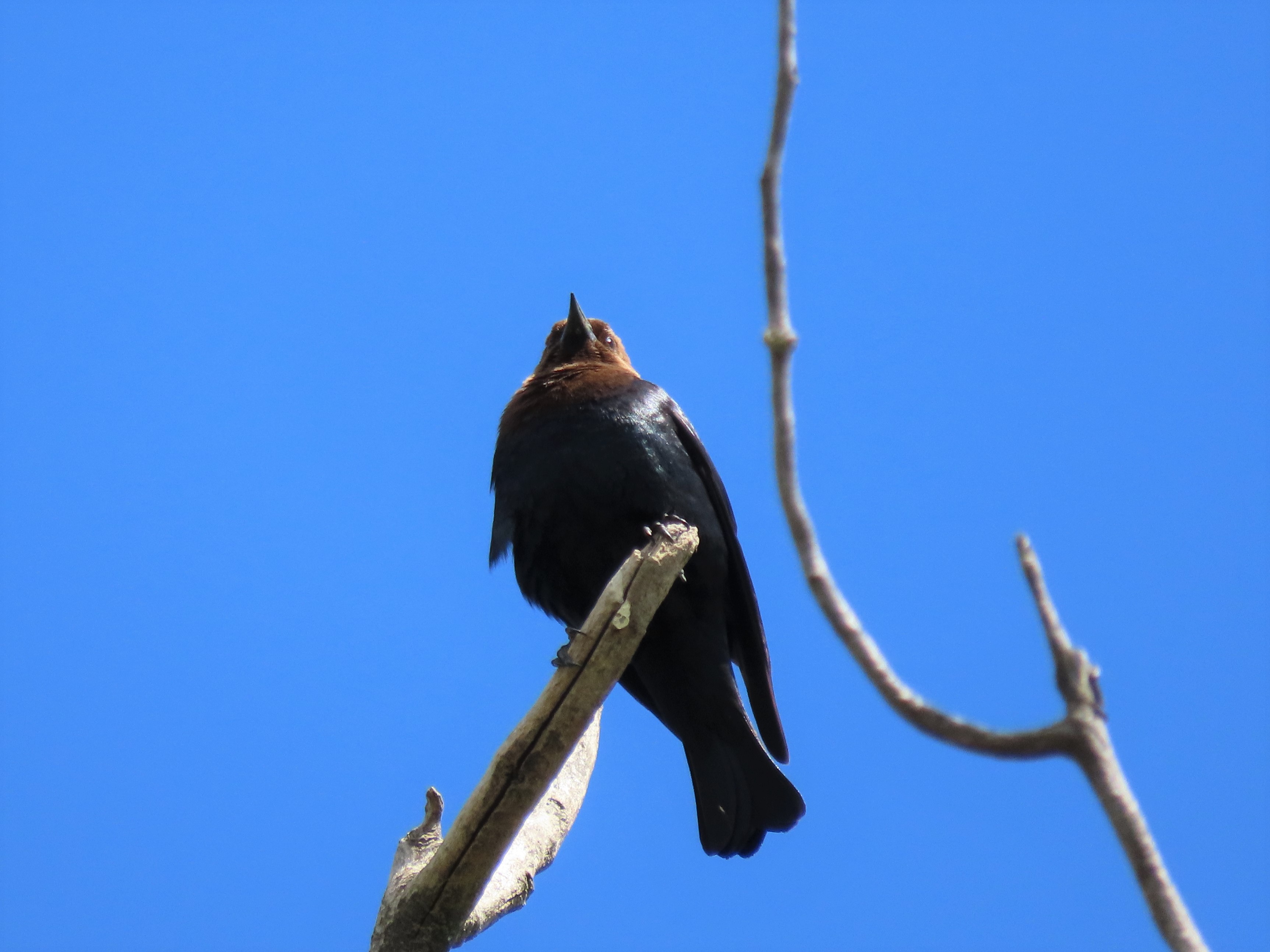
     A male Brown-headed Cowbird (Molothrus ater) looked down on us from on high as we left to head for home.


     We have very much enjoyed the two visits facilitated by the entry pass and look forward to a few more before we have to return the pass to the library. More to come in the next post I hope. 

Tuesday, May 25, 2021

A Rarity, Some Shorebirds and Other Treats

      We are starting to see the first chink of light in the tunnel of COVID darkness, and a little more freedom is now possible. I hope we are not plunged back into lockdown, having endured three such periods, for I fear the good citizens of the province will go mad!

21 May 2021

Wilmot Township, Waterloo, ON

     I was surprised, when driving along Berlett's Road en route to SpruceHaven to see a lone Wild Turkey (Melagris gollopavo) strutting across a field as only turkeys can, appearing to capture invertebrate prey as it did so.


Our backyard, Waterloo, ON

     The perennials in our garden are putting on quite a show now, and it is quite intoxicating to sit outside and enjoy bloom all around us.
     Snowdrop Anemones (Anemone sylvestris) are both prolific and beautiful.


     It is now warm enough to enjoy our morning coffee on the patio, and anemones make fine companions.


     Common Blue Violet (Viola sororia) is no less delightful.


22 May 2021
Lakeside Park, Kitchener, ON


     Cerulean Warbler (Setophaga cerulea) is one of several neotropical warblers in trouble, due principally to habitat loss in its home in South America, and here in North America where it breeds.
     It is seldom seen and ranks very high on the roster of species a birder wishes to add to her life list. A single male, at Lakeside Park, therefore, was cause for great excitement in the birding community, and as news of its presence spread, the pilgrimage of birders and photographers increased by the minute! It was staggering to contemplate the total value of expensive optical equipment and telephoto lenses in that one small clearing in an urban park.
     The bird stayed high in the canopy, at the very top of the trees, and for the most part this is what one saw.


     We do not have sophisticated cameras and $10,000 lenses, and Miriam did really well to capture what she did.


       I did not hear anyone exclaim in joy that they had a good picture, so we were not alone, and the best of equipment is no more able to bore through leaves than the camera on a cell phone.
     Happiness was seeing the bird; the picture was secondary.
     It was quite a bit easier to do somewhat better with a Swainson's Thrush (Catharus ustulatus).


     And to be in the park was enchanting.


     Our first Eastern Wood Pewee (Contopus virens) was perhaps as pleased to see us as we were to see it, because it perched and sang for a while.


     It darted from its perch a few times to capture a passing insect, and moved a metre or so, but stayed in the same area, in full view.


     It was a stark contrast to the neck-straining exercise with the Cerulean Warbler, and we viewed it alone, far from the chatter of excited humans.


     It started to rain (badly needed) and we made our way back to our car, happy to have visited the park, with so many treasures on display.


23 May 2021
Columbia Lake, Waterloo, ON


     We are so fortunate that Columbia Lake is very close to home. In less than ten minutes from our front door we can set our feet down on the trail.
     It is not so bad to be greeted by a profusion of Black Hawthorn (Crataegus douglasii) mere moments from beginning a walk.


     A Six-spotted Tiger Beetle (Cicindela sexguttata) is both common and dramatic.


     Tiger beetle males keep a grip on their mates long after mating to ensure paternity. 
     Soon after watching the beautiful tiger beetles for a while we spotted our first Northern Crescent (Phyciodes cocyta) of the spring.


     The number and variety of butterflies will only keep growing throughout the summer.
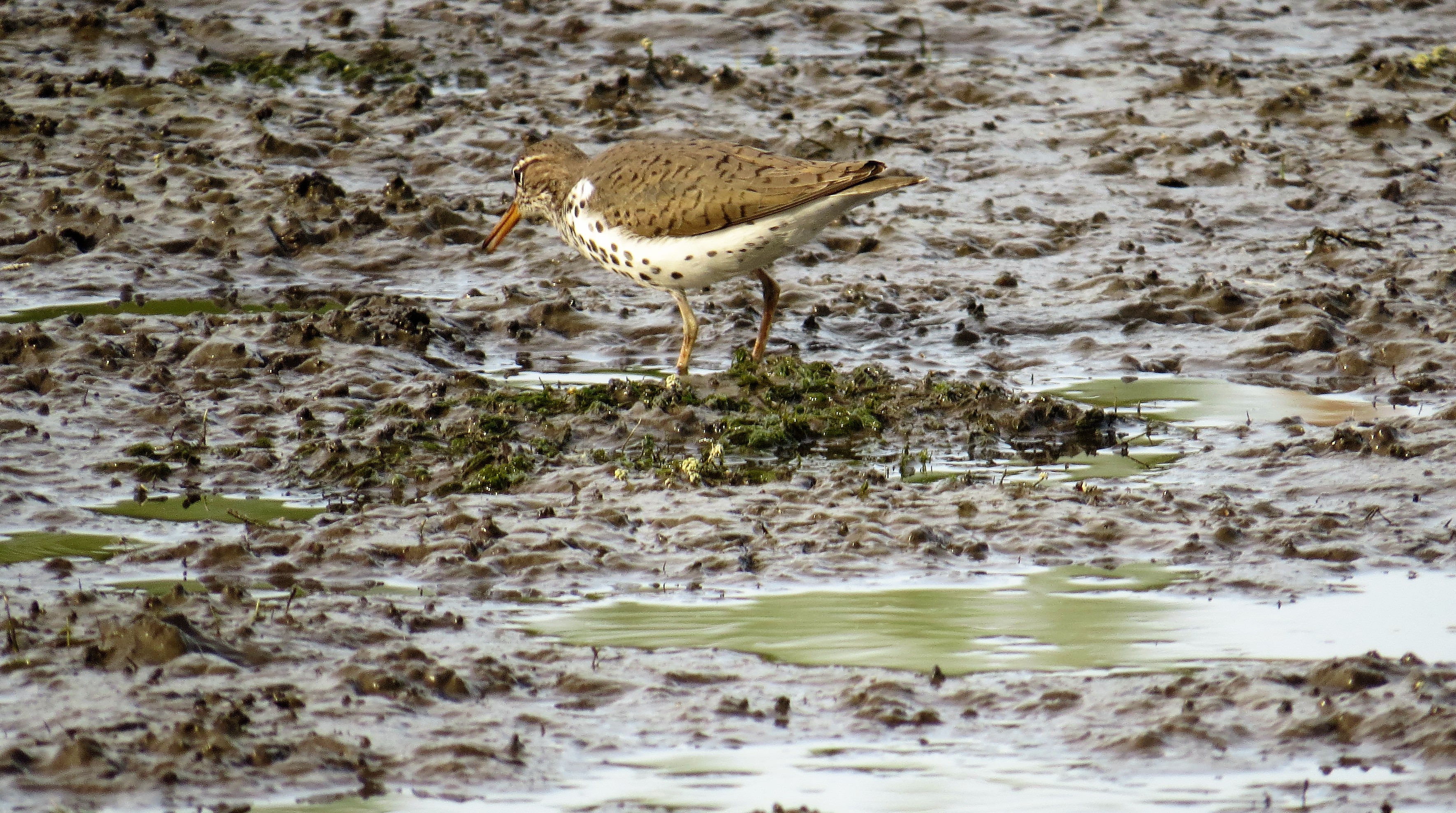
     A field of corn stubble is not a place where we expect to find Spotted Sandpiper (Actitis macularia) but this bird seemed to be exploiting the insect flush, along with American Robins (Turdus migratorius).


     A Belted Kingfisher (Megaceryle alcyon) was perched nearby, quite far from the water, and it made me wonder if it too was benefitting from an insect boom.


     A pair of Brown-headed Cowbirds (Molothrus ater) seemed not to be doing much of anything.


     Columbia Lake provides habitat for a variety of birds.....


     ..... and Canada Geese (Branta canadensis) have taken great advantage of secluded breeding areas. 


     The results are there for all to see.


     As anyone who has ever tried to take a picture of a swallow in flight knows, it is an almost impossible task. It was a stroke of luck, therefore to come across these Northern Rough-winged Swallows (Stelgidopteryx serripennis) resting on the road.


     Often there are several Great Blue Herons (Ardea herodias) and today was no exception.


     Our main purpose in choosing Columbia Lake for our walk was to check on shorebirds at the tail end of northward migration.
     The water level was ideal in one corner of the lake.


     A Spotted Sandpiper cut a fine figure perched on stones that form a conduit from one bank to the other.


     Several individuals of this species were present and they put on quite a show for us.


     It is a common bird, but it breeds locally and in consequence may be studied at will.


     Spotted Sandpiper is a polyandrous species where the female is dominant and squabbles between rival females is not uncommon.


     What a pleasure to see Spotted Sandpiper in breeding plumage when it is obvious how it came by its name.


     Killdeer (Chadrius vociferus) is the common breeding plover of the area. It is an uncommonly handsome bird.


          The much smaller Semipalmated Sandpiper (Charadrius semipalmatus) is the epitome of cuteness.


     In the picture below the plover looks quite quizzical, as though asking the Least Sandpipers (Calidris minutilla) what they are doing there.


     Were I into making fuzzy toys I think Semipalmated Plover might be my inspiration!


     Least Sandpiper is the world's smallest sandpiper, and it was a pleasure to see them in breeding plumage.


     This tiny bird weighing as little as a dozen grams will wing its way to its Arctic breeding grounds before returning south again. 


     The journeys made by shorebirds are prodigious!
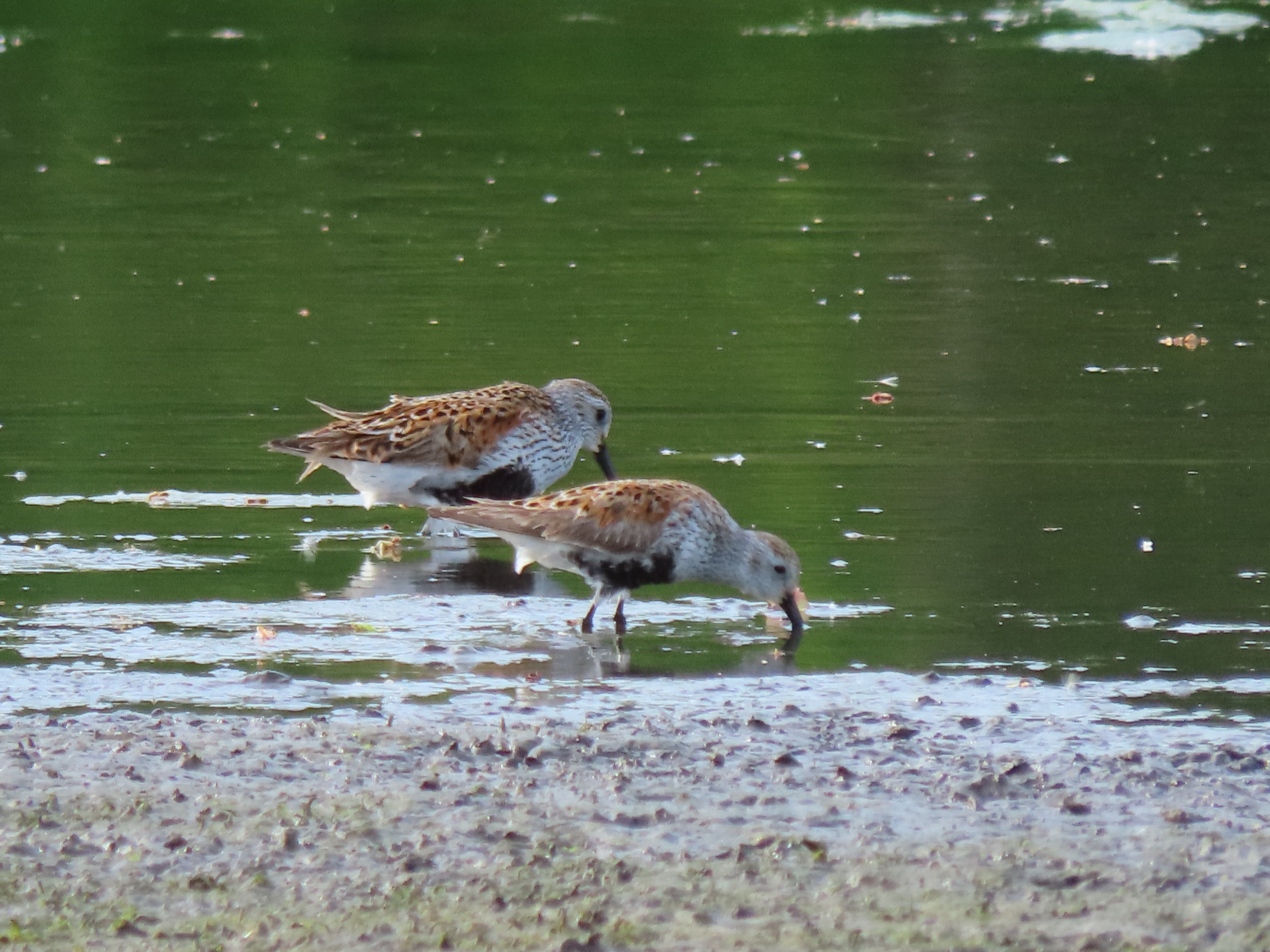
     Usually we see Dunlin (Calidris alpina) in the fall when they have moulted out of their breeding finery, so it was an exceptional treat to see this species with its distinctive black belly patch.


     There is so much enjoyment to be derived from studying shorebirds that we were mesmerized for an hour or so.


     A group of breeding-plumaged Dunlin was the proverbial icing on the cake!


     I mentioned above that the number of butterflies will increase throughout the summer. As if to reinforce the point, just as we were leaving an Eastern Tailed Blue (Cupido comyntas) flitted in front of us, and alighted for a picture.


     Life is good!

Land Acknowledgement

We acknowledge that the land on which we are situated are the lands traditionally used by the Haudenosaunee, Anishinaabe, and Neutral People. We also acknowledge the enduring presence and deep traditional knowledge, laws, and philosophies of the Indigenous Peoples with whom we share this land today. We are all treaty people with a responsibility to honour all our relations.

Followers