Monday, October 25, 2010

Laurel Creek C.A.


Laurel Creek C.A. 24 October 2010
David M. Gascoigne and Miriam Bauman

There was a large aggregation of waterfowl on the lake, so we went down to check out whether there were any interesting species, other than the normal ubiquitous and numerous Canada Geese and Mallards. By scanning through the flocks we were able to locate a pair of Pintails, a male Shoveler and a female Common Merganser. Other than a lone Pied-billed Grebe there was not much else.
The annual ritual of drawing down the water level in the fall by the conservation authority was underway, and there was an expansive area of mud with isolated pools of standing water. In these areas hundreds of Ring-billed Gulls were feeding on crustaceans and fishes which had been stranded by the receding water. It appeared that many of the gulls were already sated by the bounty, since they were picking up fishes, half-heartedly tossing them around, and letting them drop back into the water without any attempt to retrieve them. One individual, however, must have been a latecomer to the feast. We watched this bird seize a crayfish, batter it against the ground repeatedly, drop it, pick it up and repeat the same process, until the crayfish was subdued, and there was no longer a danger from its pincers. In one gulp the crayfish was gone!
The pictures show the sequence of this feeding event, from the crayfish in the gull’s bill, to half way down it’s throat, to a contented gull standing digesting its meal.


Thursday, October 21, 2010

The Millrace, St Jacobs, Ontario


The Millrace, St. Jacobs, Ontario

The millrace was constructed in the 1860s, alongside the Conestogo River, to serve the power needs of the grist mill owned and operated by Jacob C. Snider.
Today it forms part of the Trans Canada Trail, and provides a pleasant 3 km round trip walk from the Village of St. Jacobs to the dam on the Conestogo River and back. In addition to fine birding, it offers a view of Mennonite life, as old order boys may be seen fishing on the river, or properly attired girls toboggan down the slopes in the winter. Each season brings its own set of delights. Spring is glorious as the avian populations are swelled by arriving migrants and Fall provides a panoply of stunning Fall colours. In the summer many nesting species can be discovered upon careful searching and typical winter denizens are Black-capped Chickadees, Red and White-breasted Nuthatches, Downy and Hairy Woodpeckers and other typical species. Cedar Waxwings are easily found all year.
The farmers’ market in St. Jacobs is well worth a visit. It is open on Thursdays and Saturdays for most of the year, but is also open on Tuesdays during the summer. The village itself is filled with craft shops and other interesting stores, and is a magnet for tourists on the weekend.
At the Three Bridges Road end of the trail, Sundays bring a procession of Old Order Mennonites in a variety of horse-drawn carriages, on their way to a meeting house farther up the road.
In addition to excellent birding, St. Jacobs provides ample pleasures for non-birding members of a family, and is highly recommended to anyone visiting the area. We are fortunate to live close by and we enjoy walking the trail throughout the year.
A list of species we have observed there follows.


Species seen on the Millrace

Double-crested Cormorant
Great Blue Heron
Great Egret
Canada Goose
Mallard
Northern Shoveler
Common Merganser
Turkey Vulture
Northern Harrier
Cooper’s Hawk
Red-tailed Hawk
Rough-legged Hawk
Osprey
American Kestrel
Ruffed Grouse
Killdeer
Lesser Yellowlegs
Spotted Sandpiper
Ring-billed Gull
American Herring Gull
Caspian Tern
Mourning Dove
Common Pigeon
Chimney Swift
Ruby-throated Hummingbird
Belted Kingfisher
Red-bellied Woodpecker
Yellow-bellied Sapsucker
Downy Woodpecker
Hairy Woodpecker
Northern Flicker
Willow Flycatcher
Alder Flycatcher
Eastern Phoebe
Great-crested Flycatcher
Eastern Kingbird
Red-eyed Vireo
Warbling Vireo
Blue-headed Vireo
Blue Jay
American Crow
Horned Lark
Bank Swallow
Tree Swallow
Barn Swallow
Black-capped Chickadee
Red-breasted Nuthatch
White-breasted Nuthatch
Brown Creeper
House Wren
Winter Wren
Golden-crowned Kinglet
Ruby-crowned Kinglet
Blue-grey Gnatcatcher
Eastern Bluebird
American Robin
Hermit Thrush
Grey Catbird
European Starling
Cedar Waxwing
Nashville Warbler
Yellow Warbler
Chestnut-sided Warbler
Magnolia Warbler
Yellow-rumped Warbler (Myrtle)
Black-throated Green Warbler
Black-and-White Warbler
Wilson’s Warbler
Northern Cardinal
Indigo Bunting
American Tree Sparrow
Chipping Sparrow
White-throated Sparrow
White-crowned Sparrow
Song Sparrow
Dark-eyed Junco
Brown-headed Cowbird
Red-winged Blackbird
Rusty Blackbird
Common Grackle
Baltimore Oriole
House Finch
Common Redpoll
Pine Siskin
American Goldfinch
House Sparrow


Tuesday, June 08, 2010

Carden Plain, 5 June, 2010


Trip Report
Carden Plain, Ontario
5 June, 2010


David M. Gascoigne, Miriam Bauman and John Lichty


We picked up John at 06:00h and headed off under cloudy skies. The weather forecast called for mixed sun and cloud, with perhaps the odd rain shower, but all in all it didn’t seem like a bad day to go birding.
Carden Plain is a limestone alvar about an hour and a half drive northeast of Toronto. It has a unique range of flora and a rich variety of bird life. Species which are difficult to locate elsewhere can often be readily observed at Carden Plain and the area has become a veritable magnet for birders. In fact, it is becoming conventional wisdom that you go to Point Pelee in May and to Carden Plain in June.
A small population of Loggerhead Shrike, Lanius ludovicianus migrans, continues to maintain a precarious hold at Carden Plain, and this is one of the species that holds a special attraction for birders.
We made good time and experienced no delays anywhere. We took a less than direct route so that we could swing by my old house in Woodville to check for Bobolinks in the neighbouring field. It was exhilarating to find that the farmer still delays cutting his hay until the Bobolinks have raised their young, and we were treated to the spectacle of numerous individuals flying around uttering their wonderful song. A displaying Eastern Meadowlark, a species whose numbers seem to have declined in recent years, added to the magic of the moment and we already felt that we had enjoyed a good day of birding.
In days gone by a stop at the Kirkfield lift lock would always yield Cliff Swallows but there were none present today. These birds used to build their nests on the walls of the structure, but a few years ago I noticed that they were unable to attach their nests, leaving me to wonder whether a coating had been applied to prevent the birds from nesting.
We left the locks and headed north to Carden Plain. In short order, we were thrilled to hear the winnowing of Wilson’s Snipe, and it seemed that at every angle we inclined our necks there were birds in view. Some swooped low over our heads, their tails fanned to create the unique sound that so readily identifies them. We had great looks at many birds as they plummeted to the ground. One perched on a fence post but before we could get it in the scope it had taken off again. Several Upland Sandpipers were spotted and a couple of these sat atop posts for extended periods, as though to pose for photographs.
There were numbers of Eastern Bluebird, Eastern Meadowlark, Bobolink, Eastern Kingbird, Savannah Sparrow and other common species, and we were elated to see four Sandhill Cranes flying overhead.
Before moving farther along Wylie Road we saw our only Vesper Sparrow of the day. Stopping just before the marsh, we heard the bouncing ball song of Field Sparrow as we got out of the car and soon located American Redstart and Chestnut-sided Warbler. We saw first the male and then the female redstart, and Miriam’s keen eyes spotted the female building a nest.
At the marsh we located several Marsh Wrens and a possible Sedge Wren, but since I was the only one to see it and even then for the briefest of moments, we decided not to include it for the day. It would have been a lifer for John and a North American first for Miriam.
The wichety-wichety call of the Common Yellowthroat seemed to be coming from every stand of reeds, but we didn’t actually catch a glimpse of one until we stopped at the marsh on the way back.
Through the grassland area there were numerous sparrows and John spotted a single Sandhill Crane in deep grass in a field off in the distance. We were able to scope this bird for as long as we cared to; a great sighting at any time.
A mud puddle on the road was very productive and we netted Eastern Towhee, Chipping Sparrow, Brown Thrashers were off to the side and a Black-billed Cuckoo perched in a nearby snag.
For many years there has been an uneasy truce between local landowners and birders, but a level of mutual respect has now been achieved, and there are signs requesting birders to respect the rights of private property and not invade the farmers’ land. For this reason we did not go to an area where traditionally a small colony of Clay-coloured Sparrows has existed.
The final thrill of the day was achieved when, walking back to the car at the marsh, a Virginia Rail walked right across the road in front of us.
For John, a relative newcomer to birding, it turned out to be a great day that delivered seven lifers - Virginia Rail, Common Yellowthroat, Brown Thrasher, Wilson’s Snipe, Upland Sandpiper, Eastern Meadowlark and Marsh Wren.
Our drive home was uneventful and we determined to repeat the experience next year.


All species on the drive to and from Carden Plain
Great Blue Heron
Canada Goose
Mallard
Turkey Vulture
Osprey
Red-tailed Hawk
American Kestrel
Killdeer
Ring-billed Gull
Common Pigeon
Mourning Dove
Eastern Phoebe
Eastern Kingbird
Tree Swallow
Barn Swallow
American Robin
American Crow
Common Starling
American Goldfinch
Song Sparrow
Northern Cardinal
Bobolink
Red-winged Blackbird
Eastern Meadowlark
Common Grackle
Baltimore Oriole


All species at Carden Plain
Great Blue Heron
Turkey Vulture
Sandhill Crane
Virginia Rail
Killdeer
Wilson’s Snipe
Upland Sandpiper
Mourning Dove
Black-billed Cuckoo
Northern Flicker
Eastern Kingbird
Tree Swallow
Barn Swallow
Cedar Waxwing
Marsh Wren
Grey Catbird
Brown Thrasher
Eastern Bluebird
American Robin
Blue Jay
American Crow
American Goldfinch
Yellow Warbler
Chestnut-sided Warbler
American Redstart
Common Yellowthroat
Eastern Towhee
Chipping Sparrow
Field Sparrow
Vesper Sparrow

Savannah Sparrow

Grasshopper Sparrow
Song Sparrow
White-throated Sparrow
Rose-breasted Grosbeak
Bobolink
Red-winged Blackbird
Eastern Meadowlark
Brown-headed Cowbird
Baltimore Oriole

Total Species - 51
Photographs by Miriam Bauman


Wednesday, May 26, 2010

Point Pelee 14-16 May 2010


TRIP REPORT
POINT PELEE, ONTARIO
14-16 May 2010
David M. Gascoigne and Miriam Bauman
 

Friday, 14 May  2010


We checked into the Comfort Inn ($121.43 per night plus taxes) and immediately headed out to Hillman Marsh.
Compared with previous years the birds there were quite sparse, especially as far as waterfowl and shorebirds were concerned.
However, we spent a pleasant couple of hours meandering around before going back to the Comfort Inn to enjoy the dinner we had brought with us.
We had a fine Quebec cheese, Le 1608, one of our favourites, with rice crackers, accompanied by a chickpea and feta cheese salad. Dessert comprised a variety of fruit. All was washed down with an Argentian Fuzion Shiraz.

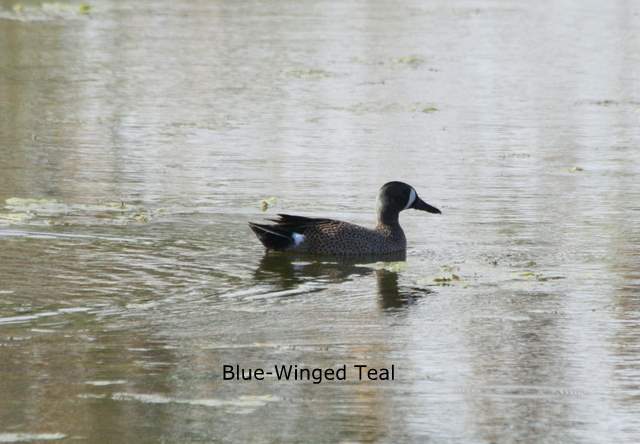
All species at Hillman Marsh - Double-crested Cormorant, Great Blue Heron, Great Egret, Canada Goose, Wood Duck, Mallard, Blue-winged Teal, Northern Shoveler, American Golden Plover, Killdeer, Short-billed Dowitcher, Dunlin, Ring-billed Gull, Bonaparte’s Gull, Caspian Tern, Common Tern, Mourning Dove, Tree Swallow, Barn Swallow, American Robin, European Starling, Yellow Warbler, Song Sparrow, Red-winged Blackbird, Common Grackle.

Saturday, 15 May 2010

Visitor Centre to the Tip

When we last stayed at the Comfort Inn two years ago, we requested a wake up call both nights, but on neither occasion did it materialize the following morning. We had a repeat of this experience this time. I have no idea why it is so difficult for the staff to organize a simple wake up call, but obviously it is an obstacle too difficult to surmount over a two year interval. I think that next time we’ll give the Day’s Inn a shot to see if they can do a little better.
After partaking of the continental breakfast we left for Point Pelee National Park, arriving at the entrance at around 06:15h. There were not many other vehicles going in and we drove down to the Visitor Centre and parked in the main lot.
We decided to walk down to the Tip and were glad that we did. It was still cool but the sun was starting to provide some warmth and birds were active. The north shore of Lake Erie is the area of the province where one can reliably expect to see Orchard Oriole and we were not disappointed. There were several individuals moving around in the trees, gleaning insects roused by the rising temperature. Competition was provided by more numerous Baltimore Orioles and numerous Eastern Kingbirds sallied forth from the treetops to snatch passing prey. A couple of Swainson’s Thrushes provided our first sightings of the year for this species.
A male and female Wild Turkey were on the road, with the male in full display. The female seemed quite indifferent to his charms, but we enjoyed the ritual. This represents the first sighting ever for us of Wild Turkey in Point Pelee National Park.
We saw a pair of Mourning Doves on a nest. One (we assume the male) was sitting on top of the other, but there was no evidence of copulatory activity and they seemed quite content to rest in this fashion. We saw three Blue-grey Gnatcatchers, two Chestnut-sided Warblers, three Magnolia Warblers, a Black-throated Green Warbler, a Nashville Warbler, a Yellow-rumped Warbler, a couple of Black-throated Blue Warblers, two Red-eyed Vireos and a Philadelphia Vireo.
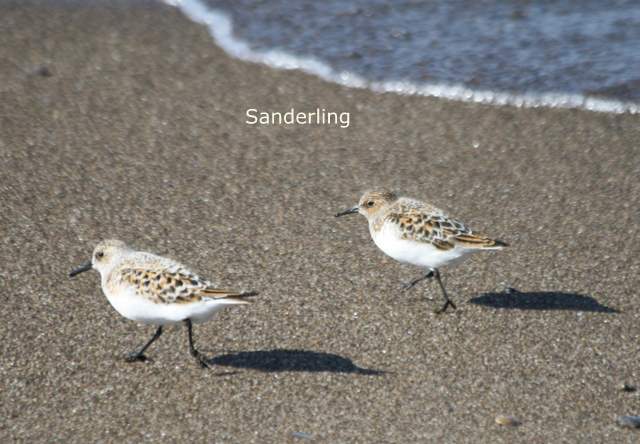
When we arrived at the Tip there was not a great deal of activity. However there was a lone Horned Lark on the sand and a group of about twenty Sanderling in different degrees of plumage, together with a stunning Ruddy Turnstone.
On the way back to get the tram we had a great look at a Northern Parula.

All species from the Visitor Centre to the Tip - Double -crested Cormorant, Great Blue Heron, Canada Goose, Turkey Vulture, Wild Turkey, Ruddy Turnstone, Sanderling, Mourning Dove, Red-bellied Woodpecker, Eastern Kingbird, Horned Lark, Tree Swallow, Barn Swallow, Grey Catbird, Swainson’s Thrush, American Robin, Blue-grey Gnatcatcher, Blue Jay, European Starling, Blue-headed Vireo, Philadelphia Vireo, Red-eyed Vireo, American Goldfinch, Nashville Warbler, Northern Parula, Yellow Warbler, Chestnut-sided Warbler, Magnolia Warbler, Black-throated Blue Warbler, Yellow-rumped Warbler, Black-throated Green Warbler, White-crowned Sparrow, Northern Cardinal, Rose-breasted Grosbeak, Red-winged Blackbird, Common Grackle, Brown-headed Cowbird, Baltimore Oriole, Orchard Oriole.

Tilden Woods Trail

Following a visit to the gift shop at the Visitor Centre to pick up a tee shirt for our friend Alejandro Solano in Ecuador (we had promised to get one for him to add to his extensive collection of birding garb) we decided to walk the Tilden Woods Trail.
By now it was getting warmer and the walk was quite delightful. The highlight was two clearly seen Black-billed Cuckoos, one either side of the trail; we added Black-and-White Warbler to our parulid list. We also had the unbridled delight of two male Scarlet Tanagers. It almost seems as if the first sighting of any year is the first ever and it never ceases to amaze.

All species on the Tilden Woods Trail - Turkey Vulture, Black-billed Cuckoo, Great-crested Flycatcher, Barn Swallow, House Wren, Grey Catbird, American Robin, Blue Jay, Red-eyed Vireo, Yellow Warbler, Chestnut-sided Warbler, Magnolia Warbler, Black-throated Green Warbler, Black-and-white Warbler, Red-winged Blackbird, Common Grackle, Brown-headed Cowbird, Baltimore Oriole, Orchard Oriole.

Marsh Boardwalk

Following the Tilden Woods Trail we went over to the Marsh Boardwalk, always reliable for species not found in other areas of the park.
We were rewarded with four Black Terns, three Swamp Sparrows and Miriam heard a Marsh Wren. A Northern Harrier was coursing over the marsh and no less than eight Common Yellowthroats perched for us in full view.
Following our walk we had lunch at the café run by the Friends of Point Pelee. A wrap called a Green Goddess was very tasty indeed.

All species at the Marsh Boardwalk - Great Blue Heron, Canada Goose, Turkey Vulture, Northern Harrier, Black Tern, Barn Swallow, Marsh Wren, American Robin, Blue Jay, Common Yellowthroat, Swamp Sparrow, Red-winged Blackbird, Common Grackle.

The Dunes

This area was not especially productive and we did not tarry long.
All species at The Dunes - Double-crested Cormorant, Common Tern, Great Crested Flycatcher, Tree Swallow, Grey Catbird, Blue Jay, Red-eyed Vireo, Yellow Warbler, Chipping Sparrow, White-crowned Sparrow, Northern Cardinal, Red-winged Blackbird, Common Grackle.

Woodland Trail

We took the shuttle down to the far point of the Woodland Trail and walked its length back to the Visitor Centre.
This trail, in times past has been quite spectacular and today rendered the only individuals of Red-headed Woodpecker, Brown Thrasher and Northern Waterthrush.
We found a Yellow Warbler sitting on a nest and another busily involved in nest construction. This bird had chosen its nest site right at the edge of the path but it seemed totally unconcerned at the foot traffic passing by. We are always amazed at the process of nest construction and we stopped to watch for a while.

All species on the Woodland Trail - Red-headed Woodpecker, Eastern Phoebe, Grey Catbird, Brown Thrasher, American Robin, Blue Jay, Yellow Warbler, Chestnut-sided Warbler, American Redstart, Northern Waterthrush, Northern Cardinal, Red-winged Blackbird, Common Grackle, Baltimore Oriole, Orchard Oriole.

This marked the end of our birding for the day. We returned to the Comfort Inn and had a glass of wine (Pelee Island Merlot) before heading out for dinner at Paula’s Fish House. Last year we had eaten here and quite enjoyed it. This year, however, the food was poorly cooked and expensive for what we had. We returned to our room, read for a while and turned in after a fine day of birding.

Sunday, 16 May 2010

Following the continental breakfast at the Comfort Inn we left to head for Point Pelee National Park again, arriving at around the same time as the previous day.
On the way up to the parking area at the Visitor Centre we saw three Wild Turkeys on the road, one of which was a huge male strutting his stuff. How the females could display such indifference confounds me!


The Tip

We decided to ride the shuttle down to the Tip and bird the area from the shuttle stop to the water’s edge.
It was a productive couple of hours and we added Orange-crowned Warbler, an unexpected Blackpoll Warbler, Palm Warbler and Wilson’s Warbler. A couple of Yellow-billed Cuckoos was a significant sighting.
After about two of hours of birding we returned to the Visitor Centre where we bought coffees from the food concession run by the Friends of Point Pelee and a huge birdseed cookie which we split. It was so delicious we got the recipe and are determined to make some at home.

All species at the Tip - Double-crested Cormorant, Greater Scaup, Ring-billed Gull, Yellow-billed Cuckoo, Red-bellied Woodpecker, Eastern Phoebe, Barn Swallow, American Robin, Blue-grey Gnatcatcher, Blue Jay, Red-eyed Vireo, Orange-crowned Warbler, Nashville Warbler, Yellow Warbler, Chestnut-sided Warbler, Magnolia Warbler, Palm Warbler, Blackpoll Warbler, Black-and-white Warbler, Wilson’s Warbler, Chipping Sparrow, Rose-breasted Grosbeak, Red-winged Blackbird, Common Grackle, Baltimore Oriole, Orchard Oriole.

DeLaurier Homestead and Trail

This area was populated by so many Yellow Warblers we lost count. Sometimes we had five or six of them in view at the same time. It was a very pleasant walk and we added Eastern Wood Pewee and Downy Woodpecker to our trip list.

All species at DeLaurier Homestead and Trail - Turkey Vulture, Mourning Dove, Red-bellied Woodpecker, Downy Woodpecker, Eastern Wood Pewee, Eastern Kingbird, Tree Swallow, Grey Catbird, Yellow Warbler, Magnolia Warbler, Yellow-rumped Warbler, American Redstart, Common Yellowthroat, Northern Cardinal, Rose-breasted Grosbeak, Red-winged Blackbird, Common Grackle.
We returned to the Visitor Centre and patronized the Friends of Point Pelee once again for lunch. We both had sausage on a bun which had nothing to set it apart, but was adequate, and we were certainly happy to spend our money with this very worthwhile organization.

Return to the Tip

Since it was getting close to the time when we would need to depart, we once again rode the shuttle to the Tip and birded there for another hour or so. Other than species we recorded earlier we added a flock of about forty Purple Martins perched in a tree adjacent to the beach.

Additional species at The Tip - Purple Martin.

We left the park at about 14:00h and had an uneventful drive home. As always after a visit to Point Pelee, we felt we had enjoyed a fine weekend of birding and we ran into a few old friends and got caught up with each other’s lives.
Our three target birds eluded us, Cape May Warbler and Blue-winged Warbler for Miriam, Louisiana Waterthrush for both of us. Ah well, there’s always next year!
 
All species at Hillman Marsh and Point Pelee National Park, 14-16 May 2010 
Double-crested Cormorant
Great Blue Heron
Great Egret
Canada Goose
Wood Duck
Mallard
Blue-winged Teal
Northern Shoveler
Greater Scaup
Turkey Vulture
Northern Harrier
Wild Turkey
American Golden Plover
Killdeer
Short-billed Dowitcher
Ruddy Turnstone
Sanderling
Dunlin
Ring-billed Gull
Boanaparte’s Gull
Caspian Tern
Black Tern
Common Tern
Mourning Dove
Black-billed Cuckoo
Yellow-billed Cuckoo
Red-headed Woodpecker
Red-bellied Woodpecker
Downy Woodpecker
Eastern Wood Pewee
Eastern Phoebe
Eastern Kingbird
Great Crested Flycatcher
Horned Lark
Tree Swallow
Purple Martin
Barn Swallow
House Wren
Marsh Wren
Grey Catbird
Brown Thrasher
Swainson’s Thrush
American Robin
Blue-grey Gnatcatcher
Blue Jay
European Starling
Blue-headed Vireo
Philadelphia Vireo
Red-eyed Vireo
American Goldfinch
Orange-crowned Warbler
Nashville Warbler
Northern Parula
Yellow Warbler
Chestnut-sided Warbler
Magnolia Warbler
Black-throated Blue Warbler
Yellow-rumped Warbler
Black-throated Green Warbler
Palm Warbler
Blackpoll Warbler
Black-and-White Warbler
American Redstart
Northern Waterthrush
Common Yellowthroat
Wilson’s Warbler
Scarlet Tanager
Chipping Sparrow
Song Sparrow
Swamp Sparrow
White-crowned Sparrow
Northern Cardinal
Rose-breasted Grosbeak
Red-winged Blackbird
Common Grackle
Brown-headed Cowbird
Baltimore Oriole
Orchard Oriole
Total - 78 species
Photographs by Miriam Bauman 

Land Acknowledgement

We acknowledge that the land on which we are situated are the lands traditionally used by the Haudenosaunee, Anishinaabe, and Neutral People. We also acknowledge the enduring presence and deep traditional knowledge, laws, and philosophies of the Indigenous Peoples with whom we share this land today. We are all treaty people with a responsibility to honour all our relations.

Followers