Showing posts with label Princeton Field Guides. Show all posts

Wednesday, January 07, 2026

Book Review - Moths of Western North America - Princeton Field Guides


     I use the Seabrooke Leckie and David Beadle Peterson Field Guide to the Moths of Northeastern North America on a regular basis, so I eagerly anticipated receiving Moths of Western North America. 
     And what a pleasure it has been to receive this excellent book, the result of more than 3,000 hours of work, as Leckie states.
     Excellence does not come easy!
     The Peterson Guide was published in 2012, and here we are fourteen years later, and the evolution of a field guide is in our hands. It is bigger, packed with information, superbly illustrated and user-friendly. The illustrations are photographs, in contrast to artwork in most earlier guides. Over the years, I have generally favoured drawings over photographs, but the skillful use of photographic images in many modern field guides tempers this opinion. The ubiquity of digital images means that someone is bound to have a first class photograph of just about everything.
     From an aesthetic standpoint, I have enjoyed pictures showing habitat as an added authentication of the subject, but for moths I don't think this works as well as for birds, for example. Moths are often not seen on plants, being commonly found on walls or similar neutral backgrounds; in fact many pictures are taken of moths having spent the night in the fridge to render them sluggish, perfect for picture-taking the morning after capture in a moth trap or other device.


     Moths are often very difficult to identify and these photographs really help. They have been stripped of any peripheral material and show the moth exactly as you might see it as it languishes on your table, warming up before flying away. There is great clarity in this technique and I know I will find it valuable as I start to use the guide.


     The book follows the standard treatment, almost universal in modern field guides, where the illustrations are on the right and the text and range maps on the left. The flight periods are indicated by a unique and interesting colour coding system.
     Common names are used where available, although with moths it is probably best to stick with scientific names to avoid confusion. Many species have no commonly accepted English name and vernacular variations are more often than not a route to confusion.
     The introductory sections are well done, concise yet informative, and include useful information on the ways to see moths. It may come as a surprise to some that it can be done cheaply and easily.


     All in all, this is a guide that I recommend enthusiastically. I know that I will benefit greatly from it, and I have no doubt that you will too.


Moths of Western North America - Princeton Field Guides
Seabrooke Leckie
Paperback - US$35.00 - ISBN: 9780691232881
688 pages - 2,000+ colour photographs
Publication date: 27 January, 2026


Tuesday, January 21, 2025

Book Review - Snakes of Australia - Princeton Field Guides


      It might be argued that Australia is best known for its kangaroos and koalas, its parrots and cockatoos, even the Sydney Opera House, but it undoubtedly has also gained a reputation for its snakes. 
      They are numerous, many are highly venomous, but nowhere near the omnipresent threat to life and limb presented in scurrilous journals and sensationalized TV shows, some of which rival print tabloids for utter nonsense. Rather, they are an essential part of the ecosystems in which they have evolved, no more and no less than their prey and their predators. Balance is always the key, and left to its own devices Nature has a wonderful way of regulating it. It is when humans start interfering that equilibrium goes awry. 
      I am far from an expert on Australian reptiles, but Scott Eipper and his wife Tie are names that I know, and they are pre-eminent in their knowledge of, and experience with, Australian snakes. Seeing their name on the cover of the book I felt I was in good hands. 
     As is always the case with Princeton Field Guides, this is an excellent work, comprehensive in its coverage, and superbly illustrated.


      The introductory sections follow a standard format, comforting and useful by its very familiarity; unusual, however, in that the glossary is at the beginning of the book instead of in its usual position at the end.
      Snakes bites engender serious concern, as they should, but few events are more overhyped than the consequences of being bitten. With proper care and access to medical intervention, complete recovery is often the outcome with no long term effects. Death sometimes occurs, but you are far more likely to be hit by a car than killed by a snake. Important sections are devoted to snake myths and fallacies, prevention, first aid and correct care of the victim. If you live in Australia, or are planning a visit, read this information carefully.
     The reality is, however, even for those anxious to see a snake, you are unlikely to encounter them.
     The bulk of the book is devoted to species accounts with informative text, a range map and full colour pictures.


     Many of the species are cryptic, nocturnal and very difficult to spot, so to have pictures of all the snakes is an achievement in itself. Most of the photographs have been taken by the Eippers, but other committed herpetologists have contributed also.


     These Princeton Field Guides have, in my opinion, become the hallmarks of excellence in works of this genre, and Snakes of Australia takes its rightful place on the bookshelves of naturalists and herpetologists the world over.  
      A job well done!


Snakes of Australia - Princeton Field Guides 
Tie Epper and Scott Epper
Hardcover - US$45.00 - ISBN: 9780691269931
364 pages - 6 x 9 inches (15 x 22.5 cm)
Publication date: 11 February, 2025


Monday, December 23, 2024

Book Review - California Reptiles and Amphibians - Princeton Field Guides


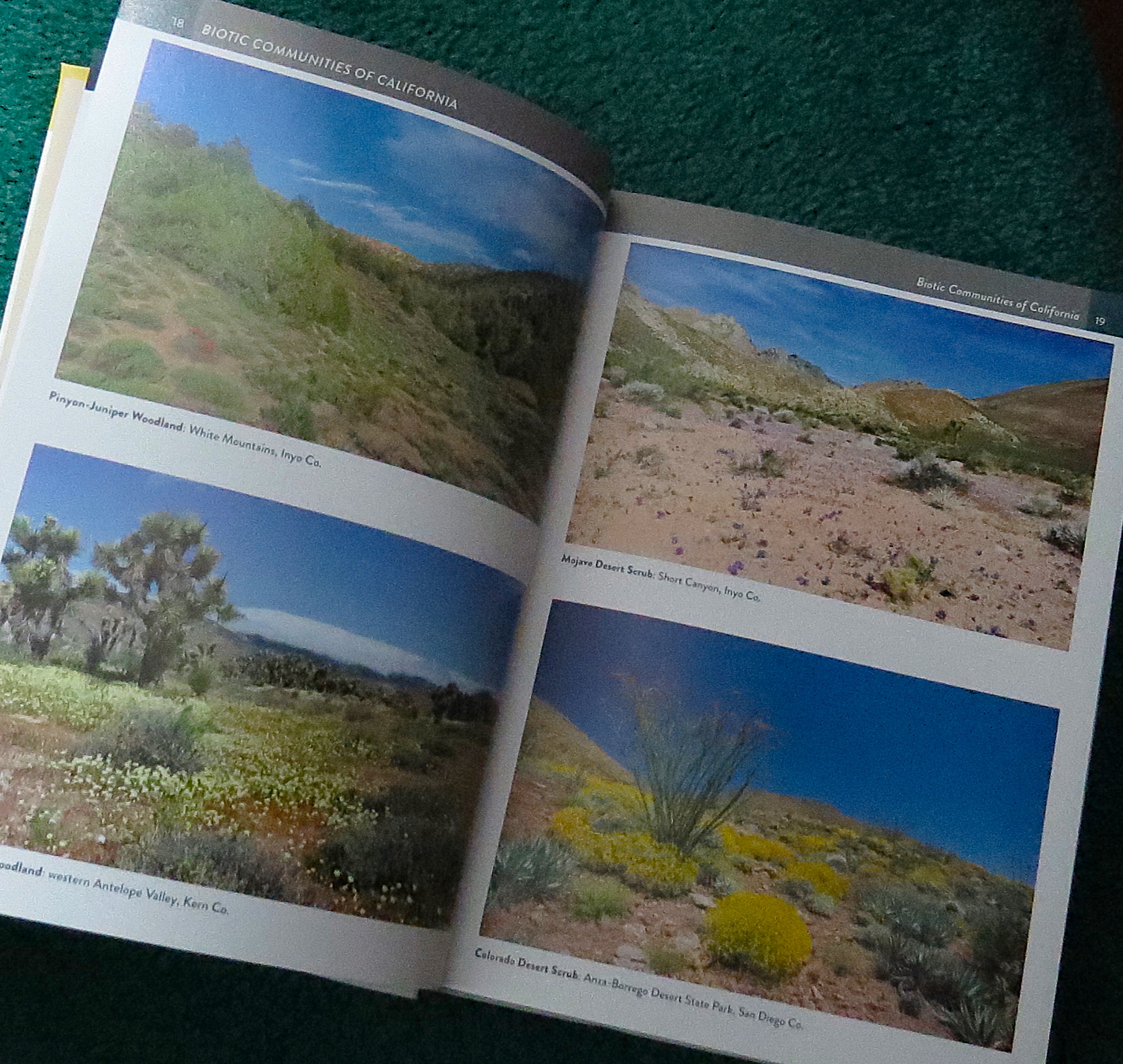
      It seemed absolutely appropriate that hot on the heels of the review of a book on deserts and drylands that I should receive this work on California reptiles and amphibians. The desert environment looms large in California, and of course drought and wildfires have plagued the state for several years. 
     Over the past twenty-five to thirty years I have made several visits to California. My arsenal of natural history resources would have been greatly enhanced by this impressive work. It covers all 209 species of amphibians and reptiles found in the state, with meticulous detail and informed facts. 


     Many species are endemic.
     Generally, for each species, a standard format is used, with information on identification, similar species, habitat, range/elevation, activity/behaviour, diet, reproduction, and conservation/remarks.
     As might be expected, many species are facing threats of various kinds, generally related to habitat loss, environmental degradation, fragmentation, roadkill, and human indifference or hostility. Wildfires are eliminating coastal chapparal and other habitats, which are replaced by grassland. Climate change - or climate breakdown as Adam Welz terms it - is affecting populations of many species with ever decreasing options in the face of rising temperatures. Increased aridity is a challenge on the one hand and cataclysmic floods a potential death sentence on the other.


     The illustrations are first rate from an ID standpoint, with plain, morphologically accurate depictions on a white background, unadorned by details of vegetation or other habitat features.


     Each species account provides a link to the plate where the species is displayed and another link to a map. This I find quite cumbersome. It would have been far better to have the range map and image opposite the text in the common practice of modern field guides.
     When seeking information on a given taxon one has to refer to the plate in another section, and the map in yet another. Obviously one cannot have the book open at all three positions at the same time. This unwieldiness is compounded when comparing two species with each other; then one is at times compelled to juggle two species accounts, two maps and two plates - and that's just about impossible.

     If while performing this dexterous operation the species account has been closed, there is no cross reference back to the text on either the map page or the plate, so the only solution is to refer to the index again - yet another step. Be sure to have two or three bookmarks in use! 
     There are perhaps production reasons why this method is used, but it is not readily apparent to me, My misgiving is in no way related to the information provided, but concerns the awkwardness in accessing all the components for each species.
     The section on amphibian larvae (which is superb) is better treated, because the species description is on the left page and the plate on the right. One still has to go to a different section for the map, however.


      May I repeat, the quality of the information is impeccable - detailed, informative, laudatory, complete, from the introductory segments to the taxonomic notes, from the discussion of threats to the last page of the index.
      Whether your interest is as a professional herpetologist or as a novice embarking on the study of a realm of nature previously unexplored you will derive great benefit from this book.
     Arm yourself with patience and forbearance and you will be in for a treat as you explore the exciting world of reptiles and amphibians, some of which may not be extant for much longer. 
     This is a book for its time. Let us earnestly hope it is not a requiem for too many species.


California Amphibians and Reptiles - Princeton Field Guides
Robert W. Hansen and Jason D. Shedd
Paperback - US$49.95 - ISBN: 9780691249070
528 pages - 5.875 x 8.25 inches (14.69 x 20.625 cm)
Publication date: 14 January, 2025


Thursday, November 07, 2024

Book Review - Birds of the Mesozoic - Princeton Field Guides


     On the face of it, it seems quite improbable, extraordinary even, that I could be looking at a field guide of birds that no human has ever seen! Not only that, it is laid out in the manner of current field guides, as though one could pick it up to go out into the field today, to find these birds. Not surprisingly, the only thing missing is a range map!
     These renditions are made possible by an examination of the rich fossil record, and the skill of modern paleontologists using sophisticated equipment and analysis to reconstruct the diversity of avialans.


     In many cases the reconstruction is based on a single articulated specimen, or even a single fragmentary specimen. For some species (e.g. Anchiornis huxleyi) there are "hundreds of complete or almost complete specimens preserving most of their feather covering."
     The resemblance to modern birds is stunning and many of these species would not seem out of place today. Modern birds are, in fact, dinosaurs and this book makes that simple truth patently obvious.


     The birds are classified into orders, or groups, and families, and there is a fascination just in examining these divisions. Explanatory notes are provided for all taxa; there is general agreement in some cases, a wide divergence of opinion in others - hardly unexpected, of course.


      Pictorially the book is a paradigm of sensory pleasure. To turn the pages to see ancient species for the first time is an exercise in wonder and delight, and everyone from novice birder to proficient ornithologist will be thrilled. I found myself lingering over some images, and comparing them with modern birds, and that was both exciting and instructive. Naturally these birds do not have common names, but what fun it would be to go through and name them all. The very nature of the book holds the promise of countless hours of enjoyment. 
    

     One must surely conclude that this is not the end of the story, perhaps not even the end of the beginning. There will doubtless be new discoveries and increased knowledge that will challenge currently held assumptions.


     But what an exciting journey this will be. Juan Benito and Roc Olivé deserve our gratitude for this bold step forward. Winter will soon be upon us and hours of nighttime reading await me.
     I am looking forward to it!


Birds of the Mesozoic - Princeton Field Guides
Juan Benito and Roc Olivé
Paperback - $27.95 USD - ISBN: 9780691266565
272 pages - 4.75 x 7.875 inches (11.875 x 19.69 cm)
250+ colour illustrations
Publication date: 05 November, 2024


Friday, August 23, 2024

Book Review - Birds of Greater Southern Africa - Princeton Field Guides


     An important part of the library of any naturalist is a series of field guides, essential tools for a complete understanding of different taxa, so the publication of a new field guide is always a cause for great celebration. A new book covering the charismatic avifauna of Southern Africa is especially enchanting, and I looked forward to it with great anticipation. The book now in my hand affirms that my expectations were entirely reasonable, the pleasure of anticipation being exceeded only by actuality.
     Modern field guides are almost without exception of outstanding quality and this guide does not buck the trend. It is well laid out, filled with information, and is authored by people with a long and distinguished association with the birds of the region. It is especially appealing that it covers Greater Southern Africa, encompassing the countries housing exceptional avian richness in the region. Many visiting birders cover two or three countries in one trip to this part of Africa, and it is very useful to have a single guide covering all the birds found there.


     The illustrations are extremely well done and accomplish what a good field guide is intended to do - it enables one to identify the bird. The well-established, almost universal format is followed with a range map and description on the left and the corresponding pictures on the right. 
     In the introductory section, a brief description is included of the different habitats where one is likely to encounter given species, and this terminology is linked back in the species accounts. For example, for Cape Sugarbird, it is stated ...."in patches of flowering Proteacae on montane escarpments, moving when these whither (sic)....."
   

     A depiction of bird topography is a standard component of every field guide, but even this familiar aspect is enhanced by using different families of birds to illustrate feather tracts and anatomical characters.


     Appendix 4 is very useful. It contains a map of each country encompassed by this guide, with the location of important bird areas clearly marked. Just studying these maps ahead of a trip will fuel enthusiasm.
     The human population of Africa is increasing at a frightening exponential rate and it can only be hoped that land will be set aside so that there is still habitat for Southern Africa's scintillating birds, including many species endemic to the region. You can do no better than to take this field guide to identify and appreciate them. 
     

    It will serve you very well.

Birds of Greater Southern Africa - Princeton Field Guides
Keith Barnes, John Fanshawe, and Terry Stevenson
Paperback - US$45.00 - ISBN: 978069123267
640 pages - 5.5 x 8.5 inches (13.75 x 21.25 cm)
3,000 + colour illustrations
Publication date: 06 August, 2024


Monday, February 26, 2024

Book Review - Ferns, Spikemosses, Clubmosses, and Quillworts - Princeton Field Guides


     I am quite sure that for most naturalists the vascular plants encompassed by this field guide, collectively known as "pteridophytes," are difficult taxa to deal with. As a consequence they receive short shrift from many otherwise keen observers, and Emily B. Sessa does a masterful job in convincing us that we should put our trepidation aside and jump in with both feet; gleefully even, with the expectation that we will learn and become entranced.
     That has certainly been my reaction to the book.
     The science is impeccable, the narrative superb, the pictures magnificent.


     Ferns, mosses and their allies are all around us, and on every continent, present even on the frigid barrens of Antarctica, so it really does behoove us to to develop a more intimate acquaintance with them.
     This is not to say that getting to know them is easy, but worthwhile things seldom are, and after all who does not relish a challenge - especially one where the rewards are so great.
     The book begins with a definition of ferns, spikemosses, clubmosses and quillworts, followed by a standard "How to use this book" segment. Eleven pages are then devoted to the techniques required to successfully identify the organisms down to the species level.


   A fine glossary follows.
     Most of the rest of the book is dedicated to a species review, grouped by family, and containing a succinct description highlighting all characters needed to clinch the ID, a range map, handily colour-coded, and several pictures.
     The author wades into the minefield of taxonomy and pays due attention to hybrids, polyploids and reticulate relationships - more grist for the intellectual mill.


     A detailed checklist enables the reader to keep track of species seen and their geographic subregions.
     Many suggestions for further reading and reference are provided, including general reference books, scientific papers, and web-based resources.


     This is a very fine treatment of a complex group of plants that command our attention; indeed our affection.
     I commend this book to all who love nature in its glorious and often prolific diversity; be sure to use it well - and often! 


Ferns, Spikemosses, Clubmosses, and Quillworts of Eastern North America - Princeton Field Guides
Emily B. Sessa
Paperback - US$29.95 - ISBN: 9780691219455
528 pages - 5.875 x 8.25 inches (14.69 x 20.625 cm)
More than 2,500 coloured illustrations, 20 black-and-white illustrations
Publication date: 05 March, 2024

Sunday, February 11, 2024

Book Review - Velvet Ants of North America - Princeton Field Guides


     I know what ants are - Edward O. Wilson made sure of that. I am a birder and could be forgiven for thinking they exist only as flicker food! But Velvet Ants? Well actually they are not ants, they are wasps. In the family Mutillidae. Confused? Just wait a bit.
     There - I have set the stage for what you are going to find is an exquisite exploration of these organisms, where identification of females and males of the same species can stump even the experts.  Page by page you will be introduced to these fascinating insects in a scrupulous scientific way, yet within the framework of a narrative tinged with scintillating humour. At times I actually laughed out loud, not what you'd expect  from Velvet Ants of North America, yet it only made the learning process that much more pleasurable. The three authors (it's hard not to draw a parallel with The Three Musketeers) have really shown us how to present solid science in a manner that even the most reluctant student will find appealing. Some may even fall in love with velvet ants.
     Permit me to cite just one example of the humour they weave into the text: "It is hard to characterize the gait of an entire family of insects, but to us, the locomotion of velvet ants resembles that of a sleep-deprived parent who is already 15 minutes late for an important appointment (months in the making), searching for their car keys on a LEGO strewn surface." 
     Overlaying this playfulness is a serious, compelling discussion, enhanced by exquisite illustrations throughout the entire book.


     The introductory sections will explain every aspect of velvet ant life, the chapter title telling much, "What is a velvet ant? The indestructible insect!"
     And on it goes. There is even a section dedicated to explaining how you can keep velvet ants as pets! The arcane realm of taxonomy is examined, with the challenges and pitfalls of new discoveries, sometimes only to learn that it is not new at all and has prior assignment to a previously misidentified species. Much terminology is developed around velvet ants to accommodate the unique circumstances of the taxa.  Day walkers, night walkers, day fliers, the graveyard shift are descriptive and evocative chapter titles too.  While the principal focus of the book is the velvet ants of the United States and Canada, there is an examination of the velvet ants of Mesoamerica and, indeed, of the World.
     Morphology is explored in matchless detail.


     The species accounts are a tour de force, with a picture, a range map and a concise description. You are even given a phonetic interpretation of those pesky scientific names to enable you to pronounce them. 
     This really is a gob-smacker of a book. Whether you are a professional entomologist or a rank amateur, I unequivocally recommend this work to you. It delivers satisfaction at every level, on every page, with every picture, with every word.
     If a glossary is important to you (it is for me), get ready for one of the most comprehensive you are ever likely to see. 
     So many esoteric organisms have become the subject of books in recent years and Princeton Field Guides are at the forefront of this expansion of knowledge.


      The books just keep getting better. Bravo, Princeton!


Velvet Ants of North America - Princeton Field Guides
Kevin Williams, Aaron D. Pan, and Joseph S. Wilson
Paperback - US$35.00 - ISBN: 9780691212043
440 pages - 5.5 x 8.5 inches (13.75 x 21.25 cm)
440 pages - 1,290 colour illustrations - 30 tables.
Publication date: 13 February, 2024

Wednesday, January 10, 2024

Book Review - Birds of China - Princeton Field Guides


     This is a remarkable field guide. From the front cover with its stunning image of a pair of Temminck's Tragopans, to the thumbnail portraits at the back, it delivers quality on every page.
     One would think that by 2024 every improvement that might be made to a field guide would have been made, but this one sets the bar yet again higher. 
     It is significant in many ways, not least of which is that it is edited by two distinguished Chinese ornithologists, supported by a cast of subordinate editors, no less competent and equally passionate about the avian diversity of their huge country.  Who better to know the bird life of China than authors of this calibre? 
     The introductory sections are useful, and in some cases unique, a brief history of systematics, for example. A brief guide to birdwatching even bears recommendations for equipment. There is a short section on bird vocalizations, and important information on bird conservation in China.
     I find the coverage of bird topography especially pleasing and useful, where detailed diagrams of a passerine, a duck and a gull are featured. For a novice birder this will be exceptionally helpful.
     The illustrations throughout are first class.


     Perhaps the most notable aspect of this field guide is that each bird is introduced first by its scientific name, a practice I have never seen in any other field guide and one which I applaud. The name is then given in Mandarin, followed by what I assume is a phonetic interpretation of the Mandarin name, and finally the English language name.


     I can hear kvetching from afar that in an English language guide, the English name should be accorded prominence, and I am not blind to the justification for that position.  It does seem to me, however, that Mandarin merits its position of prominence here - who knows maybe some of us will learn a Mandarin name or two?


      If I have one minor reservation with this exceptional guide, it is that the type is smaller than I would like, but since the guide already weighs in at 1.568 kg, and a larger typeface would necessitate more pages, it is probably a reasonable compromise.


      More birders than ever before are visiting China; rest assured that this is THE guide to take with you. You'll be very happy that you did.


Birds of China - Princeton Field Guides
Paperback - US$39.95 - ISBN: 9780691237527
672 pages - 6.125 x 9.25 inches (15.31 x 23.125 cm)
4,000 colour illustrations
Publishing date: 16 January, 2024

Land Acknowledgement

We acknowledge that the land on which we are situated are the lands traditionally used by the Haudenosaunee, Anishinaabe, and Neutral People. We also acknowledge the enduring presence and deep traditional knowledge, laws, and philosophies of the Indigenous Peoples with whom we share this land today. We are all treaty people with a responsibility to honour all our relations.

Followers