".....natural history helps make us better people, by fostering humility and awe, and offers the capacity to build better human societies, ones that are less destructive and dysfunctional."
Thomas Lowe Fleischner
09 July, 2024
Last year, two Black Swallowtail (Papilio polyxenes) pupae went into diapause and overwintered in our garage. Here is one of them having just eclosed and ready to face the world.

It flew out of the cage into bright sunshine minutes after this picture was taken.
10 July, 2024
Most houses contain a spider or two and they do far more good than harm if left alone, like this House Funnel-web Spider (genus Teganaria)

11 July, 2024
A Single-dotted Wave (Idaea dimidiata) very kindly took up residence at our front door for a while.

12 July, 2024
A lovely spider (subfamily Theridiinae) was a welcome addition to our lives.

No less so was a Speckled Renia Moth (Renia adspergillus).

This year we attempted to raise Polyphemus Moths (Antheraea polyphemus) from eggs on our American Linden (Tilia americana). Miriam made mesh bags with a draw string to enclose the branches on which the caterpillars were feeding, to safeguard them from threats like predatory wasps and birds seeking food for their chicks. As you can see a little breach occurred in the mesh and ants were able to get inside and make short work of a caterpillar.

We quickly relocated the unharmed larvae and provided a new bag. Ultimately, out of twelve eggs, we were successful in rearing two to pupation. They are now in the garage and will overwinter with us to emerge next year.
14 July, 2024
An Ipsilon Dart Moth (Agrotis ipsilon) came to visit and took a liking to the combination lock on the front door where it stayed for several hours.

18 July, 2024
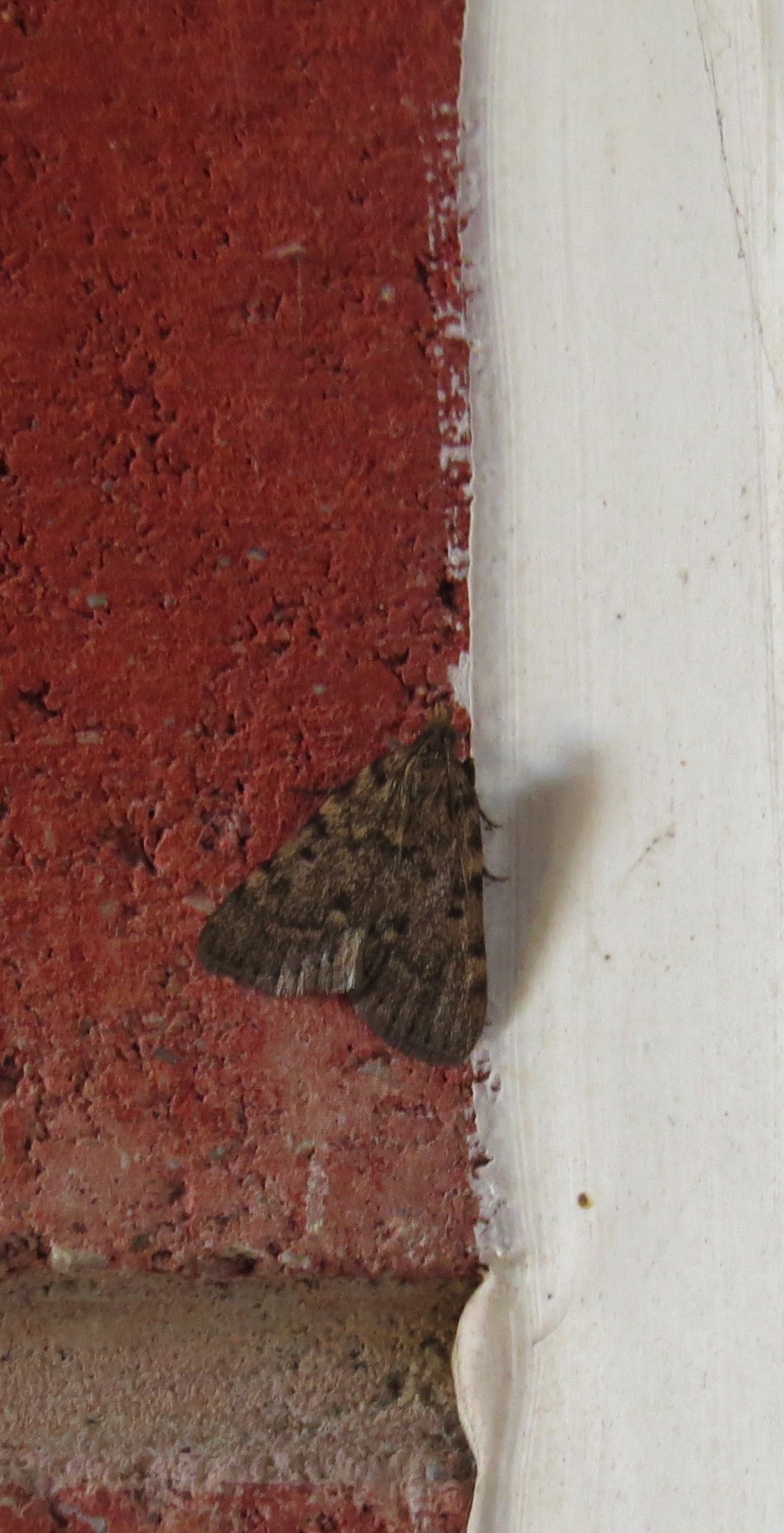
Today was the turn of a Large Tabby (Aglossa pinguinalis).
21 July, 2024
A Cross Orbweaver (Araneus diadematus) was subduing prey for later consumption.

Here is a healthy and rapidly growing Polyphemus caterpillar.

A Summer Azure (Celastrina neglecta) landed on Swamp Milkweed (Asclepias syriaca).

23 July, 2024
I wonder if an Eastern Parson Spider (Herpyllus ecclesiasticus) needs to prepare a weekly sermon?

26 July, 2024
A Cross Orbweaver is becoming very familiar to you.

27 July, 2024
A Cereal Leaf Beetle (Oulema melanoplus) clung to the screen door which resembles the iron windows of a medieval prison in this picture.

28 July, 2024
A Perplexing Bee (Bombus perplexus) was well dusted with pollen, thereby rendering payment for the sweet nectar delivered by the flower.

A Western Honey Bee (Apis mellifera) will perform the same service.

We are always delighted to see a Chipping Sparrow (Spizella passerina). They do not come to our yard as frequently as in times past.

An Autumn Meadowhawk (Sympetrum vicinum) was a very welcome visitor.

Limoniid Crane Flies (family Limoniidae) often remain perched for extended periods unless disturbed.

This is a Common House Spider (Parasteatoda tepidariorum); in fact not quite so common as other species.

Our Cup Plants (Silphium perfoliatum) are looking spectacular.

29 July, 2024
A visit from a Monarch (Danaus plexippus) is always a special event.

This One-banded Paper Wasp (Ancistrocerus unifasciatus) was drawn to the water in the bird bath.

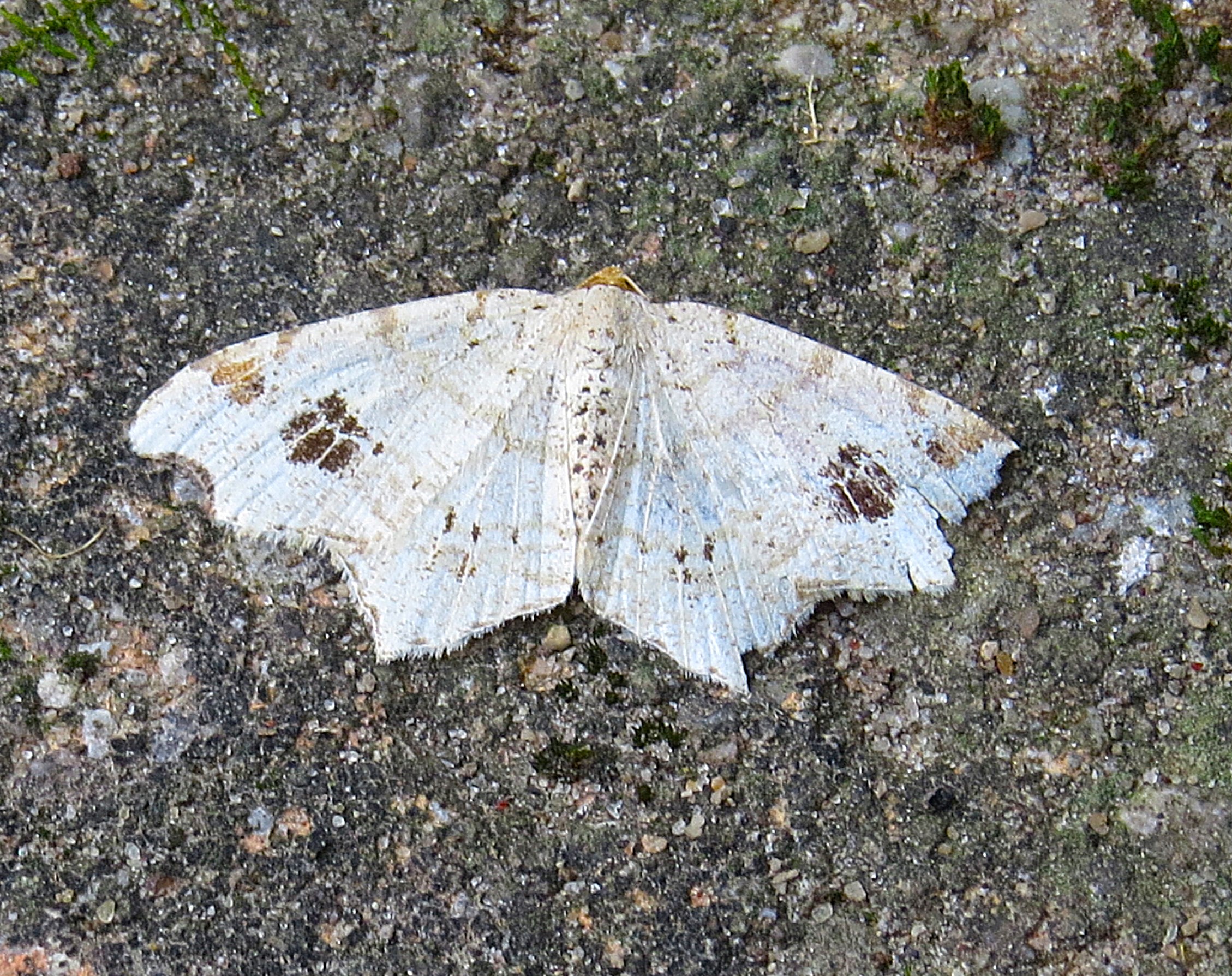
I'd bet that many people would be surprised at the number of moths that visit their backyards. Common Angle (Macaria aemulataria) might be among them.
31 July, 2024
We were heading out to run some errands but were delayed a while when we noticed a Monarch on the coneflowers.

It's hard to resist going back into the house for a camera.

A Western Honey Bee was taking advantage of a full supply of nectar too.


01 August, 2024
I doubt that European Earwig (Forficula auricularia) is anyone's favourite insect.

A Dark-barred Twin-spot Carpet (Xanthorhoe ferrugata) rested during the day.

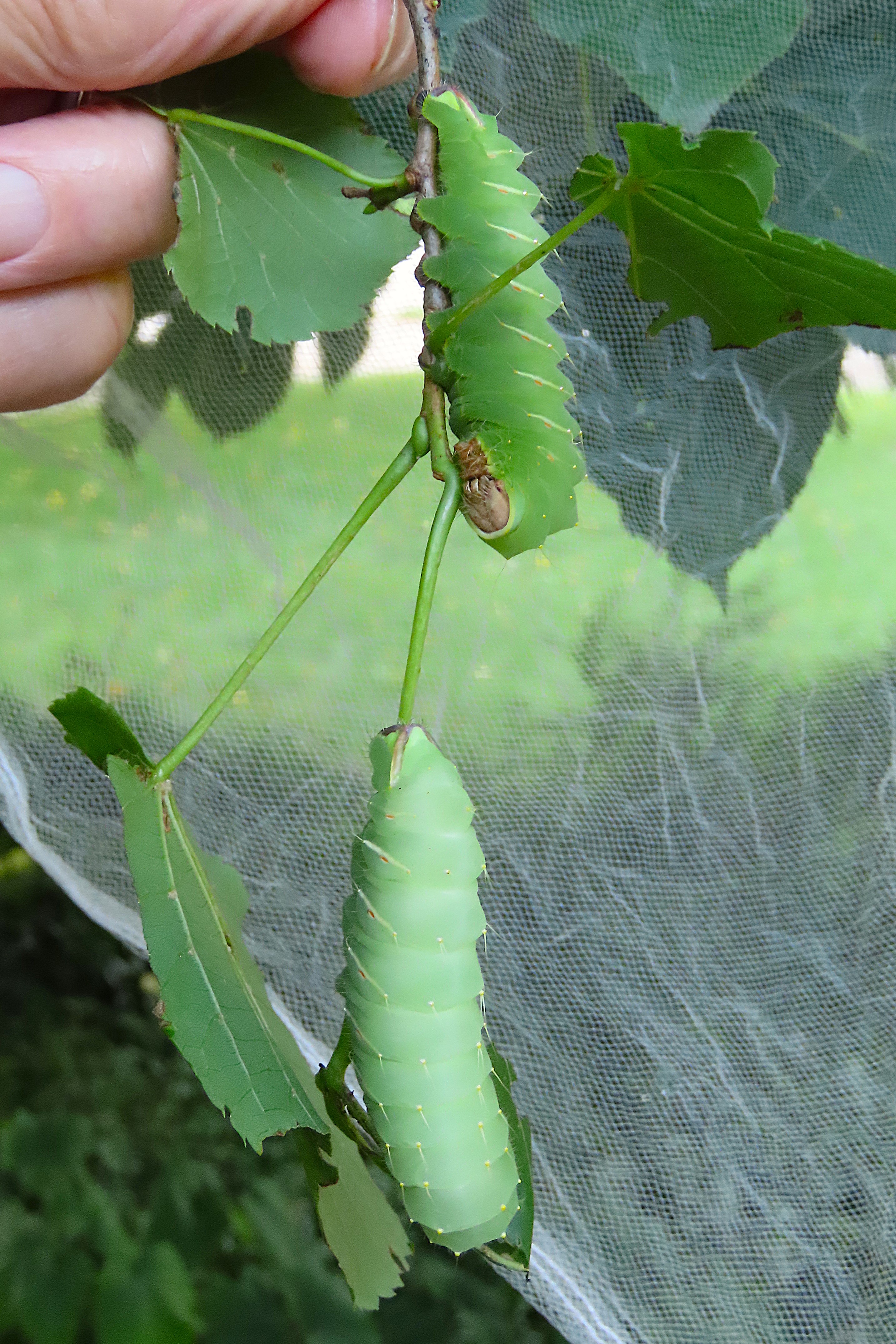
Our Polyphemus caterpillars are doing well and growing exponentially.
02 August, 2024
A Common Eupithecia Moth (Eupithecia miserulata) was a very welcome visitor.

03 August, 2024
We watched this Monarch land.

It's hard to tell on the following picture, but she curled her abdomen and laid an egg.

We immediately retrieved it and took it inside to be raised in safety.
An Autumn Meadowhawk also paid us a visit.

10 August, 2025
Tipula furca is a beautifully marked large Crane Fly.

A Strawberry Root Weevil (Otlorhynchus ovata) seemed more interested in coneflowers than strawberry roots.

15 August, 2024
You will have to agree that this Tan Jumping Spider (Platycryptus undatus) is a very appealing species, verging on cute!

If you are sometimes bothered by pesky flies this arachnid is your friend.

25 August, 2024
On a single plant of Butterfly Milkweed (Asclepias tuberosa) we found one Swamp Milkweed Leaf Beetle (Labidomera clivicollis).

By contrast, there were several Large Milkweed Bugs (Oncopeltus fasciatus).

Both of these species absorb poison from the host plant; hence their aposematic colours.
A Large Vagabond Sod Webworm Moth (Agriphila ruricolellus) was a first-time visitor.

Miriam's Gazanias have put on a spectacular show this year.


A Box Tree Moth (Cydalima perspectalis) is beautiful, but unwelcome.
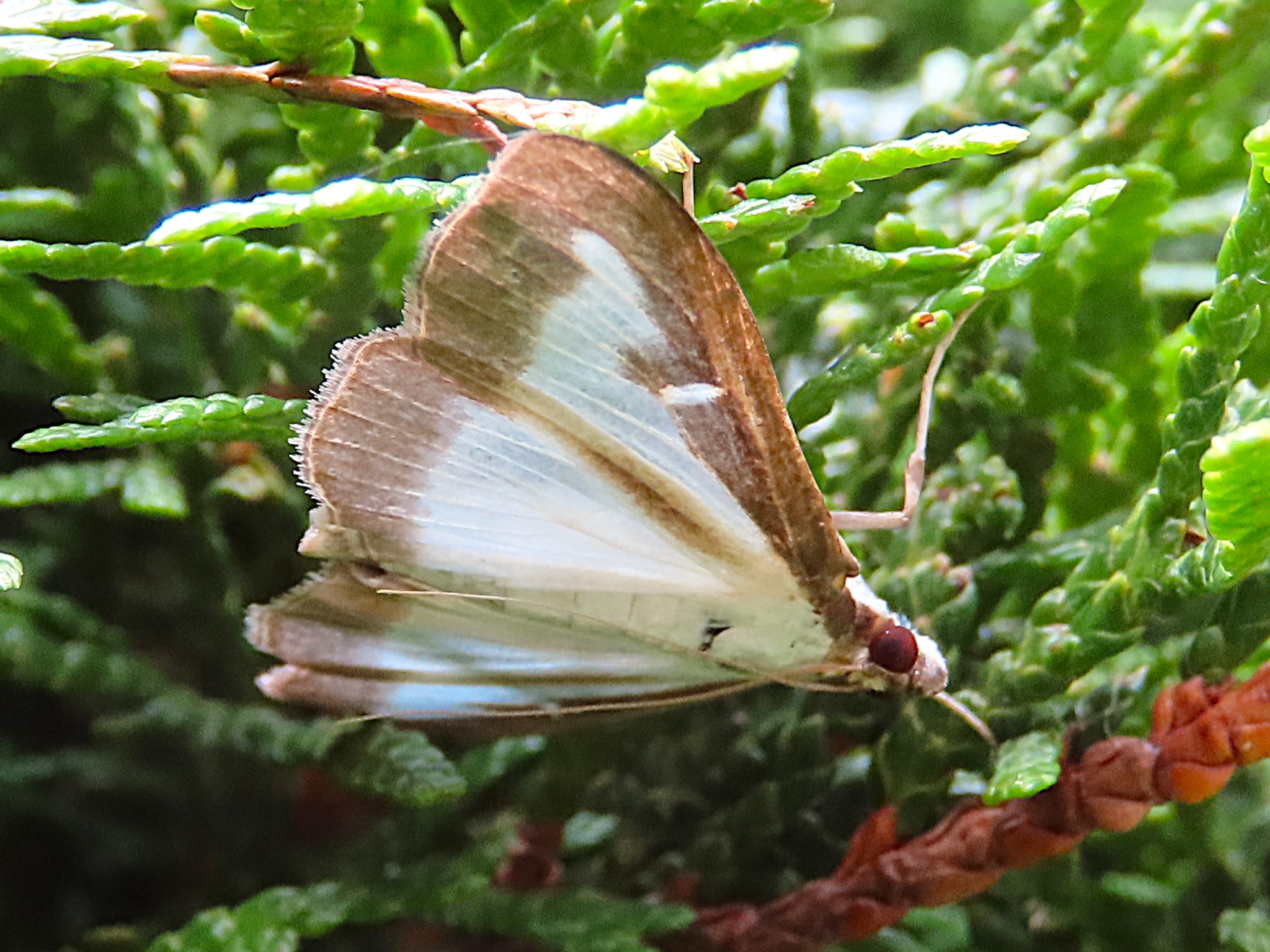
This invader was first noted in North America in Toronto, Ontario in August 2018 and has rapidly spread over Eastern North America. It is a major threat to Boxwood (Buxus spp) and should probably be killed on sight, and eggs and larvae destroyed.
Like most invasive species, however, once established it is probably going to prove impossible to eradicate.
We do have a way of messing things up, don't we?