Showing posts with label Eastern Meadowlark. Show all posts

Sunday, July 25, 2021

Birds, Beasts, Bugs and Blooms

17 July 2021
Near Wallenstein, ON

     There was a time not so many years ago when Bricker School Line, a rural road, was home to several pairs of Eastern Bluebird (Sialia sialis), but a couple of years ago a farmer upgraded his fences, removing the bluebird houses in the process, and even though they were eventually replaced the bluebirds have not been seen since.
     Eastern Kingbird (Tyrannus tyrannus) is quite common though.


     Miriam and I have remarked several times that despite suitable habitat we had never seen an Eastern Meadowlark (Sturnella magna) in that vicinity. You will understand our delight, therefore, when we spotted this individual far down a fence line.


     It was beyond what one might reasonably conclude was within camera range, so Miriam obtained exceptionally clear shots it seems to me under less than ideal conditions.


18 July 2021
Our home, Waterloo, ON

     The St. John's Wort (Hypericum perforatum) is doing exceptionally well this year.


     A little detective work by Miriam revealed the den from which the baby rabbits emerged, concealed in a dense patch of Periwinkle (Genus Vinca).


     I hope they are doing well in their quest for independence.

West Perth Wetland, Mitchell, ON

     We were on the way to Bayfield, on the shore of Lake Huron, for our first visit to Erin and her family since the start of COVID, and stopped off at the West Perth Wetland for a very brief visit.
     Wood Ducks (Aix sponsa) have evidently had a good year and these young males are acquiring their finery (mother is off to the right).


     Japanese Beetle (Popillia japonica) is a very attractive insect, but a serious pest to a wide range of trees and shrubs.


     The adult form is capable of skeletonizing foliage and subterranean larvae feed on the roots of grasses.

20 July 2021
Our backyard, Waterloo, ON

     From time to time we have seen a Raccoon (Procyon lotor) in our backyard, but never a family of three which is what greeted us when we glanced out the family room window.


     One has to give them credit for being fully compliant with COVID regulations. They were all masked and maintained adequate social distance most of the time.


     It is an attractive animal, but it can inflict serious damage in a garden, and has mastered the art of opening even the most secure garbage can.


     It was interesting to observe them for several minutes but we were not sorry to see them move on.


20 July 2021
Laurel Creek Conservation Area, Waterloo, ON

     It was mid afternoon on a beautiful day, sunny, with the temperature in the mid-twenties, and a stroll at Laurel Creek seemed just what Mother Nature ordered.


     A couple of Eastern Kingbirds were busily engaged catching insects, and this one appears to have captured something quite formidable - exactly what, however, I am not sure.


     Common Self-heal (Prunella vulgaris) is a very attractive plant, believed by some taxonomists to be both native and introduced.


     Various medicinal properties are ascribed to this plant; based on what I have been able to discover, however, few of the claims have been scientifically proven.
     Evidently Sweat Bees (Halictidae) find the flowers attractive.


     It appears that Northern Leopard Frog (Lithobates pipiens) has had a very successful breeding season, and little froglets were constantly erupting from beneath our feet.


     Carrot Seed Moth (Sitochroa palealis) is quite common in late July.


     The Seven-spot Lady Beetle (Coccinella septempunctata) was introduced into North America from Europe, and has become the most widespread species in Ontario.


     It is generally welcomed by gardeners and horticulturalists due to its preference for feeding on aphids.
     Twelve-spotted Skimmer (Libellula pulchella) is a large, striking dragonfly that, pleasingly, alights quite frequently.


     Wild Indigo Duskywing (Erynnis baptisiae) is one of the Hesperiidae that can be difficult to identify, and the period of abundance is a helpful clue.


     As has been mentioned in other posts, Bluets (Coenagrionidae) can be extremely difficult to identify as to species, so I felt a special sense of satisfaction in correctly identifying the following individual as a Tule Bluet (Enallagma carunculatum).


     Red Milkweed Beetle (Tetraopes tetrophthalmus) on the other hand is unlikely to be confused with anything else.


     Autumn Meadowhawk (Sympetrum vicinum) is our latest flying dragonfly and may be seen in October; sometimes even in November.


     I know that Richard Pegler is quite taken with Calico Pennant (Celithemis elisa) so he will doubtless enjoy the following image.


     Perhaps he will equally enjoy a White-faced Meadowhawk (Sympetrum obtrusum).


     Common Red Soldier Beetles (Rhagonycha fulva) exhibit a preference for Queen Anne's Lace (Daucus carota) where they seem to spend most of their time in homage to Aphrodite as they engage in an endless round of sex!


     Red Clover (Trifolium pratense) is much favoured by many insects.


     It was quite a meadowhawk day; here is our third species, Cherry-faced Meadowhawk (Sympetrum internum) female.


     Bees are not always easy to identify, but it is fun to take a picture and then embark on the research needed to clinch the ID, in the process learning a little about the lifestyle of the species.
     This is a Ligated Furrow Bee (Halictus ligatus).


     Marsh Snipe Fly (Rhagio tringarius) is a formidable predator of earthworms and small beetles.


     Groundselbush Beetle Trirhabda baxharidis) is an attractive species, a type of leaf beetle, but other than that I have been unable to uncover further information.


     Lest anyone think that I have moved over into the dark side, rest assured that the title of my blog, "Travels With Birds" is still valid - but who can resist these other joys of nature while the birds are busy with their young. Be patient, fall migration will be beginning soon!

Saturday, May 22, 2021

More Local Highlights

16 May 2021

Lakeside Park, Kitchener, ON


     We heard a tremendous racket from a group of American Crows (Corvus brachyrynchos) and searched to see whether they were perhaps routing a Great Horned Owl (Bubo virginianus). 


     At one point there were about twenty individuals occupying two or three trees, but we never did ascertain the reason for their noisy performance. They departed as quickly as they had arrived, shrieking and yelling all the while.
     A Baltimore Oriole (Icterus galbula) was far more restrained and serenaded us delightfully.


     It was interesting to see the channels created by a kind of wood-boring insect in this log.


     It is both sobering and distressing to contemplate the varieties of trees that are now endangered by invasive pests, often introduced from outside North America in shipments of fruit, or via wooden pallets that are already heavily infested.
     One is never out of earshot of Red-winged Blackbirds (Agelaius phoeniceus) at Lakeside Park, and we spotted a female busily constructing a nest.


     An American Red Squirrel (Tamiasciurus hudsonicus) seems to have found a meal sufficient for lunch and dinner!


Benjamin Park Trail, Waterloo, ON

     May-apple (Podophyllum peltatum) is carpeting woodlands everywhere, and there was much of it to be seen on the Benjamin Park Trail.


     Yellow Archangel (Lamium galeobdolon) is a widespread invasive, often originating in gardens; quite beautiful, but quickly swamping native species.


     Bristly Buttercup (Ranunculus hispidus) is appearing everywhere.


     There is no shortage of yellow flowers!
     Taxonomy is ever fluid it seems, and the genus Celastrina is the subject of much discussion and review. At least for now, the following species is Northern Spring Azure, also known as Lucia Azure (Celastrina lucia).


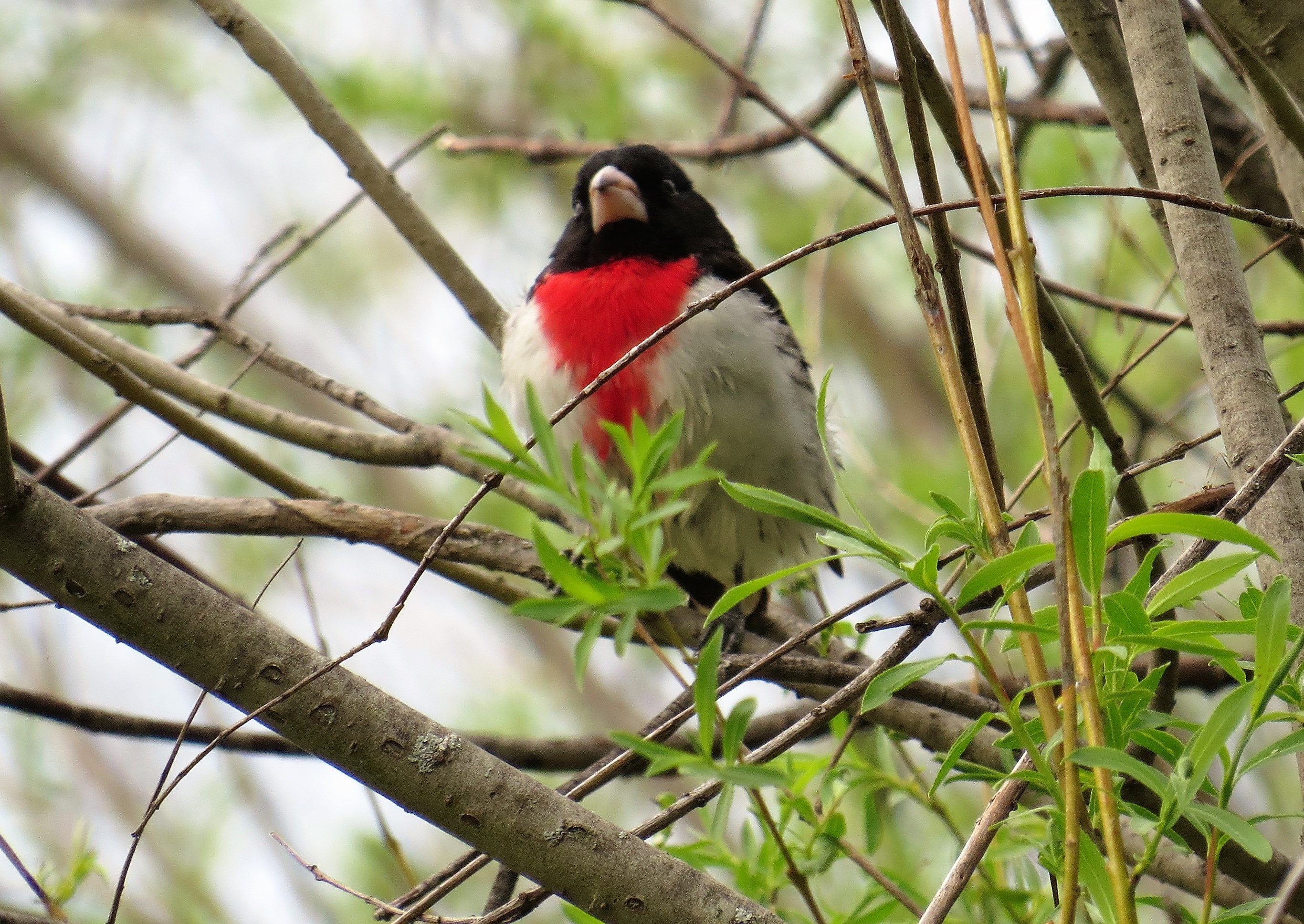
     Rose-breasted Grosbeak (Pheucticus ludovicianus) is probably no more abundant than in previous years, but I have been running into them frequently.


     It is an impressive species and it is always a great pleasure to share a few moments with them.


19 May 2021

Our Backyard, Waterloo, ON

     Ruby-throated Hummingbird (Archilocus colubris) has been a regular visitor to our backyard for as long as we have lived here, but this year visits have been few and far between.
     We were happy, therefore, when we looked out the window and saw a female at the feeder.


     The pictures are not fantastic but they were taken through the glass and are the best we could do. Perhaps even from these less-than-perfect images you will sense our joy at seeing the bird. 

RIM Park, Waterloo, ON

     There is a field opposite the parking area that has harboured Eastern Meadowlarks (Sturnella magna) over the past few years, and it didn't take us long to find one singing from the grass.


     Shortly a second bird was spotted on a cable and the two joined forces and flew off together.


     I suspect that starting a family was top of mind for them.
     The spruces (Genus Picea) seem to universally sport a good cone crop already this year. No doubt squirrels are gleeful!


     There are numerous little wet channels at RIM Park, all looking especially bucolic and tranquil in spring.


     A male Baltimore Oriole is very handsome, especially when highlighted by bright sunshine.


     A good part of the day is spent capturing food and soon there will be additional mouths to feed.


     This is a species that adds a bright splash of colour to a spring landscape, and unlike warblers and other tiny birds is quite easily seen.


     It so delights the average walker in the park that it is the single most pointed-out species, by people who see our binoculars. 


      "Did you see the oriole?" is a commonly posed question.
     For part of the trail the Grey Silo Golf course runs alongside it, and I am sure that the owners are anxiously awaiting the lifting of COVID restrictions, so that greens can reverberate with the cheerful chatters of golfers and the thwacking of balls.


      We are quite happy that we don't have to keep a watchful eye for the golf carts occupying their half of the trail.
      Wild Geraniums (Geranium maculatum) are starting to bloom, a delightful addition to any walk.


     Ground Ivy (Glechoma hereracea) is probably considered a pest in the wrong location, but for a peripatetic naturalist it gives great pleasure.


     One of the dominant features of RIM Park, the most dominant in fact, is the Grand River.


     It meanders alongside for a good part of the way, and supports a variety of birds - ospreys, eagles, terns, gulls, swallows, shorebirds - and not a few mammals. American Beavers (Castor canadensis) make their presence known and White-tailed Deer (Odocoileus virginianus) come down to river to drink.


     We enjoyed great views of a male American Redstart (Setophaga ruticilla) and when it remained still for a few seconds, Miriam obtained a couple of pictures.


     We watched transfixed as it sang to us!


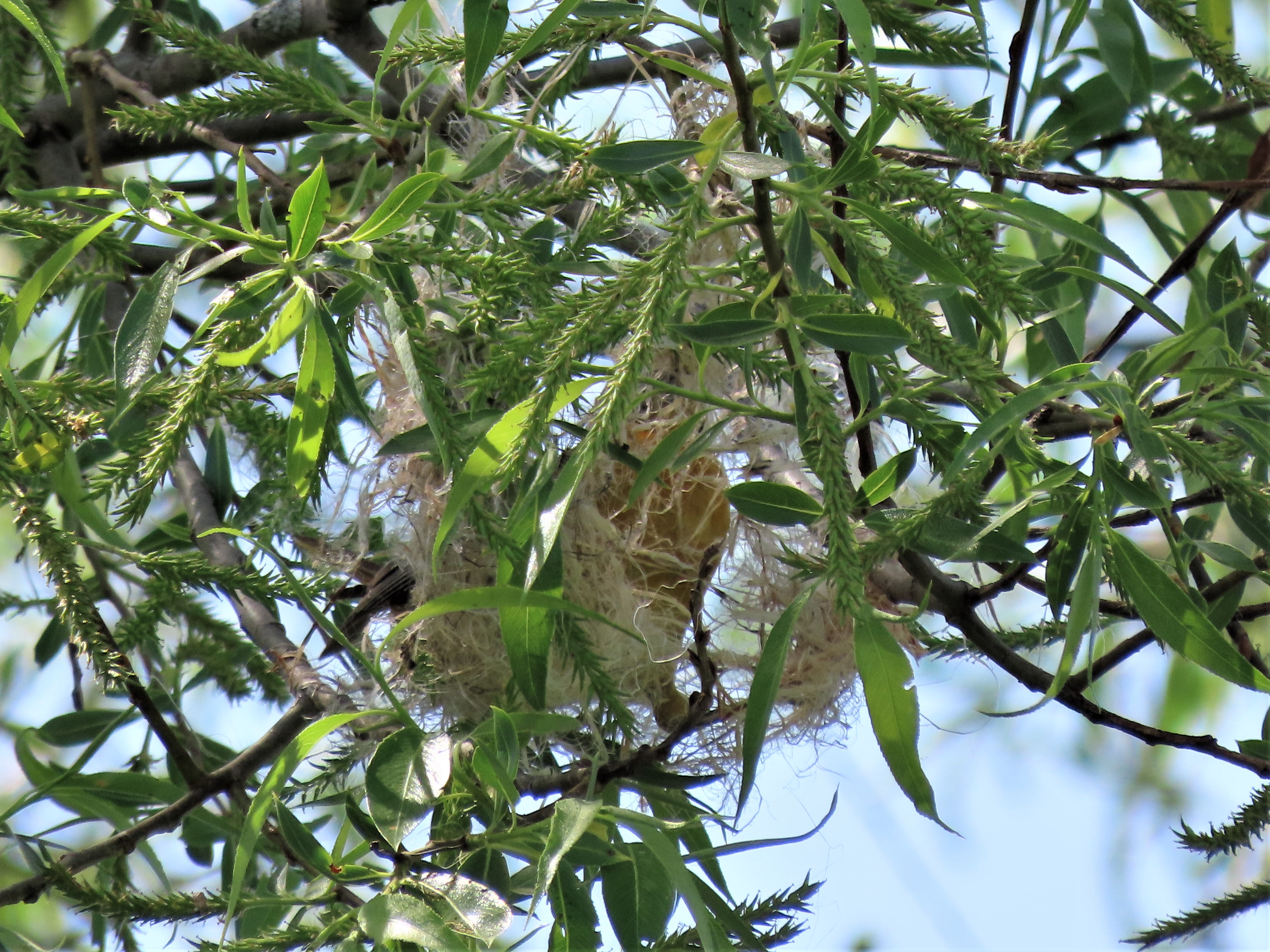
     Having had several terrific looks at a male Baltimore Oriole, additional pleasure was gained by observing a female in the early stages of nest construction.


     We see more American Yellow Warblers (Setophaga aestiva) at RIM Park than at any other location where we bird regularly.


     A Willow Flycatcher (Empidonax traillii) was a very agreeable addition to our birds for the day, but it played hide-and-seek with us.


     We spotted a Least Flycatcher (Empidonax minimus) and heard its distinctive call.


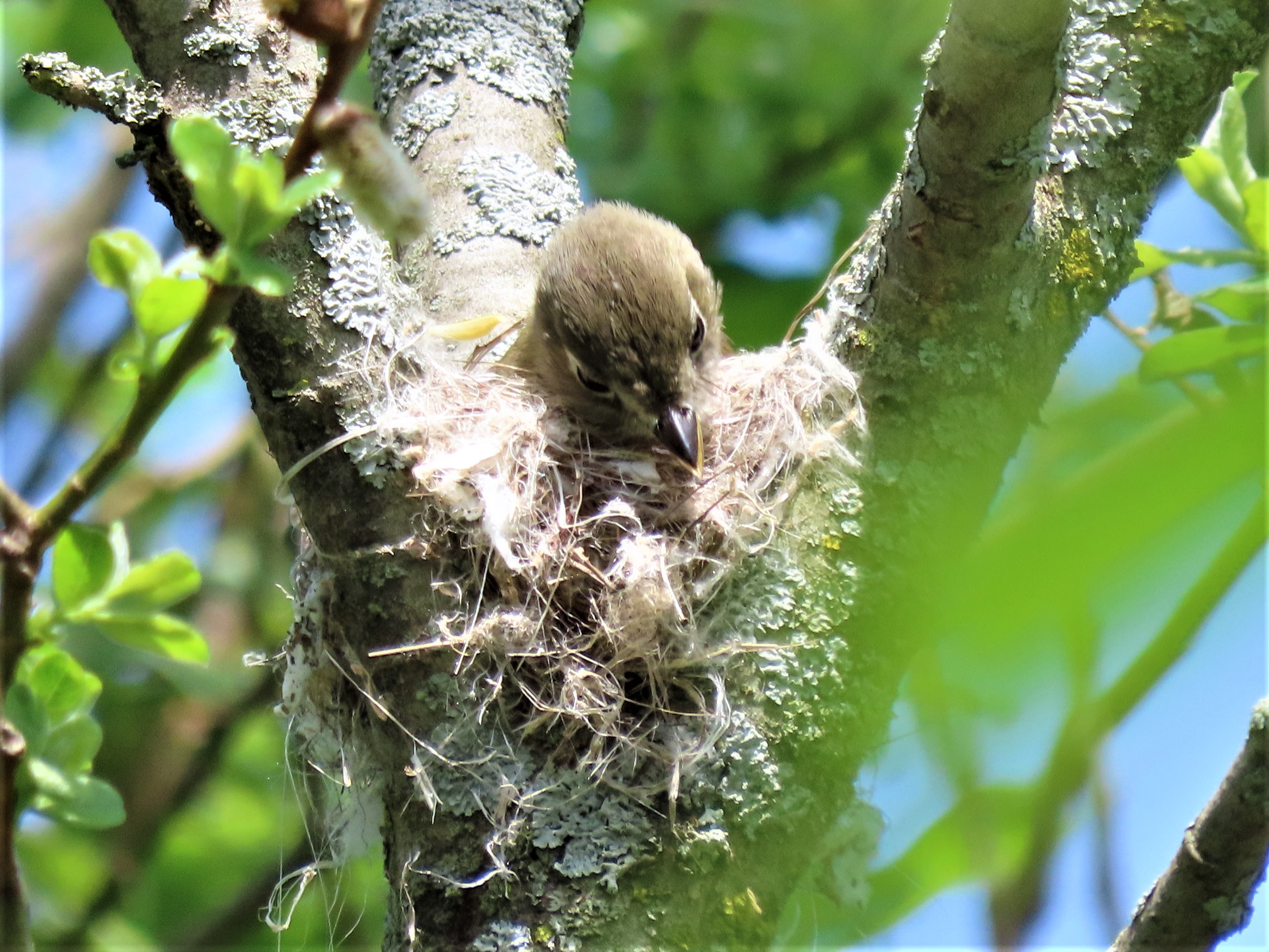
     And within moments we watched a flurry of activity and discovered out first ever nest under construction for this species.


     For many I am sure this would not be a big deal, but for anyone involved with birds, it is a moment of high excitement.


     For a moment we thought we had come across a mixed species flock, until we realized that a Grey Catbird (Dumetella carolinensis) was mimicking the songs of several other birds.


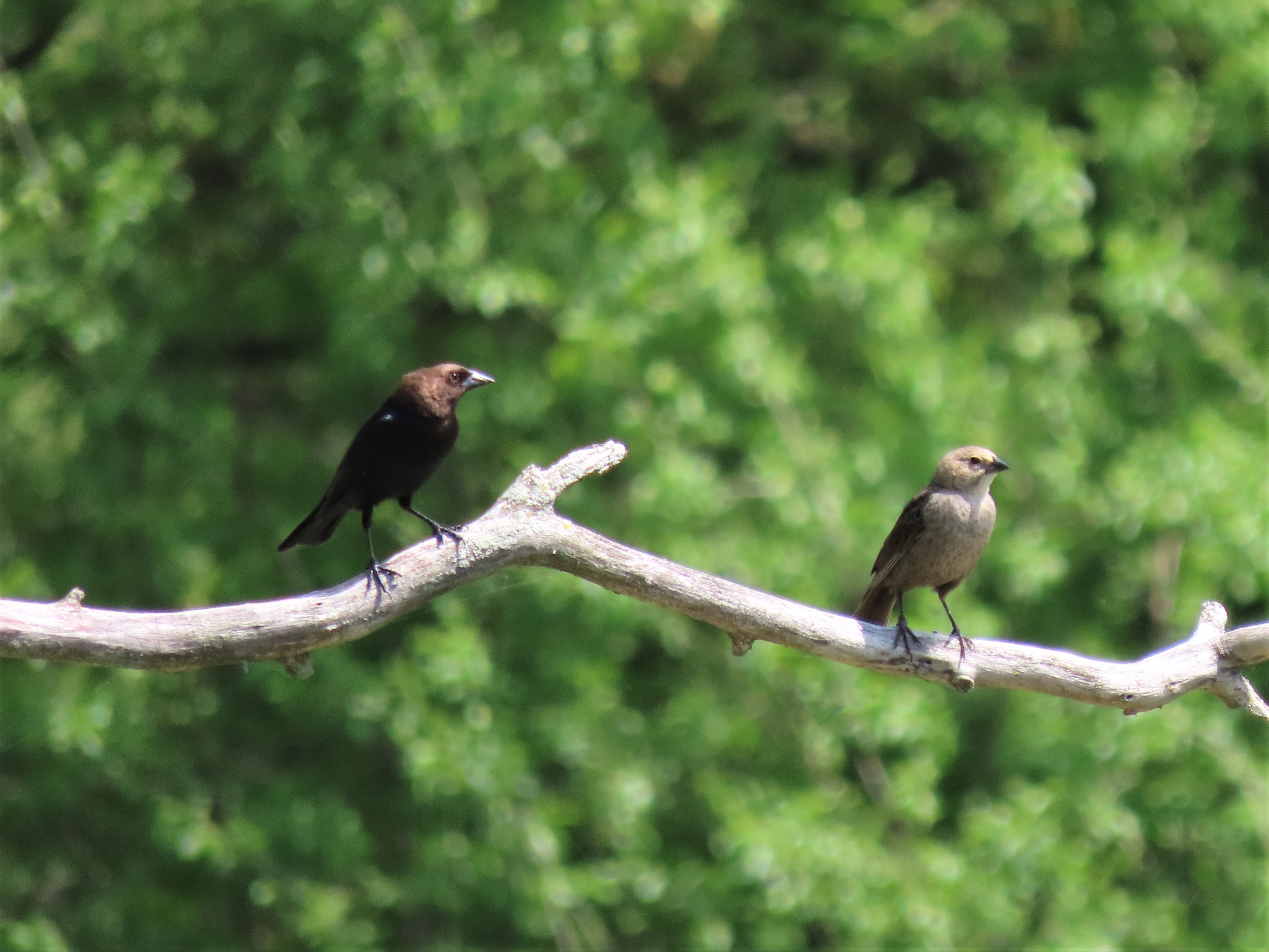
     A pair of Brown-headed Cowbirds (Molothrus ater) is an ominous sight for many small songbirds whose nests are targets for brood parasitism.


     Cheery Song Sparrows (Melopspiza melodia) never fail to delight us.


     In several spots we heard the familiar wichety-wichety call of Common Yellowthroat (Geothlypis trichas) but seldom saw the chorister, and managed but one picture of indifferent quality.


     There is one small, swampy area that we pass each time we visit RIM Park that we always think should harbour birds, amphibians and who knows what else. But it never does.


     It is perfect habitat for a pair of Northern Waterthrushes (Parkesia noveboracensis) and I remain hopeful that one day they will be there.
     There are glimmers of hope that the Province of Ontario may be on the road to loosening some of the COVID restrictions that have dominated our lives for so long. It can't come soon enough for us and perhaps before too long we can bring you reports of visits farther afield.

Land Acknowledgement

We acknowledge that the land on which we are situated are the lands traditionally used by the Haudenosaunee, Anishinaabe, and Neutral People. We also acknowledge the enduring presence and deep traditional knowledge, laws, and philosophies of the Indigenous Peoples with whom we share this land today. We are all treaty people with a responsibility to honour all our relations.

Followers