At home
02 July, 2022
A Sharp-lined Yellow (Sicya macularia) decided to pay us a visit, and we were happy to welcome it to the backyard.

04 July, 2022
No less welcome was a Large Yellow Underwing (Noctua pronuba) in the porch when we opened the front door.

It appears headless in the picture, but I can assure you it was not!
09 July, 2022
The patch of Butterfly Milkweed (Asclepias tuberosa) we planted a few years ago, has bloomed in profusion each year and presents a very striking image at the side of our driveway.

A Monarch (Danaus plexippus) was seen nectaring on it, flitting from flower to flower.
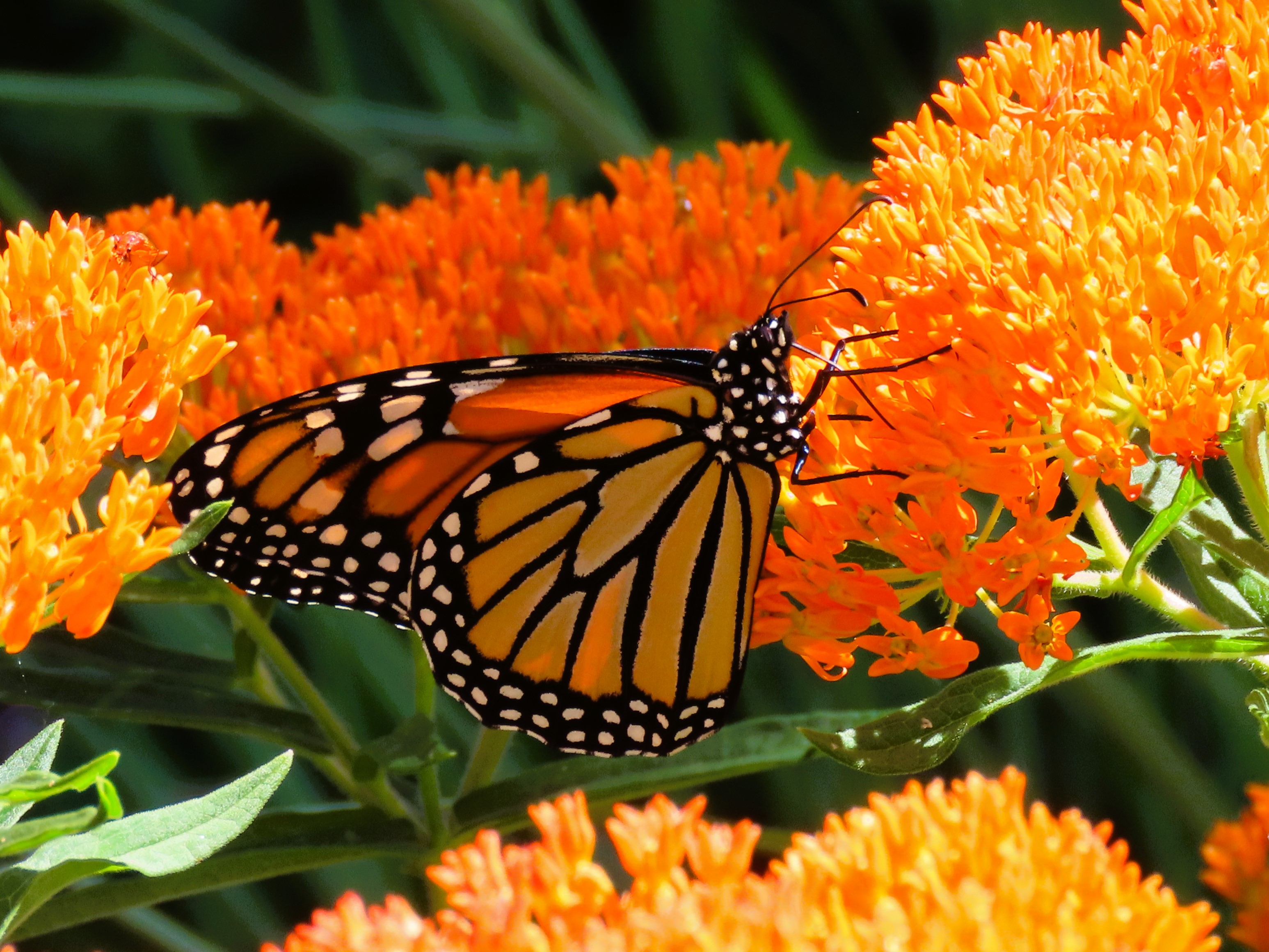
Many is the time I have seen a dozen or more Western Honey Bees (Apis mellifera) exploiting its sweetness.

12 August, 2022
Miriam was working in the garden under the bay window at the front of the house and noticed this Northern Dog-day Cicada (Neotibicen canicularis), an impressive insect to say the least.

18 June, 2022
Hillside Park, Waterloo, ON
We joined Jonah and Kayla to meet little Shai, the newest member of their family, but sleeping in the stroller was more to his liking than chatting about birds!

There were many Ebony Jewelwings (Calopteryx maculata) going about the business of their short lives.

The following fly has me totally baffled. It is perhaps a type of Snipe Fly, but I am far from sure of that.

It is undeniably attractive.
08 July, 2022
SpruceHaven, St. Agatha
Kayla had long expressed an interest in a visit to SpruceHaven, which was made even more interesting by the accompaniment of Jonah's parents, Jack and Yaffa, who were visiting from Ottawa, a delightful couple if ever I met one.
Who can fail to be enchanted by baby Barn Swallows (Hirundo rustica)?


An American Cliff Swallow (Petrochelidon pyrrhonota) (see below) was busy at its nest.

Shai finally agreed to put it an appearance, photo-bombed by Grandpa Jack in the right hand corner.

23 July, 2022
RIM Park, Waterloo, ON
There was great excitement in the local birding community when a Black-bellied Whistling Duck (Dendrocygna autumnalis), far outside its normal range, decided to pay us a visit.
I saw Mallards (Anas platyrynchos).....

..... and a preening Killdeer (Charadrius vociferus).....

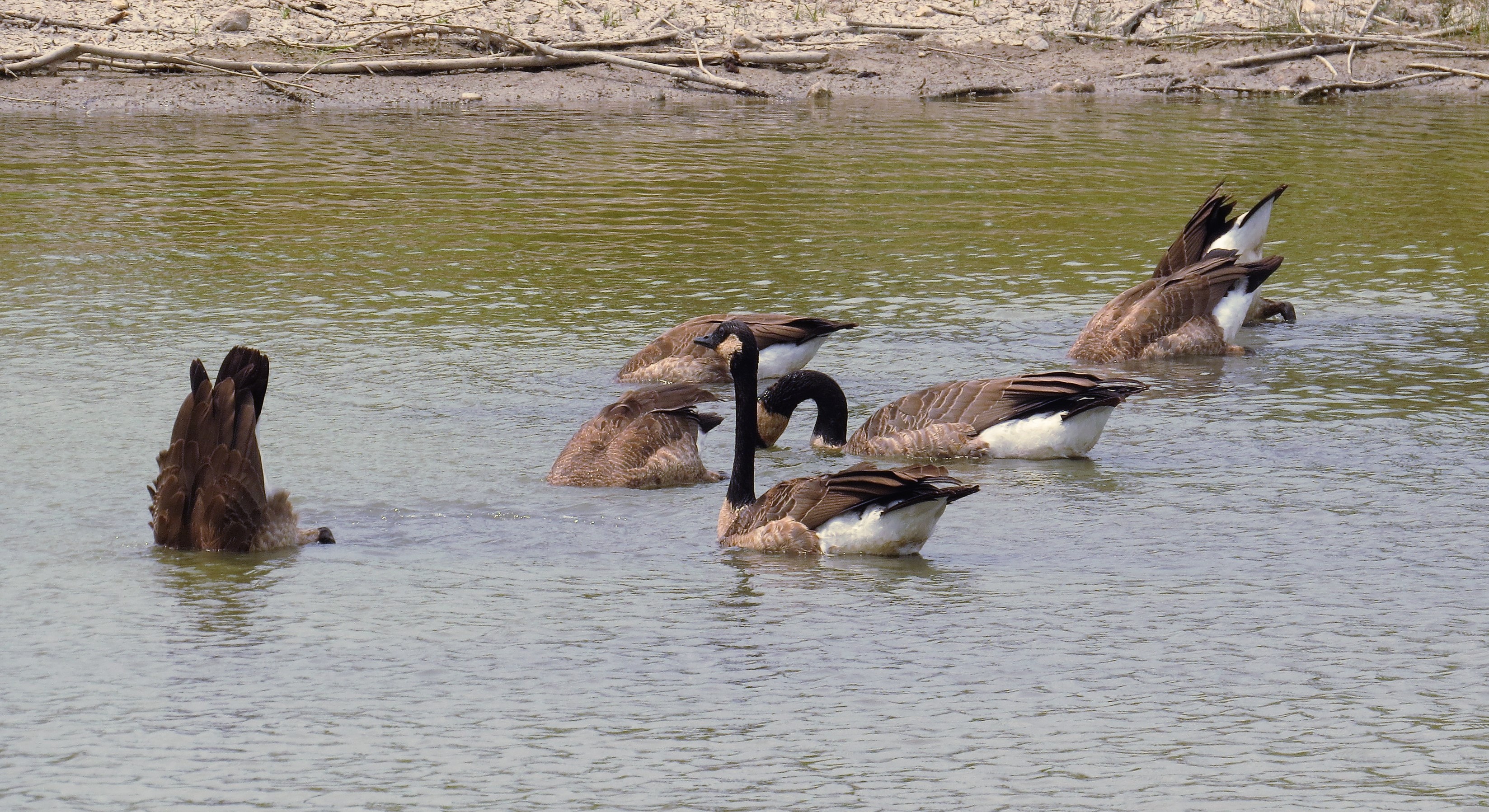
..... and Canada Geese (Branta canadensis).....
..... and finally the star of the show!

It had no idea what a celebrity it had become.
31 July, 2022
SpruceHaven, St. Agatha, ON
The barn at SpruceHaven contains around seventy-five Barn Swallow nests in an active colony that has been present there for decades. The farm has been in the Westfall family for almost fifty years with continuous occupancy since their arrival. In fact, it was the idyllic scene of swallows dipping over the pond and feeding above it that sufficiently enchanted Dave's parents to buy the property.
Thirty to thirty-five nests are in use each year, or at least have been during the six years we have monitored them.
In July 2020, a pair of American Cliff Swallows built a nest in the barn and successfully raised young. It seemed quite remarkable to me at the time, never having experienced a mixed colony of Barn Swallows and Cliff Swallows. What is even more noteworthy now, is that we have five Cliff Swallow nests, some of which are Barn Swallow structures usurped and modified by the Cliff Swallows.


The fourth picture from the top is the first Cliff Swallow nest built in the barn, a structure entirely typical of the species. The others, originally Barn Swallow nests, have been modified in odd ways, yet some were used successfully this year.
A Cliff Swallow colony inside a barn is highly unusual and my experience with this species has always been of colonies under bridges, culverts and on buildings. I have never found nests in a building and there is scant reference to it in the literature. Angela Turner comments that occasionally Cliff Swallows will nest inside buildings, but there is no indication they do so in the presence of other species. I should add that I never observed any inter-specific conflict, nor intra-specific conflict for that matter, although Cliff Swallows are notoriously aggressive in large colonies of their own species.
A Green Heron (Butorides virens) approached very close while we were concealed by the hide at the edge of the pond.

We have a very poor picture of a Blue Dasher (Pachydiplax longipennis).

This species is quite rare in this area, in fact nowhere common. It is extremely wary and difficult to approach, hence its common name "dasher". The one thing in our favour was that it tends to return to the same perch and by the exercise of dogged patience Miriam was able to obtain this image, overcoming the combined obstacles of it not being particularly close and shooting into the sun.
There are more odds and ends, but I'll save those for another time.