"I believe in birds. I believe in their beauty, in their wisdom. I love the way they take me out of myself and enable me to live anew."
Julia Zarankin
15 May, 2022
Baker Shore B&B - Cove Head Lighthouse - Bubbling Springs Trail - Farmland Trail - Baker Shore B&B
By now you are well aware that breakfast at Baker Shore is an event - more than just food, it is a memorable start to the day.
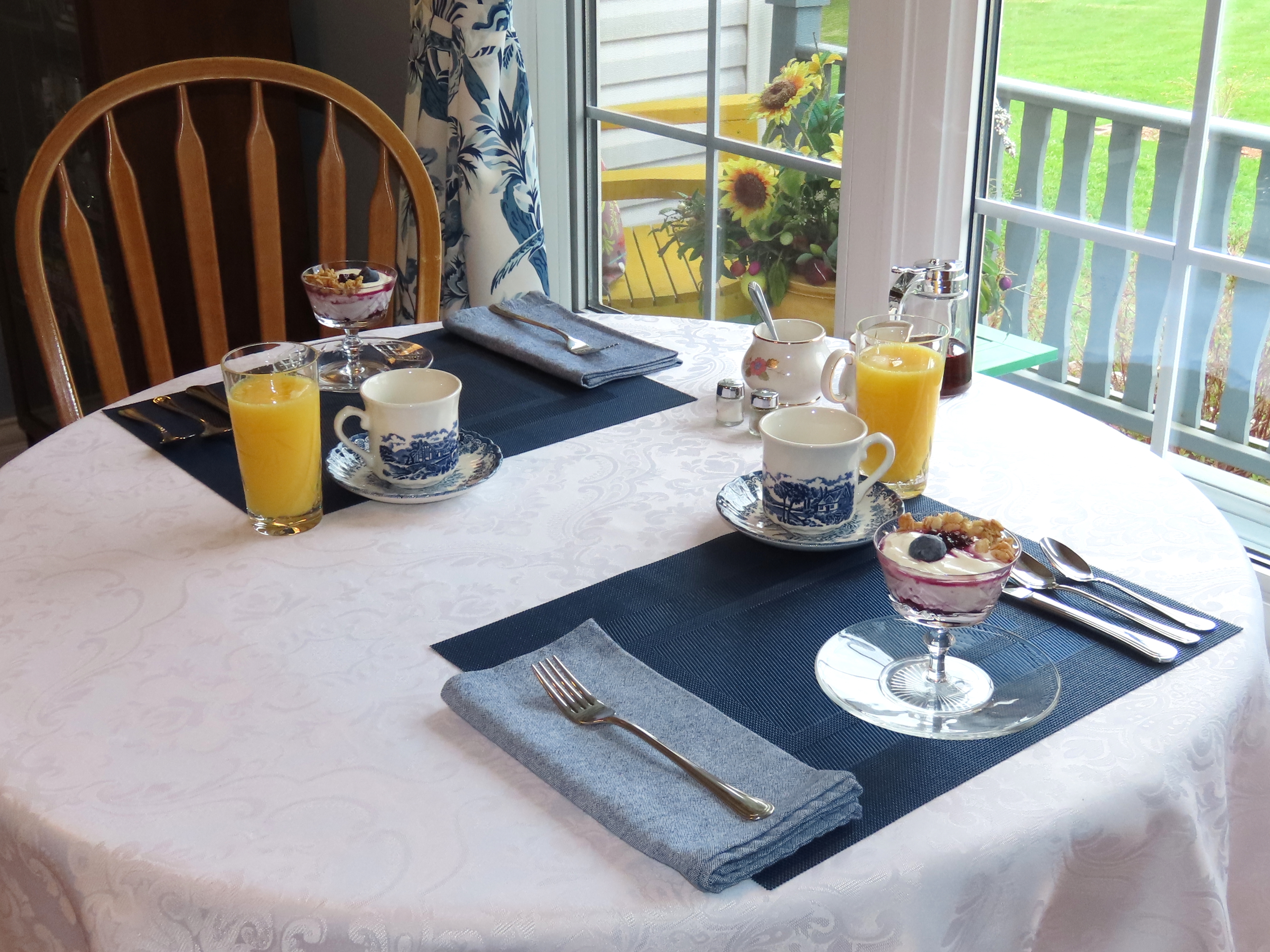
Darrell made banana crepes for the first time, and announced that we were guinea pigs. How fortunate!

They tasted as fabulous as they look.
While we were having breakfast a fox trundled up the road. We had seen it a couple of times and were always struck by the colour of its pelage. This is a Red Fox (Vulpes vulpes), but three colour morphs are found on Prince Edward Island, red, cross and silver, with a rare melanistic form that is black, in addition. There is apparently some gradation in the red to silver range, because the fox (or foxes) we saw were a delicate gold, akin to the colour of a Golden Retriever.


We were very touched.
It now hangs in our kitchen, where the colours match perfectly.

We had decided to return to Prince Edward Island National Park to redo the Bubbling Springs Trail while also covering the Farmland Trail. We stopped several times along the coast, where there was much of interest.
A juvenile Bald Eagle (Haliaeetus leucocephalus) occupied the same spot for quite a while, just resting as far as we could tell.

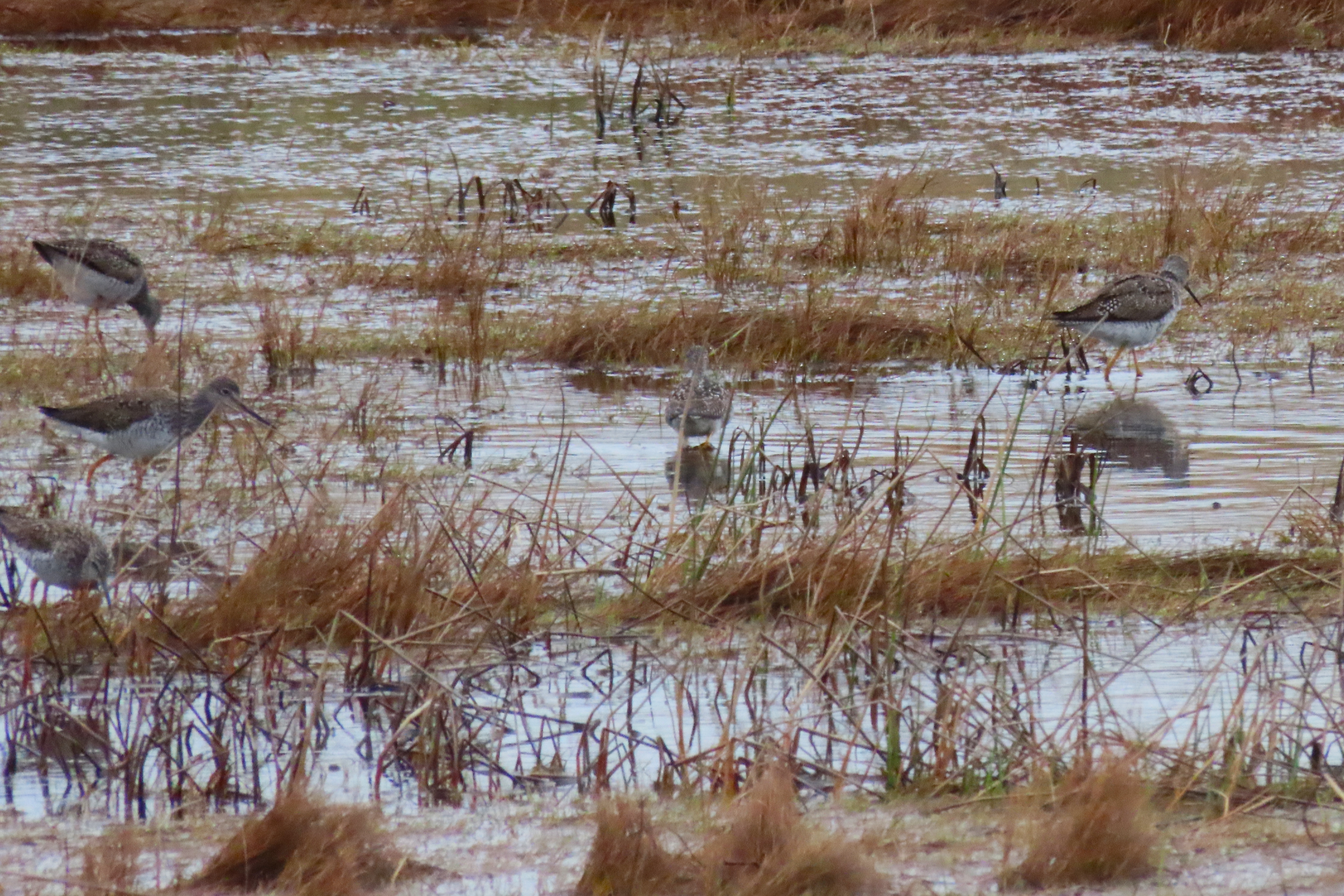
There seemed to have been a general arrival of Lesser Yellowlegs (Tringa flavipes) and Greater Yellowlegs (Tringa melanoleuca) overnight, and we saw large concentrations of birds foraging along the shoreline and in coastal marshes.

In one location we figured we had around forty Lesser Yellowlegs with Greater Yellowlegs in smaller numbers.


It was a delight to see them
Gadwall (Mareca strepera) was equally at home dabbling in the marshes.

American Black Duck (Anas rubipres) was very common.

When we saw this American Crow (Corvus brachyrynchos) we concluded that it was gathering nesting material, but now that I look at the picture I am not quite sure. Has it captured a frog do you think?

American Herring Gulls (Larus smithsonianus) and Great Black-backed Gulls (Larus marinus) were the most common gulls we saw, and both are represented in these flocks of juvenile birds. I am sure you will have fun picking them out!


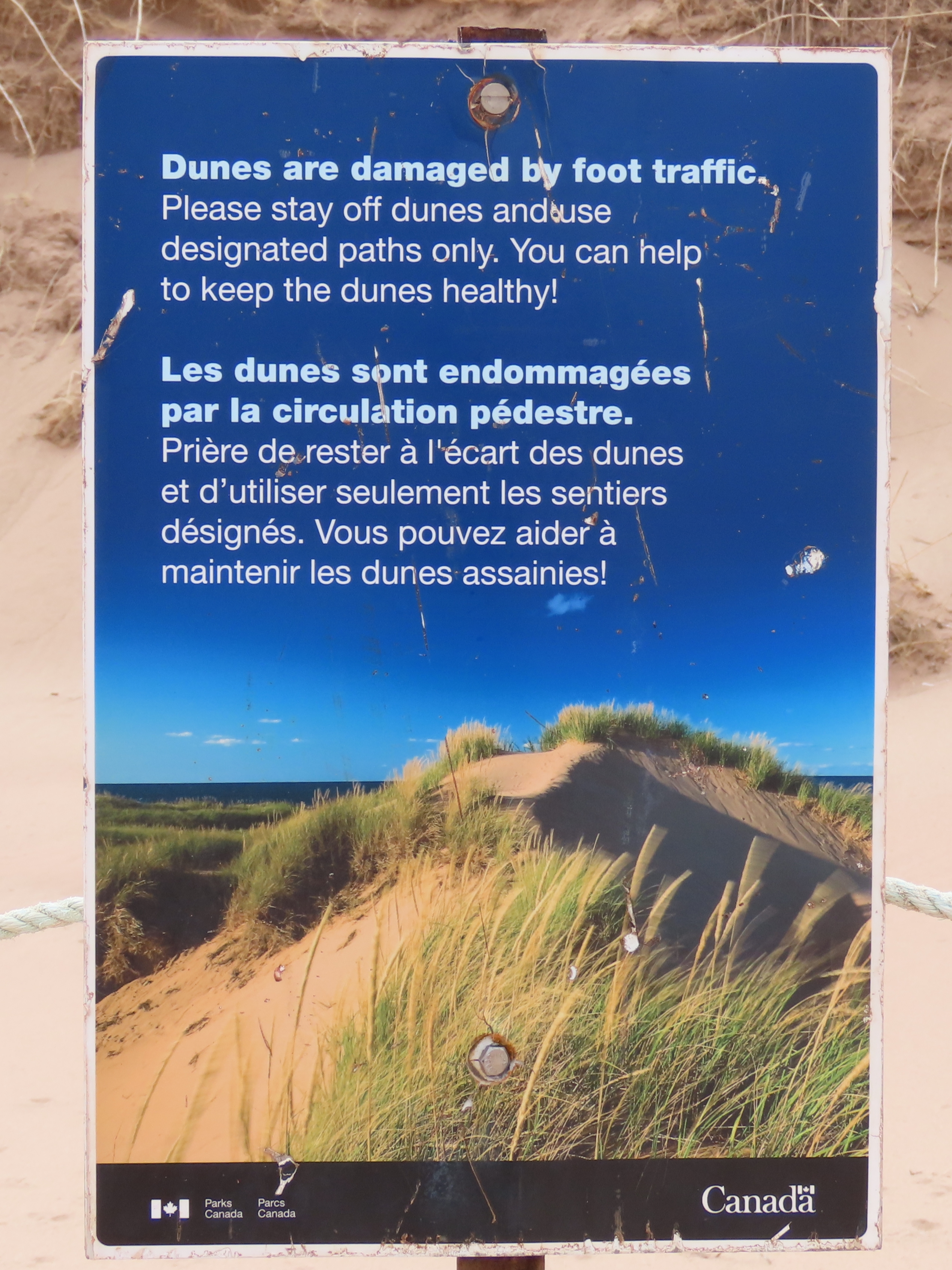
Dunes are fragile ecosystems and it is encouraging to see that steps are being taken to protect them.


For me, and I am quite sure for many others, part of the experience of a maritime environment, is the abundance of gulls, and their raucous cries as they wheel in the sky above, or claim the beach as their own. It is one of the foremost reasons I am attracted to the coast.
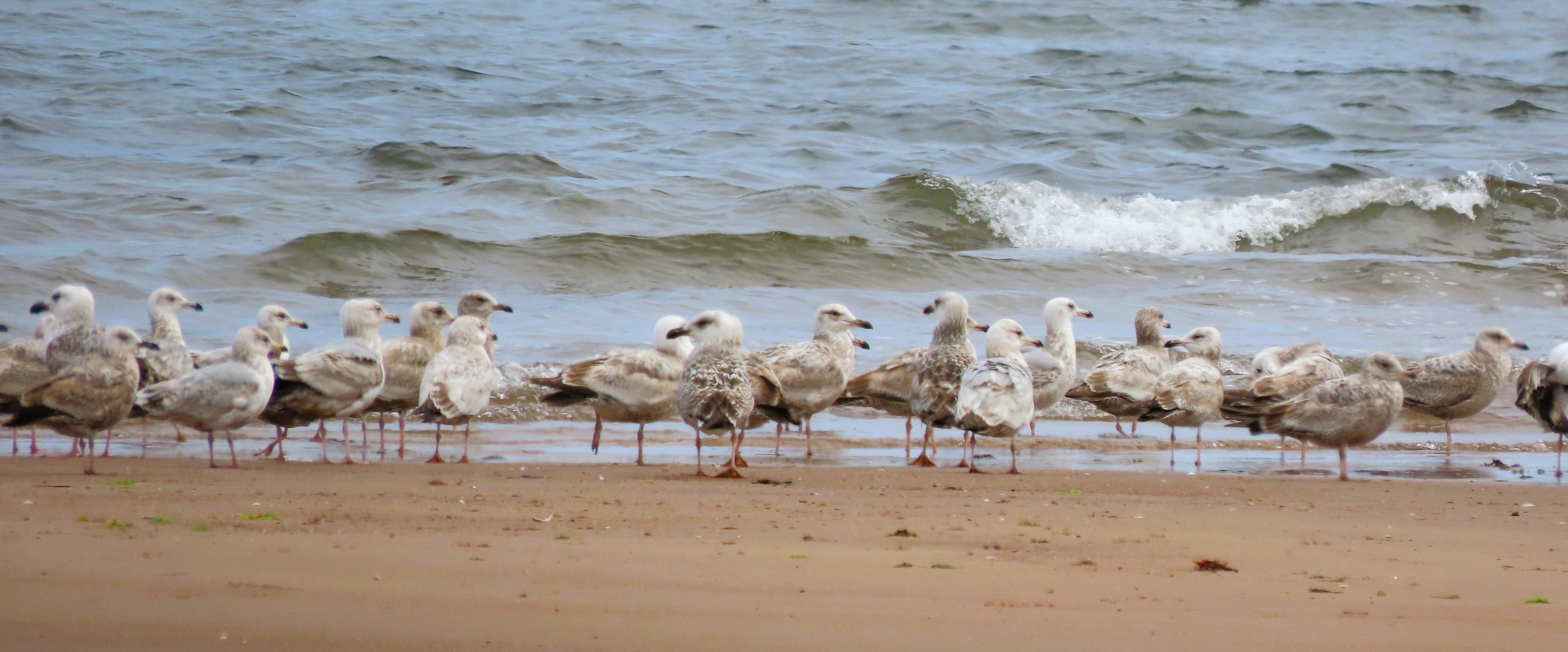


Long before the first hominid walked upright on the African savannah gulls had gained mastery of the sky and the water. And so it continues today.
The Farmland and Bubbling Springs trails held the promise of a pleasant hike, with plenty of birds along the way.

We set off in high spirits, happy to be doing what we enjoy most.
I am sure this Eastern Chipmunk (Tamias striatus) was completely indifferent to our presence.

Detached as we try to be, it's hard to look at a chipmunk and not conclude that it's cute!
I have commented before on the shallow root systems of many trees found on the Island, and here are a couple of classic cases of wind toss; trees are uprooted and topple over.


These downed trees form desirable habitat for Winter Wren (Troglodytes hiemalis) and we heard them frequently, and caught a fleeting glimpse of one, as it taunted us for an instant, and disappeared into the tangle of branches and scrub, lost to human vision.
American Red Squirrel (Tamiascurius hudsonicus) is equally at home in this tangled habitat, and is not averse to using an exposed log as its dining room.

A Hermit Thrush (Catharus guttatus) was not as evasive as a Winter Wren.

Miriam has a great way of capturing a view.
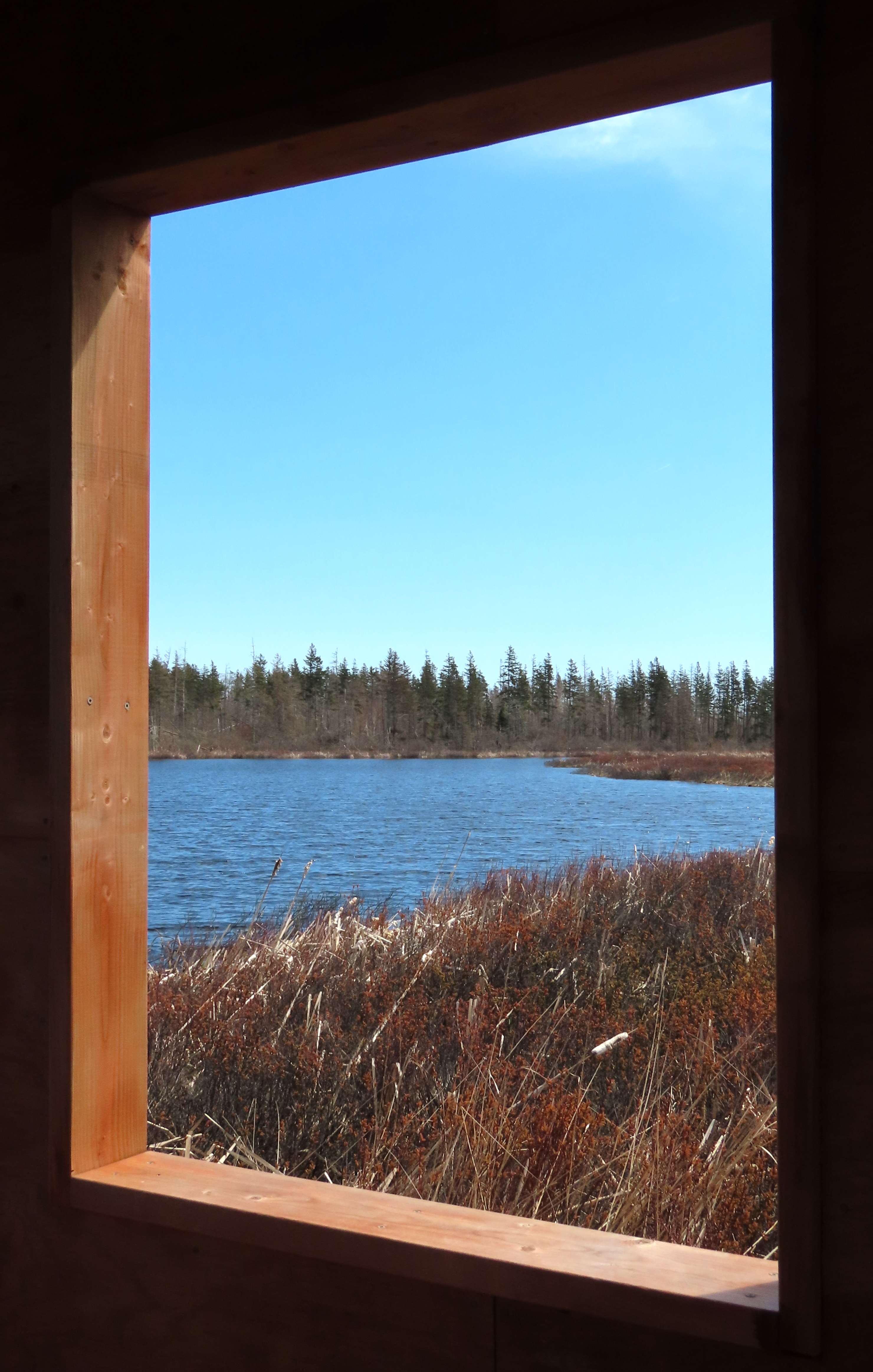
Black-and-White Warblers (Mniotilta varia) were quite easy to find, often foraging for insects in the lichen, and this individual permitted us to get some decent pictures.


Who could believe that black-and-white could look so good?

Lesser Scaup (Aythya affinis) are fine looking birds in their own way, but are never going to challenge Black-and-White Warblers on the beauty charts.

We spotted a Belted Kingfisher (Megacyrle alcyon) on the far side of the pond.

There were many trees with this curious growth. I think of this situation as a burl, and probably that's what it is. I have never seen them even approaching this size, however.
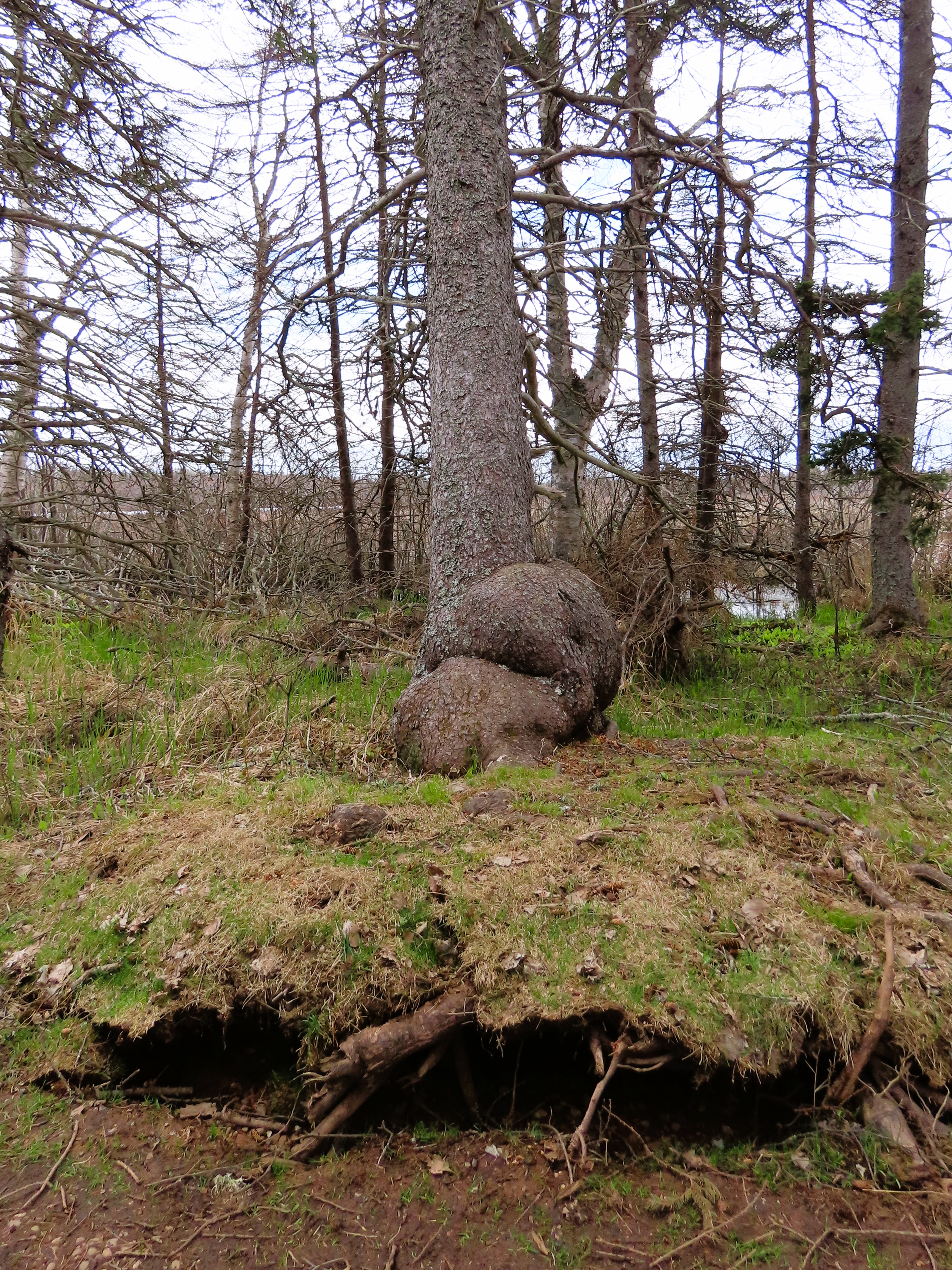
It was rare to walk even a minute or two without hearing and/or seeing a Song Sparrow (Melospiza melodia).

The walking was very easy.

The Spring Azure complex of butterflies has been the subject of much taxonomic discussion in recent years. Whether the definitive classification of all the species has yet been achieved I am not sure, but I believe that the following species is now accepted as Northern Spring Azure (Celastrina lucia).


There is no controversy surrounding Cabbage White (Pieris rapae).


We were as enchanted with the bubbling springs as we had been the previous day.

Fungi are both fascinating and beautiful - and difficult to identify!


We were quite taken with Methuselah's Beard Lichen (Usnea longissima) and Miriam was especially delighted to have Methuselah pose with it!


Reflection in a lake is always a pleasing sight.

Friendly Blue Jays (Cyanocitta cristata) were never far away.

A final glance at Marsh Marigolds (Caltha palustris) was a lovely way to leave the trails.

We went to Brothers 2 for dinner; I forget what we had, but I know we both enjoyed it.
As was our normal practice we sat on the veranda afterwards and, very fitting for our final time there, a hummingbird came to visit. Darrell's reputation as a hummingbird whisperer is intact!
Baker Shore B&B - Blacks Harbour - Grand Manan, NB
We had always had breakfast at 08h:00, but Darrell and Lynne kindly agreed to serve us at 07h:00 since we had to drive to Blacks Harbour, NB to catch the ferry to Grand Manan. We had ample time but there is always the possibility of delays so better to be early than miss the boat - literally!
The day always starts better on a good breakfast and Lynne and Darrell delivered as only they can.


We were sorry to say goodbye to our genial hosts who have become friends, with the firm promise, "See you next year!'
The journey to Blacks Harbour was uneventful and we arrived with time to spare. We were assigned our place in line for the ferry and were happy to wait until it was time to board.

As we eased away from the dock a Black Guillemot (Cepphus grylle) swam ahead of us.

Visibility was quite poor, and birds were few.

Several birders stationed themselves on deck and we joined them, but between the gloom, the wind and the cold many of us made it back inside. We each had a bowl of fish chowder, which was both excellent and reasonable, and very welcome after being aloft for a while.

The crossing from Blacks Harbour to Grand Manan takes about an hour and a half.
We had booked a week at a B&B called Birds and Blooms, operated by Lorraine MacNeill. A few days before leaving home Lorraine had called to say that she would unexpectedly be away in Alberta, but if we wished to use the house we were welcome to do so.
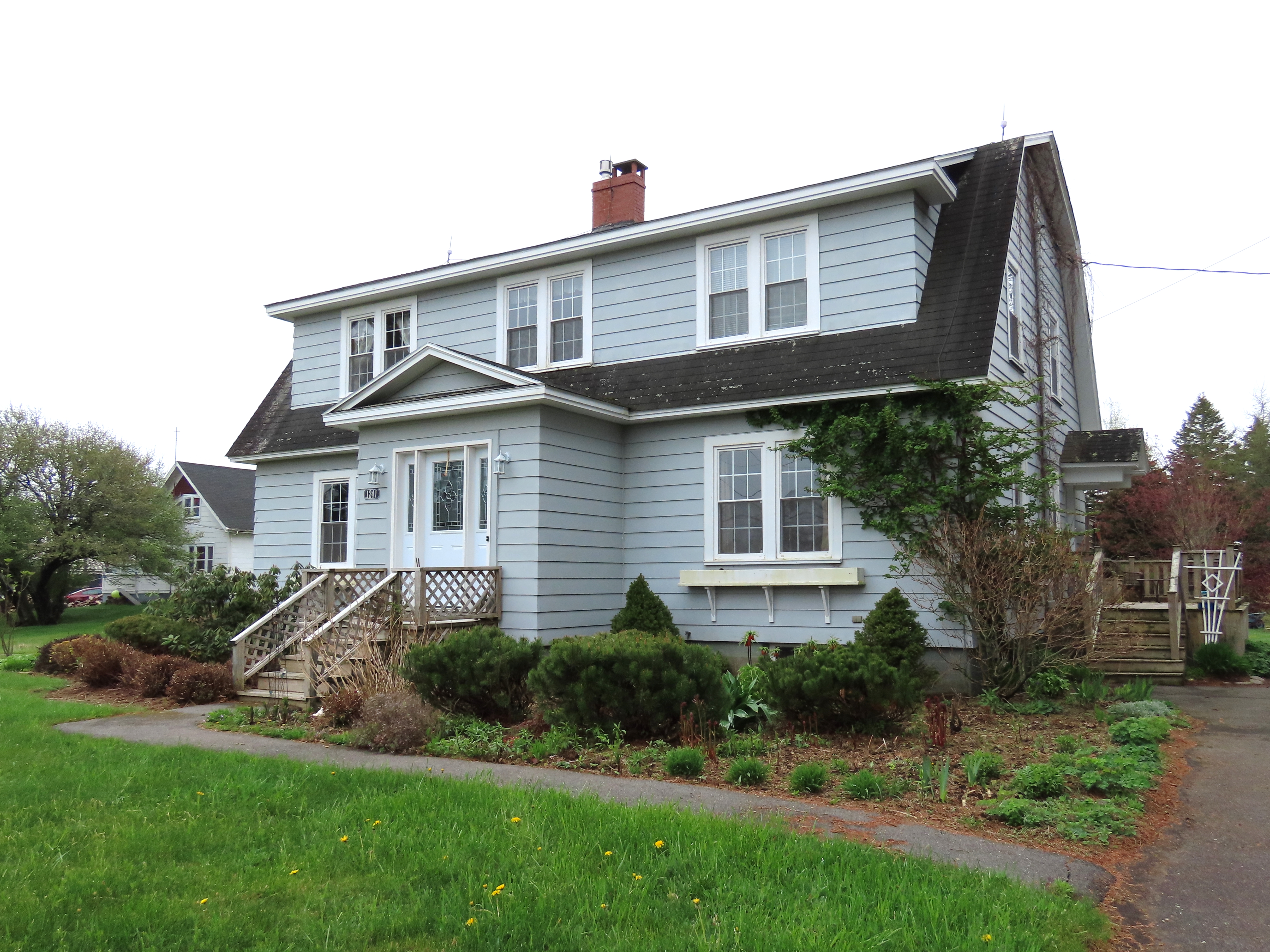
It was a lovely, spacious house and we were happy with this arrangement.
In fact we were glad that we had the run of the house to ourselves. There were four rooms to be rented to guests, with only one small bathroom to be shared by everyone. What it might have been like if eight birders had all been trying to get ready in the morning, each one waiting to get into the bathroom, I can't imagine.

There was not a lot of room for suitcases and other personal items, so since we were the only occupants we left ours out on the landing.

We understood that Lorraine would not be there to prepare breakfast, but we had thought she might have left items, like muffins for example, in the freezer, but such was not to be the case, nor had she refunded any part of the price.
The solarium was where we spent most of our time when we were "at home."

I found it odd, creepy almost, that there were bibles everywhere, and books for biblical study, and religious slogans and messages throughout.
We were unable to find the WIFI code; fortunately we had Lorraine's mobile phone number and called her. She didn't know it, and had to call someone else, but she called us back and soon we were connected.
We paid a visit to the local grocery store and bought cheese and Cesar salad for dinner, milk for coffee and cereal, and yogurt, and cold turkey slices and bagels for lunch the next day.
Thank goodness we had use of the kitchen.

There were feeders right outside the solarium and there was steady traffic, the most enchanting species from our standpoint being Purple Finch (Haemorhous purpureus). There will be pictures later.
The bed was not especially comfortable, although not terrible. Beneath the mattress cover there was foam rubber, rather resembling an egg carton. Most nights, having been out all day, we slept soundly, however.
Our adventures on Grand Manan were about to begin.