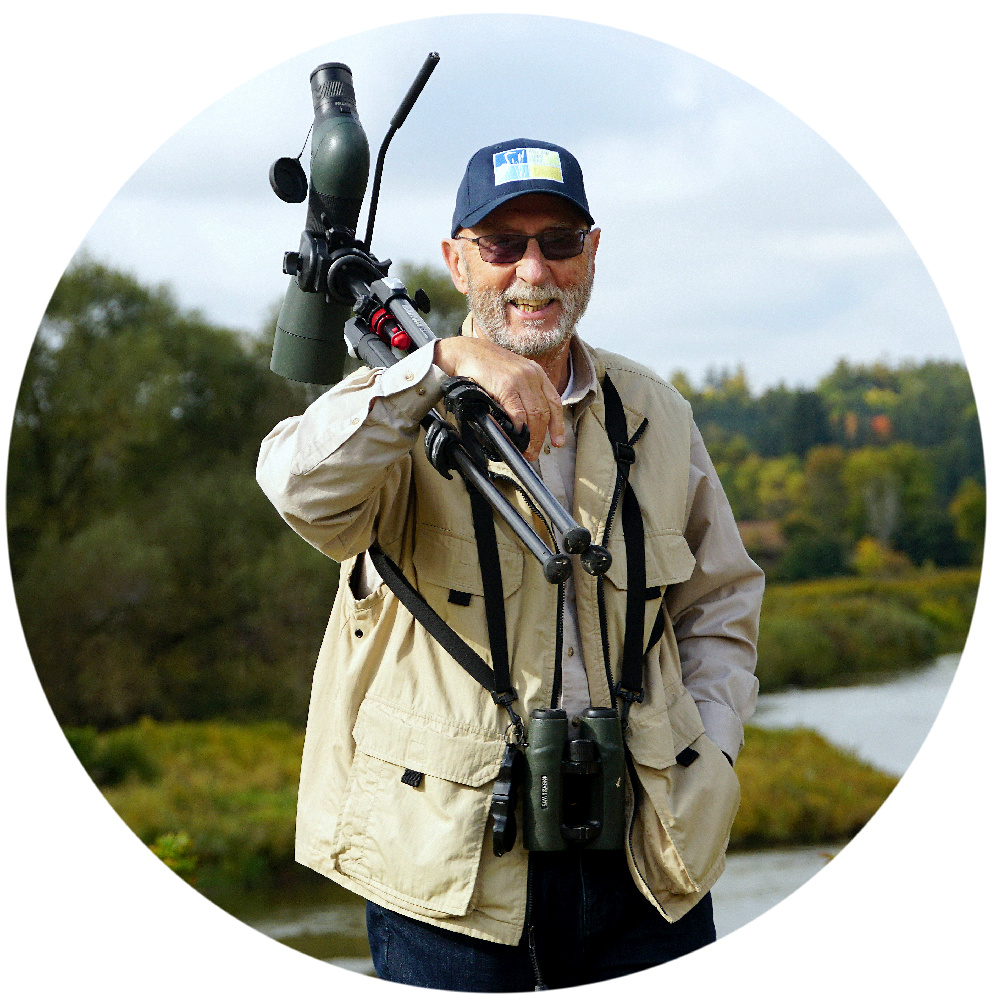
I would like you all to meet Wayne Simkin.

Wayne welcomed me into his home near Waverley, ON, not far from the historic regions of Midland and Penetanguishene, where early French Canadian martyrs met their fate, and evidence of Huron occupancy abounds.
It is fitting in a way for Wayne to reside in such an area, for he spent part of his earlier life living in the northern settlement of Moosonee, among the James Bay Cree and for several years organized caribou hunts and fishing expeditions for lake trout in northern Québec, ably assisted by the indigenous people of that territory. In fact there were remote regions where Wayne may well have been the first white man to visit.
Wayne's introduction to carving occurred in the mid nineteen-seventies when he was still a boy of twelve or thirteen. He started to produce working decoys with his father, and quickly displayed a rare talent for creativity and an appreciation of form and function. His moment of epiphany came when he entered some of his work into the annual Sportsmen's Show in Toronto and won thirteen ribbons for twelve birds, a remarkable achievement. This validated his oeuvre and convinced him that he had what it took to pursue carving in a serious way.
And speaking of ribbons, and plaques, and awards, this is just part of Wayne's "wall of honour."

How few of us will ever be able to display a ribbon that says World Champion?

Here is a White-winged Scoter, exquisitely rendered, for which Wayne was awarded Best in Show at the Canadian National Championship in 2015.

Just ponder for a moment that this gob-smacking work of art started out as a block of wood, a hunk of tupelo from a bottomland swamp in the southern United States. The lifelike qualities are stunning; the nuance, the shading, the angle of the head, the detail on the feathers, the elegance of the painting are all the unmistakable hallmarks of a maestro.
Wayne went on to enter this piece in the Master Class at the World Championships where it won second place.
In 2017 this delicate rendition of a Canada Goose at the nest garnered Best in Show for Wayne in the 2017 Canadian National Championship; ironically exactly twenty-five years after he had first won such an award.

Wayne told me that he was mentored in his early years by Al Glassford, a renowned figure in the world of Canadian carvers, and was always encouraged to develop his own style and not follow that of others. Al promoted individuality. Wayne feels that this was perhaps the most important piece of advice he received, and he has always striven to interpret a bird in the way that he sees it, and not to emulate the successful renditions of others. While his style may not be instantly recognizable to the casual observer, Wayne knows that it is identifiable at a glance to other carvers.
In 2010 Wayne was world champion with a pair of Steller's Eiders and in 2013 with a pair of Canvasbacks. Both works were sold before the end of the show so I have no pictures to show you!
Wayne does most of his work with power tools but still has a set of knives and chisels which he uses also.

Some time ago Wayne and his wife attended a presentation on the wildlife of Antarctica and his wife fell in love with penguins. I suspect that when you have a husband who can produce what your heart desires, a one of a kind carving is not too much to ask for. And this is what Wayne is working on now - a Rockhopper Penguin if I am not mistaken.


When I saw this Cackling Goose on the mantle I fell in love with it, but apparently Wayne's wife did too, and this is another piece that will not be for sale!

We took the birds outside for a little better light and you can see from my very poor picture why I generally leave the photography to Miriam! I did not do well in the bright sunlight and I should have photographed from other angles too. I apologize to Wayne for not displaying his work in a better way.
This carving was entered into competition and was featured on the front cover of an important trade magazine, and was the subject of an article inside.

It is ironic that Wayne had no idea that his work was being covered in this way, and was alerted to it by friends who casually advised him to "check the latest issue." Needless to say, Wayne was very pleased with this honour.
The pair of Ruddy Ducks featured below were scintillating in their lifelike appearance and I regret that once again my photographs do not do them justice.


For many years Wayne used acrylic paints but has switched to oil. He feels he obtains a much softer look with oil and the delicacy of the plumage is enhanced.
Although Wayne devotes most of his time to decorative art these days, his roots in working decoys are still a part of his life and he and his father enjoy time in the outdoors together.

As many of you will recall a world championship ring is one of the rewards of winning at the highest level.

You will see at the left where a diamond has been added to mark Wayne's second world championship and I asked whether another diamond would be added if he wins again. With a wry smile and an instant riposte, Wayne said, "It is not "if," it is "when," David." And I am sure that no truer statement could be made.
Thank you Wayne for permitting me to enjoy your company and learn a little more about the wonderful art you portray so well. I will look forward to seeing you at next year's Canadian championships.