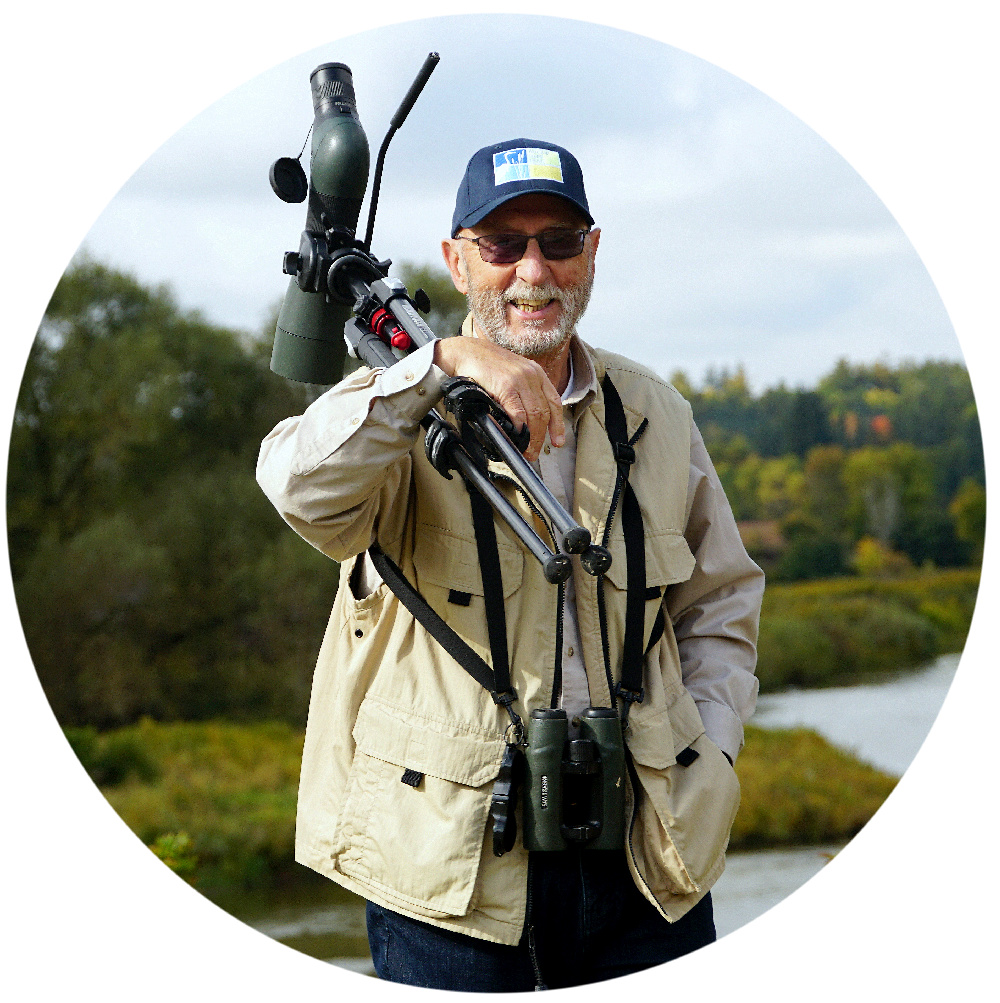
Leader: David Gascoigne
Participants: Miriam Bauman, Franc Gorenc, Carol Gorenc, Judy Wyatt, Jim Huffman, Francine Gilbert, Andrew Cudmore, Caroline Cudmore, Steve West, Anne Godlewski
Saturday 14 March 2020
Last year for one reason or another we missed having our weekend in Algonquin and I know that both Miriam and I regretted not having enjoyed our late winter getaway there. And so it was that I organized a venture north this year.
Originally we were sixteen people, but Kayla and Jonah cancelled due to concerns associated with the Coronavirus, Andrew and Lorraine had issues with their dog that prevented them from coming, and Mary simply decided not to join us.
Irene Pobojewski at Spring Lake Resort was, as always, the model of friendly cooperation and even though her season does not normally start until May, she opened up rooms for us, and permitted us to use the dining room for our pot luck dinner. Part of the pleasure of this venture is to see her friendly face and enjoy her welcoming attitude.
Those of us arriving from southwestern Ontario met at Spring Lakes Resort to check in and get our room keys (other than for Anne and Steve who inexplicably were just leaving home in Woodstock when we were almost at our destination), and Caroline and Andrew met us at the Spruce Bog Trail at the eastern end of the park, since they were arriving from Ottawa.
The temperature was mild for the time of year, hovering around zero and at times nudging above that mark.
The sky looked a little threatening at one point, but the dark clouds blew over and the day was benign and quite splendid.
Three species are normally prone to feed from the hand - Red-breasted Nuthatch (Sitta canadensis), Black-capped Chickadee (Poecile atricapillus) and Canada Jay (Perisoreus canadensis), and I was hopeful!
An American Red Squirrel (Tamiasciurus hudsonicus) wasted no time taking advantage of a free breakfast set out on the rail.
The Spruce Bog Trail was not especially productive and we moved over to the Visitor Centre.
Unfortunately, the Visitor Centre had closed just the day before our arrival due to the dreaded COVID-19 virus.
We were disappointed since it is always a great spot to eat lunch and have access to the facilities, in addition to enjoying the activity at the bird feeders; so we had to content ourselves with eating in our vehicles in the parking lot. It's just around that bend, past the snow!
Fortified by lunch we walked around to the back of the Visitor Centre, where several Evening Grosbeaks (Hesperiphona vespertina) were to be found.
A few Two-barred (White-winged) Crossbills (Loxia leucoptera) were also present and this female even remained in one spot long enough for Miriam to get a picture.
Our next stop was at the Opeongo Road, which over the fifty or so years I have been visiting the park, has been my most productive area. Our group was primed and ready for action!
Chickadees were all around, displaying a gentle curiosity, knowing that friendly humans bring food. Caroline was happy to have this one land on her hand.
It was not long before Canada Jays (recently renamed from Grey Jay - yippee!) were all around us, elegantly landing in trees and shrubs, eyeing outstretched hands for the best snack.
The Algonquin population is the most studied cohort of Canada Jays anywhere and the coloured leg bands permit tracking of individual birds.
They really are entrancing creatures.
To hand feed one is a pleasure not to be missed.
Blue Jays (Cyanocitta cristata) were also plentiful although none were as confiding as the Canada Jays.
As we drove back along the Opeongo Road we noticed evidence of a spring thaw in several locations.
Our final stop for the day was at the Logging Museum near to the east gate.
A Ruffed Grouse (Bonasa umbellus) had been wandering around in this location during our last visit, but none was seen this time.
Pileated Woodpeckers (Dryocopus pileatus) had been hard at work.
As was true everywhere Black-capped Chickadees were our constant, and very agreeable, companions.
For the first time ever I did the whole circuit at the logging museum and found it very interesting. Tom Thompson a renowned Canadian artist, met an untimely death by drowning at the age of thirty-nine on Canoe Lake, just before the vaunted Group of Seven was formed. Some of his works covered the logging activities of the day and reproductions are featured on one of the exhibits.
As we were meandering back to our vehicles we were joined by Anne and Steve, but our explorations were over for the day and we had a forty-five minute drive back to Spring Lakes to get ready for dinner.
We had a wonderful selection of food, most of which is not visible in the only picture we have, but I can assure you that no one left the table hungry, nor less than delighted with the great variety.
By way of introduction, on the left side of the table - Anne, Caroline, Judy, Carol, Andrew, Miriam at the end, then coming back along the right side, Franc, Jim and Steve.
I have no doubt that everyone slept well; I know that Miriam and I did. It had been a great day in the outdoors, a fine birding experience and good company. You can't really ask for much better than that.
Sunday 15 March 2020
We all gathered in Judy's room where she had prepared breakfast for everyone. There was all the hot coffee you could drink, cinnamon buns and the best Morning Glory muffins anywhere. Caroline brought a fresh fruit salad and Anne had some of her outstanding homemade cheese, so we all left well fortified. We are indebted to Judy for taking on this task.
It was quite a bit colder than the previous day, with the temperature at minus eleven when we left Spring Lake Resort, but it was sunny, we were deep into the rugged Canadian Shield, frozen lakes sparkled in the sun, and it was nothing short of glorious. It was a time to feel thankful to live where we do. For me, there is nothing quite as satisfying, that sense of truly belonging to a place, a sense of identity, a wellspring of appreciation.
 |
Spring Lake at Sunrise
As we meandered down the road crossbills and Pine Siskins (Spinus pinus) were flying around with some feeding on grit and minerals at the side of the road, managing to fly up before being hit by oncoming traffic.
 |
Pine Siskin
One of the species we always hope to see at Algonquin is Spruce Grouse (Falcipennis canadensis), an uncommon breeding resident, never easy to find, and on our previous three trips as a group we have not been successful.
Thanks to Franc, today was the exception. Not only was a bird feeding high above us, it was a splendid male.
It is redundant to say that everyone was delighted with this sighting; for most of the group it was their first encounter ever.
Hairy Woodpeckers (Dryobates villosus) seemed to be in a particularly friendly mood, and both male and female were observed at close range.
A Red-breasted Nuthatch was pretty cooperative too.
It looks like some are huddled against the cold.
A female Downy Woodpecker (Dryobates pubescens) came to feed in the same area as the Hairy Woodpeckers, enabling everyone to see the difference in size between the two species.
And yet another male Hairy Woodpecker put in an appearance.
Miriam decided to rest for a moment, and is either giving the royal wave or dismissing us all out of hand!
The trail meandered through the wooded area, where our boots crunched on the snow.
Finally it was out onto the wide expanse of the spruce bog and back into the forest at the other side. Within a couple of months we will be looking for Moose (Alces alces) at this location.
A stop at the Visitor Centre yielded a Red Crossbill drinking with a small group of Pine Siskins.
At the rear we saw the same species we had seen the previous day, but Anne and Steve had not been with us then, so it gave them the opportunity to catch up.
A final visit to Opeongo Road resulted in another extravaganza with the Canada Jays, every bit as enjoyable as before.
And yet another Hairy Woodpecker put on a show for us.
By now it was time to head for home and we all bade each other farewell, happy to have enjoyed a great weekend in Ontario's near north. I am sure we will do it again next year. Surely by then COVID-19 will be but a distant memory!
|
|