03 July, 2025
Miriam had business to deal with in Burlington, so we packed a lunch to make a day of it.
Initially we had planned to spend most of our time at LaSalle Park, but a movie was being shot there and all the parking spaces were occupied. Furthermore, the public was excluded from many sections of the shore, so we headed elsewhere.
It was our good fortune to discover Hidden Valley, a location previously unknown to us. It is part of the extensive Cootes Valley network of trails, much of which we have explored.

A member of the Bot Flies, Blow Flies and Allies (superfamily Oestroidea) joined us for lunch; remarkably well-behaved I must say, never bothering us for a moment.

An Eastern Black Walnut tree seemed to be shedding its fruit unduly early, perhaps due to heat stress and lack of moisture.
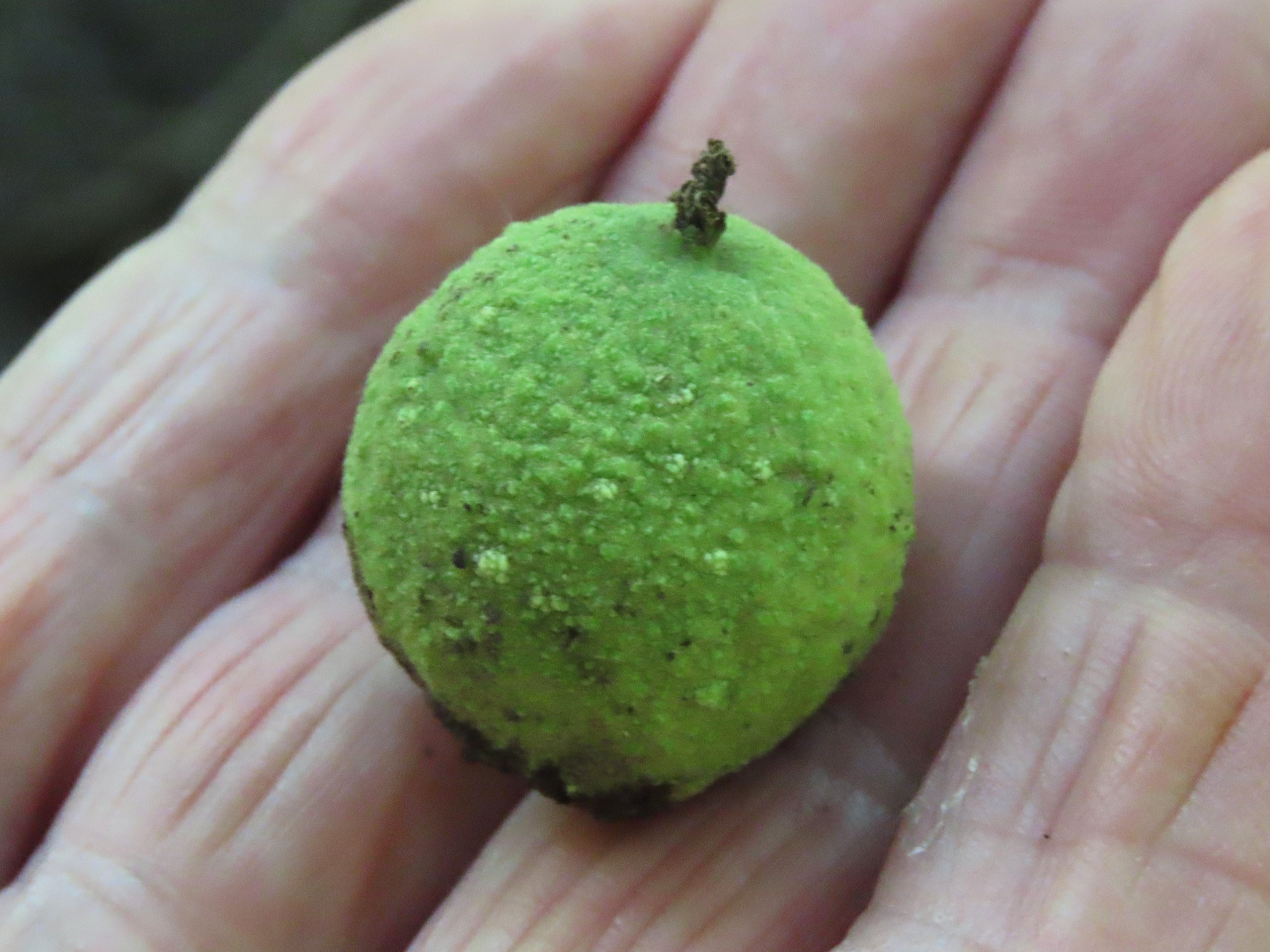
Tree roots rarely extend deep into the ground; here you see how shallow many of them are.

Ebony Jewelwing (Calopteryx maculata) is at peak abundance at this time of year and it was enjoyable to see them often - sometimes several together, with males vying for mating rights. Sound familiar?

Ebony Jewelwing ♂

Ebony Jewelwing ♀
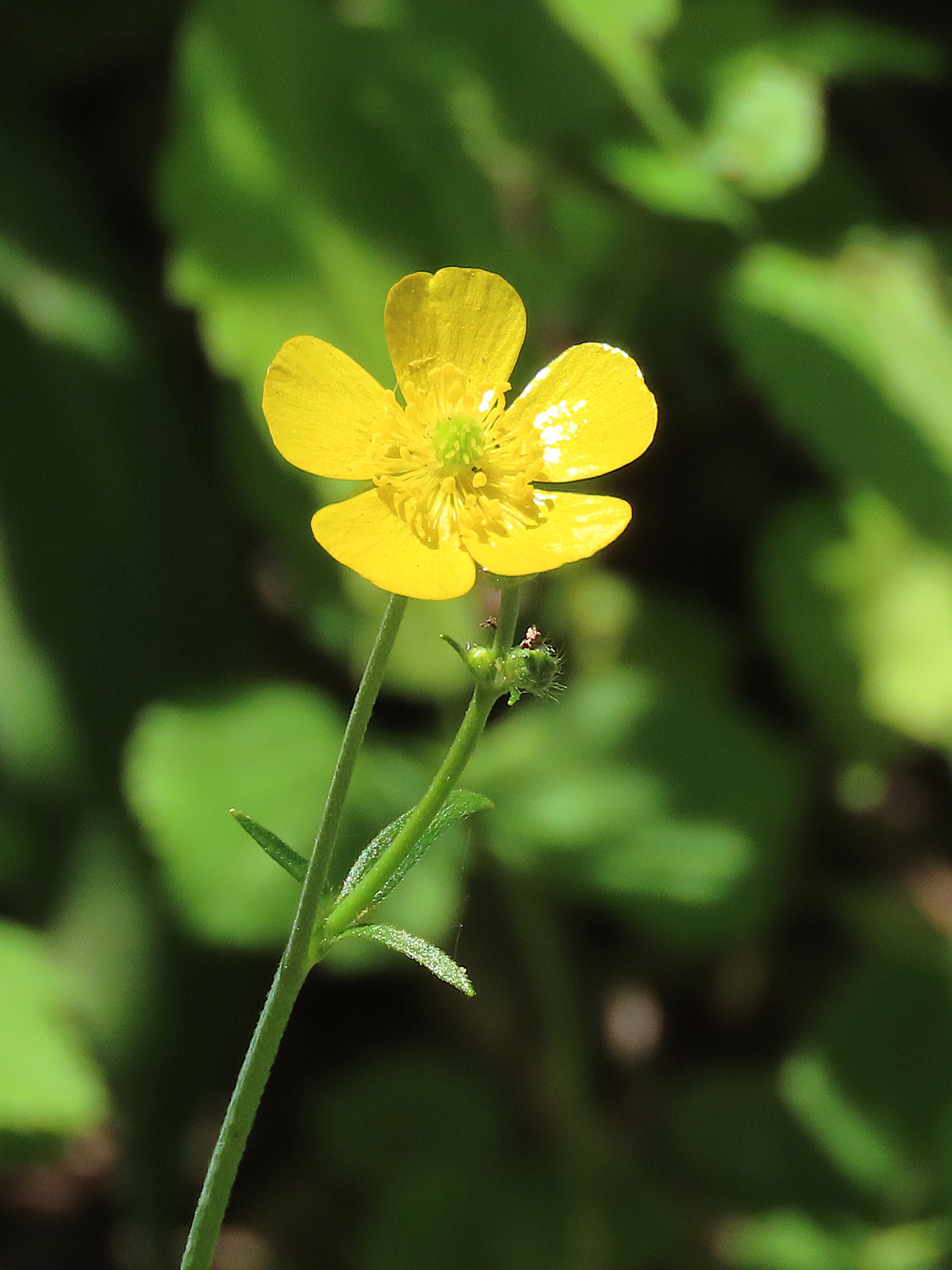
How lovely is a Buttercup (genus Ranunculus)?

Pale Jewelweed (Impatiens pallida) is seldom found far from water; I doubt that anyone could dispute that it is exquisitely beautiful, a symmetry of perfection.

This object appears to be a pupa of some kind, but I am not sure what.

Common Motherwort (Leonurus cardiaca) lived up to its name and was, in fact, quite common.

Rough Cinquefoil (Potentilla norvegica) hardly seems rough at all!

It took me a while to identify the following plant and I am still a little uncertain. However, I have concluded that it is Nipplewort (Lapsana communis). Originally from Europe and Asia, it has become widely cosmopolitan throughout the Americas.

The moth on it proved to be equally puzzling. As best I can determine it is Aetole bella, a species new to me and probably uncommon in Ontario. I have been able to find very little to confirm or refute my judgement, however, and remain open to confirmation or correction.

This is probably a Small White (Pieris rapae).

Black-eyed Susan (Rudbeckia hirta) gives me no trouble at all!


What a beauty!
A land snail, either Cepaea nemoralis or C. hortensis did its best to stay out of the hot sun.

A Northern Crescent (Phyciodes cocyta) added joy to our day.


A Western Honey Bee (Apis mellifera), that most cosmopolitan of the Apidae, foraged on Common Motherwort.

Bittersweet Nightshade (Solanum ducamara) is as lovely as a July day is long.

This species is frequently misnamed as Deadly Nightshade, the common name of Atropa belladonna, a deadly poisonous species not found in Ontario. No novels about the nefarious conduct of wronged spouses will be written about S. ducamara, unfortunately. There are a few mushrooms that would do the trick though!
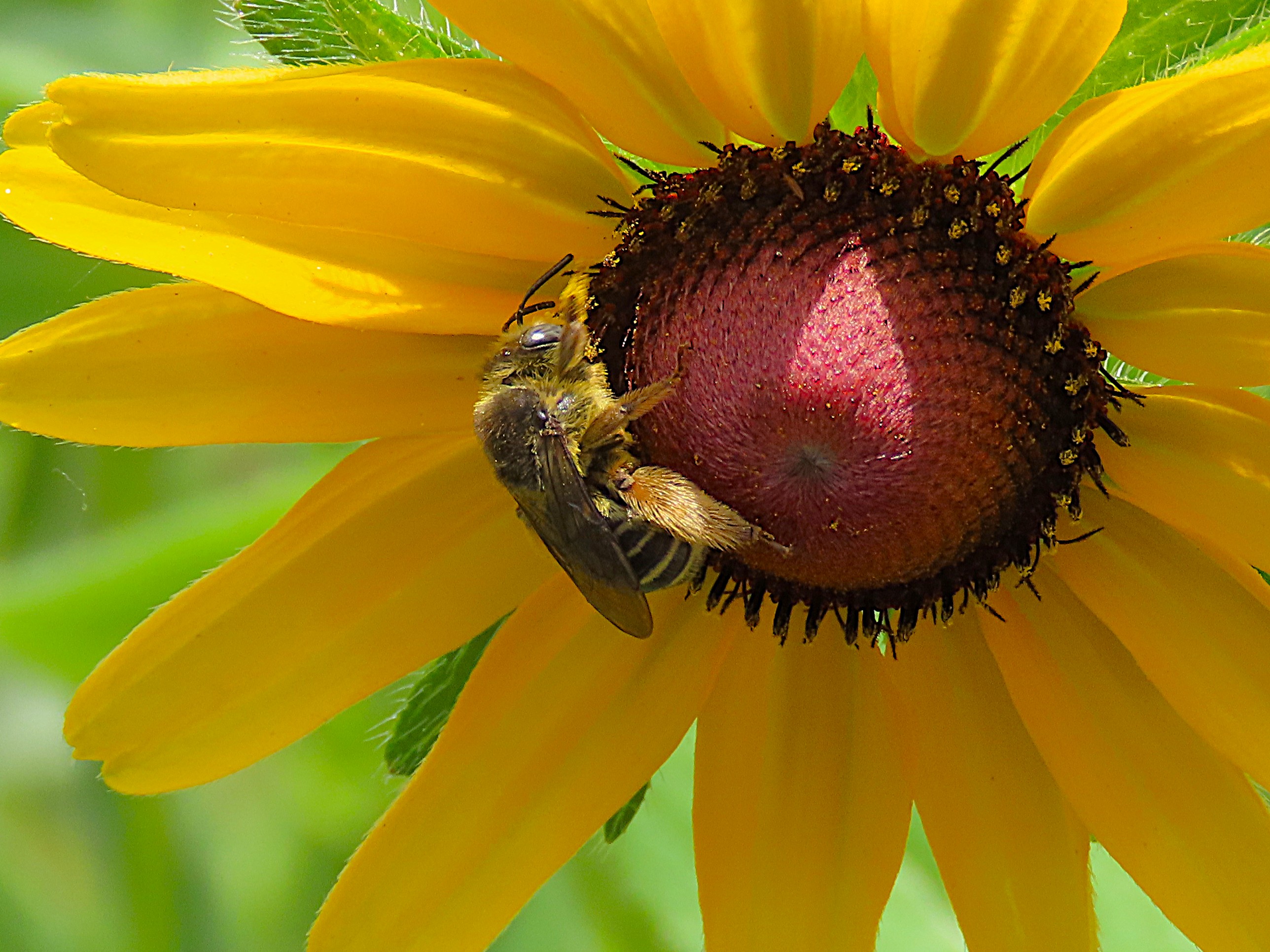
This beautiful lady is a Coneflower Mining Bee (Andrena rudbeckiae) busily going from flower to flower.
A spider in the family Araneidae waits patiently for prey.
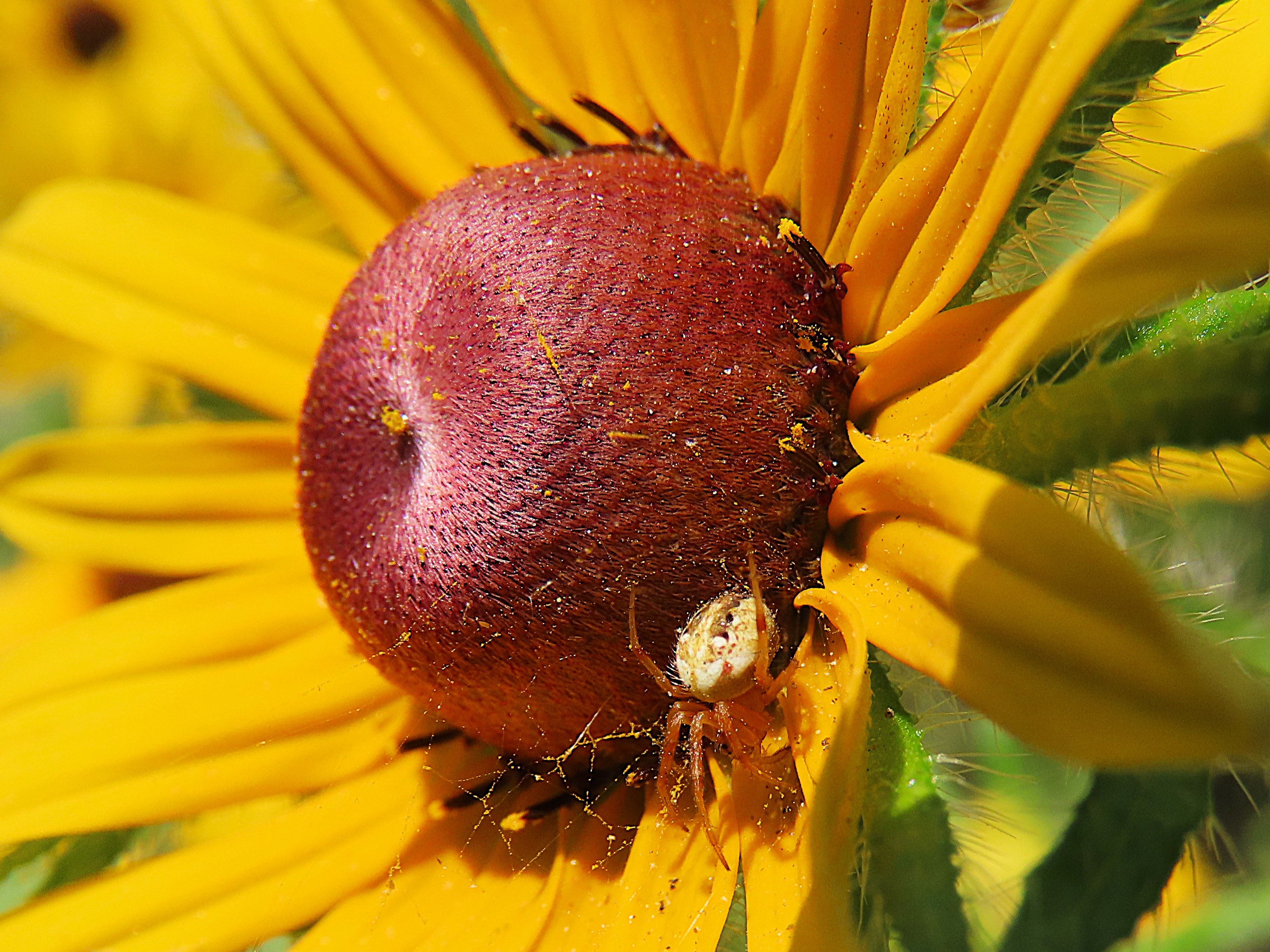
The dining technique of spiders in this family (Orb Weavers) involves external disgestion. Digestive juices are vomited onto prey to break it down before sucking it up.
Dinner anyone?
A Transverse-banded Flower Fly (Eristalis transversa) is both common and beautiful.

A Mullein (genus Verbascum) reached for the sky!

It's probably a good thing that Eastern Black-headed Nemognatha (Nemognatha nemorensis) doesn't have to fill out one of those government forms where you are only permitted so many squares for the letters of your name.

I wonder what happens when someone has a moniker like Aloysius Ryerson Goldberg-Sanderson! And double-barreled names seem to be on the ascendancy these days.
Black Raspberry (Rubus occidentalis) will soon be at its lip-staining, chin-dripping best.

Chicory (Cichorium intybus) always speaks to me of summer in Ontario.

Here is an interesting view of Wild Carrot (Daucus carota).

The fruit of American Black Elderberry (Sambucus canadensis) may be used for a whole range of delectables, from wine to preserves.

Sulphur Cinquefoil (Potentilla recta) is a pretty little flower.

Here is a bee found in the grouping, Leafcutter, Mortar and Resin Bees (genus Megachile).

We are aways thrilled to see a Common Raccoon (Protyon lotor), as long as they don't take up residence in our attic.

They are unquestionably attractive, appealing and begging to be cuddled - but don't do that!

Feel free, however, to take home some Purple Crown Vetch (Securigera varia) to grace your table.

Ants are not easy to identify for the non-specialist, but I believe this is a member of the Citronella Ants, Fuzzy Ants and Allies (genus Lasius).

Dogwoods (genus Cornus) are prolific throughout southern Ontario.

Fleabanes are delightful little flowers, many species looking quite similar. I am pretty confident this is Annual Fleabane (Erigeron annuus).

There is no doubt at all concerning the bold and beautiful Orange Day-Lily (Hemerocallis fulva).

We came to a road, where the Hidden Valley sign faced the way we had just come.

By crossing the road we joined up with trails more familiar to us and considered ourselves fortunate to have discovered a series of interlinked nature walks.


We marched on - well ambled would be a better description, stopping for everything that captured our attention. One does not aim for speed records on perambulations in nature!
I think this is Upright Hedge Parsley (Torilis japonica).

Amber Snails (genus Succinea) are extremely common this year.

To my eye, Water Forget-me-not (Myosotis scorpioides) is the very definition of perfection.

Creeping Jenny (Lysimachia nummularia) is a wonderful yellow exclamation point at the woodland edge.


Holarctic Azures (genus Celastrina) are often reluctant to land so Miriam has to be quick with the camera when they do.

The genus Slaterocoris represents a plant bug with more than 50 species.

Miriam will attest that it is not averse to taking a nip of human flesh!
We came across if not the largest Common Snapping Turtle (Chelydra serpentina) we have ever seen certainly close to it.


I once read somewhere that hyperbole and exaggeration is rife in the estimation of the size of snappers. I believe that!
One thing I am sure of, however, is that I have never previously seen one in such a rapidly flowing stream. It had no difficulty dealing with the torrent and it re-entered the water before we left.


It was a memorable encounter.
Here is Hedge Bindweed (Calystegia sepium) with an unidentified insect.

Pearl Crescent (Phyciodes tharos) is active at this time of year.

Virginia Creepers (genus Parthenocissus) were ubiquitous.

Ticks are becoming a real problem in many area of the continent where they formerly were absent.

Riverbank Grape (Vitis riparia), as the name implies, is commonly found along the banks of streams and creeks in southern Ontario.

We deemed ourselves very fortunate to come across this Thread-waisted Sand Wasp (genus Ammophila).

As we neared the end of our return stroll back to the car, another mullein was reaching for the sky.

I think we were too.