Showing posts with label Dave Westfall. Show all posts

Sunday, February 16, 2020

Great Backyard Bird Count 2020


15 February 2020

     Each year at Waterloo Region Nature (the finest little nature club in the universe) Mary Ann Vanden Elzen organizes our participation in the annual backyard bird count conducted across the continent.
     We do it in style, however!
     Instead of peering out our own windows into our own backyards, we visit the homes of three members of our club, who welcome us with coffee, tea, hot chocolate, aromatic steaming cider, muffins, cookies and the like, and at the last stop, lunch. Having been spoiled in this fashion so frequently, I cast my unanimous vote to continue this tradition forever!
     Brenda Holvey hosted us first. Brenda's husband, Alan, had always been there to welcome us too, but Alan passed away last year at the age of ninety-three, and it is a tribute to Brenda, now ninety-one years old, that she is still living in her own home and continues to welcome so many fellow naturalists. I should add that she received sterling assistance from Meg Slater.

Brenda


     I can tell you from personal experience that no one is possessed of more intelligence, good humour and wit than Brenda. I am so happy that she is my friend.
     Here we are looking anxiously at the feeders, which were for the most part not patronized extensively.


     Of course, given the very strenuous nature of this kind of birding, we had to keep going back to refuel with food and drink.


     Paul Bigelow always acts as the official counter for our group and seems to be enjoying his coffee, since there was not at that point much to record.


     Others kept looking and also did not miss the opportunity to mingle and socialize, a very important part of this event.


     It is a measure of the paucity of birds visiting Brenda's well-stocked feeders that the visit of a Black-capped Chickadee (Poecile atricapillus) generated excitement and hoots of joy among this corps of expert birders!


     As we left to move on to our next destination, Miriam turned to get a shot of Brenda's house.


     Fraser and Nancy Gibson were the next to host our group; their house being mere minutes from Brenda's location.


     Fraser, a very fine naturalist, has an array of feeders of different types, dispensing a range of seed, with suet feeders also, and there was lots of activity at the Gibson Fat, Protein and Good Taste Café.


     Fraser and Nancy are so fond of bird houses that even their house plants are so equipped.


     I spent a good deal of time fixated on this abode, waiting for the tiny occupants to fly in or out, but if they did they escaped my scrutiny.
     A Dark-eyed Junco (Junco hyemalis) and a Mourning Dove (Zenaida macroura) were content to feed on the ground on seed knocked down by energetic birds at the feeders, who obviously had specialized training in eating only one out of four seeds, strewing the remaining three hither and yon - more hither than yon actually.


     These House Sparrow (Passer domesticus) were the proud holders of the avian equivalent of a gold medal in seed tossing.


     Their friends lined up along the fence and in the conifers just waiting to join them.


     Happy humans sipped, snacked and watched.


     A pair of House Finches (Haemorhous mexicanus) obligingly perched on opposing sides of a feeder.


     I made the facetious remark that males are more handsome than females, and Mary Ann was quick to retort, "Yes, that happens with birds, David!" Touché!
     Black-capped Chickadees in characteristic fashion visited a feeder, grasped a seed, and left.


     And what would a day at the bird feeders be without a squirrel waiting his turn to filch a little snack?


     Soon it was time to move on to Sprucehaven, our final destination, where Dave Westfall, Sandy Hill and Jamie Hill would be our kind and generous hosts. This is a view looking out from the family room window towards the barn where we do our Barn Swallow (Hirundo rustica) research.


      Everyone was happy to mingle, chat, eat, drink, eat some more and watch birds.


     A wonderful feast was laid on for us, a veritable smorgasbord of so many good things, it begged for a return visit to the table. 
     There are many feeders at SpruceHaven and the birding was commensurately good. Here are shots of some of the species seen.

Dark-eyed Junco
Blue Jay (Cyanocitta cristata)
Hairy Woodpecker (Dryobates villosus)

American Tree Sparrow (Spizelloides arborea)
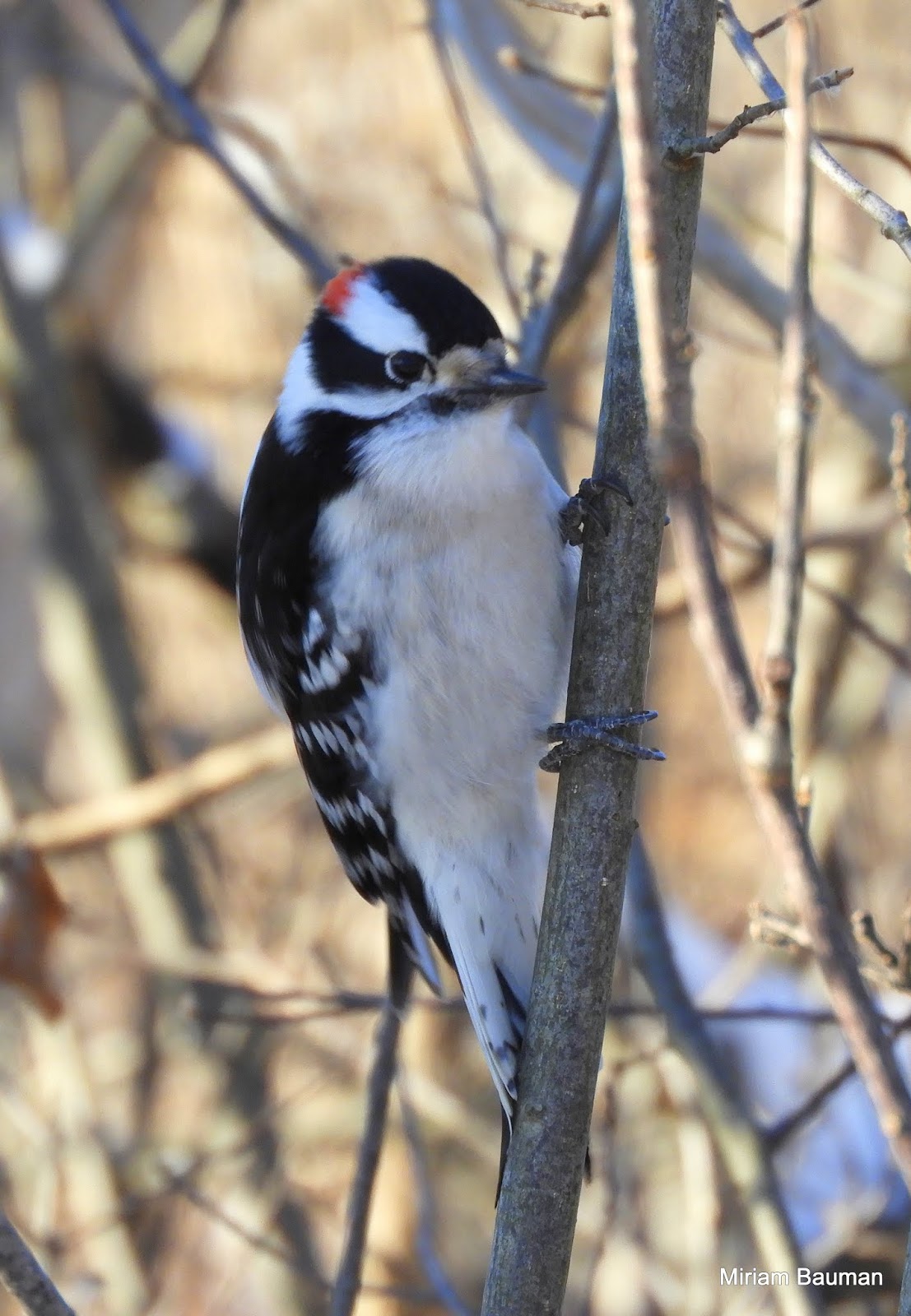
Downy Woodpecker (Dryobates pubescens)


     All too soon it was time to head for home, and one by one, we started to leave.
     It had been a terrific day characterized by good fellowship, great food, every bird was a joy to see, nothing could have been better.
     A huge vote of appreciation is due to Mary Ann for organizing the event as she does year after year, and to Brenda, Fraser and Nancy, and Dave, Sandy and Jamie for hosting. 
     I am already looking forward to next year!

Final tally: Mourning Dove (3), Downy Woodpecker (2), Hairy Woodpecker (1), American Crow (1), Blue Jay (1), Black-capped Chickadee (11), Red-breasted Nuthatch (1), White-breasted Nuthatch (1), House Sparrow (36), House Finch (5), American Goldfinch (9), American Tree Sparrow (2), Dark-eyed Junco (10), Northern Cardinal (5).  Total: 88 individuals of 14 species.


Sunday, September 15, 2019

Annual Visit of Waterloo Region Nature to SpruceHaven

14 September 2019

Leader: David Gascoigne

Club members participating: Miriam Bauman, Shirley Bauman, Betty Brechun, Theo Byrne, Catherine Campbell, Lynn Conway, Daniel Entz, Fraser Gibson, Anne Godlewski, George Greer,  Brad Hale, Cathy Hale, Bill Hall, Victoria Ho, Dale Ingrey, Nina Ingrey, Adriaan Kemp, Barb Kemp, Denise Leschak, Hugh McCaul, Louise McCaul, Alan Morgan, Anne Morgan, Janet Ozaruk, Meg Slater, Frank Steinmoeller, Marj Steinmoeller,  Henriette Thompson,  Selwyn Tomkun, Don Voisin, Mary Voisin, Andrew Wesolowski, Lorraine Wesolowski, Stephen West, Susan Youngson.

Guests: Nicholas Bauer, Sarah Colter

     Judging by the impressive attendance for this annual outing I can say with confidence that this is the most anticipated event on the Club's schedule. There was a nucleus of regulars supplemented by many members visiting for the first time, and a couple of guests.


      Everyone is not in the picture above, but it gives you an idea of the level of participation.
     We always begin our day's activities in the barn which houses our Barn Swallow (Hirundo rustica) colony, which is where it really all started.


     This majestic old structure is looking quite grand this year having received  a fresh coat of paint and repairs where necessary.
     It is a great pleasure for me to have so many people interested in what we do and to explain the full scope of our monitoring and research activity.


        Newcomers are filled with knowledge before they leave and veterans of this event are always happy to learn of improvements in tracking devices, and to hear of discoveries we have made during the season. There is no doubt that these birds still hold many secrets we have yet to discover.
     The swallows have all departed for South America, but the nest below reminds us that they called SpruceHaven home for another breeding season. Given the conflagration in the Amazon, and the uncertainty of the conditions awaiting these migrants, it is unclear how many will survive to return next spring. It is with no small measure of sadness that we contemplate the  future of Barn Swallows and other aerial insectivores, when it seems that anthropogenic interference and continued habitat degradation and elimination, renders their existence ever more precarious -  to say nothing of the poor choices we continue to make in electing our political "leaders."


       We moved outside to continue with our walk and it seems that Selwyn Tomkun was anxious to point out something to me.


     We have installed numerous boxes for Eastern Screech Owl (Megascops asio) and have had a reasonable level of success in attracting these charming little owls to use the boxes as winter roosts, but so far none have bred in them.


     We continued with our walk.


     And there was more to do in terms of explaining the various programmes we have underway at SpruceHaven and the success of our nest boxes.


     This past season Tree Swallows (Tachycineta bicolor) and Eastern Bluebirds (Sialia sialis) fledged record numbers of young and we also had great success with Black-capped Chickadee (Poecile atricapillus) and House Wren (Troglodytes aedon). We continue to be motivated to help cavity-nesting species who find fewer and fewer natural nest sites and we have plans to erect more nest boxes this fall in readiness for next year's breeding season.
     We were lucky to have Fraser Gibson on hand to explain the features of the latest advances in beehives.


     The "jewel in the crown" this year is the conversion of approximately forty acres of farmland to native grassland. Soil samples were taken and the land seeded with the mix of plants that would have been characteristic of a tall grass prairie at the time of European settlement of our area.


     It looks a little weedy right now, but as the new growth establishes its dominance this will start to change. We have a reasonable expectation that by next year we will attract Eastern Meadowlark (Sturnella magna), followed by other grassland species in succeeding years. It is a very exciting prospect.
     Already I have noticed an increase in Savannah Sparrows (Passerculus sandwichensis), and Barn Swallows and Tree Swallows were seen hawking insects over the field , and Common Starlings (Sturnus vulgaris) were feeding on the ground in large flocks . When Kevin and I were banding last weekend Horned Larks (Eremophila alpestris) flew overhead.


     There was more to explain!


       Everywhere is awash with Canada Goldenrod (Solidago canadensis) at this time of the year, and it is both beautiful to see and provides rich foraging for butterflies and other pollinators.


     A Wooly Bear Caterpillar was seeking a place to hibernate for the winter; it will pupate in the spring to emerge as an Isabella Tiger Moth (Pyrrharctia isabella).


     These fungi on a tree were very interesting, but I am afraid that I am unable to identify them.


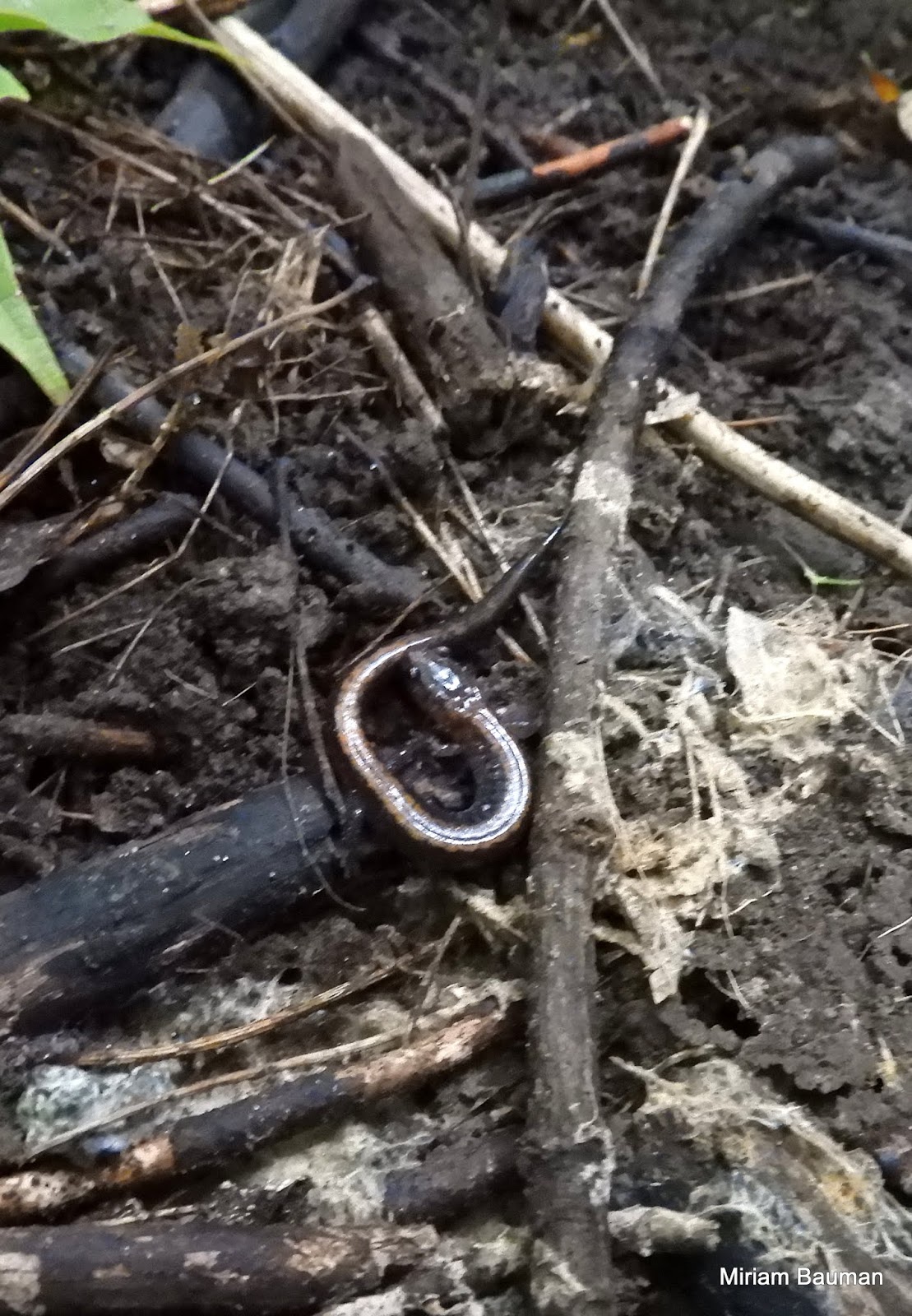
     We went into the woodlot to introduce everyone to our salamander monitoring project.


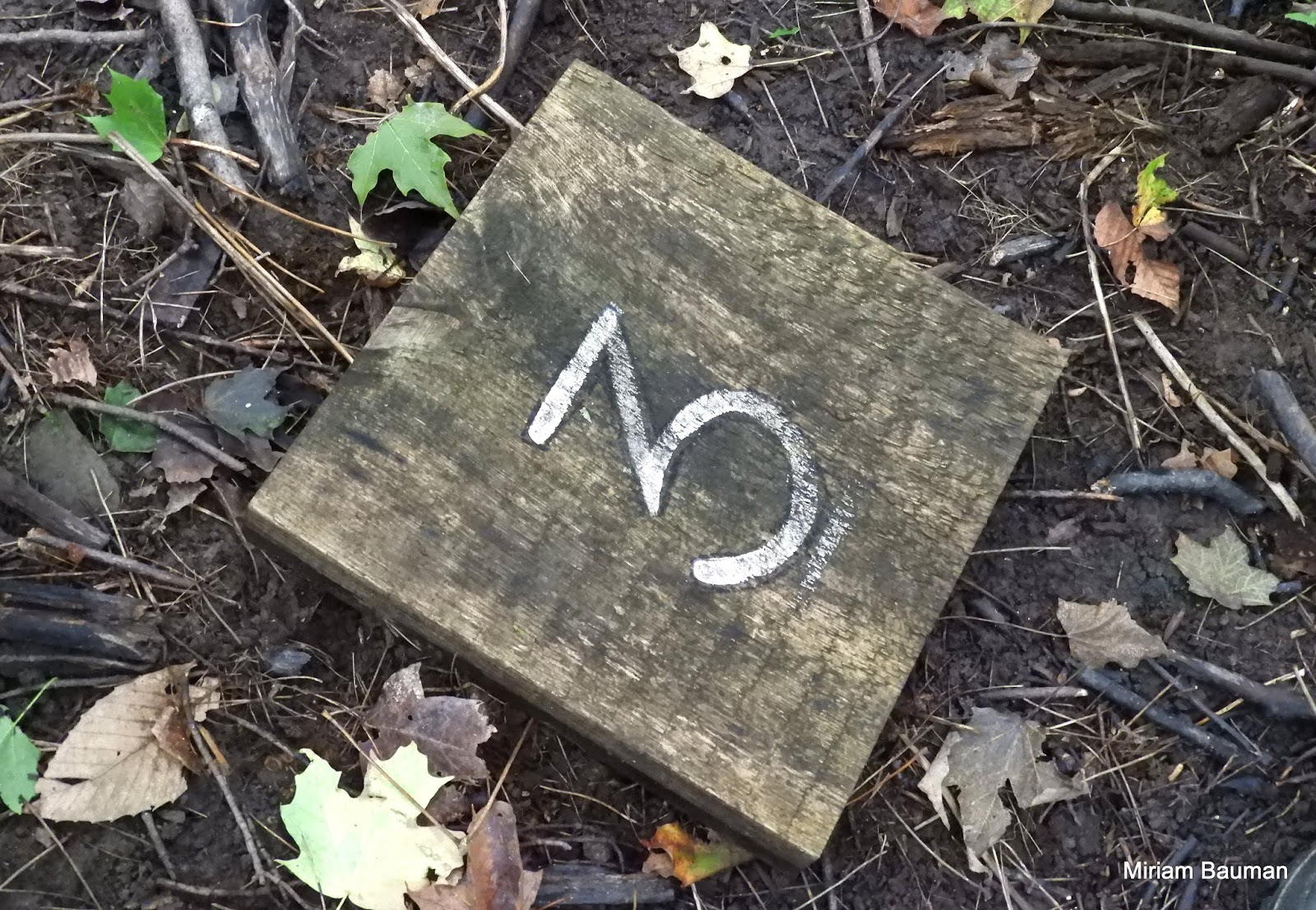
      I was lucky that under only the second board I turned over there was a cooperative Eastern Red-backed Salamander (Plethodon cinereus) for all to see.


          It is a measure of the deep interest that our group has in the natural world, that very few participants had dropped out along the way, and those that faltered did so only due to mobility issues and not from any lack of interest.


     It was time to head to the house for coffee and refreshments and we wended our way across the future grassland, slowly I might add, as everyone stopped to check out every treasure that revealed itself.


      I am sure I am not the only one who cast a glance across this rolling terrain with visions of a tall grass prairie blowing in the wind a few years hence.
      Everyone enjoyed warm Westfall/Hill hospitality and relived the events of the day and marvelled at just what SpruceHaven has come to mean to us all.


     Dave, Sandy and Jamie have proven themselves to be true visionaries and custodians of nature. Their commitment to habitat restoration and the preservation of the natural world extends far beyond what one might reasonably expect from even the most dedicated conservationist. As one who gets to deal with them every day I am constantly reminded of their largesse, the magnanimity of their philosophy and their fundamental decency.
     I know that you will all join me in saluting these champions. It is a privilege to have them in our lives.

Land Acknowledgement

We acknowledge that the land on which we are situated are the lands traditionally used by the Haudenosaunee, Anishinaabe, and Neutral People. We also acknowledge the enduring presence and deep traditional knowledge, laws, and philosophies of the Indigenous Peoples with whom we share this land today. We are all treaty people with a responsibility to honour all our relations.

Followers