We are slowly easing back to normalcy, although having been in and out of lockdown three times, we are waiting to see if this return to regular life will last.
06 June 2021
Three Bridges Road, St. Jacobs, ON
This was a very hot day with the air temperature around 32 degrees, and with humidity factored in close to 40. To say that I dislike this kind of weather would put it mildly.
Instead of taking a walk we decided to go for a drive in an air-conditioned vehicle.
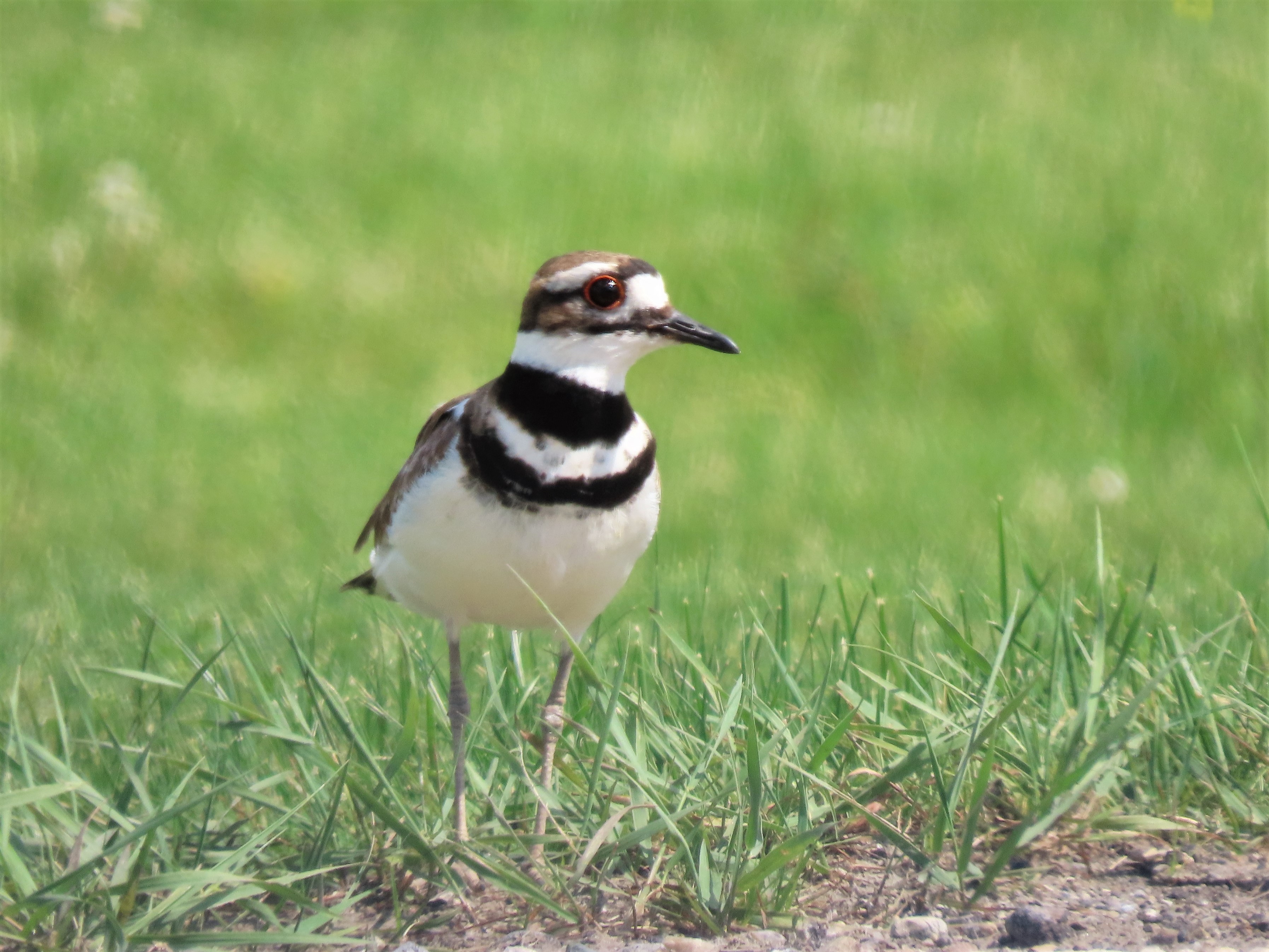
There is a small man-made pond on Three Bridges Road and on hot days it becomes a premier attraction for birds; Killdeer (Charadrius vociferus) especially are prone to congregate there.

Four were present to enjoy the cooling effect of the water.

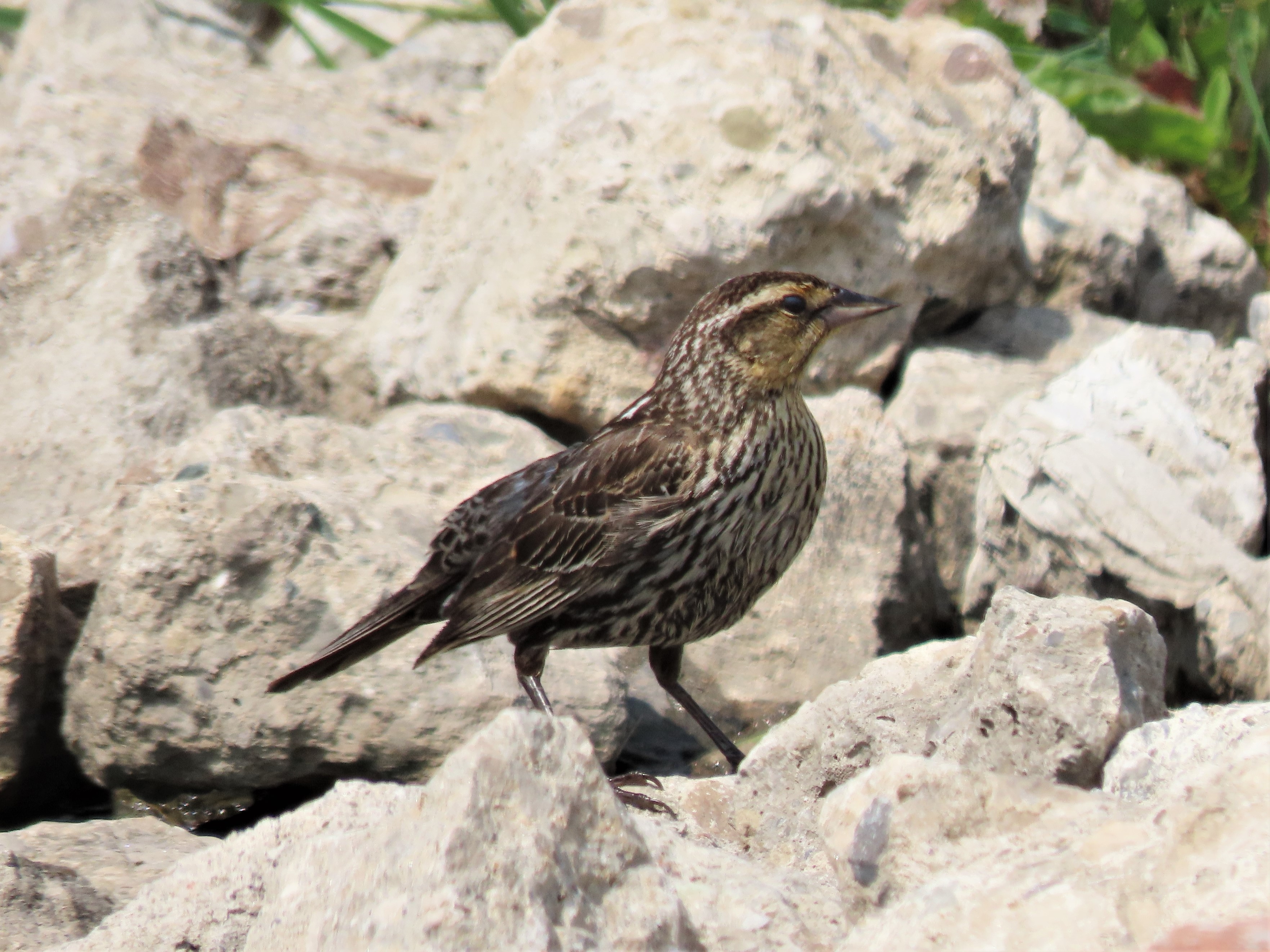
And a female Red-winged Blackbird (Agelaius phoeniceus) was not to be denied either.
Farther along the road we spotted six Killdeer in a field where the grass no doubt offered a little respite from the heat.
Even the face on this tree seemed to be suffering and grimacing!

Hawkesville, ON
A Belted Kingfisher (Megaceryle alcyon) was panting to stay cool, all the while scanning for fish in the river below. No doubt a plunge would be refreshing!

Our Backyard, Waterloo, ON
Back at home the backyard was a bit of an oasis, with the temperature being several degrees lower than out on the street.

A juvenile American Robin (Turdus migratorius) visits us several times a day, finding rich pickings among the stones on the path.

Although quite capable of foraging for itself it has not lost the instinct to beg for food and gives it a try with any other bird that is close at hand regardless of species.

It has little success of course, but it is fun to watch as it tries to secure food without effort. We enjoy watching these antics.
We have a lone Lupine (Lupinus polyphyllus) which is producing beautiful flowers and attracting pollinators.

On any given day many American Goldfinches (Spinus tristis) come to feed and bathe. The males look especially handsome at this time of year.

But the females are not lacking in charm and beauty either.

Common Grackles (Quiscalus quiscula) are all business when they visit. They waste no time when gathering food, and often stop for a drink at the bird bath on the way out.

Never a day goes by without Mourning Doves (Zenaida macroura) and the backyard wouldn't be the same without them.

And it is a rare day that we don't have North Cardinals (Cardinalis cardinalis). The male bursts on the scene in a blaze of glory, with a song to match.

The female is equally beautiful, perhaps more so in the eyes of some.

Laurel Creek Conservation Area, Waterloo, ON
After dinner we took our coffee and cookies over to Laurel Creek to spend a little time in David's Dell.
A Golden-backed Snipe Fly (Chrysopilus thoracius), our first ever, was an exciting discovery.

07 June 2021
SpruceHaven, St. Agatha, ON
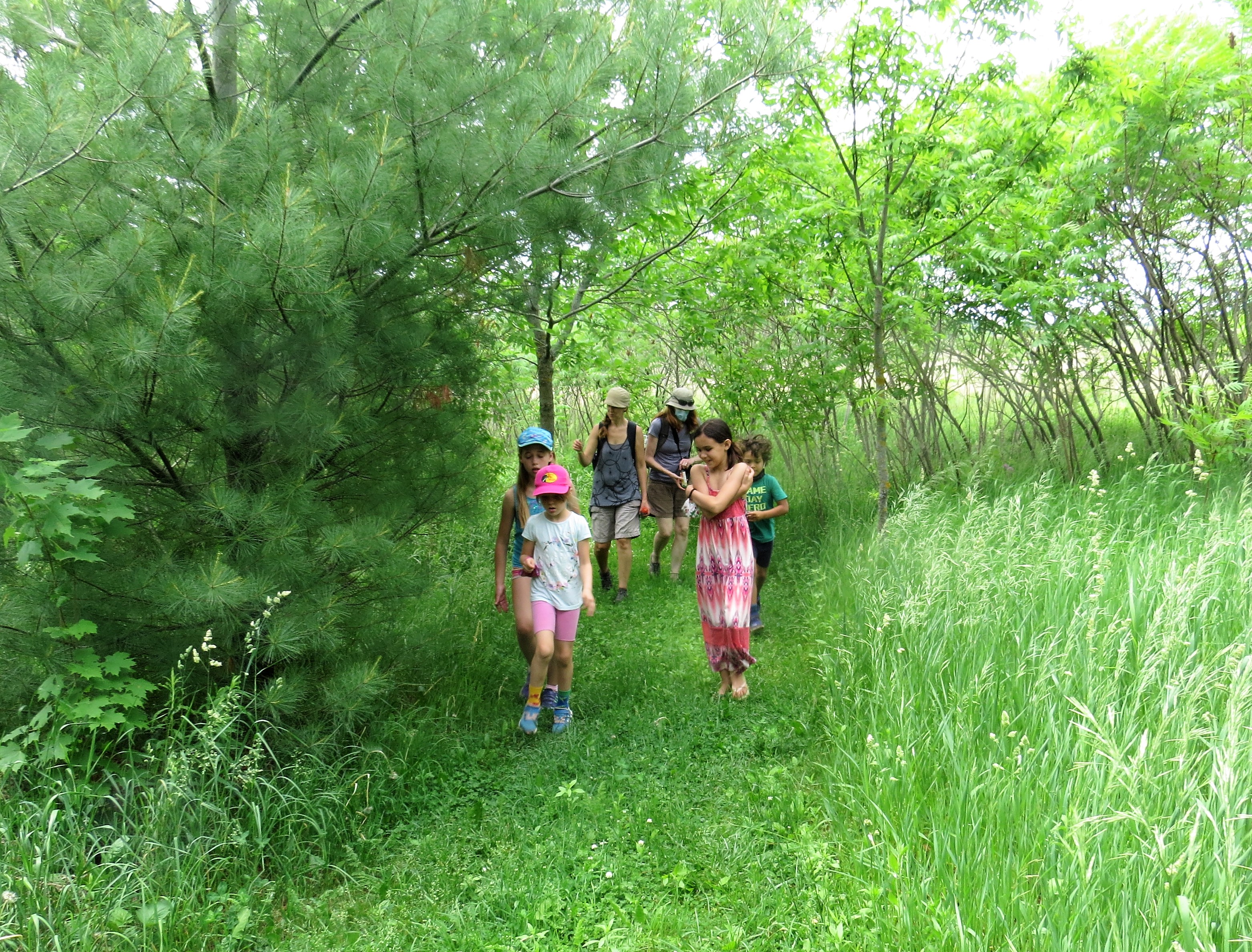
Last year I had the distinct pleasure of conducting a walk for couple of teachers and a group of children.
The teacher's names are Katherine and Kayli, fine dedicated people, and a pleasure to know and share time with.
Here is Katherine's definition of the group: "This group has no status as a school, and is best described as a group
of parents (essential workers) working together to support our children through
this pandemic year. While The Working
Centre supports its staff in this way by providing space, we are a
self-directed "learning pod" (with a big focus on
experiential learning!) with no formal structure or status".
I can't imagine a more creative way to teach children. And when you meet the kids it is immediately apparent that they have learned so much and have developed skills as young naturalists.
It was my pleasure to spend an afternoon at SpruceHaven with them.

The series of pictures below will give you an idea of the fun they had, all the while learning new things about the wonderful world of nature. I don't think that further commentary is needed from me.



08 June 2021
Hirondelusia, Kitchener, ON

Hirondelusia is a Barn Swallow habitat modified from designs approved by the Ministry of Natural Resources and Forestry to mitigate habitat, and to channel public concern about species at risk.
This project was conceived and constructed by my friend Jennifer Cleary-Lemon, Associate Professor in the Department of English Language and Literature at the University of Waterloo, with admirable and able cooperation from Marcel O'Gorman, University Research Chair, Professor of English and Founding Director of The Critical Media Lab.


Through a collaborative, combined academic and creative approach, Hirondelusia seeks HOW and WHY specific species at risk recovery strategies are designed and built, and WHAT seeing structures like this tell humans about threatened species like the Barn Swallow.


Bravo Jennifer and Marcel.
Behind John M. Harper Public Library, Waterloo, ON
Behind the library there is an expanse of open ground (for how long I wonder?) stretching towards the nest of Western Osprey (Pandion haliaetus) that has been successful for several years. The nest is located atop a hydro transmission tower, close as an osprey flies to the productive fishing areas of Laurel Creek Reservoir and Columbia Lake.
This grassland with scattered shrubs and two small artificial ponds, surrounded on all sides by roads and human presence, forms a bit of a haven for wildlife, and we have often made exciting discoveries there.
Savannah Sparrow (Passerculus sandwichensis) can be found with little effort, and no doubt breeds there.

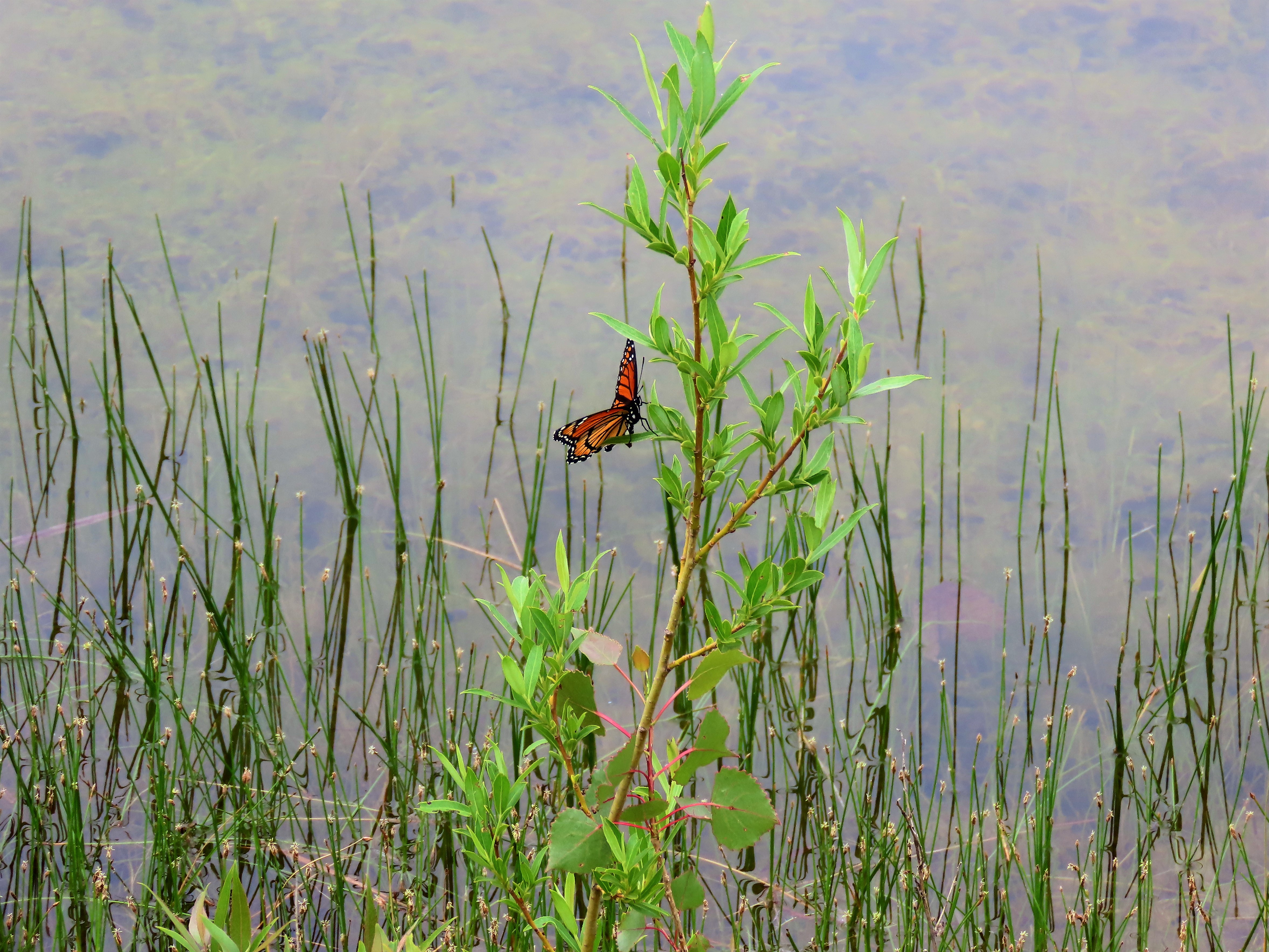
Viceroy (Limenitis archippus) is a species that mimics a Monarch (Danaus plexippus) to fool predators into thinking it is toxic.
Miriam took what I see as two very appealing pictures.

Gypsy Moth (Lymantria dispar) is a destructive defoliating moth, and its caterpillars can strip a tree in record time. Unfortunately they are abundant and widespread this year, wreaking havoc wherever they appear.

Dragonflies abound now, but so many simply refuse to rest for a few minutes, and so remain unidentified since we do not capture them in a net.
Calico Pennant (Celithemis elisa) was more obliging than most.

Calico Pennant ♂

Calico Pennant ♀
I hope that my good friend Richard Pegler, dragonfly aficionado and skilled photographer, will enjoy these shots.
Virginia Ctenucha (Ctenucha virginica) is a common diurnal moth, and there were many flitting around.

It's good to keep a wide eye open when searching through vegetation. Nature delivers simple treasures.

Water droplets on a leaf outshine the Hope Diamond in my opinion. Human bling is superficial, artificial, sometimes garish, and valued financially and aesthetically according to time and the dictates of fashion. Nature's adornments are eternal in their beauty, ephemeral perhaps, yet guaranteed to reappear.
Common Ringlet (Coenonympha tullia) is indeed common at this time of year.

What would a grassland with scattered saplings be without a chorus of Song Sparrows (Melospiza melodia)?

So many familiar wildflowers, so much pleasure.

Daisy Fleabane (Erigeron strigosus)

Red Clover (Trifolium pratense)
There were many, many insects and their larvae making a living among the forbs and grasses, the flowers, shrubs and ground cover, so many I could not count so high.
Here is the larva of a Seven-spotted Lady Beetle (Coccinella septempunctata) quietly going about its business.

A Four-lined Plant Bug (Poecilocapus lineatus) is a very handsome specimen.

Ribwort Plantain (PLantago lanceolata) was dotted here and there.

It has been said that familiarity breeds contempt. I can assure you that this adage is untrue of our reaction to American Goldfinch (Spinus tristis). Rarely a day goes by that we do not see this species and there are usually several in our backyard, but it never becomes any less beautiful for its ubiquity.

We were not sure whether we had seen Giant Vetch (Vicia nigricens) before, but if so we had forgotten it.

It is very striking.
And so is a Golden Tortoise Beetle (Charidotella sexpunctata).

Do you find Tufted Vetch (Vicia cracca) beautiful?

Dotted Loosestrife (Lysimachia punctata) is non native, but quite beautiful. It has the ability, however, as do most invasive species, to out-compete native vegetation.

It would be great if we did not have to deal with so many organisms that do not belong here, but I am afraid it is too late to expect that we will ever eradicate them, or in some cases even get them under control.
Our final companion of the morning was a very handsome Black Blister Beetle (Epicauta pensylvanica).

What a wonderful time we had, poking and probing, making exciting discoveries, calling each other over to share our finds. If you are someone who has been chafing at the bit to emerge from COVID restrictions, I encourage you to get out and search in a local field, or woodlot, along the banks of a pond, or in your own backyard. There is more to satisfy your curiosity than you ever dreamed possible.
ENJOY!