21 July 2021
Laurel Creek Conservation Area, Waterloo, ON

We are taking full advantage of the annual pass we bought to permit entry to all the conservation areas administered by the Grand River Conservation Area, and at the same time indulging our passion for nature. To no one's surprise, especially not mine, Miriam is proving to be a proficient and persistent macro photographer.
As indicated when telling of our last foray into Laurel Creek C.A., Northern Leopard Frogs (Lithobates pipiens) give every indication of a very successful year.
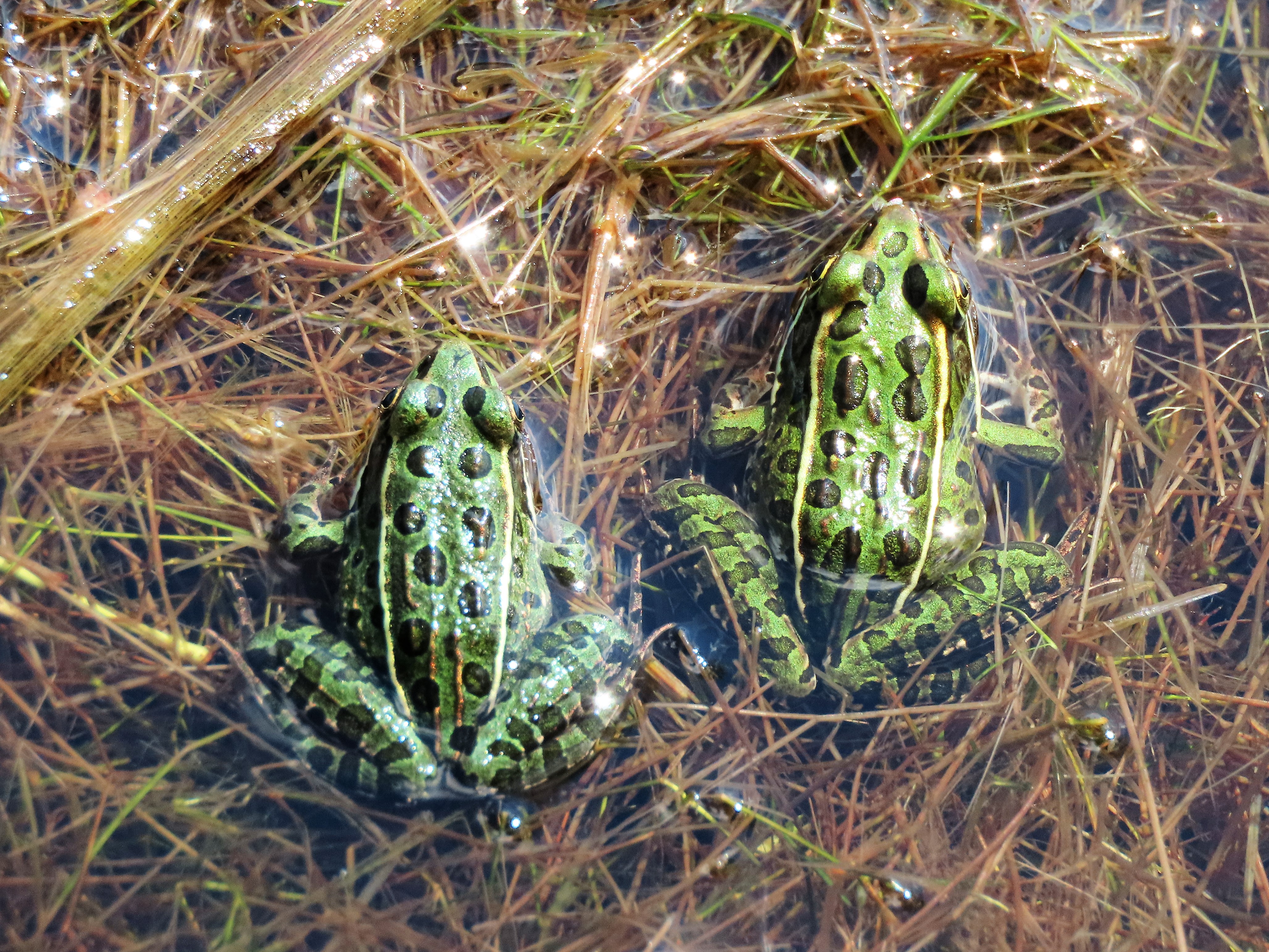
I am using not even the slightest hyperbole when I say that they were everywhere we walked, hopping out of our way as we moved, frequently heading for the nearest patch of water.

At a given moment there were hundreds in view.

So often, of late, there has been a litany of despair associated with wildlife populations, so it is encouraging to be able to report success of this magnitude.

There follows a picture of a Slender Spreadwing (Lestes rectangularis), albeit not of exceptional quality.

Field Bindweed (Convolvulus arvensis) does not move and is somewhat easier to photograph!

Paper Wasps (Polistes spp.) are the insects we love to hate, yet they generally do not threaten us unless their nest is under siege.
Dark Paper Wasp (Polistes fuscatus) is a distinctly marked species, and Miriam approached this individual at close range to get her pictures.

Neither Miriam nor the wasp felt at risk from the other, and both went about their business undisturbed.

Common Red Soldier Beetles (Rhagonycha fulva) were not shy about showing the world what they do best!

Unlike the paper wasp above, this Widow Yellowjacket (Vespula vidua) is more aggressive and at times stings without apparent provocation.

Miriam was a little more circumspect in her approach to it.
Canada Geese (Branta canadensis) are not stingy when it comes to providing fertilizer for all who wish to collect it, often on the soles of your shoes unfortunately!

Viewed from below they are a handsome vanguard.

Some species of dragonfly never seem to land, but Widow Skimmer (Libellula luctuosa) has no such reluctance.

This Acadian Hairstreak (Satyrium acadica) was equally cooperative.

Monarchs (Danaus plexippus) have been seen more frequently of late. This one is perhaps dusted with pollen.

A Song Sparrow (Melospiza melodia) found a convenient perch on a memorial bench.....

.....from where it trilled its lovely song.

American Goldfinch (Spinus tristis) is a very handsome bird.

This species is a late breeder, but the onset of nesting is about to begin.

Here is a Carrot Seed Moth (Sitochroa palealis) viewed from every angle.


Clouded Sulphur (Colias philodice) is abundant.

Butterflies are an important component of the diet of Eastern Kingbird (Tyrannus tyrannus).

Questions posed by Elaine
A regular reader of my blog, Elaine, has posed a variety of question regarding birds and their biology and lifestyle and I will start to answer them, two or three at a time in this and subsequent posts.
Q. Do some birds only have one brood per year?
A. Most species at our latitude are single-brooded, especially neotropical migrants like wood warblers, thrushes, flycatchers, hummingbirds etc who are present here for three to four months on average, and do not have sufficient time to raise a second brood. Large birds such as raptors with long incubation periods and prolonged nestling care have only one brood.

Q. Which factors influence how many broods birds have per year?
A. Food availability is generally the most significant factor. In times of abundance more second broods are initiated, but not by the entire population of a species. In a well-studied Barn Swallow (Hirundo rustica) colony, for example, around thirty pairs had successful first nests, a dozen or so laid second clutches. Second broods have higher failure rates across a range of species.

Q. If a bird's nest, eggs or babies are destroyed, what's the impact on their nesting behaviour.
A. If the event occurs early most species will renest. However, if it is late in the cycle, just before nestlings are about to fledge for example, no attempt will be made to renest and the year's breeding attempt will be lost.
22 July 2021
Hillside Park, Waterloo, ON with Heather and Lily
Ebony Jewelwing (Calopteryx maculata) may be found from April through October, but July and August are the peak flight months here in southwestern Ontario.

Ebony Jewelwing ♂
They were abundant at Hillside Park.

Ebony Jewelwing ♀

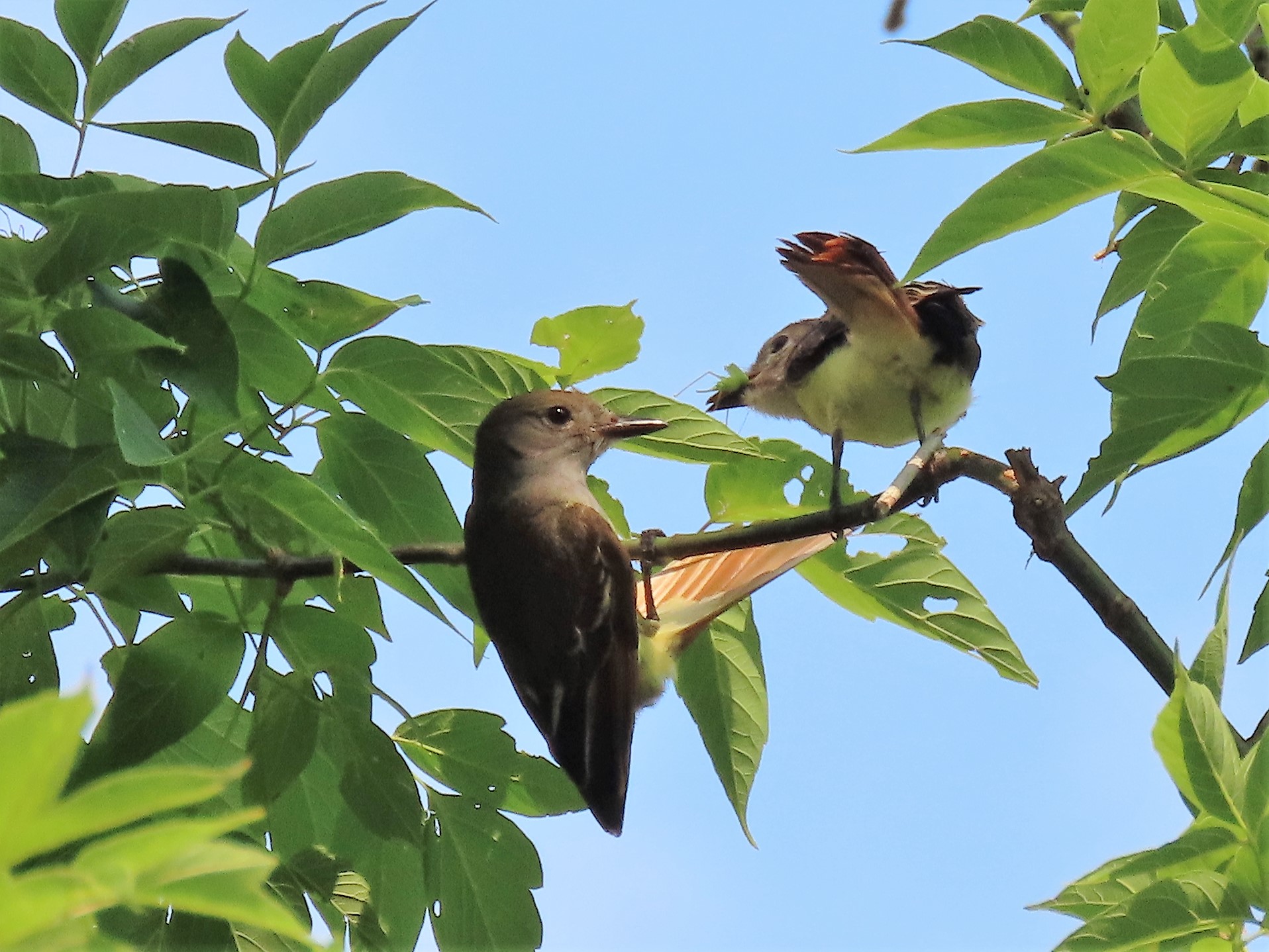


Clouded Sulphur (Colias philodice) was the most common butterfly encountered.

Lily was of course the star of the show, and here she is being very good in her stroller as her mom looks off at something that caught her eye.

Lily is not always happy to be in the confines of her stroller any more, but today for the most part she was a model of good behaviour.

A hearty breakfast helped to keep her occupied.

Green Immigrant Leaf Weevil (Polydrusus formosus) is another invasive pest in the army of species that has arrived here in shipments of fruit or by other means.

It feeds on the leaves and blossoms of many woodland trees, but is also a threat to fruit trees and orchards.
Himalayan Balsam (Impatiens glandulifera) as its very name implies is also invasive, and is an aggressive colonizer, supplanting native species.

It produces copious nectar and is well serviced by bees.
All too soon it was time to bid goodbye to Heather and Lily.

Securely strapped into her car seat, Lily smiled goodbye to us.

See you next week!
26 July 2021
SpruceHaven, St. Agatha, ON
Sanctuary Field is well on its way to becoming the grassland we are all hoping for.

In places Black-eyed Susan (Rudbeckia hirta) is forming a carpet of gold.

The pond in front of the house is abuzz with activity and I was happy to spot this female Eastern Pondhawk (Erythemis simplicicollis) resting on the broad leaf of a water lily.

Better be careful not to become a snack for a watchful Green Frog (Lithobates clamitans).

Some are partly hidden, just lying in wait for unsuspecting prey.

The Staghorn Sumach (Rhus typhina) are beginning to send us a message that summer is running away on us and fall is not so far ahead.

Their ostentatious and extravagant fruit clusters will soon pale by comparison with their fiery autumn foliage.
Something to look forward to.