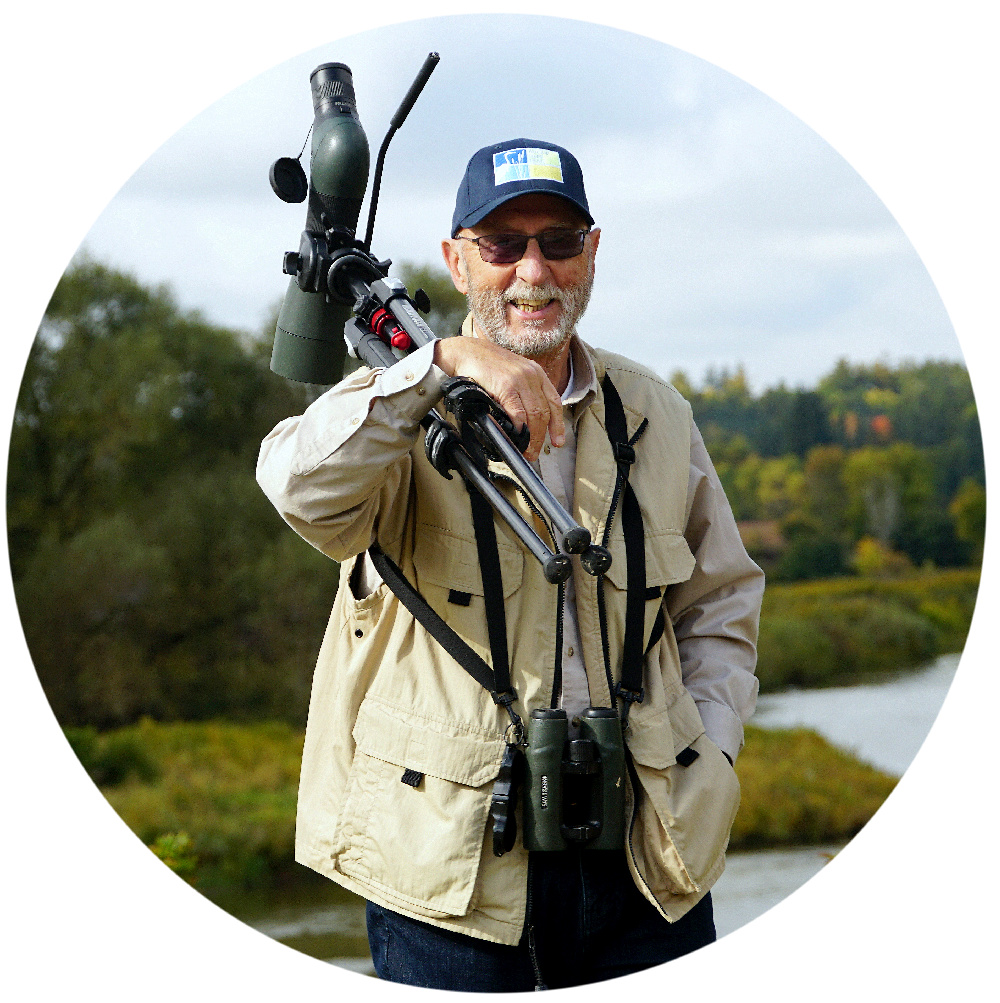
My love affair with Cuba, its birds, its people and its history continues and I was happy to organize another tour with a stellar group of participants.
Leader: David M. Gascoigne
Participants: Mike Duchene, Linda Dutka, Beth Martin, Virgil Martin, Alan Morgan, Anne Morgan, Kathy Waybrant
Cuban Guide: Tania Piñeiro Cordero
17 February, 2024
St. Jacobs/Waterloo/Kitchener - Varadero - Havana - Viñales
We were picked up dark and early as planned - Airways Transit operating with its usual seamless efficiency - and delivered to Pearson International Airport with the required three hours to wait for our flight.
It was a long walk to our departure gate and we arrived there only to find that it had been changed, necessitating another long walk. As birders we took this all in stride (pun intended), of course.
We were about an hour late departing, following de-icing, but the pilot made up time and we arrived only about twenty minutes late.
I was excited about seeing Tania and Jovany (our trusty driver) again, but the pleasure was enhanced when I saw that Mariana too had come to welcome us to Cuba. A multitude of hugs later we embarked on the bus and set off for Havana.
Our journey was uneventful, with Mariana delivering her always entertaining and informative narrative as we made our way, and before long we were in Havana to have lunch at one of our favourite restaurants, Habana 61.

When all were full, and well satisfied, we set off on a special assignment to pick up Manuel Iturralde, one of Cuba's leading geologists, who would remain with us during our stay in Viñales, to provide detailed information about the famous mogotes (karst) of the region. Since Alan Morgan, one of Canada's pre-eminent geologists was part of our group, we were fortunate indeed to have this level of expertise along with us.
At around 18h:45 we rolled into Viñales and it was lovely to see our familiar casa, a Cuban home to make a Canadian feel at home.

The weather was decidedly unfriendly and Kathy captured a wonderful image of the sky.
.jpg)
Another round of warm and affectionate hugs was served up, each one seeming better than the last.
We were not all able to stay in the same home, but all were equally inviting, with friendly, obliging hosts.
Magdiel and Maidalys are like old friends now; warm, charming and obliging.

At 19h:30 we all met for a splendid dinner - splendid is the only kind they serve!

By the time it was all done we had consumed soup, fish, chicken, rice, beans, salad, yucca, sweet potatoes and dessert; for those of us not susceptible to caffeine-induced insomnia, expresso coffee, too.
We were all a little tired after a very long day's travel and we retired early. Sleep came easy.
18 February, 2024
Viñales - Los Mogotes - Tobacco Farm
I took a coffee out onto the veranda at the front of the house, where Beth joined me, and together we watched Viñales wake up. It was raining, however, at times quite heavily, and even the best conditions were of gloomy overcast.
We had no gloomy thoughts, however; birding was on our minds. A little rain, or less than perfect visibility, was not going to deter us.
As we ate breakfast we spoke excitedly of the target birds for the day, principal among them Cuban Solitaire (Myadestes elisabeth), a range-restricted Cuban endemic.
Just off from the eating area a short way, Magdiel's immaculate motor cycle impressed us all.

He uses this every day to go to his farm about an hour away to tend to chores and bring back fresh produce for us to eat.

Jovany waited with the bus and as soon as the others joined us from their casas we were ready to go!

The Mogotes beckoned and in short order an impressive landscape began to appear.
.jpg)

It is a rare occasion I am sure, when a distinguished Cuban geologist and an equally distinguished Canadian geologist are side-by-side, both looking out at unique, distinctive, ancient formations.
.jpg)
Manuel Iturralde, Alan V. Morgan
It was a first time meeting Manuel and he was both entertaining and knowledgeable; Alan for me, however, remains the emeritus of emeriti.

But enough of this geology stuff! This is a birding trip, after all.
Our principal quest was for the secretive and retiring Cuban Solitaire, and we had to dodge rain showers, sometimes verging on torrential, to seek out this species. It proved not to be easy.
Eureka! Suddenly, there it was. Plain of countenance, subdued in colour, yet rhapsodic in song and a vision of rare beauty to a very appreciative audience.
.jpg)
An American Kestrel (Falco sparverius) seemed as grumpy with the rain as we were.
.jpg)
Many of us were getting quite wet, and soon we had to concede victory to the weather and we returned to Viñales to change into dry clothes.
This was the mere prelude to a great event.
I am a great admirer of Nils Navarro's fine work, Endemic Birds of Cuba: A Comprehensive Field Guide.

Nils and Tania are friends of longstanding, and she arranged for us to visit him. Such a pleasure, such a privilege.

We spent an hour or so in the company of a man passionate about the birds of Cuba and gained an insight into his views on classification and a wide range of other aspects of ornithology.
He is currently working on a new field guide to the birds of Cuba and we were privileged to see some of his artwork and have the creative process explained to us.

-2.jpg)
.jpg)
All things considered, I am glad it rained!
It was time to go for lunch.

Following a lunch, at which I ate more than I eat in a whole day at home, (others too, I believe), we returned to enjoy that decidedly sensible aspect of life, a siesta.
The weather was still iffy at best when we set out again, but we went to an area of sparse woodland near a lagoon where birds were active.
We had finished our lunch but a Turkey Vulture (Cathartes aura) was still dining with gusto.
.jpg)
Safe to say that rare is the preferred condition of the meat, perhaps seared lightly by the sun.
A Cuban Green Woodpecker (Xiphidiopicus percussus) is content with an assortment of grubs, insects and spiders. (Doesn't the scientific name here spur you to interpret its etymological roots?) Full marks if you pronounce the genus correctly first time!
.jpg)
The nesting season for this species spans from February to August, so it's possible that a female may be inside the cavity with eggs, having been fed by her attentive mate.
Who does not marvel at a Western Spindalis (Spindalis zena)?
.jpg)
Who is not impressed by Kathy's skill as a photographer?
She makes a Cuban Blackbird (Ptiloxena atroviolacea) look special.
.jpg)

Novice birders are often surprised to learn that Smooth-billed Ani (Crotophaga ani) is a member of the cuckoo family, but indeed it is.
.jpg)
If you are unfamiliar with its unique lifestyle it is well worth an hour of your time to "read all about it!"
We ended our day with a visit to a tobacco farm where the normal range of hijinks and silliness was enjoyed by all.
Many leaves were drying - fine cigars in the making.
.jpg)

In no time at all, Mike was attached to a stogie, puffing like a veteran.

.jpg)
Virgil, sensible fellow that he is, was content to sit and enjoy the fun.

This blue car attracted a lot of attention from our group, as do all vintage vehicles in Cuba, some of which would command a small fortune back home.
.jpg)
Around every corner, something of interest caught our eyes.
.jpg)
Despite the weather; in some ways because of the weather, it had been a great day, and a stellar beginning to our Cuban odyssey.
Palm Warbler (Setophaga palmarum) is abundantly common in Cuba, and it seemed appropriate that just before dinner it was the last bird captured through our lens, perhaps come to bid us goodnight and a warm "Bienvenido a Cuba."
.jpg)
¡Hasta mañana mis amigos!
Photographic credit and sincere thanks are owed to Alan, Beth, Kathy, and Virgil - and there are even a few pictures of my own).